

Most people think poetry is hard to get. Billy Collins spent decades proving it does not have to be.
He wrote about memory slipping away, a barking neighbor’s dog, and something as small as a cheap lanyard made at summer camp, and turned all of it into work that filled reading halls across America.
In 1999, New York Times writer Bruce Weber called him “the most popular poet in America,” and that reputation was earned line by line, poem by poem.
Among the most famous Billy Collins poems, “Forgetfulness,” “Introduction to Poetry”, and “The Lanyard” take the top spot, followed closely by “Aimless Love” and “The Revenant.” Below you’ll find eight of Billy Collins famous poems, what each one is about, and which to read first.
Who Is Billy Collins?

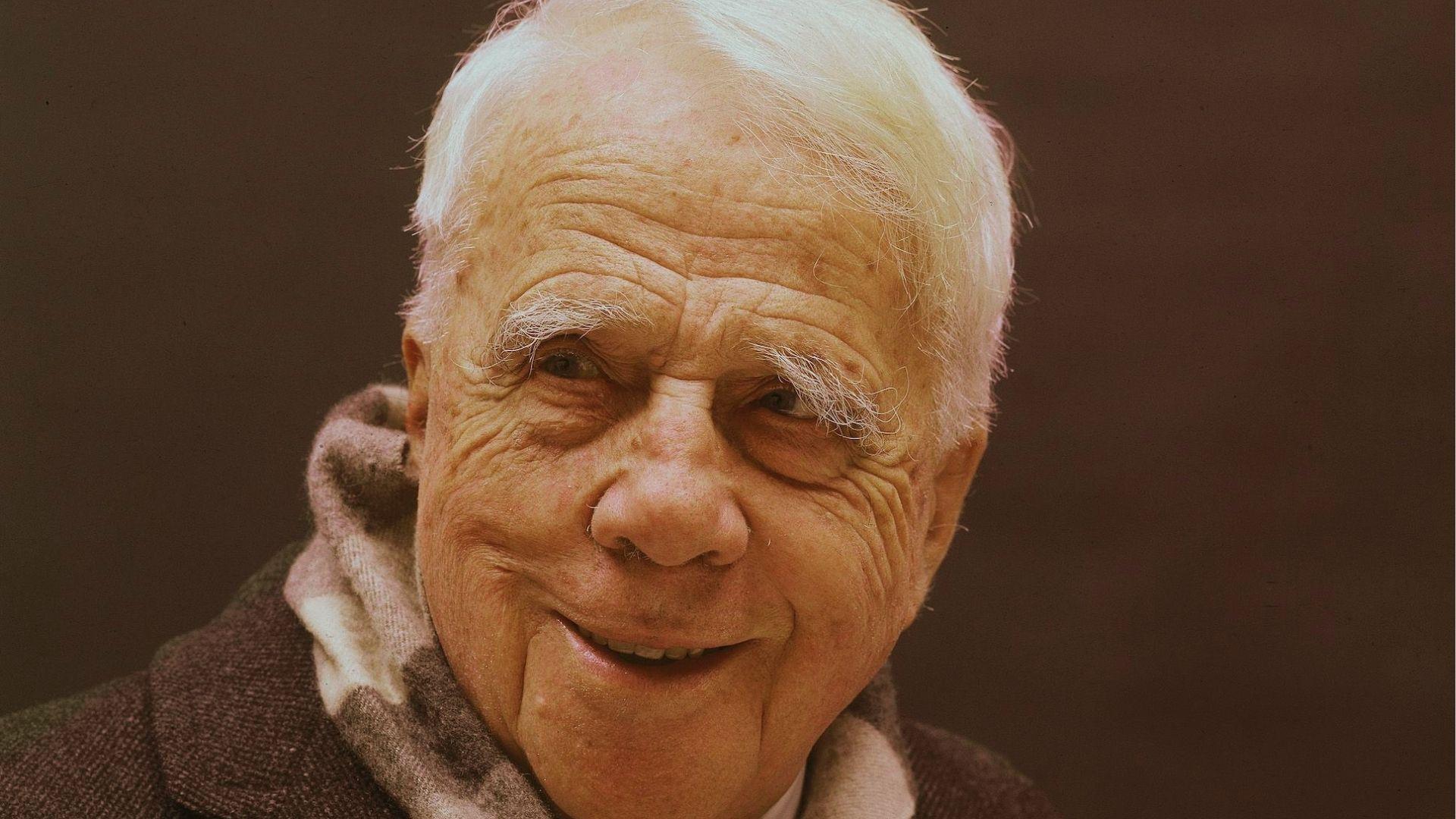
Billy Collins is an American poet, born in New York City in 1941, who served as US Poet Laureate from 2001 to 2003. He is known for funny, conversational poems that turn serious without warning.
His mother could recite verses on almost any subject and often did. That early exposure to spoken language shaped everything.
He earned his BA from the College of the Holy Cross and completed his MA and PhD at the University of California, Riverside.
He joined the faculty at Lehman College in the Bronx in 1968 and taught there until he retired in 2016. His breakout came with Questions about Angels in 1991, selected for the National Poetry Series. Before that book, he was respected. After it, he was sought out.
Billy Collins as US Poet Laureate
Collins served as US Poet Laureate from 2001 to 2003, then as New York State Poet Laureate from 2004 to 2006. He treated the post like real work.
He became a regular on NPR and appeared on A Prairie Home Companion with Garrison Keillor, which widened his audience further.
He received the Chicago-based Poetry Foundation’s Mark Twain Award for humorous poetry in October 2004; he was also the inaugural recipient of the honour.
His 2024 collection, Water, Water, gathered sixty new poems. He was 83 and still writing.
During his time as Poet Laureate, he created Poetry 180, a Library of Congress program that offers one poem for each of the 180 days of the high school year. It is free online, with no analysis required.
What Makes Billy Collins’ Poetry Different
Collins writes the way a thoughtful person actually thinks, not the way a textbook says a poet should.
His poems start with something ordinary and quietly slip into something that catches you off guard.
He called himself “reader conscious,” always imagining one person in the room with him. Plain but never empty. Conversational but never sloppy. Critics say he is too accessible. Readers keep coming back anyway.
Billy Collins Famous Poems: The 8 to Read First
These are the ones readers return to, teachers assign, and anthologies keep printing.
| Poem | What It’s About | Tone |
| Forgetfulness | Memory fading with age | Calm, quietly sad |
| Introduction to Poetry | How students attack poems instead of reading them | Funny, pointed |
| The Lanyard | A mother’s gifts versus a child’s | Tender, wry |
| Another Reason Why I Don’t Keep a Gun in the House | A barking dog and Beethoven | Absurd, comic |
| The Art of Drowning | The life that flashes before you | Dry, dark |
| The Revenant | A dead dog’s honest verdict on its owner | Funny, sharp |
| Aimless Love | Falling for ordinary things | Light, warm |
| Fishing on the Susquehanna in July | Imagining a place from a painting | Playful |
“Forgetfulness”: The Poem That Captures What We All Fear
It tracks the slow process of forgetting until you lose things you thought were permanent, like how to swim or ride a bike.
The tone is calm, which makes the fear underneath land harder. Collins compares forgotten memories to people who have retired to a fishing village where there are no phones.
That one image does more than a full stanza of dramatic writing would.
One detail readers often miss: the “dark mythological river whose name begins with an L” is the Lethe, the river of forgetting in Greek myth. Forgetfulness” first appeared in Poetry magazine in January 1990 and was collected in Questions About Angels (1991). The Academy of American Poets hosts the full text.
“Introduction to Poetry”: His Most Taught Poem
Collins describes asking students to hold a poem up to the light, drop a mouse into it, feel the walls for a light switch.
Then he shows what they actually do. They tie the poem to a chair and beat a confession out of it. It is funny and pointed, which is exactly why teachers keep assigning it. It is also poem number one in Poetry 180.
“The Lanyard”: A Simple Gift and Everything It Means
The lanyard poem starts with a boy weaving a cheap craft at summer camp for his mother.
Collins uses that small object to look at the impossible gap between what a mother gives and what a child can ever return. It never reaches for emotion. The emotion finds it.
The closing lines, where the grown speaker admits the boy believed the lanyard would make them even, are where most readers feel it. That turn is unpacked in our line-by-line analysis of “The Lanyard”.
“Another Reason Why I Don’t Keep a Gun in the House”: Humor as High Art
A neighbour’s dog will not stop barking. Collins puts on Beethoven.
Then he imagines the dog sitting in the orchestra, barking through the symphony as if Beethoven had written a part for him. Absurd, relatable, and Collins at full speed.
“The Art of Drowning”: Dark Wit at Its Most Precise
This poem asks whether the life that flashes before you as you drown would actually be worth watching. Drier than his other work. Right at the edge between funny and unsettling.
“The Revenant”: The World Through a Dog’s Eyes
Written from the perspective of a dog returning after death to judge its owner. The dog is not grateful. It is honest and irritating. One of his funniest poems and one of his sharpest.
“Aimless Love”: Affection Without a Target
Collins describes falling in love with a wren, a mouse the cat dropped, a seamstress in a tailor’s window, a bowl of broth and, finally, a bar of soap. The speaker calls it “the best kind of love” because it asks for nothing back.
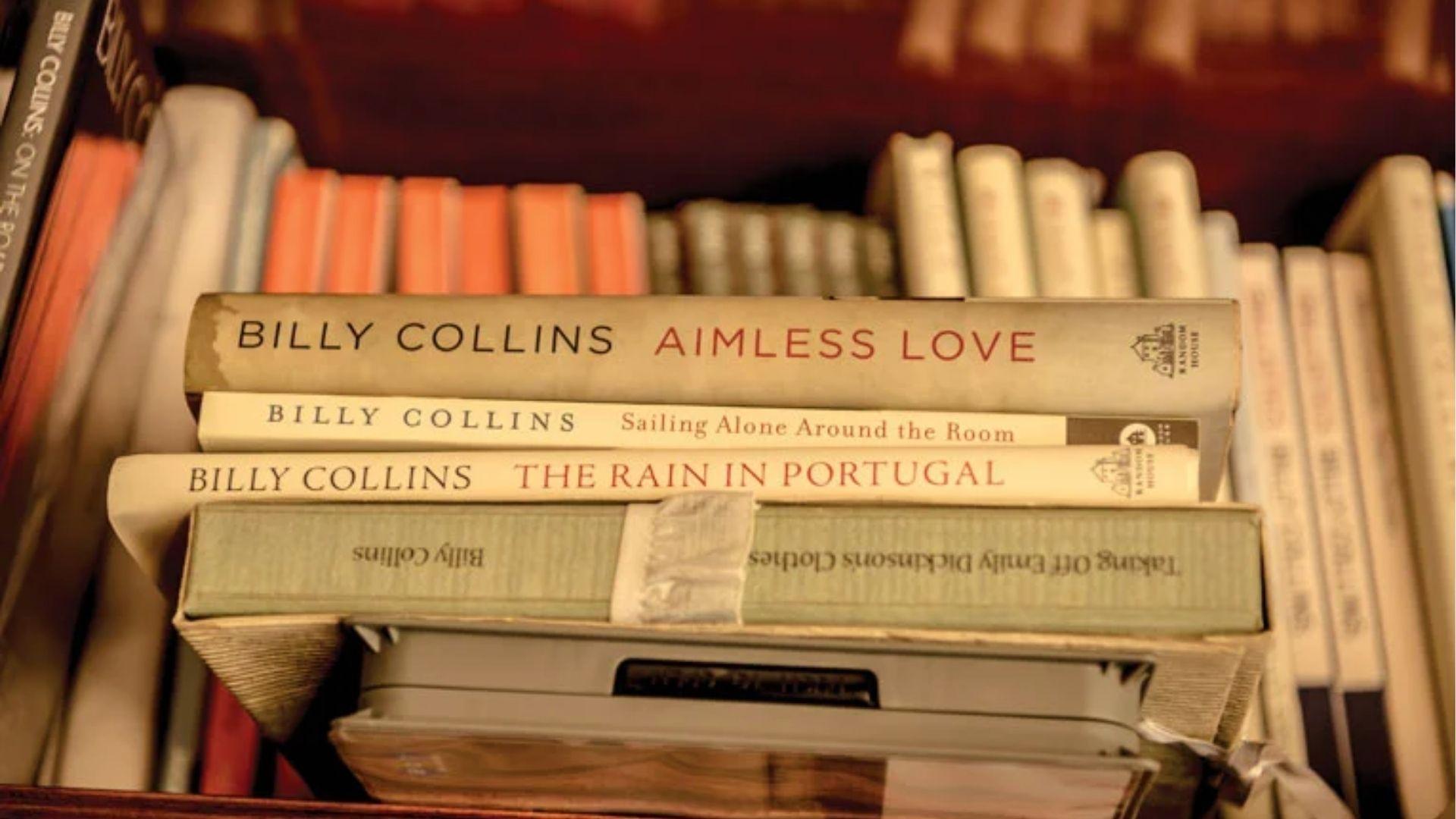
The poem first appeared in Nine Horses (2002), and Collins later used the title for his 2013 book Aimless Love: New and Selected Poems. He does not overexplain it, which is the right call.
“Fishing on the Susquehanna in July”: Imagination as Experience
He has never fished on the Susquehanna. He saw a painting of it in a museum. The poem makes the case that imagining something fully is experience enough. It does not argue the point. It just shows it happening.
How to Read a Billy Collins Poem
Collins said stepping from the title into the first line is like stepping into a canoe. A lot of things can go wrong. He is thinking about you from the very first word.
He also said he is willing to stop anywhere. Most people move through the day in a straight line. The poet stops and looks at what is on either side.
When you read Collins, do the same. Slow down. The shift from light to serious happens quickly and quietly. If you miss it, the poem reads as a plain joke, and you lose its serious half. If you like to mark up a poem as you go, circle the line where the tone turns.
Why Billy Collins Is the Perfect Entry Point for Non-Poetry Readers
His poems do not need a glossary. They only ask that you notice ordinary things. Memory. A dog. A camp craft. A painting in a museum.
Start with “Forgetfulness” if memory feels close to home. Start with “The Lanyard” if family, and what we owe the people who raised us, feels closer.
Start with “Another Reason Why I Don’t Keep a Gun in the House” if you want to laugh first and feel things second. There is no wrong place to start. That is the point.
Why Billy Collins’ Poems Are Worth Reading?
Billy Collins did something most poets never manage. He made people who had given up on poetry come back to it. His work is written to reach you, and more often than not, it does.
Beyond the humour and the plain language, what makes him worth reading is the way he finds something real inside something ordinary and makes you feel like you already knew it.
Of all the Billy Collins famous poems, “Forgetfulness” is the one I would hand a first-time reader, because its turn from comic to sad is the clearest in his work.
Frequently Asked Questions
Where can I read Billy Collins poems for free?
The Poetry Foundation website hosts a large selection at no cost, including several originally published in Poetry magazine.
What is Billy Collins’ most famous poem?
“Forgetfulness” and “Introduction to Poetry” are his most widely read poems. “Introduction to Poetry” is also the first poem in his Poetry 180 program.
Did Billy Collins write about serious topics?
Yes. He read “The Names” at a special joint session of Congress on September 6, 2002, held to remember the victims of September 11.
What is the Poetry 180 program Billy Collins started?
It is a free online program he created as Poet Laureate, offering one poem per school day for high schools, with no analysis required.