


You've got a poem in front of you, and the pen just sits there. The blank page feels bigger than the poem.
Learning how to annotate a poem takes that stuck feeling away fast. You get a real order to follow, instead of guessing where to even start.
I've graded poems covered in circles and stars, and the student still couldn't tell me the theme. Mark everything, and you've marked nothing.
This guide walks you through four passes, start to finish. You'll spot the poem's turn, catch its sound, and end up with a theme that actually holds up.
What Does It Mean to Annotate a Poem?
Annotating a poem means marking it up as you read on purpose, not randomly. You circle words you don't know, underline lines that catch your attention, and jot short notes in the margin.
It's not the same as reading carefully in your head. Writing something down makes you remember it. It also forces you to slow down just enough to notice patterns you'd otherwise cruise right past.
Here's what most people get wrong, though: They mark everything.
Every line, every word. I've seen it plenty of times. The page ends up covered in ink, and none of it means anything anymore.
The goal is to be picky.
You're looking for specific things: Imagery, sound, structure, meaning the core elements of poetry that every annotation should address.
If a line doesn't connect to any of those, leave it alone. Blank space on the page isn't a problem. It's actually a sign you're doing it right.
Before You Start: Set Up Your Annotation System
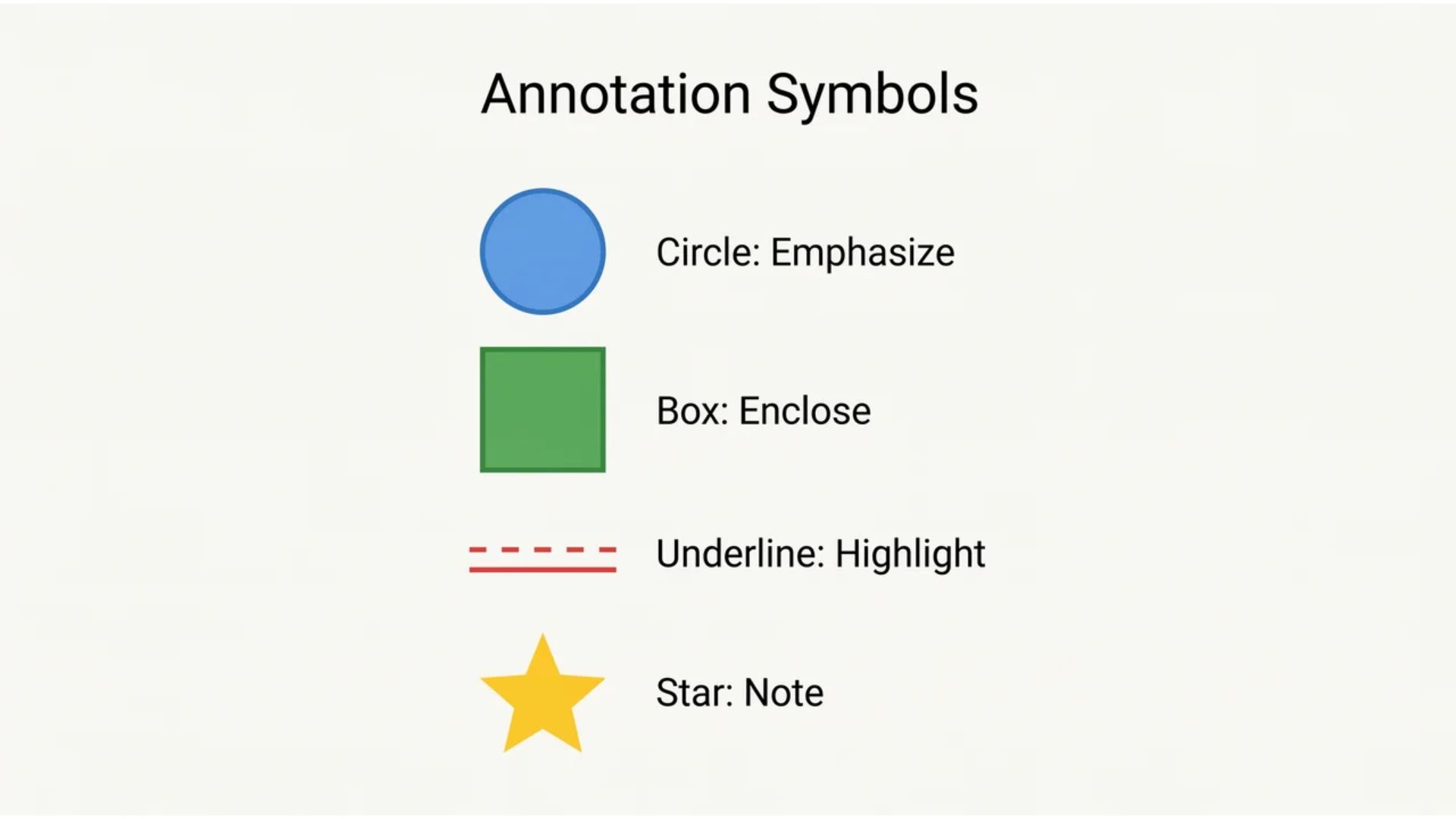
Before you touch the poem, decide how you're going to mark it. This sounds like a small thing. It isn't. Without a system, you end up re-reading the same lines five times trying to remember what you meant by that squiggle in the margin.
You don't need anything complicated.
Here's the setup I keep coming back to:
- Circle unknown words to look up later
- Box concrete, sensory images things you can see, hear, or feel
- Underline sound devices like rhyme or alliteration
- Star the lines that feel most important
That's it. Four symbols. The reason it works is that each one has exactly one job. When you look back at your marked-up poem, you know instantly what you were thinking, no guessing.
You can swap these out for your own symbols. The only rule is consistency: same mark, same meaning, every time.
As for where you work, paper or digital both get the job done. Pick whichever one you'll actually stick with and move on.
How to Annotate a Poem Step by Step
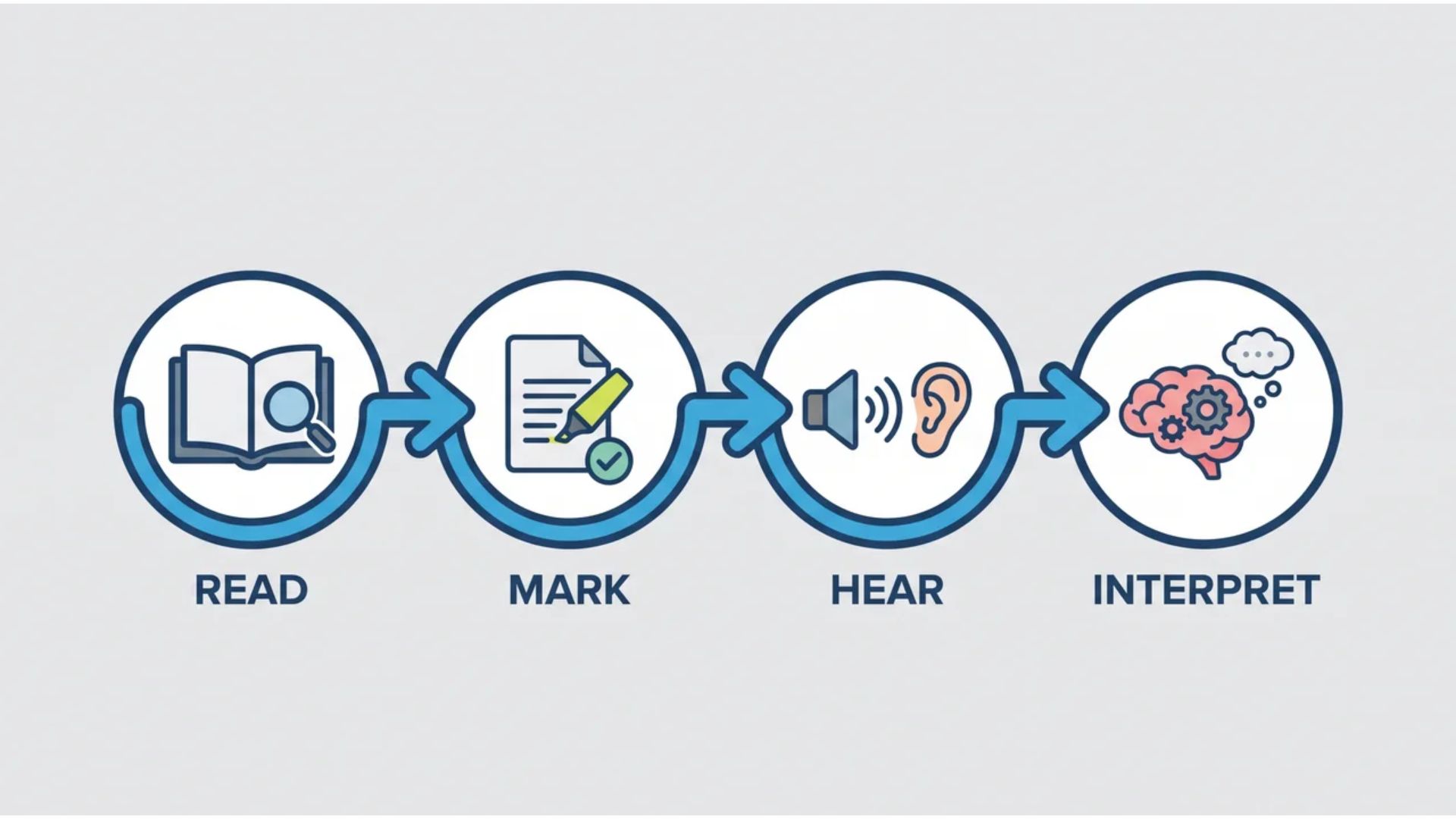
"Four passes, each with one job:Read it, mark it, hear it, then figure out what it means."
Step 1: Do a Clean First Read
Put the pen down for this one. Read the poem all the way through without stopping to mark anything. Just let it land.
Read it out loud if you can, poems are built for sound, and you'll catch the rhythm with your voice in a way your eyes alone won't.
Once you're done, write one line about your gut reaction. "This feels heavy" or "I don't get the ending yet" is plenty. That first impression matters more than it seems.
Step 2: Mark Language and Imagery
Start with words you don't fully know. Circle them, look them up, write the meaning right next to the word. Don't skip this, poems often turn on one exact word, and guessing isn't good enough.
Then look for imagery. Box anything that creates a picture or a feeling you can see, hear, or touch.
After that, highlight anything repeated or unusual. A word that shows up three times in eight lines is doing something on purpose. Figure out what.
Step 3: Mark Sound and Structure
Give each end sound a letter, the first new sound is A, next is B, and so on. That's your rhyme scheme. Not every poem follows a neat pattern, and that's fine. Free verse skips rhyme entirely and uses line breaks for rhythm instead.
Mark alliteration and assonance where you spot them. Then find the volta the moment where the tone or subject shifts. In sonnets, it's usually around line 9. In free verse, watch for a tense change or a sudden new image.
Step 4: Mark Meaning and Ask Questions
Write down every question that comes up as you read. Why is this line so short? Why did the tense just change? Those questions aren't a sign you're lost, they're the start of real analysis.
Circle every metaphor and simile, then ask what it's actually doing. A good comparison isn't decoration. It's carrying meaning.
Finish by writing the theme in one sentence. Not the topic. A walk in the woods is a topic. How small choices shape a whole life is a theme. If your first try feels flat, sit with it a little longer.
Common Mistakes to Avoid
A few habits can quietly ruin good annotation work, even when you're trying your best. Here's what to watch out for:
- Over-annotating: If you mark every single line, nothing actually stands out anymore. You end up with a page full of ink and no clue what mattered most. Being picky about what you mark is what makes annotation useful in the first place.
- Skipping the clean read: Jumping straight into marking before you've read the whole poem once means you're guessing at what's important before you even know where the poem is headed. You end up circling things that don't connect to anything by the end.
- Naming without noting effect: Writing "alliteration" or "metaphor" next to a line and moving on doesn't actually tell you anything. That's just labeling. The real work is asking why the poet used it there and what it's doing to you as the reader.
Fix these three habits and your annotations stop being decoration. They start actually helping you understand the poem.
Final Takeaway
Poetry annotation isn't complicated once you've done it a few times. It's just reading with a pen in hand and paying real attention.
After a few poems, you'll notice yourself catching things automatically that used to slip right past you.
That's what learning how to annotate a poem actually gets you:Closer reading, without the extra effort. Pick a poem you like and try it out. Tell me what theme you landed on in the comments.
Frequently Asked Questions
How to correctly annotate a poem?
Read it once without writing anything, then go back to focused passes to circle unfamiliar words, mark sound devices, and work toward the poem's overall meaning.
What are 5 ways to analyze a poem?
Look at word choice, imagery, rhyme and sound, the poem's turn, and the theme each one reveals a different layer of what the poet is actually saying.
What are some easy poems to annotate?
Start with short poems that have clear rhyme schemes and strong imagery good options include "Fire and Ice" and "Nothing Gold Can Stay" by Robert Frost, "Mother to Son" by Langston Hughes, and "The Rose That Grew from Concrete" by Tupac Shakur.