

Putting a number on your poetry collection is harder than it sounds. The poems are written. The folder is full.
But when it comes to deciding how many poems should be in a poetry book, most poets either stop too soon or keep adding past the point where the book still holds together.
Most poetry books contain 30 to 100 poems. A chapbook usually holds 15 to 30 poems across 20 to 47 pages. A full-length collection typically holds 40 to 100 poems across 48 to 100+ pages. The right number depends on your format, how long your poems are, and where you plan to publish.
That tension is real and it trips up a lot of writers before they ever send a single page to a publisher. The answer depends on more than just counting pages. Format, poem length, and publishing path all change the target.
Get the count right, and your collection reads like one complete thought. Get it wrong, and even strong poems start to feel loose.
What is the Average Poem Count by Book Type?
Most poetry books hold anywhere from 30 to 100 poems, but the right number depends on which format you're working in, and each one plays by different rules.
The number on the cover means nothing if you don't know which format you're working in and each one plays by completely different rules.
Most poetry books hold anywhere from 30 to 100 poems. But that wide range exists because the word "poetry book" covers several different formats.
A micro-chapbook and a full-length collection are not the same thing. Neither are an instapoetry collection and a traditional manuscript. Before you count poems, you need to know which type of book you are actually making.
Types of Poetry Books

Not all poetry books are built the same and if you're still experimenting with specific poetic forms before settling on a format, that exploration is worth finishing first.
Micro-Chapbook: The smallest format in poetry publishing. Usually 8 to 12 poems across no more than 15 pages. Often handmade or printed in small runs. Good for a single tight theme or a limited-edition project.
Chapbook: The most common starting point for new poets. Typically 15 to 30 poems and up to 47 pages. Often saddle-stitched, which keeps printing costs low. Many publishers treat it as a sample of a poet's larger voice.
Full-Length Collection: The standard format for traditional publishing. Usually starts at 48 pages and typically runs 60 to 100 pages, sometimes up to 120. This is what most open manuscript contests and publishers expect when you submit.
Instapoetry Collection: A modern format built around very short, often single-stanza poems. Rupi Kaur's Milk and Honey runs over 200 pages and holds about 179 poems across four sections. Poem count is high, but individual poems are often just two to five lines long.
Anthology: A collection that pulls poems from multiple poets rather than one voice. Usually runs well past 100 pages and is edited rather than authored.
What Affects How Many Poems You Actually Need?

Two poets can write the same number of poems but end up with very different book lengths. Poem length, layout, theme, structure, and publishing requirements all affect how many poems your collection needs.
Poem Length and Formatting
Understanding poem length and form matters here. A haiku may take three lines, while a narrative poem can fill several pages. Free verse and wider spacing can also increase page count. Look at how your poems actually fit on the page before deciding how many you need.
Trim Size and Page Layout
Book size affects how much space each poem takes. A 6×9 book gives poems more room, while a 5.5×8.5 trim may push longer poems onto another page. White space also affects your final page count and overall poem count.
Theme, Structure, and Sections
A focused collection can feel complete with fewer poems, while a book with several sections may need more. Each section should feel balanced. If you are adding poems just to fill a section, consider cutting or combining sections instead.
Publishing Path: Traditional vs. Self-Publishing
Traditional publishers often have page requirements for full-length manuscripts, while self-publishing gives you more flexibility. A shorter collection can work if the poems feel complete and the format suits the project. Always check the requirements before finalising your manuscript.
Contest Submissions
Poetry contests usually set page limits rather than poem counts. Full-length contests commonly request 48 to 80 pages or more, while chapbook contests often ask for roughly 20 to 35 pages. Always check the specific contest guidelines before deciding how many poems to include.
How Many Poems Should a Debut Collection Have?
Your first collection does not need to be long. It needs to be ready, and those are two very different things.
Aim for 40 to 70 poems as your working target: That range covers most full-length submissions and gives you enough room to build a real thematic arc without padding.
Draft at least twice as many poems as you plan to publish: If your final book will have 50 poems, write 100. Cutting from abundance produces better books than building from scarcity.
Remove any poem that does not feel fully finished: Not every draft belongs in print. Read each one out loud. If you stumble on a line, the poem needs more work.
Cut poems that repeat a theme already handled better elsewhere: Two poems about the same loss are fine. Five are not. Duplication dilutes your strongest pieces.
Ask a trusted reader to mark the poems they would skip: You do not have to act on every note, but if three people flag the same poem, that is useful information.
Do not overstuff the collection to hit a number: A debut collection with 45 tight, honest poems will always land better than 80 that feel stretched.
Chapbook vs. Full-Length
The format you choose right now will determine who reads your work, how fast it gets published, and what doors it opens next.
| Feature | Chapbook | Full-Length Collection |
| Poem Count | 15 to 30 poems | 40 to 100+ poems |
| Page Count | 20 to 47 pages | 48 to 120+ pages |
| Binding | Saddle-stitched (stapled) | Perfect bound (spine) |
| Cost to Produce | Low, ideal for self-printing | Higher, usually requires a printer or publisher |
| Best For | New poets, single themes, building an audience | Experienced poets, wider distribution, publisher submissions |
| Time to Publish | Faster, less content to finalise | Longer, more poems, more editing rounds |
| Contest Use | Chapbook contests and open calls, e.g. about 25 pages for Moonstone's contest | Full manuscript contests, usually 48 to 80+ pages |
| Publisher Expectation | Sample of a poet's voice | Complete body of work |
| Audience Reach | Targeted, niche readership | Wider commercial and literary reach |
| Can Lead To | A full-length collection deal | Awards, wider readership, literary recognition |
How to Organise Poems Once You Have the Right Count
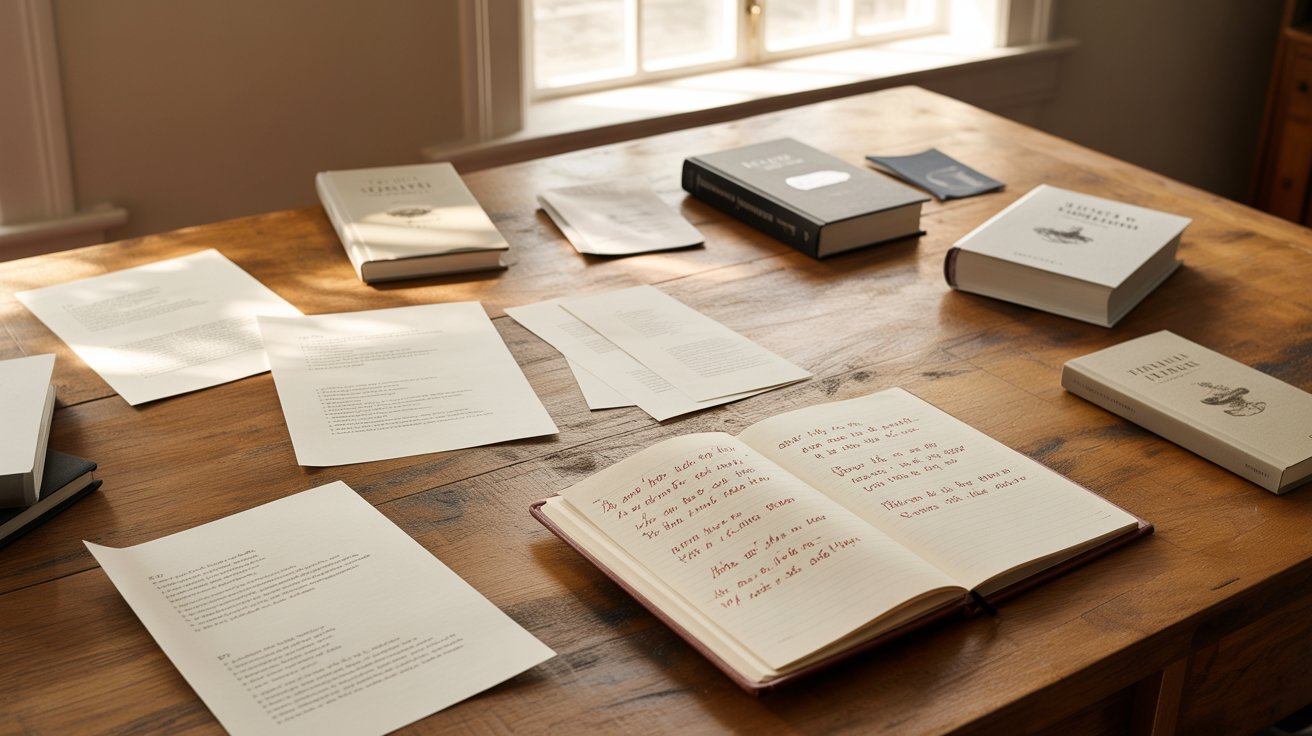
Getting the count right is only half the job. Where each poem sits inside your collection matters just as much as whether it belongs there.
Your opening poem sets the tone for everything that follows, so it needs to be one of your strongest. From there, alternate between heavier and lighter pieces.
Stacking too many intense poems together tires the reader out fast. Group poems by theme or emotional movement, not just by when you wrote them.
Think of the collection as having a shape: a clear entry point, a turning point somewhere in the middle, and a closing poem that gives the reader somewhere to land.
That final poem is the last thing they carry with them, so it earns its place by feeling like an arrival, not just an ending.
In Summary
Knowing how many poems in a poetry book you actually need comes down to one thing: honesty.
Honesty about whether each poem is finished, whether the collection holds together, and whether the format you have chosen matches what you are trying to say.
The right count is not a magic number. It is the point where nothing is missing and nothing feels forced. If your book is 42 poems and every one of them earns its place, that is enough.
If you are working on your first collection, share this with a poet friend who might need it. And drop a comment below. How many poems are in yours?
Frequently Asked Questions
What Is a Good Size for a Poetry Book?
A good size depends on format. Chapbooks run 20 to 47 pages. Full-length collections typically start at 48 pages and can reach 120 pages or more.
How Do You Structure a Poetry Book?
Open with a strong poem, group pieces by theme or emotional shift, alternate between heavy and light pieces, and close with something that feels like a resolution.
Should I Self-Publish or Use a Traditional Publisher for Poetry?
Self-publishing gives you full control and faster release. Traditional publishing offers wider reach. Both are valid. Your goals decide which fits better.
How Many Books Do You Need to Sell to Make a Living From Poetry?
There is no fixed number, because royalties are usually small per copy and most poetry books sell in modest numbers. Very few poets earn a full-time income from book sales alone. Most combine readings, workshops, grants, and teaching to build sustainable income.
What is a 39-Line Poem Called?
A 39-line poem is most often a sestina. It has six six-line stanzas followed by a three-line envoi, and the same six end-words rotate through every stanza in a fixed pattern.