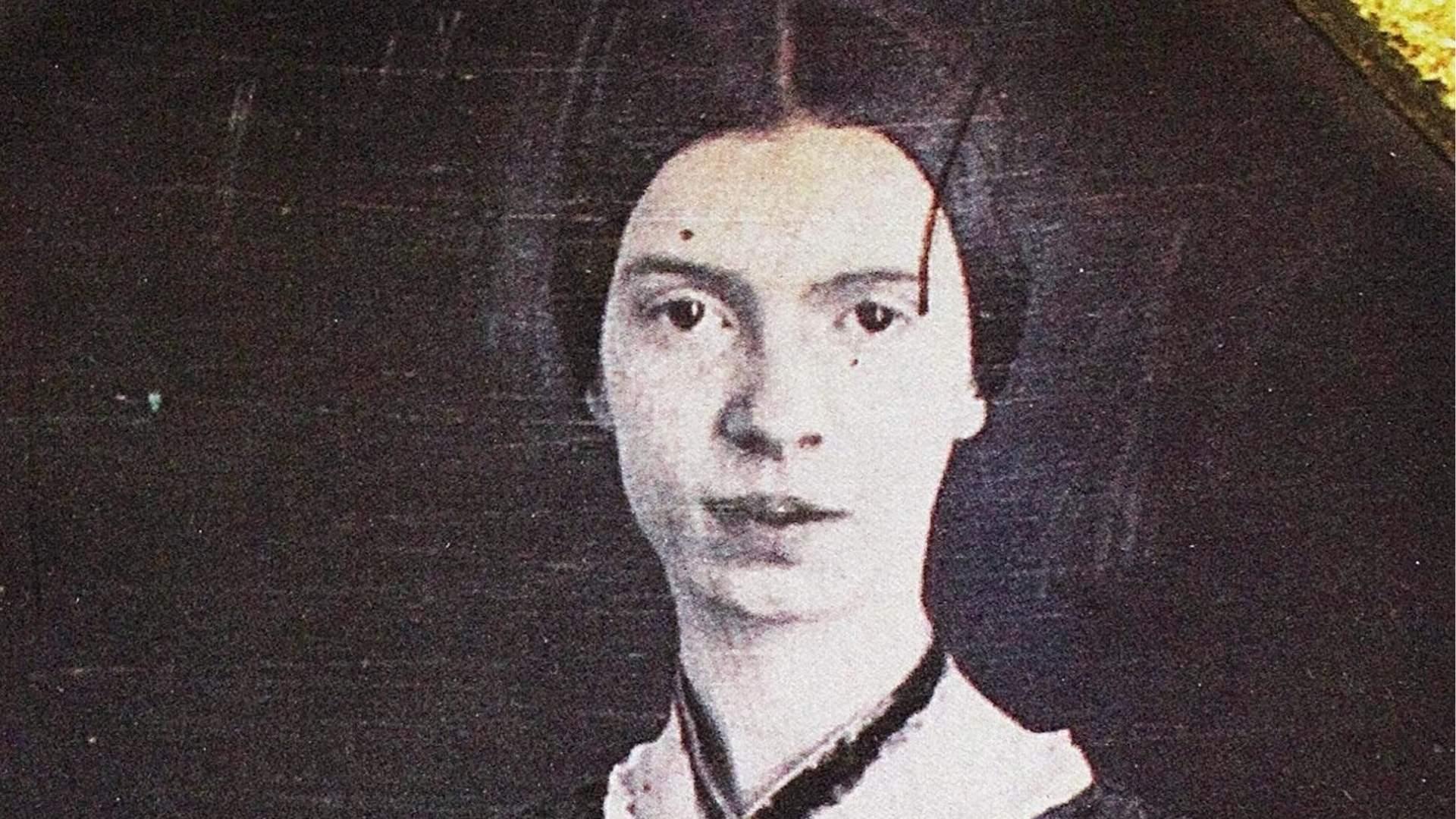
Emily Dickinson short poems pack more emotion into eight lines than most writers manage in eight pages.
I read my first Dickinson poem in school and remember thinking how is something this short this heavy?
You get that same feeling every time. She wrote nearly 1,800 poems in her lifetime, most never published while she was alive.
“ Hope is the thing with feathers” is one of her most loved. It compares hope to a bird that never stops singing, even in the worst storms.
Who Was Emily Dickinson?
She lived quietly, but her words refused to.
Her Life in Amherst and Why She Stayed Hidden
Emily Dickinson was born in 1830 in Amherst, Massachusetts, into a well-educated family.
Her father was a lawyer and later a congressman. She attended school, had close friendships, and wrote letters constantly.
But as she got older, she pulled back from public life entirely. Nobody knows the full reason. What she did instead was write nearly 1,800 poems, most of them never shared with anyone.
How Her Poems Were Published After Her Death
Only about a dozen poems were published before she died in 1886.
Her sister Lavinia found the rest hidden in a box and made sure the world saw them. The first collection came out in 1890, but editors changed her punctuation and altered her style.
The real, unedited versions did not reach readers until 1955, when scholar Thomas H. Johnson published them from her original manuscripts. That is the version we read today.
Why Emily Dickinson’s Short Poems Still Hit Hard
Four lines from Dickinson can do what four stanzas from someone else cannot.
Her Use of Dashes and Slant Rhyme
Dickinson used the dash the way a painter uses space. It is not random. Each dash creates a pause, a breath, a moment of tension. It makes you stop and sit inside the line before moving on.
She also used slant rhyme, meaning words that almost rhyme but not quite. “Soul” and “all.” “Tune” and “on.”
It gives her poems an off-balance feeling that matches the emotions she is writing about. Nothing feels too neat. Nothing feels resolved. That discomfort is the point.
How Hymn Meter Made Her Poems Unforgettable
Most of her poems follow common meter, the same rhythm used in church hymns.
It goes like this: eight syllables, then six, alternating. You can actually sing many of her poems to the tune of “Amazing Grace”, and they fit perfectly.
That rhythm is why her poems stick in your head. You have been hearing it your whole life in hymns and folk songs.
When Dickinson uses it, something in your brain recognises the pattern before your mind even processes the words.
Short. Rhythmic. Impossible to forget.
Short Poems and What They Really Mean
No academic language, no overthinking. Just the poem and what it really means.
1. Hope Is the Thing with Feathers
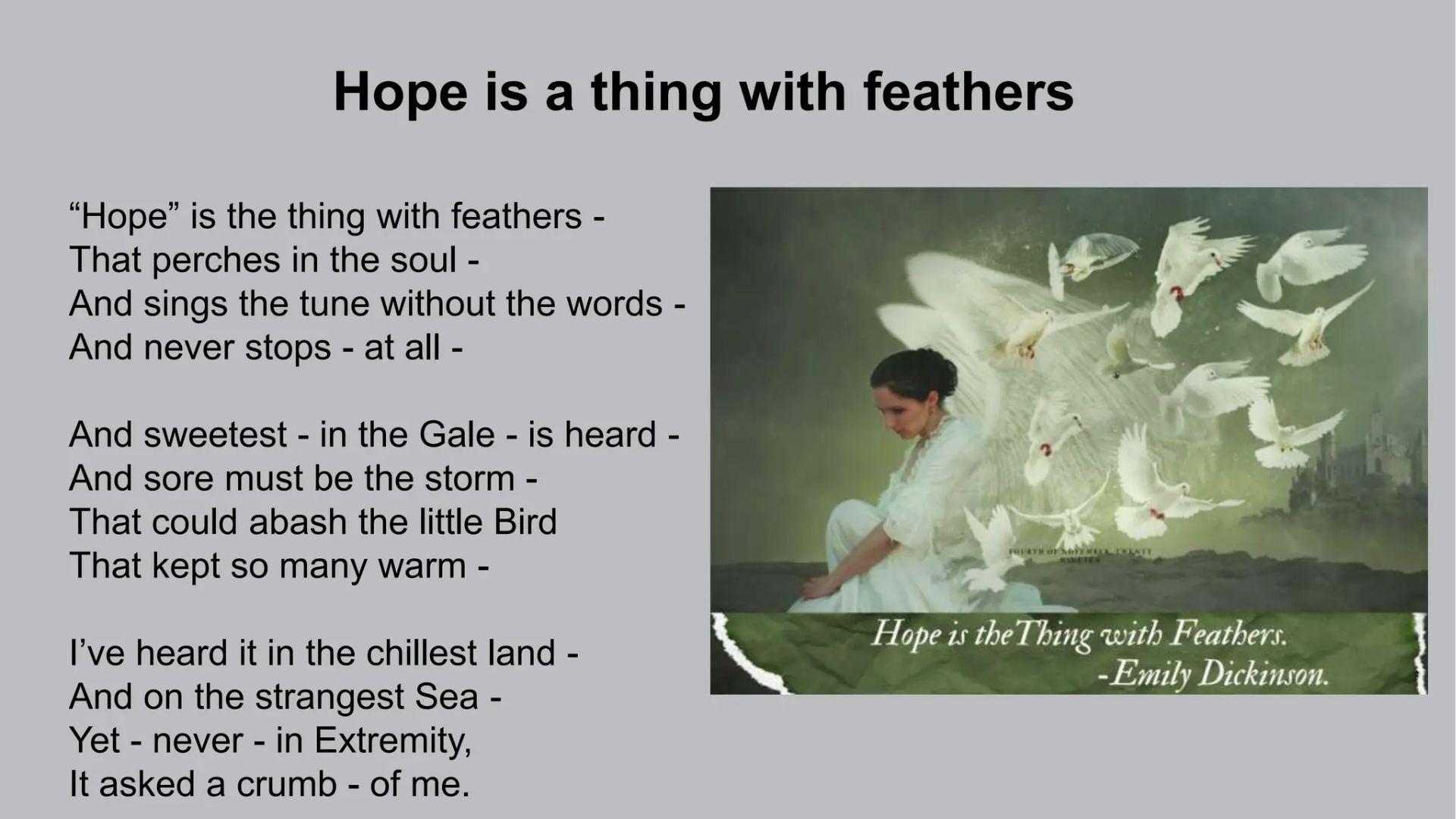
“Hope is the thing with feathers / That perches in the soul.”
Dickinson compares hope to a bird. It sits inside you, sings constantly, asks nothing in return, and keeps going even through storms.
The poem says hope never stops. Not for anyone. Not in the worst moments. It is one of the most comforting things she ever wrote.
2. I’m Nobody! Who Are You?

This poem is about rejecting the need for public attention. Dickinson says being nobody is actually a relief.
The alternative, being somebody, means performing for an audience like a frog croaking its name to an admiring swamp. She found fame hollow. This poem is her saying so, with a smile.
3. Because I Could Not Stop for Death
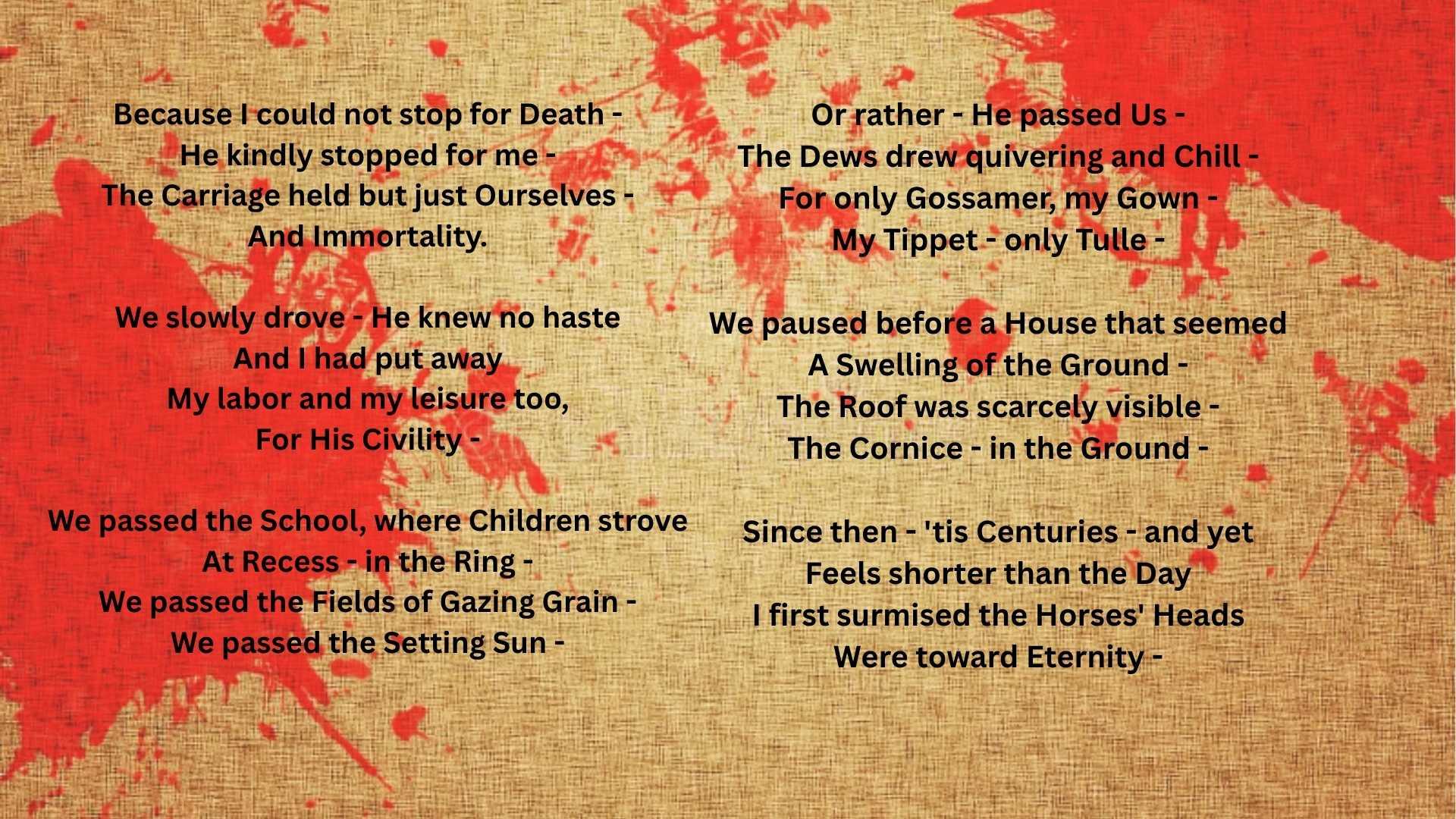
Death shows up as a gentleman in a carriage, polite and unhurried. He picks up the speaker and they ride together past school, fields, and a setting sun.
The poem treats death not as something terrifying but as a quiet, inevitable companion. It is eerie in the calmest possible way.
4. Wild Nights: Wild Nights!
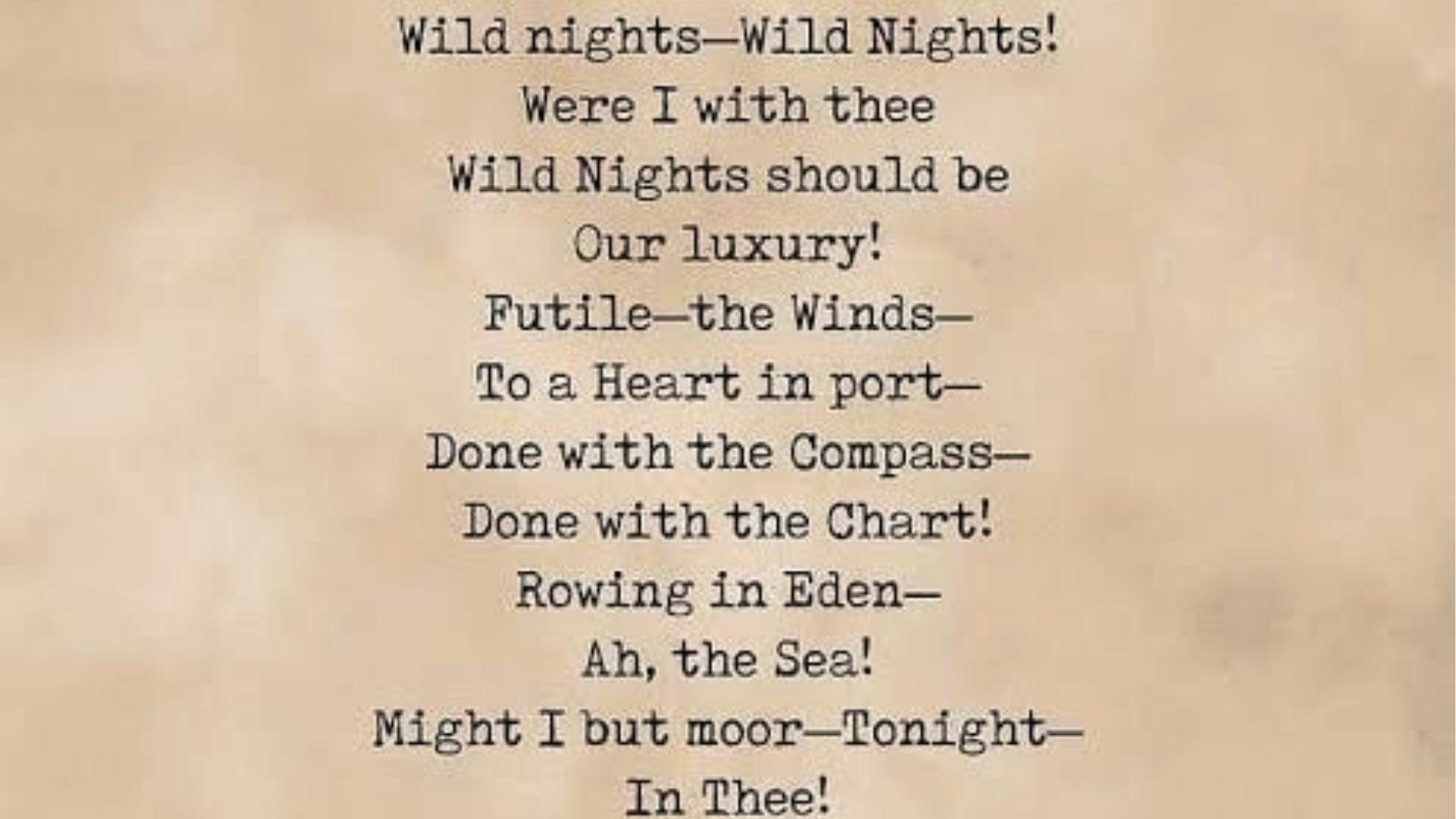
This is one of Dickinson’s most openly passionate poems. It expresses intense longing and desire.
The speaker imagines being with someone and the feeling of being completely sheltered and at peace. Short, urgent, and more emotionally direct than most of her work.
5. I Never Saw a Moor
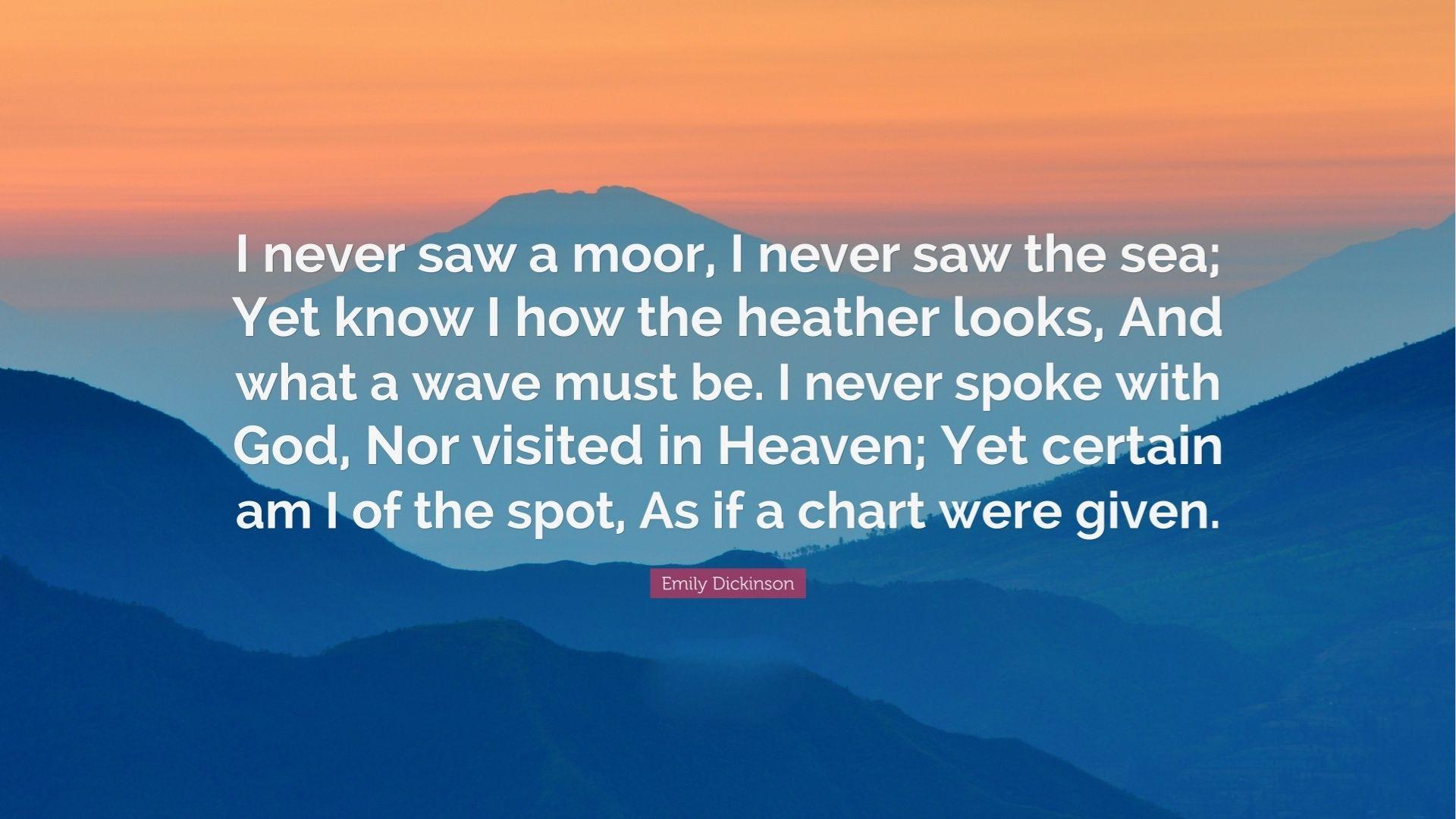
Dickinson had never seen a moor or the sea when she wrote this. But she says she knows exactly what they look like.
And she applies the same logic to heaven. She has never seen it either, but she knows it is real. It is a quiet poem about faith built not on proof but on inner certainty.
6. Tell All the Truth but Tell It Slant
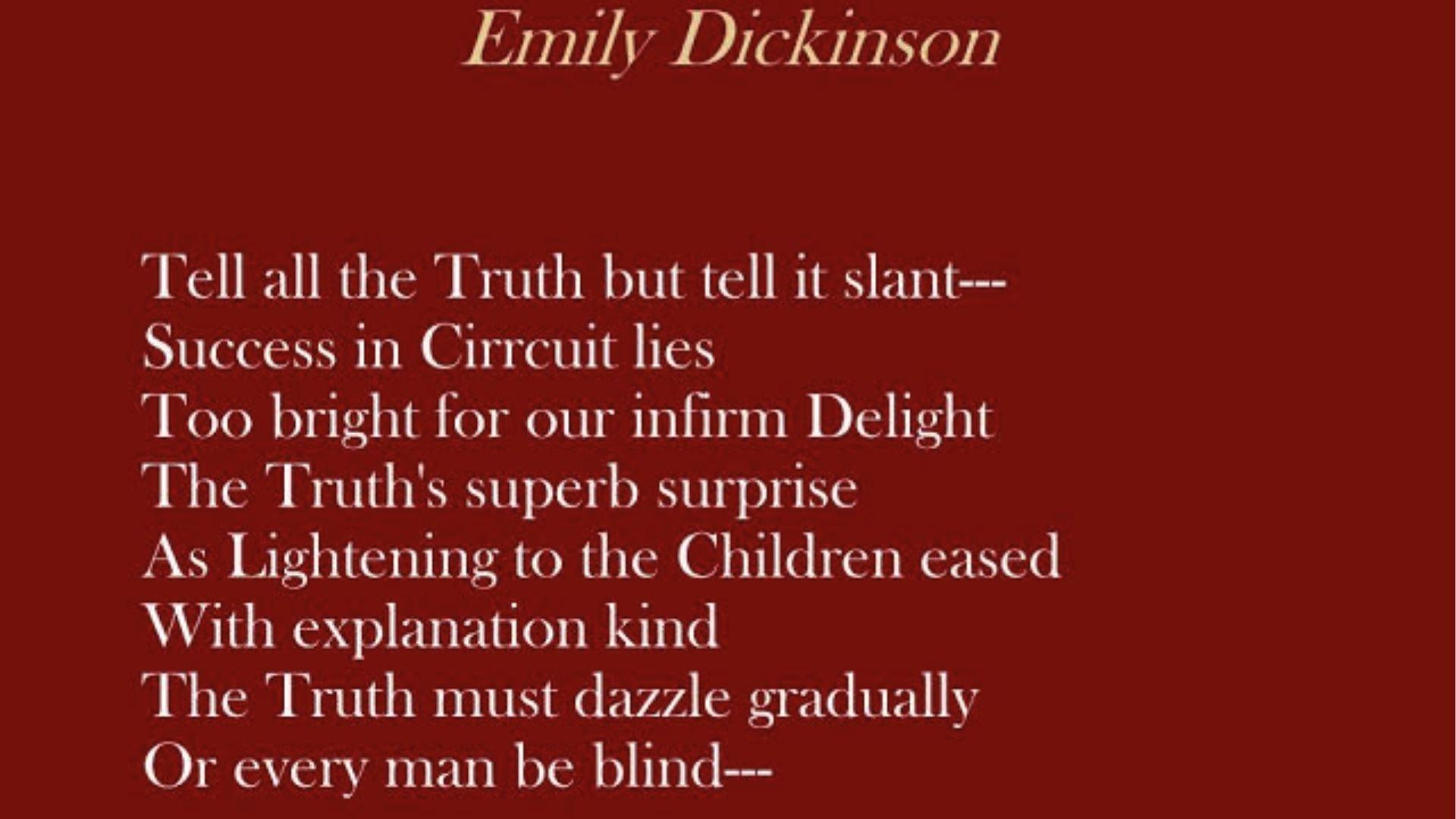
She is saying that direct truth can be too much for people to handle. You need to approach it at an angle, let it in slowly.
Like sunlight, truth delivered all at once can blind. This is also a poem about how she wrote. Indirectly. Carefully. On purpose.
7. A Bird Came Down the Walk
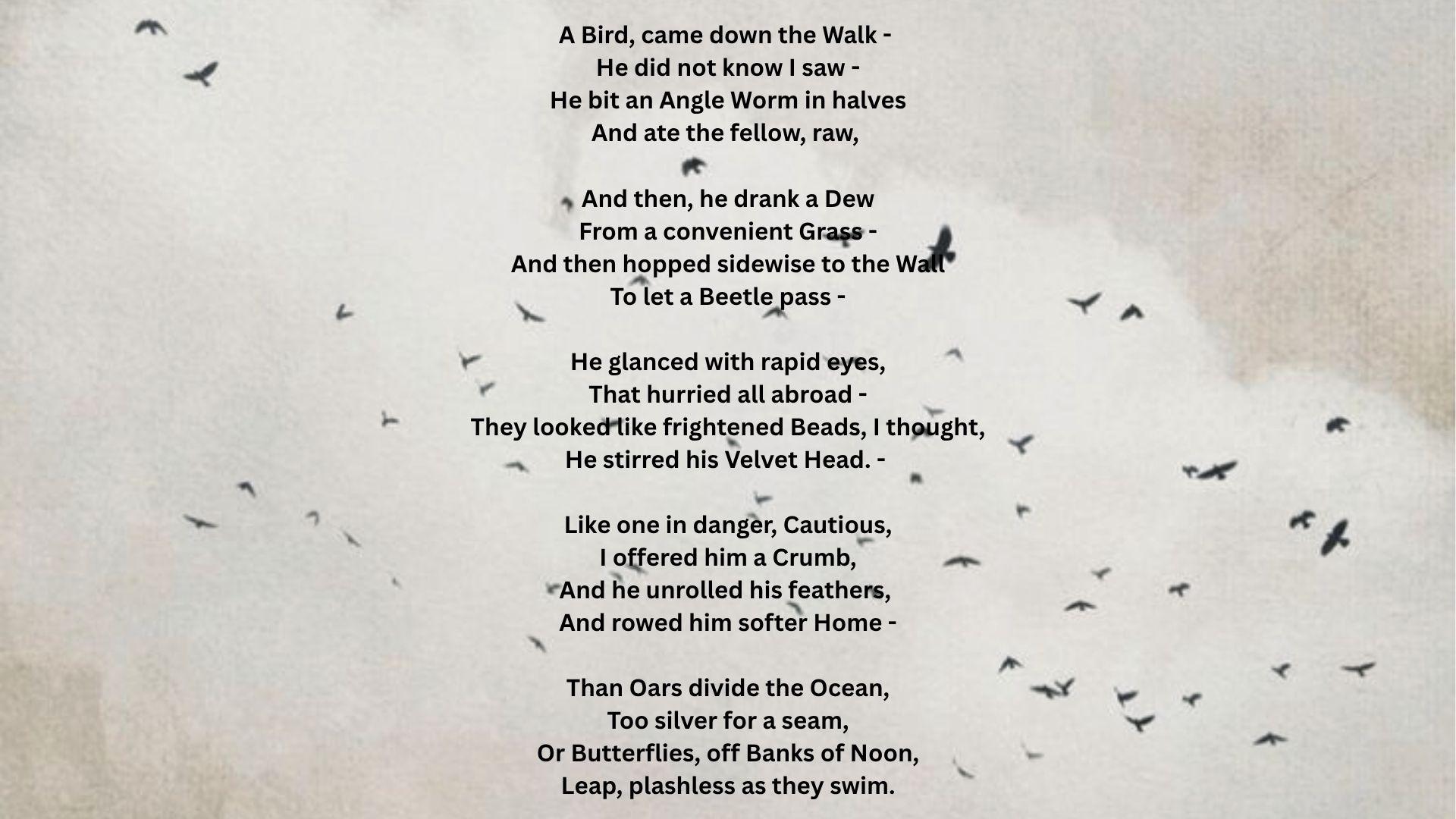
A small, precise nature poem. A bird eats a worm, drinks dew from a blade of grass, and then flies away when the speaker tries to offer a crumb.
The details are exact. The ending, the bird flying, is described as effortless and free in a way a rowing boat in water could never match. It is a poem about wildness that cannot be tamed.
8. The Brain Is Wider Than the Sky
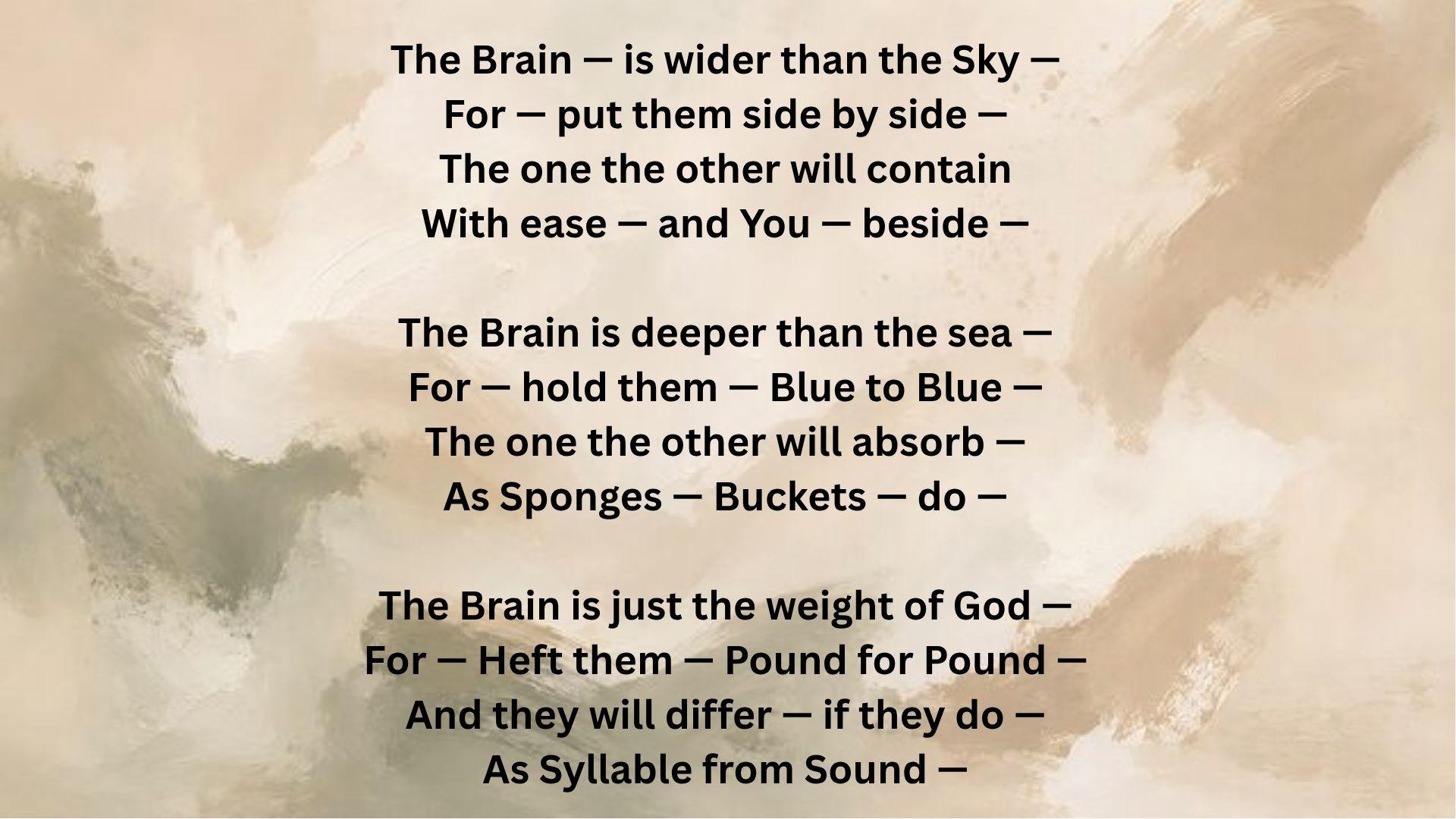
Dickinson says the brain contains the sky, the sea, and even God. The human mind is not smaller than the universe.
It holds the universe. It is one of her most confident poems. She is not asking permission to claim this. She is just stating it.
9. I Felt a Funeral in My Brain
This poem puts you inside a mental breakdown, or possibly the moment of death. The imagery is a funeral happening inside the speaker’s own head.
Mourners stamp, a service drones on, a coffin is carried. At the end, something breaks and the speaker falls through into nothing. It is one of her darkest and most psychologically precise poems.
10. This Is My Letter to the World
Dickinson knew most of the world would never read her during her lifetime. This poem accepts that.
She writes to a world that never wrote back to her, and she asks that her message be judged gently. It is quiet, not bitter. Just honest.
11. Much Madness Is Divinest Sense
She is flipping the labels. What society calls madness may actually be the clearest thinking. What gets called sense is often just conformity.
Agree with the majority and you are called sane. Disagree and you are dangerous. She wrote this in the 1860s. It still reads like today.
12. After Great Pain a Formal Feeling Comes
This poem captures how people go numb after a major loss. You do not cry. You do not feel. You just go through the motions. Nerves sit ceremoniously like tombs. The heart keeps asking if it was really that bad.
The whole thing ends like freezing to death, first a chill, then surrender, then letting go. It is grief written with clinical precision.
13. Safe in Their Alabaster Chambers
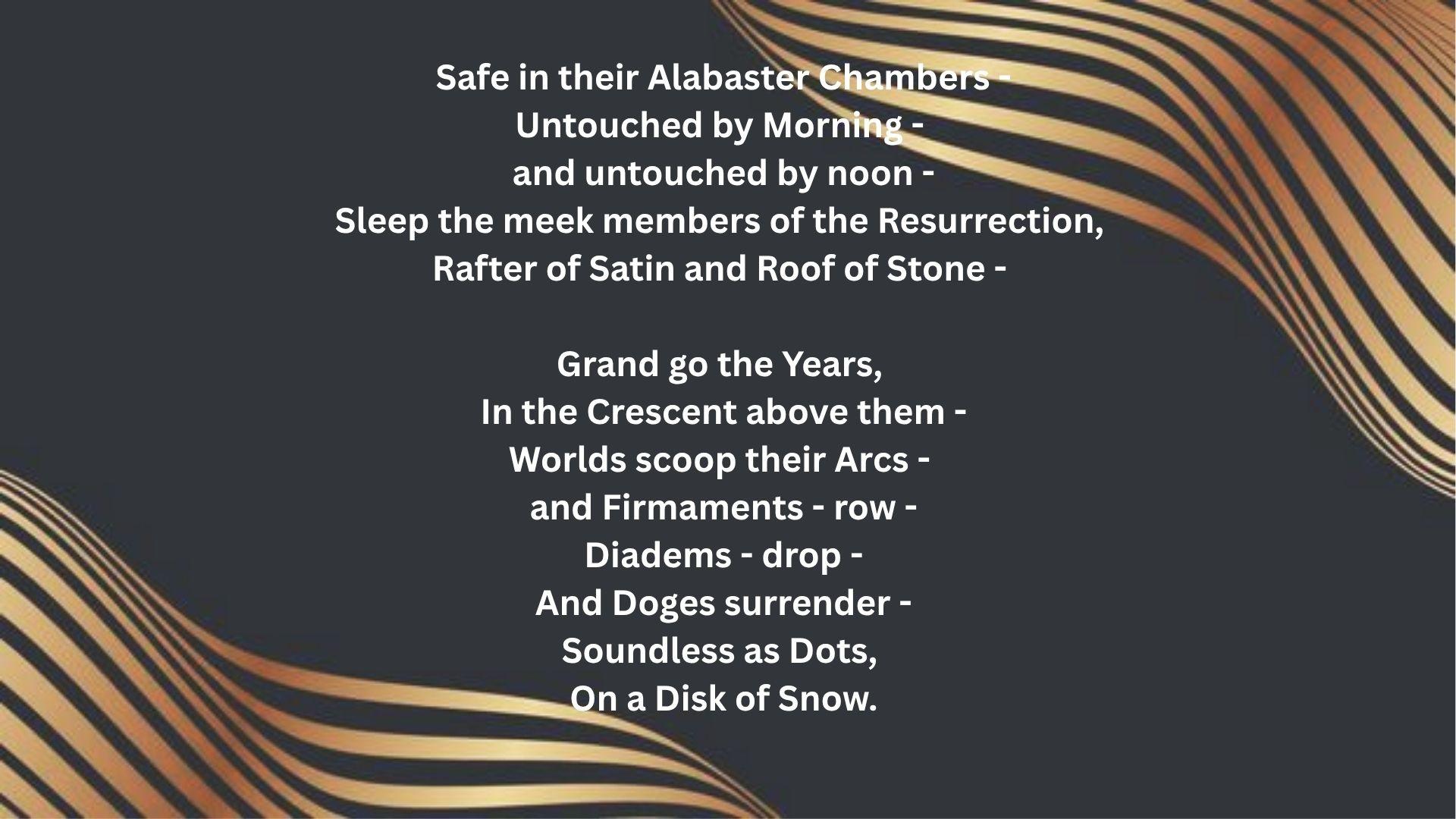
The dead lie still in their sealed tombs while the whole world keeps moving. Birds sing, breezes blow, morning comes and goes.
The poem has two versions. In both, the contrast between the frozen dead and the living, moving world is the entire point. It is slow and cold and very still.
14. In This Short Life

One of her smallest poems. She asks how much of life we actually get, and suggests the answer is not very much. It reads like a sigh more than a statement. Very few words, very much weight.
15. The Sky Is Low, the Clouds Are Mean
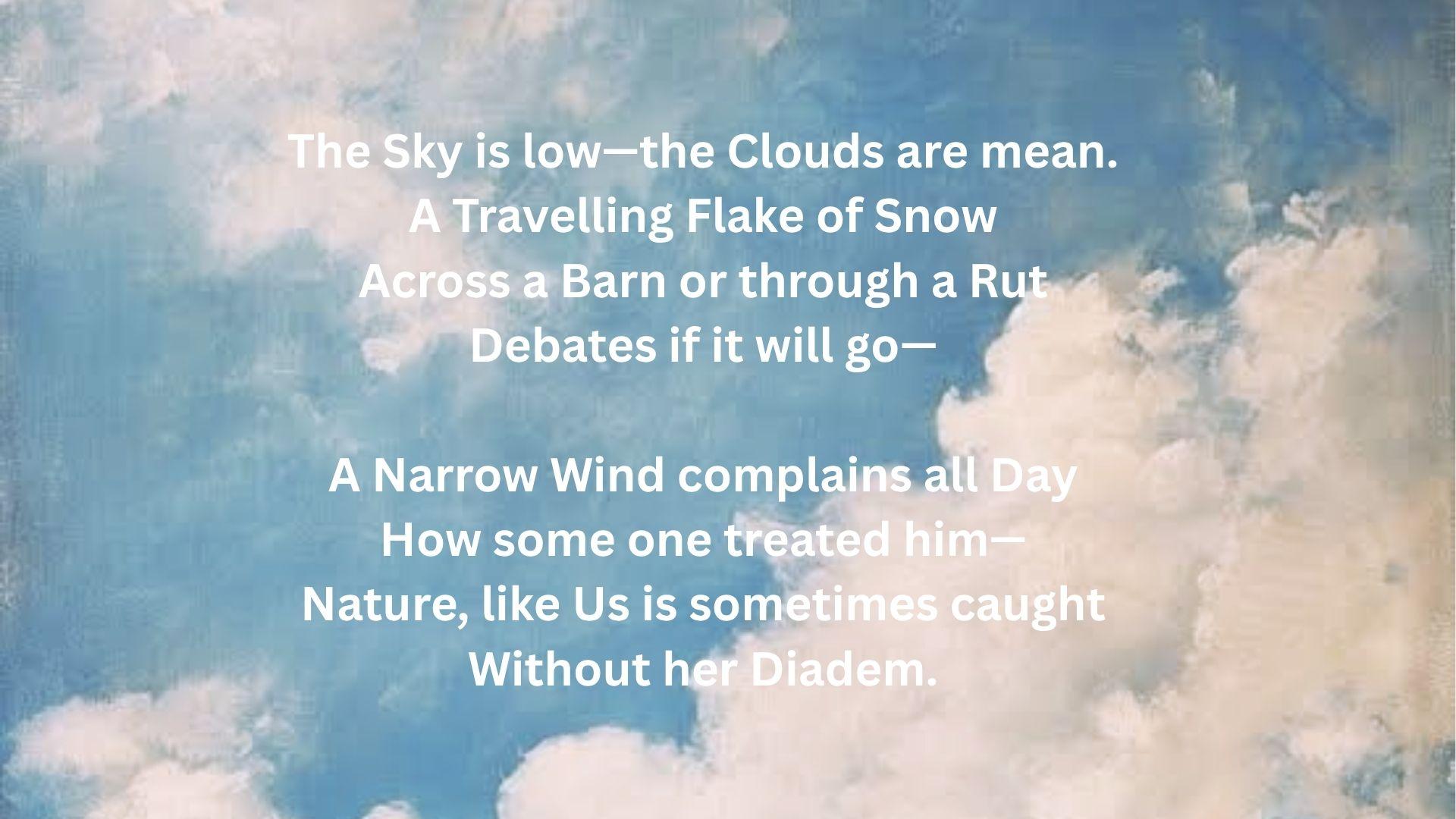
A late autumn poem. The sky presses down, clouds are described as mean, nature feels irritable and grey.
Then suddenly a purple creature offers a small piece of news and the whole scene shifts. It is a poem about how one small, odd detail can cut through the dreariness of a bad day.
Why These Poems Outlasted an Entire Century
Dickinson died in 1886 with almost no public recognition. No fame, no readership, no legacy she could see.
And yet here you are, reading her work now. That does not happen by accident. It happens because she wrote about things that do not age.
Hope does not age. Death does not age. The feeling of being nobody in a world that rewards being somebody does not age. That is the real reason these poems still hit.
Final Thoughts
Emily Dickinson short poems are proof that length has nothing to do with impact.
She wrote in a small room, shared almost nothing while alive, and still managed to say things that nobody else has said better.
You now have 15 of her strongest short poems with clear explanations you can actually use. Read a few again slowly.
If one stays with you, share it. And if you want more poets who wrote big ideas in small spaces, check out our other poetry guides.
Frequently Asked Questions
Did Emily Dickinson write poems about love?
Yes. Poems like “Wild Nights” show clear romantic longing, though she rarely named the subject of her feelings directly.
Why did Emily Dickinson not publish her poems?
She submitted a few early poems but received little encouragement. She continued writing privately without seeking publication for most of her life.
Are these poems good for memorisation or school?
Yes. Most of her short poems are under 16 lines and use a rhythmic pattern that makes them easy to memorise. They are widely used in middle school, high school, and college English classes.
What themes run through Emily Dickinson’s short poems?
Death, hope, nature, identity, faith, and the limits of language. She returned to these themes repeatedly across her 1,800 poems, each time from a slightly different angle.