


Most poetry lists give you a title and move on, with no context and no reason to care. Richard Wilbur's poems deserve better.
I've read through his major collections and ranked the five poems that matter most. The ranking is based on how often each poem is anthologised and taught, how much critical attention it draws, and how well it holds up on a first read. You'll also see what set his style apart, plus a short beginner's list if you're new to him.
Quick answer: Richard Wilbur's best-known poems are "Love Calls Us to the Things of This World," "The Writer," "Boy at the Window," "Advice to a Prophet," and "A Baroque Wall-Fountain in the Villa Sciarra." Three of the five come from Things of This World (1956), the collection that won his first Pulitzer Prize.
Who Was Richard Wilbur?

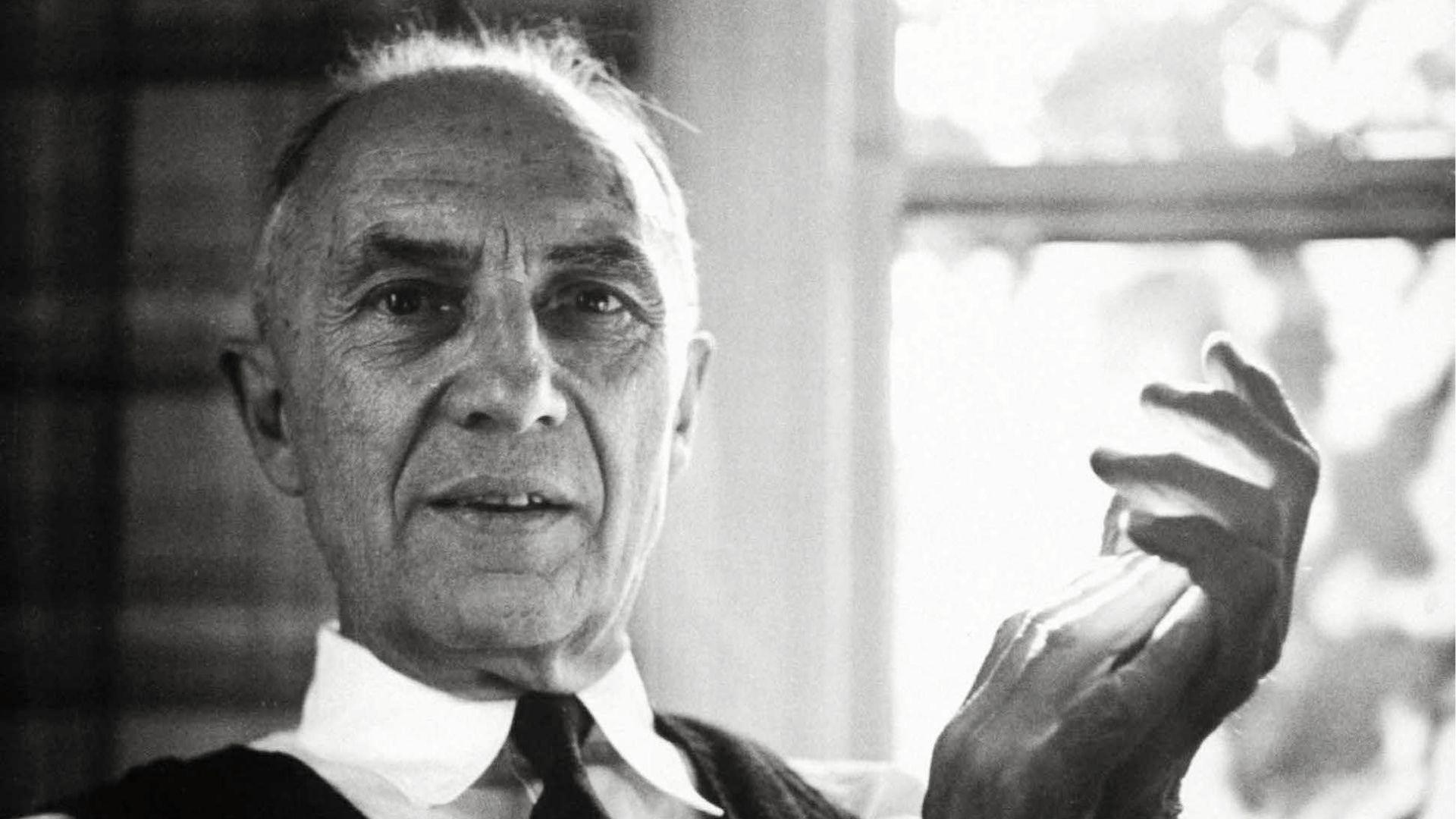
Richard Wilbur (1921–2017) was an American poet and translator, the second US Poet Laureate, and a two-time Pulitzer Prize winner. He was known for formal, rhymed verse at a time when many of his peers were abandoning it.
He was born on March 1, 1921, in New York City and grew up in rural New Jersey. After graduating from Amherst College in 1942, he served as an Army cryptographer in North Africa, Italy, and France during World War II.
That is when he began writing poetry seriously. His first collection, The Beautiful Changes and Other Poems, appeared in 1947.
He went on to teach at Harvard, Wellesley, Wesleyan, and Smith College, and returned to Amherst late in his career.
He won the Pulitzer Prize twice: in 1957 for Things of This World, which also won the National Book Award, and in 1989 for New and Collected Poems (1988). In 1987 he became the second Poet Laureate of the United States, succeeding Robert Penn Warren.
Beyond his own poems, he translated Molière, Racine, and Corneille into English verse, and wrote lyrics for Leonard Bernstein's musical Candide.
He died on October 14, 2017, in Belmont, Massachusetts, at the age of 96.
What Makes Richard Wilbur's Poetry Different?
Wilbur wrote in meter and rhyme just as the loudest American poetry was heading the other way. Robert Lowell and Sylvia Plath were turning to raw, confessional work. Wilbur kept to stanzas, rhyme schemes, and careful sound, and made the form look effortless.
That choice sometimes left him out of step with critics who wanted louder, more personal poems. It's also why his work reads so cleanly today. Three habits show up again and again:
- He starts with an ordinary object, like laundry, a snowman, or a fountain, and lets it open onto a larger question.
- He balances the spiritual and the physical instead of choosing one over the other.
- He lets wit and precise sound carry the emotion rather than stating it outright.
Richard Wilbur's Most Famous Poems, Ranked
These are the poems that show up in anthologies, classrooms, and critical essays, and for good reason.
| Rank | Poem | Collection (Year) | What It's About | Best For |
| 1 | Love Calls Us to the Things of This World | Things of This World (1956) | Laundry on a line seen as angels at dawn | Readers who want Wilbur at his best |
| 2 | The Writer | The Mind-Reader (1976) | A father listening to his daughter write | Anyone who writes, or parents a writer |
| 3 | Boy at the Window | Things of This World (1956) | A boy and a snowman pitying each other | First-time readers |
| 4 | Advice to a Prophet | Advice to a Prophet and Other Poems (1961) | What nuclear loss would really cost us | Readers drawn to big questions |
| 5 | A Baroque Wall-Fountain in the Villa Sciarra | Things of This World (1956) | Two fountains, two ways to live | Readers ready for a longer poem |
1. Love Calls Us to the Things of This World (1956)
This is the poem most people point to when they talk about Wilbur at his best.
It opens in the drowsy, hypnopompic moment just after waking. The speaker sees laundry on a line outside the window and imagines the sheets and clothes as angels in flight.
Midway through, the soul shrinks from the day ahead and cries out: "Oh, let there be nothing on earth but laundry." That one line tells you what the soul wants: a world of pure, weightless things.
The poem asks how we return to the physical world after a night of dreams. Its answer is love: the soul "descends once more in bitter love" to accept the waking body.
For the full reading, see our stanza-by-stanza analysis of Love Calls Us to the Things of This World.
2. The Writer (1976)
This one lands hardest if you've ever watched someone you love struggle to find their own voice.
Wilbur wrote it about his daughter working on a story in her room. He pauses in the stairwell outside, listening to the stop-and-start clatter of her typewriter, and thinks about what it means to work something out in writing.
The poem turns midway when he remembers a starling that once got trapped in that same room.
It battered itself against the glass before it finally found the open window. That image becomes the heart of the poem: writing as a fight for freedom.
Early on, he wishes her "a lucky passage." By the end, he repeats that wish, only harder.
It's personal without being sentimental, and the formal structure gives the emotion more weight, not less.
3. Boy at the Window (1956)
A short poem, but one that stays with you.
In two rhymed, eight-line stanzas, a small boy looks out at a snowman standing alone in the dusk and weeps for it.
Wilbur gives both of them a perspective, and that's where the poem gets interesting. The child feels sorry for the snowman left out in the cold.
The snowman, in Wilbur's telling, is "content," with "no wish to go inside and die." Still, he melts enough to shed a tear for the boy, surrounded by "such warmth, such light, such love, and so much fear."
It's a poem about pity that works in both directions. Each one worries about the other, and each is wrong about what the other needs.
4. Advice to a Prophet (1961)
Written during the Cold War, this one has lost none of its relevance.
Wilbur argues that you can't scare people into caring about nuclear destruction just by describing its scale. Numbers and catastrophe don't move us. What does move us is the loss of specific, tangible things: the white-tailed deer, the lark, the jack-pine, the trout in the stream.
Wilbur asks the prophet to "speak of the world's own change" instead of abstract destruction. That shift from scale to specificity is the whole argument of the poem.
The lesson for anyone trying to make people care: show them what they'd actually lose.
5. A Baroque Wall-Fountain in the Villa Sciarra (1956)
This is one for readers who want to see Wilbur working at full stretch.
The poem describes an ornate fountain in a Roman garden. Then it becomes a meditation on two ways of living: the extravagant, over-decorated fountain versus the plain, upward jets of Carlo Maderno's fountains in St. Peter's Square.
He describes the fountain's figures as caught in "a saecular ecstasy," a worldly pleasure that renews itself endlessly. Then he asks whether that pleasure is enough.
Wilbur isn't just describing art. He's asking what a good life looks like, and whether simplicity or richness gets us closer to it.
It's longer and more demanding than the other poems here, but it shows his full range. The poet-critic Randall Jarrell counted it among the most nearly perfect poems any American had written.
Best Richard Wilbur Short Poems for Beginners
If you want to start reading his work without committing to longer pieces, these are the right entry points.
Boy at the Window is the obvious first choice. It's short, clear, and gives you a good feel for how Wilbur builds meaning from a small moment. You can read it in under two minutes and keep thinking about it for an hour.
A Barred Owl, from Mayflies (2000), is only 12 lines long. Parents soothe a child frightened by an owl's call, and the poem quietly asks what comforting words leave out. It asks little of you on a first read and rewards a second one.
A Fire-Truck shows his lighter side. It's a burst of delight at speed and noise that, for a moment, knocks every thought out of the speaker's head.
If you've tried poetry before and found it slow or hard to connect with, start with Boy at the Window. Read it twice. That's usually enough to show you what Richard Wilbur's poems are really doing.
Why Richard Wilbur's Poems Still Hold Up
Wilbur's poems hold up because he built them to last. From "Love Calls Us to the Things of This World" to "The Writer," his best work shows what formal verse can do in the hands of someone who believes in it: precision, wit, and real feeling in the same poem.
If you're new to him, start with "Boy at the Window," then read "The Writer." When you're ready to go deeper, our full analysis of Love Calls Us to the Things of This World walks through his most famous poem line by line.
Tell us in the comments which Wilbur poem you're starting with. If "The Writer" stays with you, read Robert Hayden's "Those Winter Sundays" next. It's another mid-century American poem about a parent's quiet love.
Frequently Asked Questions
What Is a Famous Quote by Richard Wilbur?
His most quoted phrase is the title "Love Calls Us to the Things of This World." It isn't a line inside the poem. It echoes a passage in St. Augustine's Confessions about love drawing the soul back to the physical world.
What Are Richard Wilbur's Poems About Love?
Wilbur treats love as grounded and physical rather than abstract. Try "A Simile for Her Smile" (1950) for romantic love, "The Writer" for a parent's love, and "The House," a late poem about his wife.
Was Richard Wilbur a Confessional Poet?
No. While Robert Lowell and Sylvia Plath wrote openly about their private lives, Wilbur preferred formal, outward-looking poems about shared experience. His later work grew more personal, but he never adopted the confessional mode.
Which Richard Wilbur Collection Should I Read First?
Collected Poems 1943–2004 is the most complete single volume, covering about sixty years of work. If you'd rather start with one original collection, choose Things of This World (1956), which contains three of the five poems ranked here.