

In Chapter 1 of Lord of the Flies, titled “The Sound of the Shell,” two English schoolboys, Ralph and Piggy, meet on a deserted island after a wartime plane crash.
They find a conch, blow it to gather the other survivors, and vote Ralph their chief, while Jack Merridew is left to lead the hunters.
No adults, no rules, and a leader chosen partly because he holds a shell: it sounds like an adventure, yet the cracks show within pages.
This Lord of the Flies chapter 1 summary covers the plot, the characters, the key events, the climax, and who should read the book.
If you like classics about fragile order, try our Fahrenheit 451 book review next.
Lord of the Flies Chapter 1 Summary From Start to Finish
The chapter unfolds in four stages, from a chance meeting at a lagoon to a climb that ends with a failed kill. Jack’s vow over that piglet pays off in our Chapter 4 summary, when he finally makes his first kill.
Ralph and Piggy Meet at the Lagoon
The novel opens with a fair-haired boy named Ralph picking his way down through a long scar of smashed trees toward a lagoon.
A heavy, bespectacled boy with asthma, soon known as Piggy, catches up with him, and their talk explains the situation: A plane carrying English schoolboys away from a war has been shot down and has crashed on a tropical island, with no adult in sight.
Ralph is so thrilled that he stands on his head, but Piggy fears the adults back home may be gone, because he recalls talk of an atom bomb.
Ralph insists that his father, a naval officer, will come to rescue them. Piggy then confides that he hates his school nickname, which is “Piggy,” and Ralph, amused, starts using it at once.
The Conch Calls the Boys Together
At the lagoon, Piggy spots a cream-colored conch shell and explains how to blow it, and after a few tries Ralph sends a deep blast across the island. Boys straggle onto the beach, starting with a six-year-old named Johnny, until the group spans roughly six to twelve years old.
The twins Sam and Eric are among the last to arrive, followed by a column of choirboys in black cloaks and caps led by a red-haired boy named Jack Merridew.
Jack had expected an adult to be in charge, and finding none, he says the boys must look after themselves.
The Vote for a Chief
A choirboy named Simon faints, Jack tells Piggy to be quiet and calls him Fatty, and Ralph blurts out the nickname Piggy begged him to keep secret, which sets the boys laughing at Piggy’s expense.
When Ralph says the group needs a chief, Jack claims the job, and Roger calls for a vote.
The choirboys vote for Jack, everyone else votes for Ralph, and Ralph wins. To soothe Jack, he puts him in charge of the choir, which Jack declares will be the hunters.
The Exploration of the Island
Ralph then picks Jack and Simon to explore the island and leaves Piggy behind despite his protests.
On the climb they push a huge boulder loose and watch it crash into the forest, and from the top of the mountain the three see water on every side, and Ralph declares the island theirs. On the way back they find a piglet tangled in creepers.
Jack draws his knife but hesitates, the piglet escapes, and Jack drives the knife into a tree trunk and vows that next time he will not hold back.
Characters Introduced in Lord of the Flies Chapter 1
The main characters in Chapter 1, and the ones any Lord of the Flies chapter summary should cover, are Ralph, the fair-haired boy who becomes chief; Piggy, the asthmatic, bespectacled thinker who knows what the conch can do; Jack Merridew, the red-haired head chorister who wants to lead; and Simon, a quiet choirboy.
Ralph
Ralph is about twelve, tall, athletic, and quick to enjoy an island without adults. He is friendly but careless, ignoring Piggy at first and then giving away his secret in front of everyone.
The narration suggests he wins the vote on size, looks, and above all the conch in his hands, none of which measures judgment.
Piggy
Piggy is overweight, wears thick glasses, and has asthma, which keeps him out of the water.
His father is dead and he lives with his aunt, and he has the practical mind the group needs, since he works out what the conch can do and thinks to collect everyone’s names.
The novel never gives his real name, and the way the boys treat him becomes a quiet gauge of how the group is behaving.
Jack Merridew
Jack is the head boy and chapter chorister at his school, and he arrives leading the choir in marching order, still in black cloaks and caps despite the heat.
He claims the right to be chief because, in his words, he can sing C sharp, a sign of how arbitrary his claim is.
He loses the vote, takes command of the hunters, and proudly shows off a large sheathed knife.
Simon, Roger, and the Rest
Simon faints when the choir arrives, then joins Ralph and Jack on the exploration, where the other two largely talk over him.
Roger is the boy who proposes the vote, and Johnny is the first to answer the conch. Readers who want another English story about children in a closed world can compare it with our Never Let Me Go review.
Key Events in Chapter 1 and the Themes They Introduce
Chapter 1 moves quickly, but three threads carry most of its weight, and each one comes back later in the novel.
The Conch and the Pull of Civilization
The crash left a long scar through the jungle, and the war behind it makes rescue uncertain from the start, so the boys’ first instinct is to rebuild what they know.
The conch is the tool for that. In this chapter it only summons the boys, and Ralph is holding it when he says they need a chief, but it grows into a symbol of order, and it is smashed in Chapter 11 at the moment Piggy is killed.
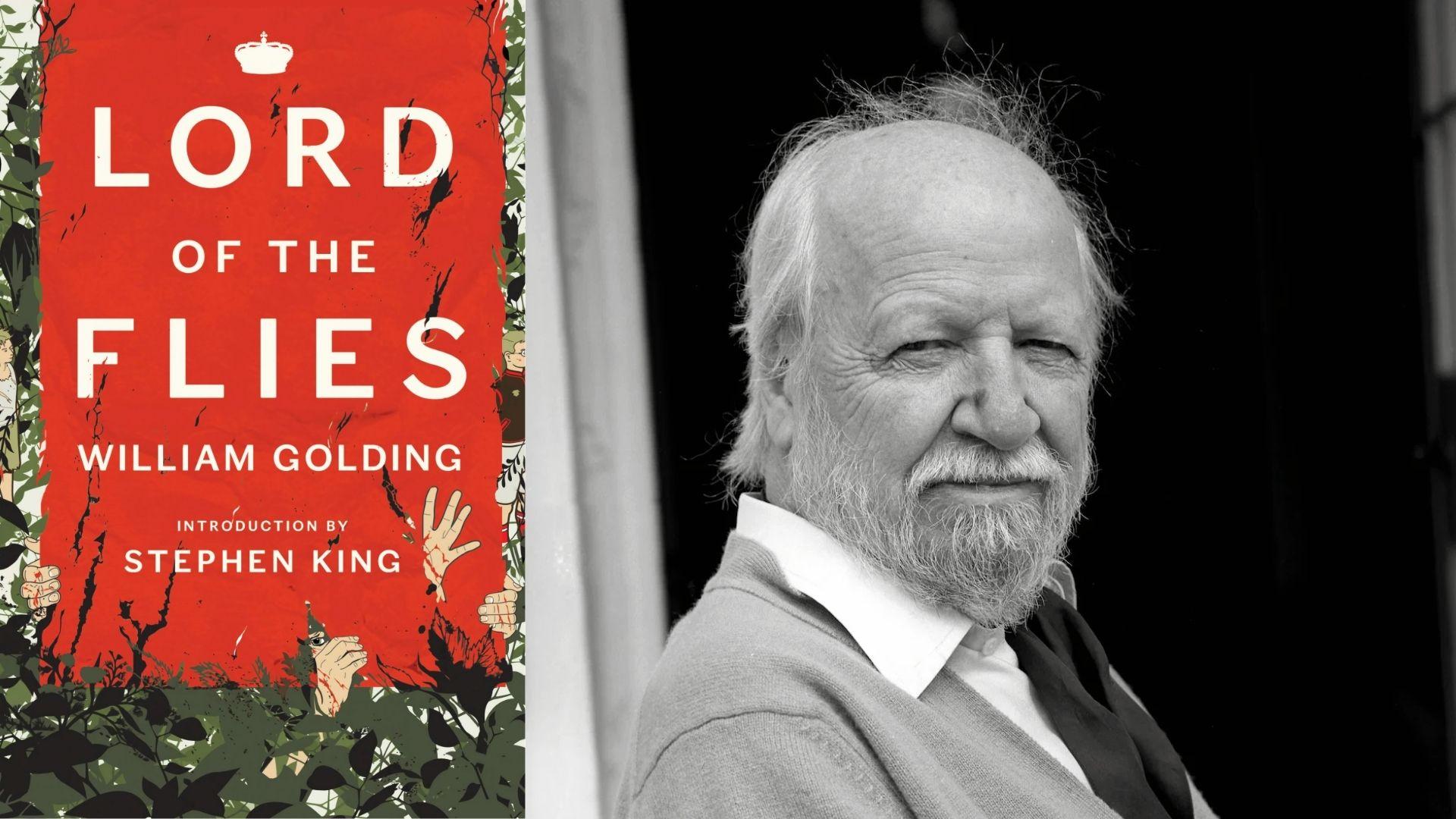
Faber and Faber published the novel in September 1954, less than a decade after World War II, and the official William Golding website confirms the date and notes that Golding won the Nobel Prize in Literature in 1983.
Piggy and the Treatment of the Weak
Ralph spreads Piggy’s secret and the group laughs, which marks Piggy as the boy it is safe to mock.
Nothing about his thinking is wrong, since he works out the conch and wants the names recorded, yet his body and manner make him the easy target.
The pattern hardens quickly: in Chapter 4 Jack hits him and breaks his glasses, and in Chapter 11 Piggy walks to Castle Rock to demand his stolen glasses back, which ends in his death.
Jack, the Piglet, and the Pull of Savagery
Jack’s humiliation at the vote and his vow over the piglet feed each other. In Chapter 4 he paints his face, which lets him hide from shame, and he kills his first pig.
While the hunters are away, the signal fire goes out and a ship passes, so the cost of Jack’s hunger is not only a dead animal but a lost chance at rescue.
The Climax of Chapter 1: The Vote and the Piglet
The climax of Lord of the Flies Chapter 1 comes in two beats: the election, where Ralph wins leadership and Jack is humiliated, and the piglet scene, where Jack raises his knife, cannot strike, and vows that next time he will not hesitate.
Why the Election Is the Turning Point
The vote matters because it shows how readily the boys fall back on adult habits, and how little those habits guarantee. Piggy is the clearest thinker on the beach and Jack the most obvious leader, yet Ralph takes the job, and his answer is a compromise:
Jack gets the choir as hunters. Keeping order, the scene suggests, sometimes means bargaining with the instincts that threaten it.
Jack and the Piglet as the Emotional Peak
The piglet scene turns that tension physical. The boys all understand why Jack freezes: the weight of cutting into living flesh and the sight of blood.
His vow, and the knife driven into the tree, tell the reader that a choirboy’s restraint will not last.
The Boulder Echo in Chapter 11
There is also an echo worth watching for. In Chapter 1, the three explorers push a boulder loose on the climb as a game, delighted by it.
In Chapter 11, Roger sends a boulder down from Castle Rock, killing Piggy and shattering the conch, which is the novel’s larger climax.
Who Should Read Lord of the Flies
Lord of the Flies suits students studying allegory, readers who enjoy survival stories with a psychological edge, and teens and adults ready for dark themes, and Common Sense Media’s book review recommends it for ages 12 and up, mainly because of its violence.
Students, Book Clubs, and Survival-Story Fans
The novel rewards slow reading, with its symbols, its political parallels, and a hard question about how thin the line between order and chaos can be.
Common Sense Media calls it a staple of school reading lists while noting that some of its views of savagery feel dated and deserve discussion.
If you like stories that ask what people do when the rules disappear, this classic is worth the time.
Age Guidance and Content Notes
The violence arrives gradually. Chapter 1 has no deaths, so it is an easy place to test whether Golding’s style suits you.
Later chapters include the killing of Simon and the death of Piggy, plus a pig hunted in graphic detail, and many kid reviewers on the same site say it suits readers 15 and up.
What Chapter 1 Tells Us About the Rest of the Book
The short version of this Lord of the Flies chapter 1 summary is that a group of stranded boys build a small society within a few pages and plant the seeds of its collapse at the same time.
Ralph gets the conch and the title of chief, Piggy gets the ideas and the insults, and Jack gets a knife, a grudge, and a vow. Keep an eye on the conch, the hunters, and Piggy as you read on, because each of them carries Chapter 1’s promises forward.
When you finish, move on to Chapter 2, “Fire on the Mountain,” where Ralph calls the boys together with the conch again and the problems of living without adults begin to show.
Frequently Asked Questions
Why Does the War Matter in Lord of the Flies?
Study guides such as CliffsNotes read the wartime setting as Golding’s argument that the boys’ behavior mirrors the adult world, and that the capacity for cruelty exists in everyone, not only in children. The grown-ups who sent the boys away were fighting a war of their own.
What Is the Scar in Lord of the Flies Chapter 1?
It is the path the plane cut through the jungle, and the boys see it again from the mountain. CliffsNotes reads it as an early warning, since it stays raw like a wound that does not heal, and LitCharts ties Ralph’s claim on the island, scar included, to the violence in human nature.
Why Does Jack Hate Ralph?
Jack’s resentment shows most clearly in Chapter 2, when Piggy insists he is holding the conch and Jack answers that it does not count on the mountain, an early sign he will not be bound by Ralph’s rules. By the later chapters, Jack has split off to lead his own tribe at Castle Rock.
Do the Boys Get Rescued in Lord of the Flies?
Yes. In Chapter 12 a naval officer arrives from a cruiser, an echo of Ralph’s Chapter 1 belief that his naval father would come for them. This answer spoils the ending, so skip it if you are still on Chapter 1.