Robert Frost’s poems have stayed on school reading lists, bookstore shelves, and people’s minds for more than a century.
I’ve read a lot of poetry, and Frost is one of the few poets who makes you feel you already know him. His lines are plain, but they open up once you sit with them. Nothing Gold Can Stay, for example, fits a whole lesson about how the best things fade into eight short lines.
This guide covers his most famous poems, the lesser-known ones worth your time, his writing style, and why his work still connects with readers today.
Key Note:Robert Frost’s five most famous poems are “The Road Not Taken,” “Stopping by Woods on a Snowy Evening,” “Mending Wall,” “Fire and Ice,” and “Nothing Gold Can Stay.” All five are short, set in the natural world, and hide a bigger question under a simple scene.
Who Was Robert Frost and Why Do His Poems Endure?
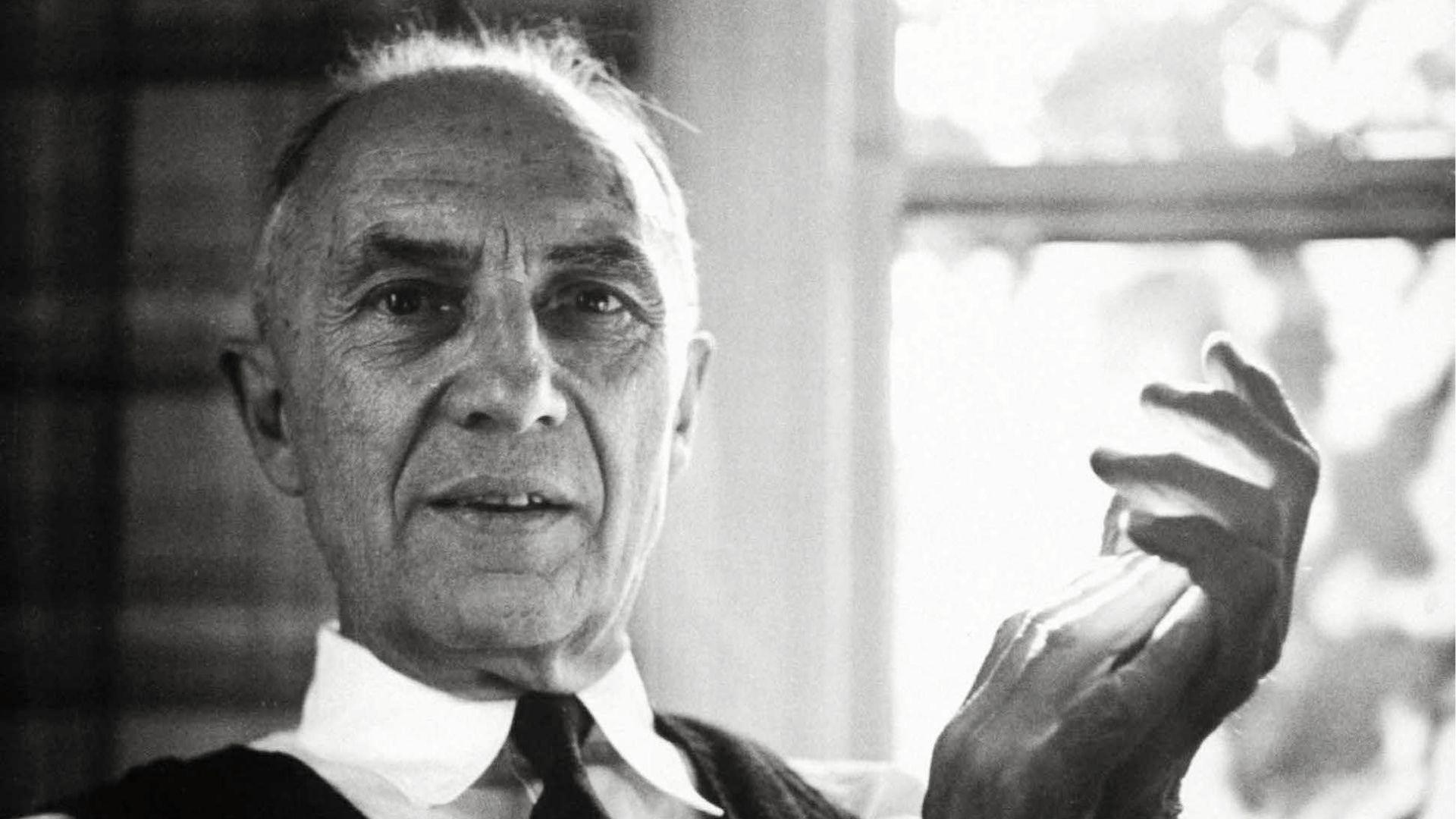
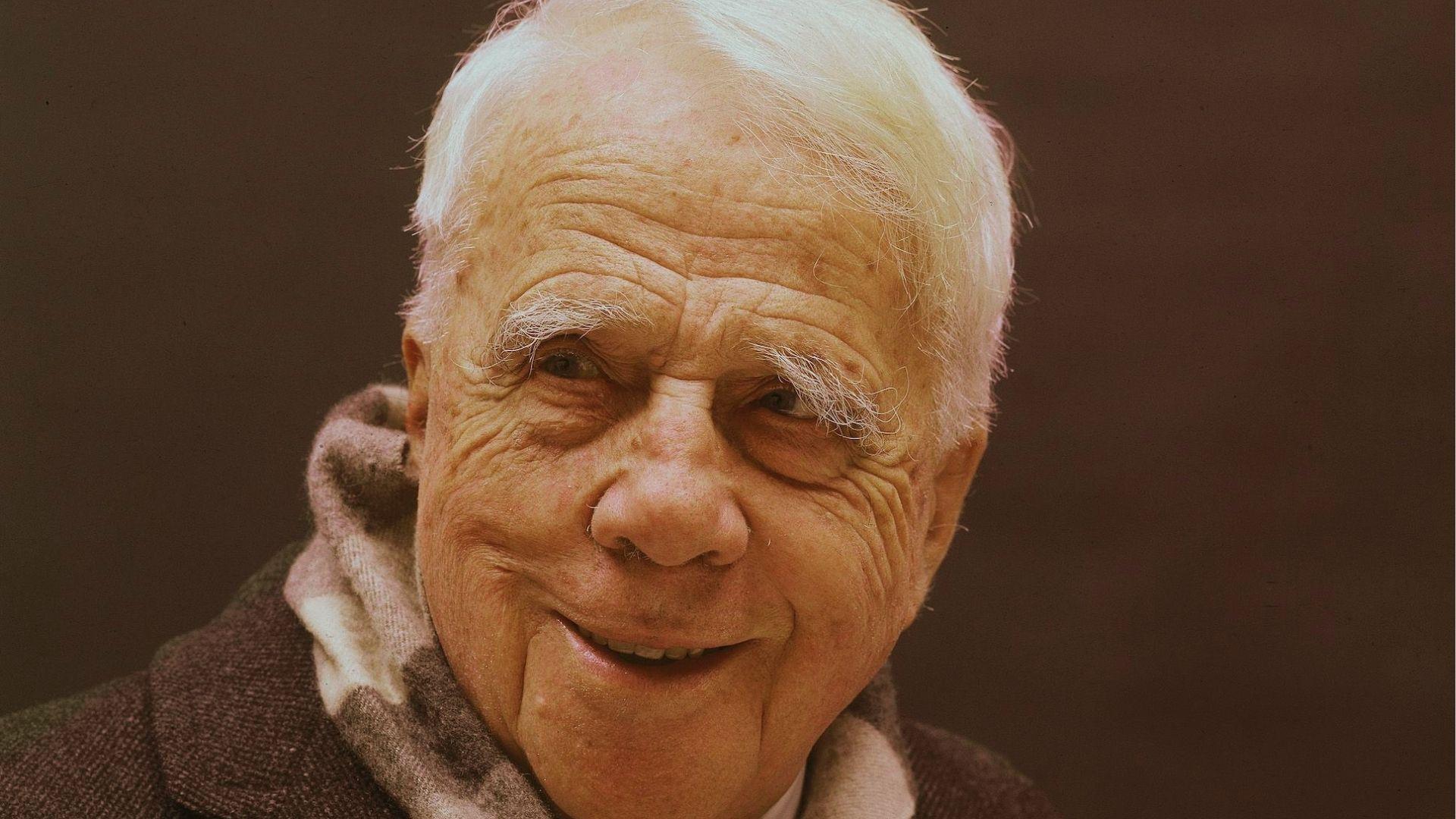
Robert Frost (1874–1963) was an American poet and the only poet to win the Pulitzer Prize for Poetry four times.
He was born on March 26, 1874, in San Francisco and moved to New England at 11, after his father’s death. He spent the rest of his life there, and it shows in everything he wrote. Fences, snowy woods, and country roads aren’t just settings in his poems. They carry the meaning.
He never finished college, leaving both Dartmouth and Harvard without a degree, yet he went on to teach for decades at Amherst and other schools. Frost’s path from college dropout to professor is a story of its own.
He farmed in Derry, New Hampshire, through his twenties and thirties, then found his first real success in England.
His first two books, A Boy’s Will (1913) and North of Boston (1914), were published there. His Pulitzers followed in 1924, 1931, 1937, and 1943. In 1961, he recited “The Gift Outright” from memory at John F. Kennedy’s inauguration.
He wrote the way people actually talk, then shaped that speech into formal verse, which is harder than it sounds.
His poems are easy to spot: a quiet outdoor scene, a small moment, and something heavier underneath. The action stays small. The meaning doesn’t.
The 5 Most Famous Robert Frost Poems (With Key Themes)
These are the poems most people know, and many still misread. Here’s what each one is actually doing.
1. The Road Not Taken (1916)

This may be the most misread poem in American literature. Most people see it as a celebration of taking the unconventional path.
Frost actually wrote it partly to tease his friend, the English poet Edward Thomas, who agonised over which way to go on their country walks.
Both roads in the poem are described as roughly equal, worn “really about the same.” The speaker admits that, years from now, he’ll tell the story with a sigh and claim the road he chose “made all the difference.”
The poem is about how we build meaning from our choices after the fact, not about being brave. It first appeared in Mountain Interval (1916).
2. Stopping by Woods on a Snowy Evening (1923)
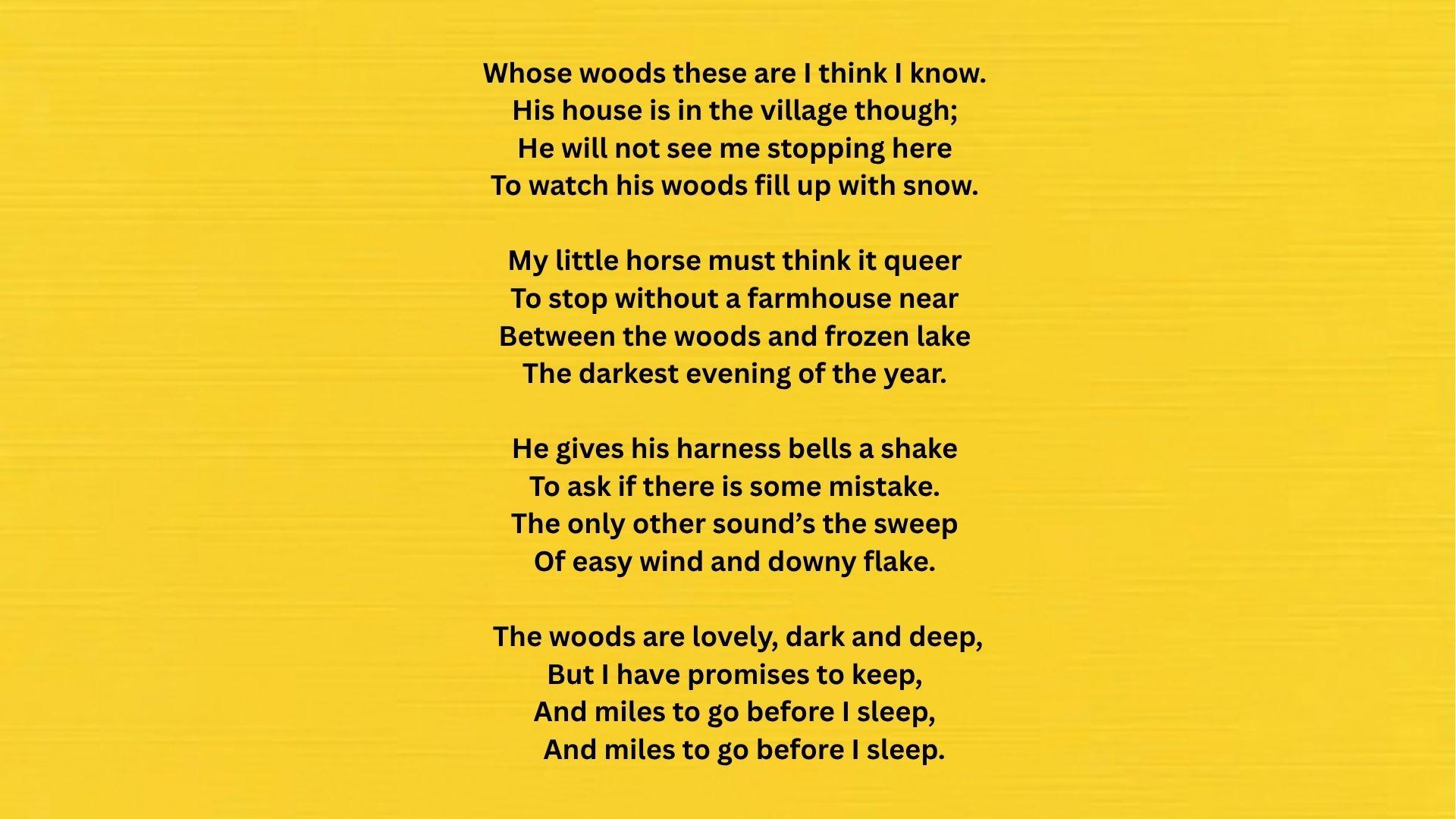
A man stops to watch snow fall in dark, quiet woods. His little horse finds the pause strange and gives its harness bells a shake.
The poem ends by repeating the line “And miles to go before I sleep.” It reads as a man pulled toward stillness, then pulled back by duty.
Some read it as a poem about death. Others read it as pure scene-setting. Both readings hold up, which is part of why it lasts. It was collected in New Hampshire (1923), the book that won Frost his first Pulitzer.
3. Mending Wall (1914)
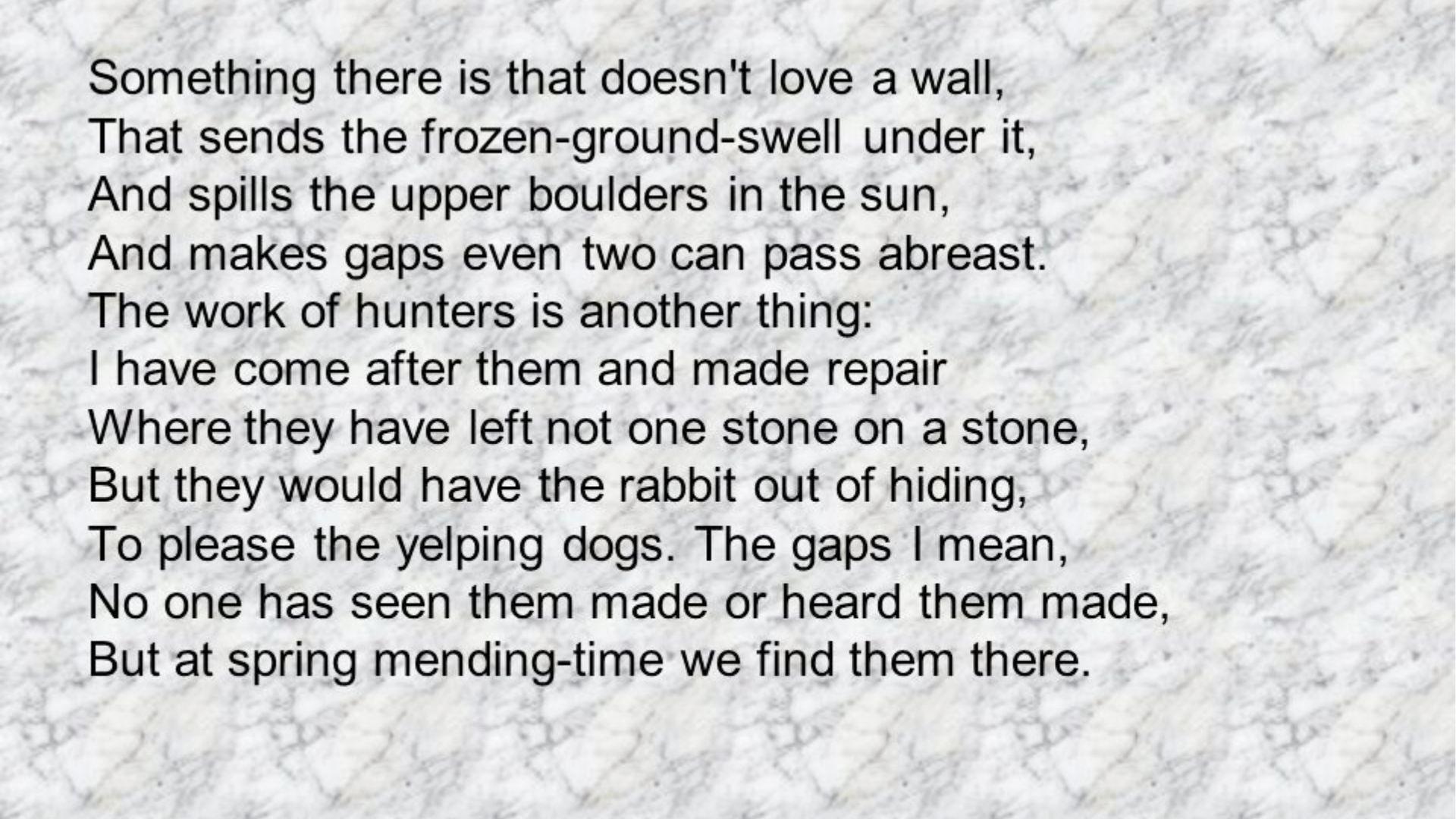
Two neighbours meet each spring to repair the stone wall between their properties. One of them twice repeats a saying he inherited from his father: “Good fences make good neighbours.”
The speaker questions why the wall needs to exist at all, since there are only apple trees on one side and pines on the other. But Frost doesn’t take a clear side. After all, it’s the speaker who calls the neighbour each spring to start the repair.
The poem asks which boundaries we keep out of habit and which ones actually serve a purpose. For a closer reading, see our full breakdown of Mending Wall.
4. Fire and Ice (1920)
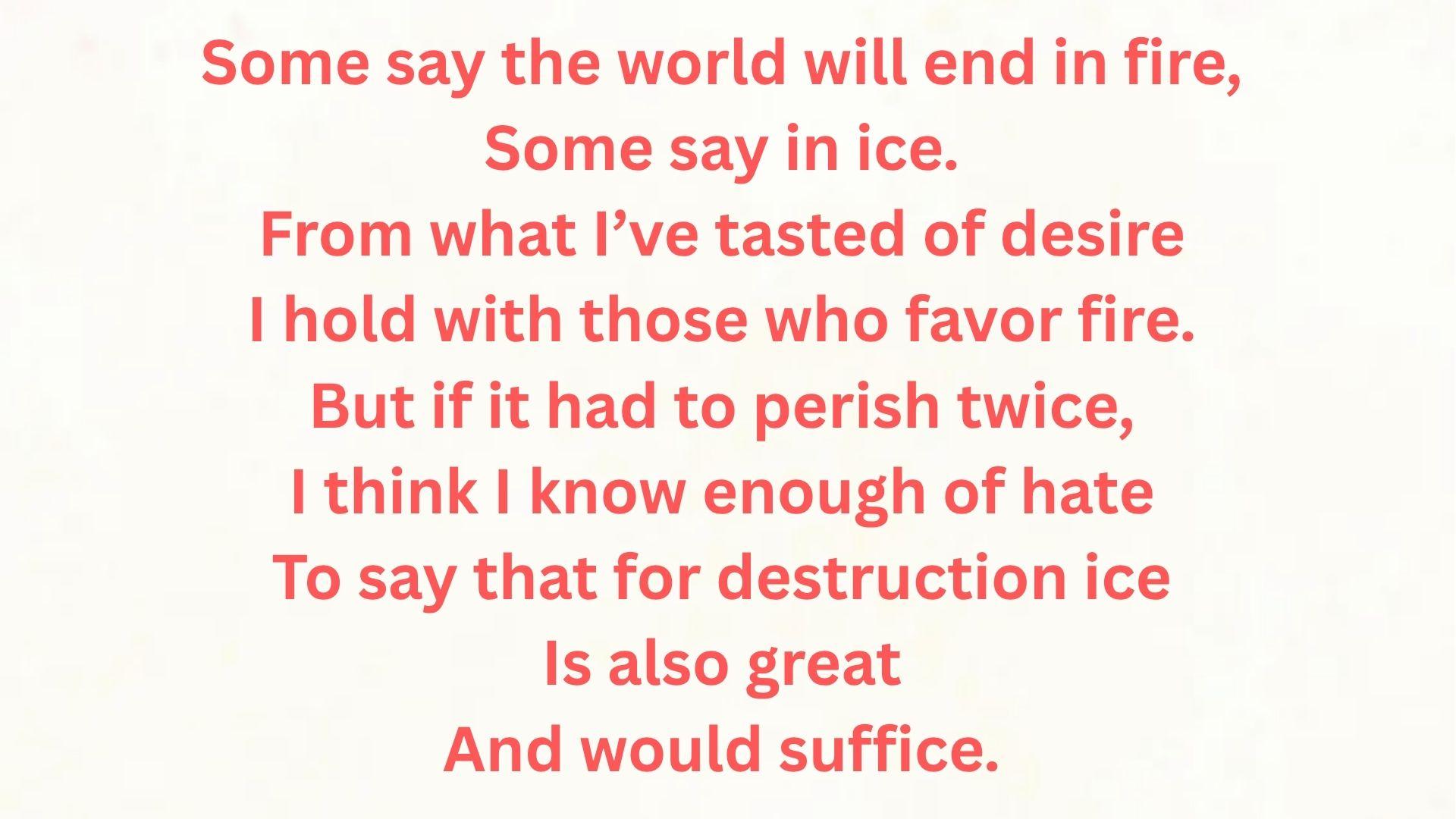
Nine lines. Two ways the world could end: fire, which Frost ties to desire, or ice, which he ties to hate. He concludes that either would do the job.
It’s the kind of poem that looks simple and grows darker the more you think about it. First published in Harper’s Magazine in December 1920, it still feels current.
5. Nothing Gold Can Stay (1923)

Eight lines about how nothing at its best lasts long.
The first green of spring is really gold, and it fades. Dawn gives way to ordinary day. Even Eden didn’t hold. Frost connects the natural world to loss in a way that stays with you.
It’s short enough to memorise in ten minutes and rich enough to think about for years. It also reached a new generation through S.E. Hinton’s The Outsiders, where Ponyboy recites it. Our complete analysis of Nothing Gold Can Stay takes it line by line.
More Robert Frost Poems Worth Reading
Beyond the famous five, these poems show Frost’s wider range.
After Apple-Picking (1914)
A speaker stands at the end of a long day of picking apples, exhausted and starting to drift toward sleep.
The poem blurs the line between ordinary tiredness and something deeper. Published in North of Boston, it’s meditative and slow in the best way.
The Pasture (1914)
Frost often placed this poem at the opening of his collections as an invitation to the reader.
It’s simple: someone heading out to tend the pasture, promising not to be long, and asking you to come too. It works as a literal description and as a gentle welcome into his work.
Dust of Snow (1920)
A crow shakes snow from a hemlock tree onto the speaker below, and that small moment lifts his mood.
In just eight lines, it shows how a tiny thing in the natural world can rescue a bad day. Both the crow and the hemlock usually signal gloom, which makes the change in mood even more striking.
The Runaway (1918)
A young Morgan colt, meeting snow for the first time, panics and bolts along a wall. The speaker watches and wonders who left the horse out to face the season alone.
It’s a quiet poem with an undercurrent of concern that stays with you.
Acquainted With the Night (1928)
This one is darker than most of Frost’s work. A speaker walks alone through a city at night, passing a watchman and hearing a distant cry, and feels profoundly disconnected.
It’s also a sonnet written in terza rima, the interlocking rhyme scheme Dante used. It’s one of the clearest examples of Frost using setting to write about an inner state.
Robert Frost’s Writing Style Explained
Style isn’t just how a poem looks. It’s how it moves and what it leaves behind.
Traditional Form Meets Everyday Speech
Frost worked mostly in traditional forms: sonnets, blank verse, and set rhyme schemes. But the language inside those forms sounds like regular conversation.
He called this “the sound of sense.” The idea is that you can hear meaning in the rhythm of speech, the way you can follow the tone of voices behind a closed door without catching the words.
This tension between formal structure and casual language gives his poems their particular feel. They’re controlled without feeling stiff, and accessible without feeling shallow.
Nature as Metaphor, Not Just Setting
Frost’s woods, walls, and roads aren’t just scenery. They’re doing work. The snowy woods in one poem stand in for temptation or rest. The wall in another stands in for the reasons we give ourselves for keeping distance from other people.
He didn’t write nature poems the way some poets celebrate nature for its own sake. He used the natural world to say something about human experience.
That’s why his poems travel across time and place. The specifics are New England. The meaning isn’t.
Why Robert Frost’s Poems Still Hold Up
Robert Frost’s poems hold up because they meet you where you are. You can read “The Road Not Taken” at sixteen and again at forty and take something different from it each time.
That’s a rare quality in any writing. If you want to go deeper, pick one poem from this list and read it twice: once for what it says and once for what it leaves unsaid.
Then explore the poets who carried his formal tradition forward, starting with our guide to the best Richard Wilbur poems. Got a favourite Frost poem? Drop it in the comments.
Frequently Asked Questions
What Is the Saddest Poem of All Time?
It depends on the reader. Among Frost’s own work, “Home Burial” (1914) is often called his saddest. It follows a husband and wife who grieve their dead child in ways neither can understand. “Out, Out—” (1916), about a boy’s fatal accident with a buzz saw, comes close.
What Are All of Robert Frost’s Poems?
Frost published hundreds of poems across his career, from A Boy’s Will (1913) to In the Clearing (1962). The most complete single volume is The Poetry of Robert Frost, edited by Edward Connery Lathem (1969).
What Themes Does Robert Frost Write About Most?
Frost returns again and again to choice, isolation, nature, duty, and the passage of time. Most of his poems circle one or more of these without ever stating them outright.
Did Robert Frost Win Any Major Awards?
Yes. He won the Pulitzer Prize for Poetry four times, in 1924, 1931, 1937, and 1943, more than any other poet. He was also awarded a Congressional Gold Medal.