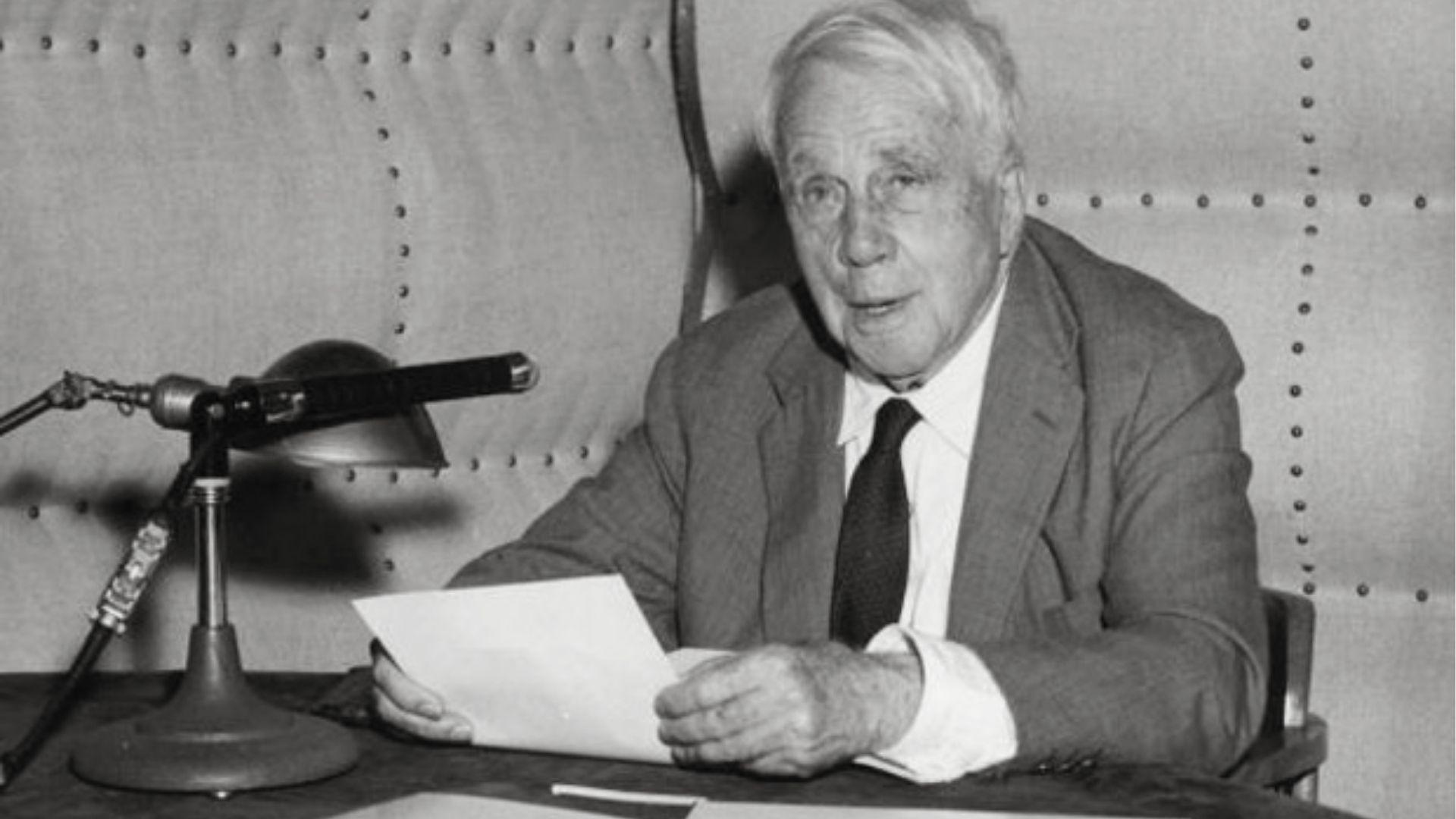
Robert Frost’s education is one of the most interesting stories in American literary history.
He enrolled at Dartmouth at eighteen, walked out after a few months, then tried Harvard and left that too. Never earned a degree. Yet he went on to teach at Harvard, Dartmouth, Amherst, and Michigan, the same institutions that could not hold him as a student.
I find it genuinely remarkable how someone the system kept passing over became one of its most respected voices.
His real classroom was eleven years on a farm in Derry, self-directed reading, and writing his first poem before any college seminar. That farm is also where the Mending Wall poem was born, one of the most read poems in American literature.
If you think formal education is the only path to authority, Frost’s life will make you rethink that. Here is where that story begins.
Robert Frost Education at a Glance
| Detail | Information |
| Full Name | Robert Lee Frost |
| Born | March 26, 1874, San Francisco, California |
| High School | Lawrence High School, Massachusetts, 1892 |
| College Attended | Dartmouth College, Harvard University |
| Degree Earned | None |
| Teaching Career | Pinkerton Academy, Amherst, Michigan, Harvard, Dartmouth |
| Honorary Degrees | 40+ |
Robert Frost and College: The Short Story
Frost attended two colleges, finished neither, and still taught at four of America’s most respected institutions.
He enrolled at Dartmouth in 1892 and lasted less than a semester. The rigid academic routine did not sit well with him and he walked away.
Harvard came next, from 1897 to 1899, but poor health and a growing restlessness pulled him out before he could finish. What filled the years in between was farming in Derry, New Hampshire, reading whatever interested him, and writing steadily.
By the time the literary world took notice, he had already been standing in classrooms for years. No diploma behind him, no formal credential to point to. Just eleven years of land, language, and quiet persistence.
Early Life and Schooling in Lawrence, Massachusetts
Frost grew up in Lawrence, Massachusetts, and showed early signs of the writer he would become.
How His Father’s Death Shaped His Path
William Frost died in 1885 when Robert was eleven. The family moved back to Lawrence with almost no money. College was not a given. It was survival first, ambition second.
Lawrence High School: Class Poet and Co-Valedictorian
Frost graduated co-valedictorian from Lawrence High School in 1892, sharing the honor with Elinor White, who later became his wife. He was also named class poet, a title he earned by actually writing well.
His First Published Poem Before College
Frost published “My Butterfly: An Elegy” in 1894 in The Independent literary journal. He was twenty years old and had not yet sat in a single college class. His writing life started before any of that.
The Derry Farm Years: Where the Real Learning Happened
From 1900 to 1911, Frost lived and worked on a farm in Derry, New Hampshire. His grandfather bought it for him partly out of hope, partly out of concern.
What Rural Life Taught Him That College Could Not
Farming forces you to pay attention to small things. The way light changes over a field. How animals behave before weather shifts. Frost paid that kind of attention and it showed up directly in his poems.
How the Farm Shaped His Voice and Imagery
Lines like “good fences make good neighbors” did not come from a library.
They came from years of working land and watching people who worked land. His language became plain on purpose, words a farmer or mill worker would actually use.
How Frost Taught Without a Degree
Frost spent more of his adult life teaching than farming, and students remembered him as one of the most memorable instructors they ever had.
Pinkerton Academy: Where He First Found His Teaching Style
In 1906, Frost began teaching at Pinkerton Academy in Derry with no degree and no certification.
He got the job through personal reputation and the recommendation of a local minister.
He stayed five years, overhauled the English curriculum, and built a teaching style around conversation rather than lecture.
Amherst, Michigan, Harvard, and Dartmouth
After his time in England, where his first two books were published, Frost returned to the United States with a literary reputation.
He taught at Amherst College from 1917, held positions at the University of Michigan, and returned to both Harvard and Dartmouth, this time as a celebrated figure rather than a struggling student.
What His Students Said?
He rarely lectured. He asked questions and pushed students to defend what they actually thought. One former student said you left his class feeling like you had done the thinking yourself.
What Did Robert Frost Believe About Education?

Frost believed education was about learning to think, not collecting facts.
In 1931, he delivered a lecture called “Education by Poetry” where he argued that poetry teaches you to hold an idea and test it honestly, something most schools never teach because they reward correct answers over honest thinking.
He took it further by saying all thinking is metaphorical. When you say a plan “fell apart” you are using a metaphor without noticing it. Frost believed poetry was the only subject that trained you to notice it consistently.
The Man Who Never Graduated Received Over 40 Honorary Degrees
Frost received more than 40 honorary degrees from institutions including Oxford, Cambridge, Harvard, and Dartmouth.
Both schools he walked away from as a student eventually celebrated him as one of their own. There is something worth sitting with in that.
How Robert Frost’s Education Shaped American Poetry
Because he farmed instead of sitting in seminars, his language stayed grounded. Because he read on his own terms, he absorbed what genuinely interested him.
Because he came to teaching through life rather than a degree, he treated students as people to think with, not containers to fill.
His formal education was incomplete. His actual education went deeper than most credentialed writers ever reach.
The Bottom Line
Robert Frost’s education proves the path to mastery is rarely the straightforward one. He skipped the diploma but not the work. He left two colleges but never stopped learning or teaching.
If his story resonated with you, I think you will find just as much value in reading about how his time in England shaped his first published collections.
Frequently Asked Questions
Did Robert Frost ever marry?
Yes. Frost married Elinor Miriam White on December 19, 1895, his high school co-valedictorian. They had six children together before Elinor passed away in 1938.
What faith was Robert Frost?
Frost was raised Swedenborgian but later identified with Congregationalism. He had a complicated and often conflicted relationship with organized religion throughout his life.
What is Robert Frost’s most famous quote about life?
His most quoted line is “In three words I can sum up everything I’ve learned about life: it goes on.” It remains the line readers connect with most.
Who was Robert Frost influenced by?
Frost was most influenced by the English Romantics, particularly Wordsworth, and by poets Edward Thomas and Rupert Brooke, whom he met during his time in England.