

There are gifts you give as a child that you are genuinely proud of. A drawing. A handmade card. A braided plastic lanyard from summer camp. Billy Collins built an entire poem around that last one and what he found inside it is quietly devastating.
The Lanyard poem is funny, then it isn’t. That shift is worth understanding.
This piece walks through what Collins is really doing beneath the humor, and why the poem has stayed with readers long after they first encountered it.
What Is The Lanyard Poem by Billy Collins About?
“The Lanyard” by Billy Collins is a poem about the impossibility of repaying a mother’s love. It is told through the memory of a boy who once handed her a woven lanyard from summer camp and believed, briefly, that it made them even.
The poem is simple on the surface. A boy makes something at camp. He gives it to his mother. He feels, in that moment, that the ledger is balanced.
Collins knows it isn’t. And so do you, reading it.
That gap between what the boy thinks he’s offered and what his mother has actually given is what the whole poem turns on. The humor isn’t just there to make you smile.
It’s doing something harder than it looks the same way contrast carries all the weight in the Ozymandias poem summary, where the gap between a king’s grand claims and a crumbled statue says everything a direct statement never could.
A sincere version of this poem would feel manipulative. It would push you toward feeling something. Collins doesn’t push. He lets the boy be genuinely proud of his lanyard, and that sincerity is what makes the ending hit.
By the final lines, the comedy quietly steps aside. What’s left isn’t a joke. It’s grief and the particular kind that comes from realizing, too late, that you never had the words for what you owed.
The Lanyard by Billy Collins: Full Poem
Below is the full text of The Lanyard Poem by Billy Collins, first published in his 2005 collection The Trouble with Poetry and Other Poems.
The other day I was ricocheting slowly
off the blue walls of this room,
moving as if underwater from typewriter to piano,
from bookshelf to an envelope lying on the floor,
when I found myself in the L section of the dictionary
where my eyes fell upon the word lanyard.
No cookie nibbled by a French novelist
could send one into the past more suddenly-
a past where I sat at a workbench at a camp
by a deep Adirondack lake
learning how to braid long thin plastic strips
into a lanyard, a gift for my mother.
‘
I had never seen anyone use a lanyard
or wear one, if that’s what you did with them,
but that did not keep me from crossing
strand over strand again and again
until I had made a boxy
red and white lanyard for my mother.
She gave me life and milk from her breasts,
and I gave her a lanyard.
She nursed me in many a sick room,
lifted spoons of medicine to my lips,
laid cold face-cloths on my forehead,
and then led me out into the airy light
and taught me to walk and swim,
and I, in turn, presented her with a lanyard.
Here are thousands of meals, she said,
and here is clothing and a good education.
And here is your lanyard, I replied,
which I made with a little help from a counselor.
Here is a breathing body and a beating heart,
strong legs, bones and teeth,
and two clear eyes to read the world, she whispered,
and here, I said, is the lanyard I made at camp.
And here, I wish to say to her now,
is a smaller gift-not the worn truth
that you can never repay your mother,
but the rueful admission that when she took
the two-tone lanyard from my hand,
I was as sure as a boy could be
that this useless, worthless thing I wove
out of boredom would be enough to make us even.
What the Speaker Actually Believes and Why Collins Makes Him Wrong
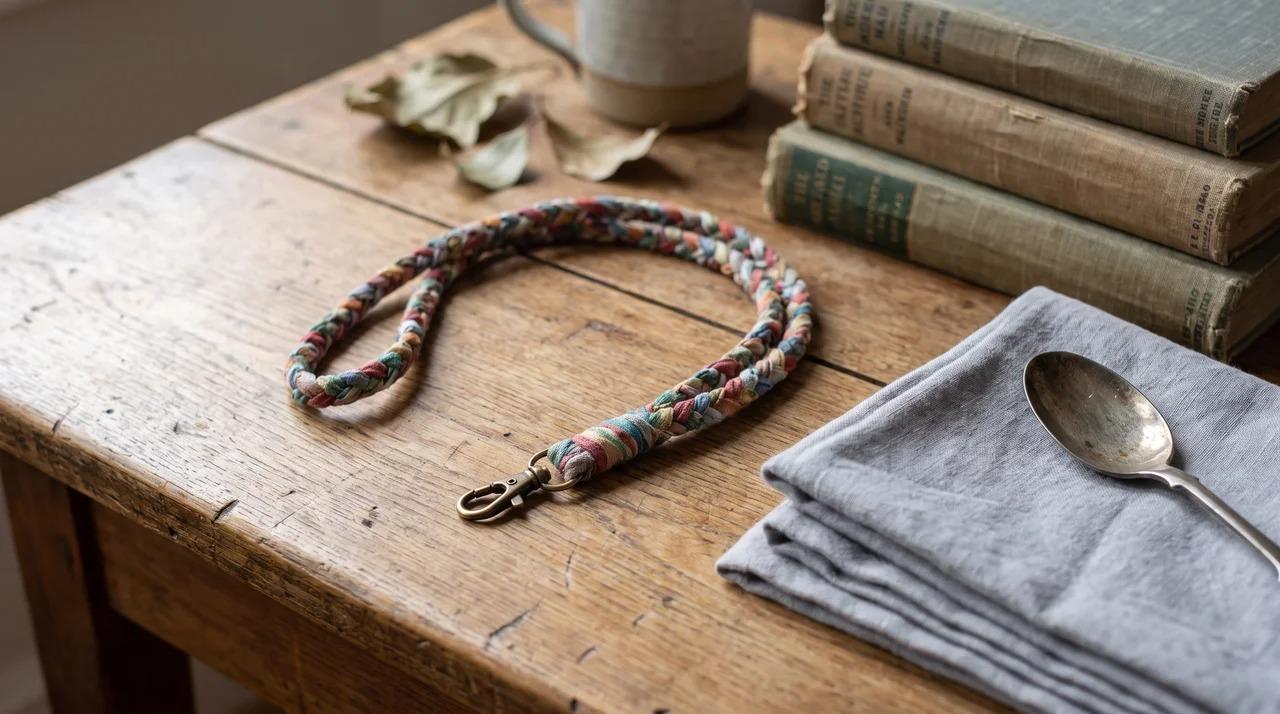
The child in The Lanyard Poem is not being ungrateful. He is being sincerely transactional, applying the only logic available to him, and Collins understands that distinction completely.
The boy’s reasoning is straightforward. She gave things. I gave a thing. We are square.
That is not selfishness. That is exactly how a child’s love works. Children do not have access to the full ledger. They see a gift, they make a gift, and the exchange feels complete. Collins does not mock the boy for this. He presents the logic plainly, without irony, because the sincerity is the point.
Here is what that choice does to the poem.
By letting the boy be genuinely proud of the lanyard, Collins makes the mother’s love look even larger by contrast. You are not reading a poem about a selfish child. You are reading a poem about the scale of what a parent absorbs, quietly, without keeping score.
The lanyard does not reveal the boy’s failing. It reveals the size of what surrounds him, which he cannot yet see.
That is where the poem’s real weight lives.
Adult readers bring the full ledger the boy cannot. You know what a mother carries. He does not. So you hold both things at once: his genuine pride, and everything it cannot account for.
That double vision is what makes the poem land so hard. You are not just watching a child be oblivious. You are watching innocence do what innocence always does. It loves as much as it can, and it has no idea how far short that falls.
How Collins Uses Humor to Carry a Serious Point
Collins does not use humor to soften the poem’s subject. He uses it to make the subject survivable long enough for the reader to reach the ending, where the full weight of it lands.
Think about what this poem is actually about. A child’s complete inability to repay what a mother gives. That is not a light subject. Approached directly, sincerely, with all its emotional gravity upfront, it becomes a greeting card. It tells you how to feel before you have the chance to feel it.
The humor stops that from happening.
By making the speaker gently ridiculous, Collins lowers your defenses. You are smiling at the boy’s confidence. You are charmed by how certain he is. You are not braced for anything. And that is exactly where Collins needs you.
Because the poem does not stay funny.
The final lines drop the comic tone almost completely. The language becomes plain. The mother’s gifts are listed without embellishment. What she gave him is set beside what he gave her, and Collins steps back and lets that gap speak for itself.
Readers feel that shift even when they cannot name it. Something changes in the last stanza, and the smile from earlier becomes something harder to carry.
That tonal move is the poem’s most precise decision. The humor was never the point. It was the approach. And without it, the ending would have nowhere near the same impact.
If you want to track moves like this yourself, it helps to know how to annotate a poem; catching tonal shifts on the page is a lot easier when you’ve got a system.
What the Lanyard Symbolizes
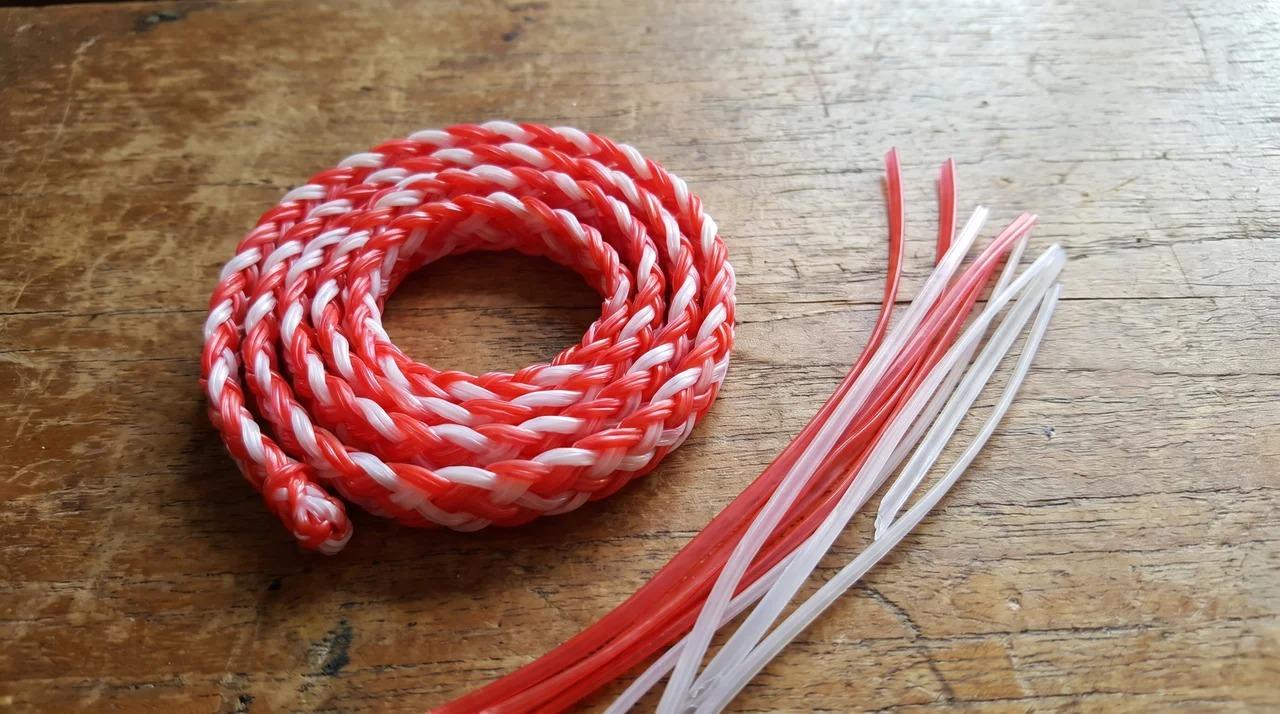
The lanyard in Collins’ poem is a handmade, well-intentioned, and essentially useless object. That combination is precisely why it works as the poem’s central image.
A lanyard holds keys. It is braided from thin plastic strips. It takes an afternoon to make and serves no purpose the mother could not manage without it. Collins knows this. The boy does not. And that gap between what the object is and what the boy believes it represents is where the symbol does its work.
It could have been any handmade gift. But a lanyard is specific in a way that matters.
It was made at summer camp. The boy was at a lake in the Adirondacks, weaving plastic strips out of boredom, while his mother was at home doing everything the poem lists.
The leisure of the making sits against the weight of what she carried, and Collins never has to point that out. The contrast is already there.
What keeps the lanyard from becoming purely ironic is the boy’s pride in it.
He is not being sarcastic. He genuinely believes he made something worth giving. That sincerity is what the symbol needs to work. A cynical gift would be a different poem entirely. This one only lands because the love behind the lanyard is real, even when the lanyard itself is not enough.
The Poem’s Ending: Why It Lands the Way It Does
The ending of “The Lanyard” works because Collins stops being funny. That silence, after everything that came before, is where the poem’s real meaning lives.
For most of the poem, Collins keeps things light. The boy is confident. The tone is warm and gently comic. You are carried along by it. Then the final lines arrive and something shifts.
The language becomes plain.
Collins lists what the mother gave. A body. A beating heart. Strong legs, bones, teeth. Years of care across sick rooms and ordinary days. He does not dress this up. He does not reach for imagery or feeling. He simply states what she gave, and then places the lanyard beside it.
And then he stops.
There is no conclusion. No morals. No instruction on how to feel about the gap between those two things. Collins trusts you to feel it yourself, and that trust is what makes the ending work.
If he had told you what to think, the poem would have collapsed into sentiment. Instead he removes the humor, clears the space, and lets the contrast do everything.
That restraint is the hardest thing to pull off in a poem like this. Most writers cannot resist explaining the point they just made. Collins makes the point and walks away. The reader is left holding it alone, which is exactly where he needed you to be.
Final Thoughts
The Lanyard poem does not ask you to feel guilty for what you gave your mother. It asks you to see clearly. The boy with the lanyard was not wrong to be proud. He just could not yet measure what surrounded him.
That is what Collins leaves you with. Not a lesson. A recognition.
If this poem caught something you have been carrying, share it with someone who might feel it too. And if you want to keep exploring poetry that does more than it appears to, there is plenty more waiting for you here.
Frequently Asked Questions
What is a brief summary of The Lanyard Poem?
The speaker recalls making a braided plastic lanyard at summer camp as a gift for his mother. As an adult, he sets that small object against everything she gave him and arrives at a quiet, rueful admission about the gap between the two.
Is The Lanyard Poem based on a true story?
Collins has spoken about the poem drawing on a real memory and he did make a lanyard at summer camp as a child. But it is not a confession or a tribute. It is a reflection built around that memory, using it as a way into something much larger than the event itself.
What type of poem is “The Lanyard” by Billy Collins?
It is a free verse poem with no fixed rhyme scheme or meter. Collins uses conversational, everyday language to draw the reader in before the subject quietly deepens beneath them.
Why is “The Lanyard” so often shared on Mother’s Day?
The poem captures something most people recognise but rarely say out loud: that a mother’s love operates on a scale nothing can match or repay. That honesty, delivered without sentimentality, is why it keeps finding its way back every May.