

Some moments don’t have the right words yet. You’re sitting with something, a hard season, a quiet grief, a feeling you can’t quite name, and prose doesn’t reach it.
That’s when a winter solstice poem finds you. Not because it explains anything, but because someone else already stood in that same dark and wrote their way through it.
The fifteen poems here were chosen for exactly that reason. They’re grouped by what they carry, hope, stillness, nature, celebration, the return of light, so you can move toward what you actually need right now, not just what fits the season.
Some will comfort you. Some will name something you’ve been carrying alone. A few might do both at once.
What Is a Winter Solstice Poem?
A winter solstice poem is a poem written about or set during the winter solstice, the shortest day and longest night of the year, which falls around December 21 in the Northern Hemisphere.
These poems explore themes like darkness and light, stillness, seasonal change, nature, reflection, and the slow return of the sun.
They range from ancient ritual verse to modern meditations on what it means to stand at the turning point of the year.
The tone varies widely. Some solstice poems are celebratory marking the moment the light begins to return. Others sit in quiet grief or loneliness, using the long dark night as a mirror. Many fall somewhere in between: still, reflective, honest.
There is no single mood that defines this form. What holds them together is the moment they’re written about, not the feeling they carry.
List of Winter Solstice Poems for the Longest Night
The poems below are grouped by the feeling they carry, not just the season they describe. Whether you’re looking for something quiet and reflective or something to read aloud at a gathering, there’s a poem here for that moment.
Winter Solstice Poems About Darkness and Light
These poems sit inside the tension the solstice creates; the dark is real, and so is what’s coming. They don’t rush past the night to reach morning. They stay in it.
1.“Winter Solstice” – Ray McNiece
McNiece doesn’t write the solstice as a symbol. He writes it as something you stand inside. The darkness here has actual weight to it. The longest night isn’t framed as a test or a metaphor, it’s a pause, a stillness that asks you to stop and stay with it.
The light that comes back isn’t dramatic. It’s quiet. Almost uncertain. And that restraint is what makes it land.
2.“A Winter’s Cloak” by Joyce Rupp and Macrina Wiederkehr
Joyce Rupp and Macrina Wiederkehr wrote this as part of a seasonal reflection cycle, and the framing is unlike most winter poems you’ll come across. Winter here isn’t something that happens to you. It’s something you choose to step into.
Rupp uses the image of a cloak heavy, deliberate, chosen. That single shift changes everything. The darkness the poem describes isn’t threatening. It’s protective. It holds you while the harder work happens underneath the surface.
For anyone moving through a difficult season, that reframe matters. Most people want to outlast winter, to get to the other side as fast as possible. This poem asks what happens if you rest inside it instead.
3.“The Snowfall Is So Silent” by Miguel de Unamuno
Unamuno doesn’t treat silence as an absence. He treats it as something that moves, settles, and presses in.
This poem follows snowfall not as scenery but as a force that narrows the world. The snow blankets everything outside while pulling the speaker further inward.
What makes it unusual is the tension it holds: the landscape grows whiter, more open, more still yet the room grows darker and smaller. That inward compression is the emotional core of the poem.
It’s a piece about how silence doesn’t empty a space. It fills it differently. Unamuno finds weight in that, and the poem carries it without once raising its voice.
Winter Solstice Poems About Nature and the Season
These poems don’t use nature as a backdrop. The landscape is the subject. Snow, cold, and stillness aren’t setting the scene; they are the scene.
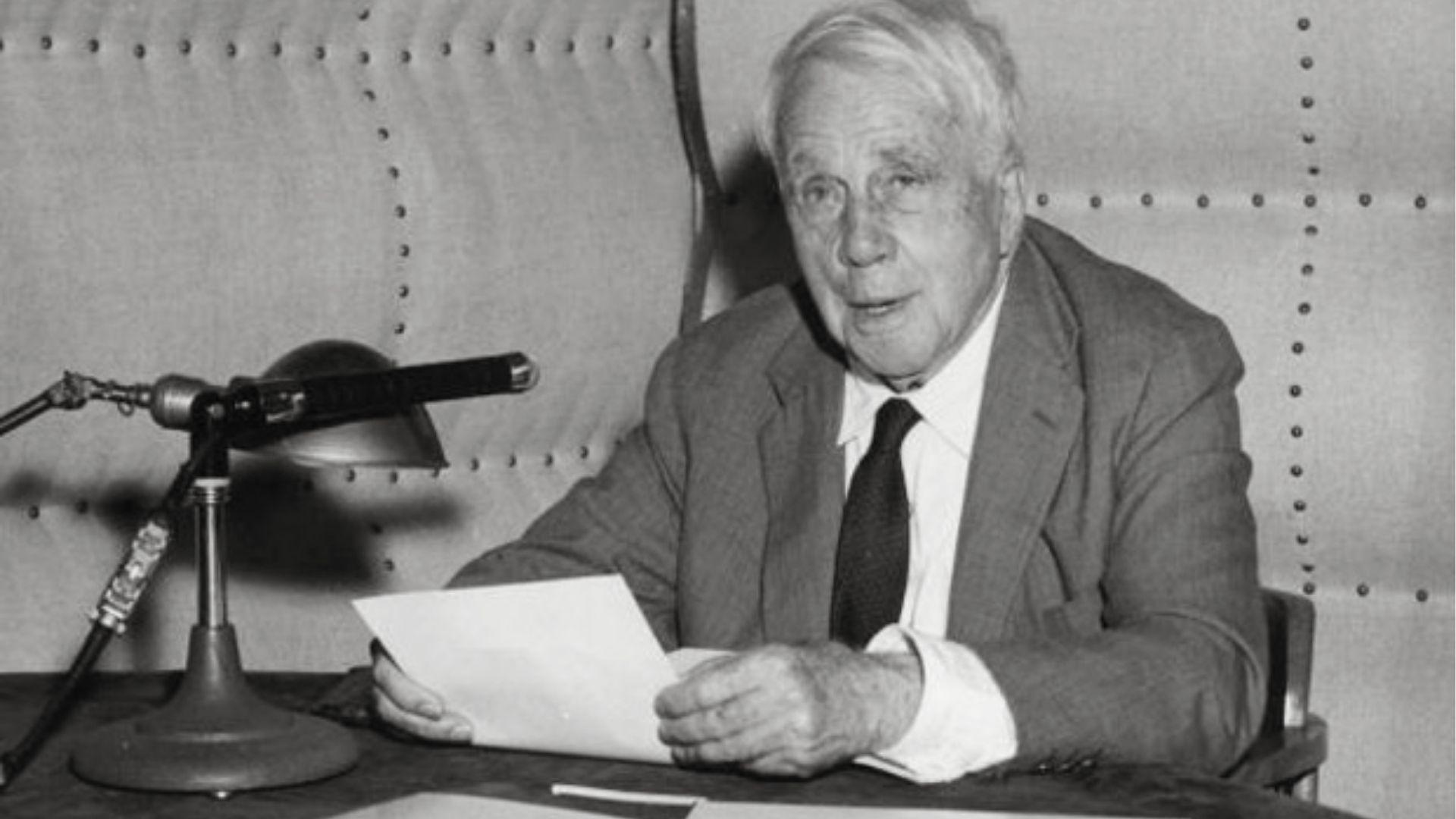
4.“Stopping by Woods on a Snowy Evening” – Robert Frost (1923)
Frost’s speaker stops his horse in the dark, with snow falling, no one watching. For a moment, he just stands there.
The woods pull him in because they offer stillness, a pause from whatever obligation waits down the road. But it doesn’t last. He has promised to keep miles to go. He says it twice. That repetition is the whole poem.
Anyone who has ever stolen a quiet moment they couldn’t afford knows exactly what Frost is describing.
5.“Snowy Night” Mary Oliver
Oliver steps outside on a winter night and simply watches. Not to find meaning, not to escape anything. Just to look.
What she notices, the way snow settles, the quiet that isn’t quite silence, is the kind of detail most people move through too quickly to catch.
The poem doesn’t tell you what winter means. It puts you in it. By the last line, something has shifted. The cold feels closer, and so does the night.
6.“A Country Boy in Winter” Sarah Orne Jewett
Jewett writes about winter the way someone who has lived through hard ones does. There’s no beauty for beauty’s sake.
The landscape is bare, the work is real, and the season shows up as something you manage, not something you admire.
That honesty is what makes the poem land. It reminds you that for a lot of people, winter isn’t a feeling or an aesthetic. It’s just the season you get through.
Winter Solstice Poems About Stillness and Reflection
The solstice is a natural stopping point. These poems use it that way as a pause before the year turns, a moment to look back before moving forward.
7.“The Solstice” – W.S. Merwin
Merwin writes without punctuation, and in this poem that choice does real work. There’s no pause forced on you, the lines keep moving even as the subject insists on stillness. He holds the solstice as a moment shared between two people watching the light go.
The tenderness is quiet, but it’s there, running underneath the awareness of time passing too fast. What stays with you is the last turn: darkness and return held together in the same breath, neither one cancelling the other out.
8.“Between Autumn Equinox and Winter Solstice, Today” – Emily Jungmin Yoon
Yoon repeats the word “today” throughout the poem until it starts to feel both solid and slightly strange. That’s the point. She’s writing about the weeks between autumn’s end and the solstice, the waiting period and the repetition of “today” keeps pulling you back to the present tense, refusing to let you look away.
The Korean word chada runs through it too, meaning cold, filled, kicked, worn four meanings for one season. The unease she captures is domestic and precise. It doesn’t announce itself. It just settles in.
9.“Winter Solstice” – Lawrence Sail
Sail began writing seasonal poems as Christmas cards sent to friends, small, carefully made things, not written for publication.
“Winter Solstice” comes from that tradition, and it carries that quality: it feels addressed to someone specific, not broadcast outward. He doesn’t reach for comfort at the solstice.
He asks what it means to stand at the lowest point of the year and look honestly at where you are. The specificity is what earns it. This isn’t winter in general, it’s this night, this pause, this particular reckoning before the light begins to return.
Winter Solstice Poems About Hope and the Return of Light
These aren’t cheerful poems. They’re honest ones. They acknowledge the depth of the dark before they point toward the light which is exactly what makes the hope in them feel real.
10.“A Christmas Carol” – Christina Rossetti (1872)
Rossetti doesn’t open with comfort. She opens with cold The poem drops you into a frozen, bitter landscape before it brings you anywhere near a manger. Earth is as hard as iron. Wind moaning. She earns the warmth by sitting in the bleakness first.
That contrast is what holds the poem together. The grandeur of angels and archangels is there. So is the mud of a stable. The vastness of God set against the smallness of a newborn.
The final stanza turns inward. The speaker asks what she can offer. Her answer is just her heart. It lands because the poem never performed joy to get there. It was honest about the world first.
In 2008, when the BBC asked choirmasters across the UK and US to name their favourite Christmas carol, Rossetti’s poem took the top spot. Not because it’s cheerful. Because it’s true.
11.“The Peace of Wild Things” – Wendell Berry
Berry wrote this poem for the sleepless nights. The kind where dread shows up uninvited at 3 a.m. and won’t leave.
He doesn’t fight it. He walks outside, to the water, to the dark, and finds that the natural world simply isn’t worried. The wood drake rests. The heron sleeps. Nothing out there is rehearsing tomorrow’s catastrophe.
That’s the poem’s quiet argument. Not that fear is wrong, but that the world keeps its rhythm regardless. The dark has a pattern.
The light returns. It always has. The solstice makes this one land differently than it would in any other season, because right now, you’re living inside exactly what Berry was writing about.
Winter Solstice Poems for Ritual and Celebration
These poems are meant to be spoken, not just read. They were written for gathering to mark the solstice as a moment worth honouring out loud, together.
12.“Winter Solstice Chant” by Annie Finch
This chant was built for voices in a room, not eyes on a page. The repetitive structure and imagery of darkness and stars evoke the cyclical nature of the seasons, and that rhythm is deliberate. It’s what pulls a group into a shared beat and holds them there.
Finch draws on pagan and earth-centered forms. The return of light isn’t described here. It’s invoked, collectively, through the act of saying the words together.
If you’re leading a Yule ritual or seasonal gathering, this is the piece that gives everyone something to hold. It works because it requires participation. That shared act is the whole point.
13 “The Shortest Day” by Susan Cooper
For more than 40 years, people have been reading and performing this poem to celebrate the winter solstice. That kind of staying power tells you something.
Cooper wrote it for a theatrical production that has since become a ritual in itself. It traces the ancient human instinct to push back against the dark fires built, candles lit, music played, and connects that instinct to every generation that came before us.
What makes it land in a gathering is the sweep of it. It doesn’t sit in one moment. It pulls the whole long history of the solstice into the room with you, and by the end, you feel part of something much older than tonight.
How to Use a Winter Solstice Poem
Winter solstice poems can be read privately, shared at a gathering, or used in a card or letter. The right poem depends on the mood and the moment.
Reading one alone on December 21 is the simplest place to start. You don’t need a ritual or a group. Sit with a poem that matches where you are quiet, reflective, or just present. That’s enough to make the evening feel marked rather than passed over.
If you’re gathering with others, a poem read aloud gives the room a moment to slow down. It doesn’t have to be formal. One person, one poem, one minute it changes the feel of the night without making it heavy.
Choose by what you actually need. If you’re carrying something difficult, reach for Berry or Rupp. If you want warmth without sentimentality, Rossetti holds that well. If you want to sit honestly in the dark, Frost or Oliver will meet you there.
Final Takeaway
The right winter solstice poem doesn’t have to be perfect for the occasion. It just has to be right for where you are. Some of these poems will sit quietly with you.
Others will give the room something to hold onto. A few might put words to something you’ve been carrying for weeks. Pick one tonight. Read it slowly. That’s enough.
If you found a poem here that stayed with you, I’d love to know which one in the comments. And if you’re looking for more seasonal reading, check out our collection of winter poems for the cold months ahead.
Frequently Asked Questions
What is the most beautiful short poem?
Many readers point to Emily Dickinson’s “‘Hope’ is the thing with feathers” a quiet, twelve-line lyric that turns hope into a small, resilient bird that never stops singing.
What does the winter solstice symbolize?
The winter solstice symbolizes the turning point between darkness and light, the longest night of the year, after which the days slowly begin to grow longer again.
What is a cute saying about winter?
Mary Oliver wrote, “In winter, all the singing is in the tops of the trees” a small, warm observation that says more about winter than most longer descriptions do.