

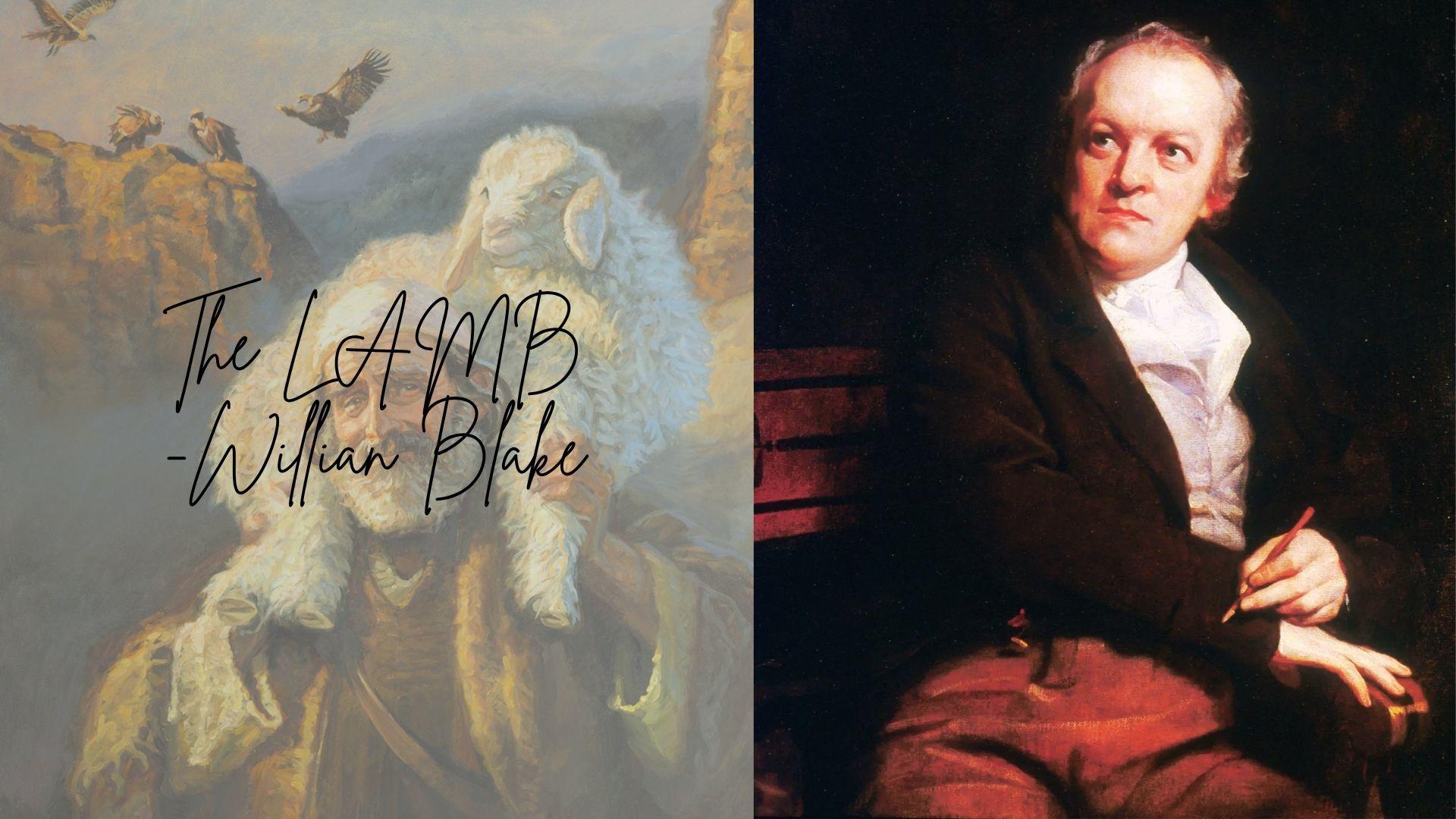
Blake’s the lamb poem looks simple at first. A child, a lamb, a question. But there’s more happening beneath the surface than most people realise.
Published in 1789 as part of Songs of Innocence, the poem connects three things you might not expect together: A baby animal, a child, and Christ. Blake does it deliberately, through the poem’s language, structure, and form all pulling in the same direction.
The lamb poem is a short lyric in which a child asks a lamb who created it, then answers the question themselves by pointing to Christ, the Lamb of God.
From the full text to a plain breakdown of both stanzas, to why Blake built it the way he did, everything you need to actually understand this poem is covered below.
What Is “The Lamb” by William Blake?
The lamb poem is a short piece written by William Blake in 1789. It’s part of a collection called Songs of Innocence, a set of poems Blake wrote from the perspective of childhood, where the world still feels simple and safe.
The poem has a single speaker: A child talking to a lamb. The child asks the lamb who created it, then turns around and answers the question themselves.
That’s the whole poem. Twenty lines, two stanzas, one idea explored with real care.
What makes it worth paying attention to is why Blake wrote it this way. He wasn’t just writing a pretty nature poem. He was making a point about innocence, what it means, what it sees, and what it gets right that experience sometimes can’t.
Songs of Innocence was published alongside its pair, Songs of Experience. Blake designed the two books to be read together as a complete argument about the human condition.
The lamb poem sits on the innocent side of that divide, and understanding that context changes how you read every line.
What Does “The Lamb” Actually Say?
Here’s the full text of the poem before we break it down.
Little Lamb, who made thee?
Dost thou know who made thee?
Gave thee life, and bid thee feed, By the stream and o’er the mead;
Gave thee clothing of delight, Softest clothing, woolly, bright;
Gave thee such a tender voice, Making all the vales rejoice!
Little Lamb, who made thee? Dost thou know who made thee?Little Lamb, I’ll tell thee, Little Lamb, I’ll tell thee:
He is called by thy name, For he calls himself a Lamb:
He is meek, and he is mild, He became a little child
:I a child, and thou a lamb, We are called by his name.
Little Lamb, God bless thee! Little Lamb, God bless thee!
Now let’s look at what each stanza is actually doing.
Stanza One: The Questions
The first stanza is all questions.
The child looks at the lamb and asks: Who made you? Who gave you your soft wool, your gentle voice, your food by the stream?
It sounds simple, almost like a nursery rhyme. That’s intentional. Blake is writing in the voice of a child, so the language stays light and the tone stays warm.
But look at what the child is actually noticing.
Not just that the lamb exists, but that someone gave it specific gifts: Life, food, warmth, a voice. The child is marvelling at the detail of creation, not just the fact of it.
The stanza ends by repeating the opening question. That repetition isn’t filler. It’s Blake setting up a call and response, like a song or a lesson waiting for its answer.
Stanza Two: The Answer
The second stanza answers the question, and the same child does the answering. No adult steps in. No outside voice arrives. The child already knows.
The answer is Christ. Blake tells us that the Creator is called by the lamb’s own name, that he is meek and mild, and that he became a little child. In Christian tradition, Jesus is called the Lamb of God, so the connection Blake is drawing is direct, not decorative.
Then comes the line that ties everything together: “I a child, and thou a lamb, we are called by his name.” The child, the lamb, and Christ are now one group. They share a name, a nature, and a kind of smallness.
The poem closes with a blessing: “Little Lamb, God bless thee.” Twice. It’s gentle, final, and completely sure of itself. That certainty is the whole point of innocence in Blake’s world.
Why Does Blake Connect a Child, a Lamb, and Christ?
Most readers notice the three-way connection Blake makes in the lamb poem. Fewer stop to ask why it actually holds together.
In Christian tradition, Jesus is called the Lamb of God, described as meek and mild, and entered the world as a child.
So the lamb, the child, and Christ share a name, a set of qualities, and a condition: Being small and vulnerable in the world.
The line that makes it clearest is “He became a little child.” That word “became” matters. Christ didn’t just appear among the innocent, he joined them. He took on the same smallness the lamb and the child already inhabit.
That’s why “I a child, and thou a lamb, we are called by his name” doesn’t feel like a stretch. The identity runs in both directions.
One thing worth knowing: This only works inside the register of innocence. In Songs of Experience, the same question, who made thee, produces fear instead of certainty.
Blake isn’t saying innocence is naive. He’s saying it sees something real that experience sometimes loses sight of.
How Does the Poem’s Form Reinforce Its Meaning?
The structure of the lamb poem isn’t accidental. Blake built it to mirror exactly what it’s saying.
Two stanzas: One asks, one answers. That’s a catechism, a question and answer format used to teach religious ideas, usually to children. Blake isn’t just writing about innocence, he’s using the form that innocence actually learns through.
The repetition works the same way. “Little Lamb, who made thee?” opens and closes the first stanza. It sounds like a lesson being spoken aloud, the kind you repeat until it sticks. That’s not a stylistic flourish; it’s the whole texture of childhood learning.
The meter is worth noticing too. Blake uses a trochaic rhythm, stress first, which gives the poem a lullaby feel. Read it aloud and it almost rocks. That’s deliberate. He’s writing in the cadence of childhood, not just about it.
The form and the meaning aren’t separate things here. The poem teaches the way a child learns, moves the way a child speaks, and lands with the quiet certainty a child feels before the world gets complicated.
How Does “The Lamb” Differ from “The Tyger”?
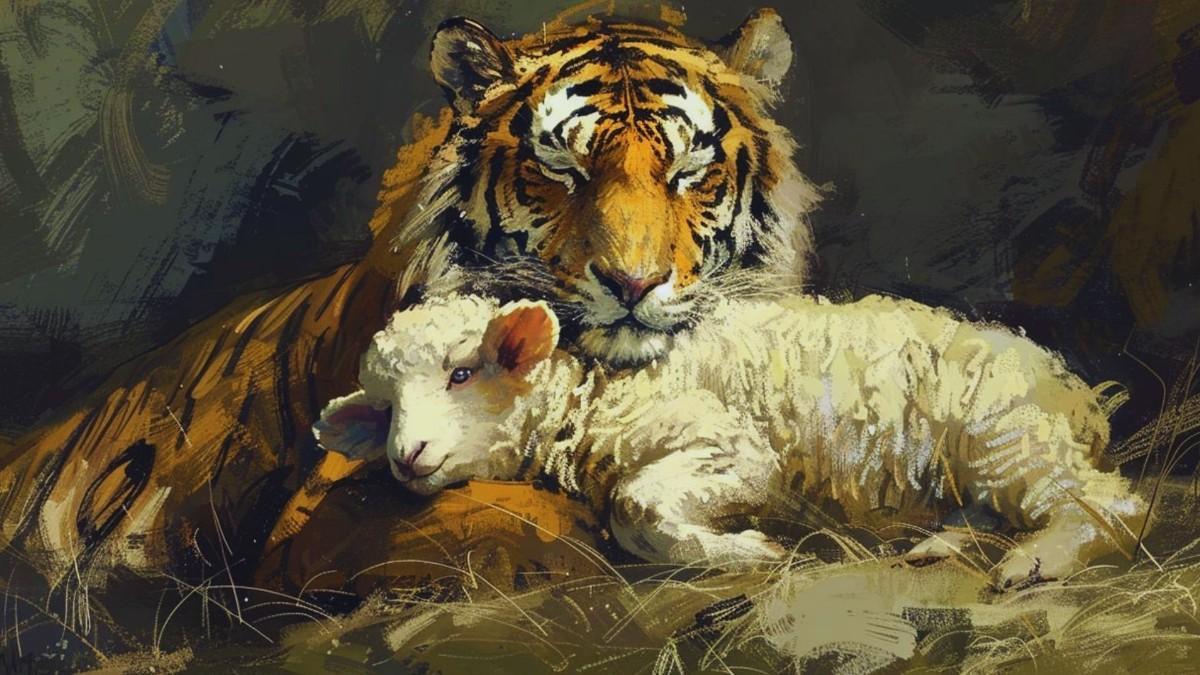
Both poems ask the same question: Who made you?
Only one answers it.
In the lamb poem, the child-speaker asks and then confidently answers. In “The Tyger,” from Songs of Experience, the speaker asks over and over and never gets a reply. That asymmetry is Blake’s whole point.
The two poems are companion pieces, designed to sit on opposite sides of the same argument. The lamb poem lives in innocence, “The Tyger” in experience. Innocence sees a creator who is gentle and knowable. Experience looks at the same world and finds something it can’t explain.
Reading the lamb poem alone, it can feel almost too simple.
Reading them together is when Blake’s argument becomes clear: Innocence isn’t ignorance, it’s a different kind of knowing that experience makes harder to hold onto.
Closing Thoughts
The lamb poem rewards the closer you look at it. Blake packed a precise theological argument into twenty lines, using the form, the rhythm, and the speaker to carry the meaning, not just the words.
The child, the lamb, and Christ share more than a mood. They share a name, a nature, and a condition. That’s the poem’s real claim, and it holds up.
If you want to go deeper, read it alongside “The Tyger” and watch how the same question lands completely differently. Drop a comment below if you have questions about either poem.
Frequently Asked Questions
What is the main theme of “The Lamb” by William Blake?
The central theme is divine creation and shared innocence. Blake argues that the lamb, the child, and Christ are united by the same name, nature, and condition of smallness.
What is the meaning of the lamb poem?
The poem means that creation is the work of a gentle, knowable God who entered the world as both a child and a lamb. It’s Blake’s case that innocence sees this clearly, without doubt or fear.
What does the lamb symbolise in Blake’s poem?
The lamb carries three meanings at once: a literal animal, a symbol of Christ, and a mirror for the child-speaker. Blake’s point is that all three share the same identity through the Incarnation.
How does “The Lamb” relate to Blake’s “Songs of Innocence and of Experience”?
“The Lamb” sits in the innocent half of the collection, where belief feels certain, and the world feels safe. Its counterpart is “The Tyger,” which asks the same question about creation but never answers it.
Who is the speaker in “The Lamb,” and why does it matter?
The speaker is a child who both asks and answers the question, with no adult stepping in. That self-sufficiency is Blake’s way of showing that innocence already holds the knowledge it needs.