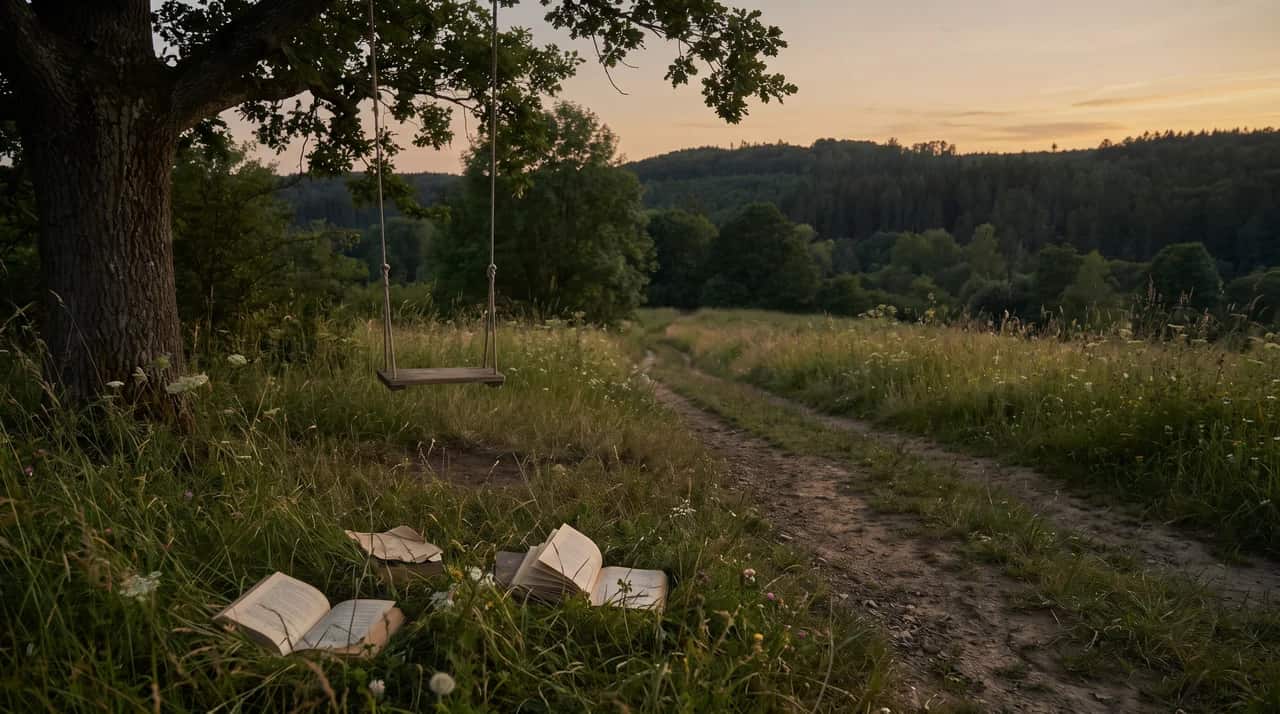



Some poems you read once and move on. “Birches” is the kind you come back to not because it’s hard, but because it keeps giving you something new.
Frost wrote it far from home, pulling a New England landscape from memory. A boy. Bent trees. A man who’s tired and wants a moment away from it all but not forever.
That gap between leaving and returning is what the poem is really about. By the end, you’ll see exactly how Frost builds that feeling, why the form makes it work, and what the ending is actually saying because it’s not what most people think.
What is “Birches” by Robert Frost?
“Birches” is a 59-line poem published first in The Atlantic Monthly in August 1915, then collected in Mountain Interval in 1916. Many sources confuse the two dates.
The 1916 collection is where most readers encounter it, but 1915 is when it first appeared in print.
Frost wrote it in blank verse, meaning unrhymed iambic pentameter. The form sounds like natural conversation while holding a careful rhythmic structure underneath. That tension between loose and controlled mirrors what the poem itself is doing.
Frost wrote “Birches” during his time in England. It belongs to the same period as “The Road Not Taken” and “Mending Wall”, the work that made his American reputation.
The Story the Poem Tells
“Birches” moves in three distinct stages: observation, imagination, and longing. Each one leads into the next.
The poem opens with the speaker noticing bent birch trees. He knows ice-storms caused it.
But Frost doesn’t rush past that fact. He slows down and describes it in sharp visual detail: ice-coated branches clicking in the breeze, the ice turning many-coloured as it cracks, and crystal shells shattering onto the snow-crust.
Then comes the turn. The speaker says he prefers to think a boy bent those trees through play. Frost marks this shift with a direct line: “But I was going to say when Truth broke in.”
Truth interrupts like a person talking over him. That’s deliberate. The speaker isn’t confused about reality. He’s choosing imagination anyway.
The final movement is personal. The speaker sees himself in that boy. He admits he’s tired. Life feels like a pathless wood with no clear way through.
His wish isn’t to escape for good. He wants to climb up and be set back down again. Not gone. Just briefly lifted.
The Central Themes of “Birches”

The poem works through three connected themes: imagination versus reality, childhood versus adulthood, and escape versus return. They don’t operate independently. Each one feeds into the next.
Imagination vs. Reality
Frost doesn’t ask you to choose between the ice-storm truth and the boy who bent the trees. He holds both at once. The speaker knows the scientific explanation.
He simply prefers the other version. That preference isn’t denial. It’s a conscious choice to let imagination sit alongside reality without replacing it.
Childhood and the Weight of Adulthood
The boy in the poem isn’t just a memory. He’s a model. Frost shows him learning exactly how far to climb before the branch bends, keeping his poise, never launching out too soon.
That knowledge matters. The boy represents a way of engaging with difficulty and coming back from it intact.
The adult speaker says he dreams of going back to being a swinger of birches, but what he really wants back is that method.
Escape, Return, and the Meaning of “Earth’s the right place for love”
This is the line most readers quote, but few explain what it does. The speaker first admits he’d like to get away from Earth a while.
Then he immediately guards against being misunderstood, and only after that does he describe climbing a birch and being set back down.
That order is the point. He’s not building toward escape. He’s limiting it before he even describes it.
The line “May no fate willfully misunderstand me / And half grant what I wish” closes the door on any reading that treats this as a death wish or permanent departure.
The wish is to leave briefly and return. Earth isn’t a consolation. It’s the conclusion.
The Form and Language of “Birches”
Frost picked blank verse for a reason. Unrhymed iambic pentameter sounds like someone thinking out loud, and that’s exactly what this poem is.
A tighter form would have felt too deliberate. This one breathes.
Look at lines 5 through 20. That’s where Frost gets precise. The clicking, the shattering, the crystal shells of ice avalanching onto the snow-crust. He’s not decorating the scene.
He’s building a case. The speaker needs you to see how real the ice-storm is before he admits he’d rather imagine something else. If the reality isn’t vivid, the preference for imagination means nothing.
Then Frost does something unexpected. He writes: “So was I once myself a swinger of birches.” The shift is abrupt and deliberate.
By making the speaker’s identification with the boy explicit rather than implied, Frost gives the reader less room.
You either accept his presence in the poem or the whole thing falls apart. Most poets would have kept that distance. Frost removes it.
Who Was Robert Frost?
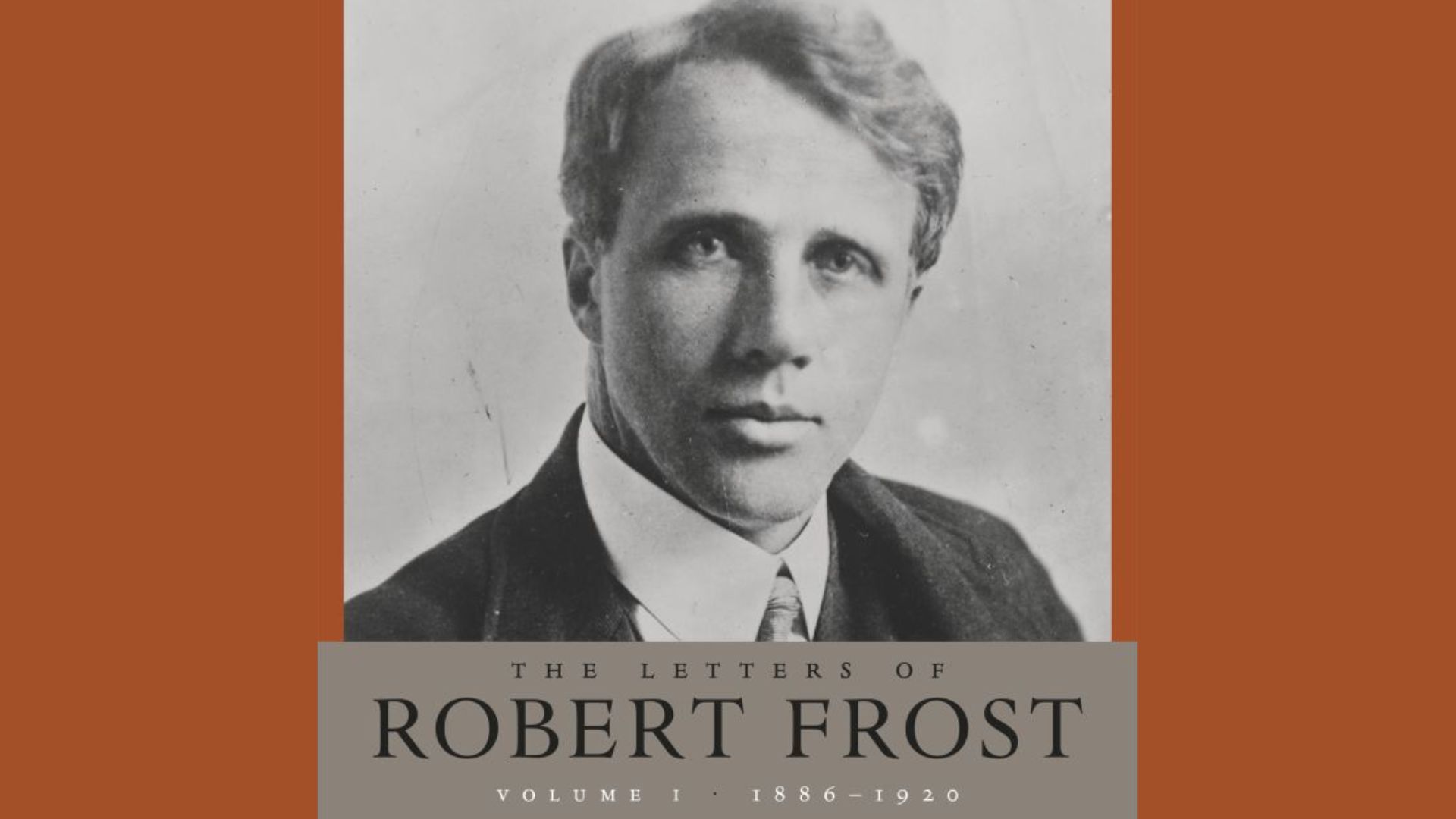
Robert Frost (1874–1963) was an American poet known for his poems of rural New England life, including “Birches,” “The Road Not Taken,” and “Stopping by Woods on a Snowy Evening.” He is the only poet to have won the Pulitzer Prize for Poetry four times.
Frost was born in San Francisco on March 26, 1874. After his father died in 1885, when Frost was eleven, the family moved to Lawrence, Massachusetts.
That move shaped everything. The farms, woods, and rural rhythms of Massachusetts and New Hampshire became the landscape he wrote from for the rest of his life.
He struggled to get published for years, working as a teacher and a farmer and writing in the margins of ordinary life. In 1912, partly out of frustration, he moved his family to England.
That is where his career finally broke open. His first two collections, A Boy’s Will (1913) and North of Boston (1914), were published there, and English publishers took him seriously before American ones did.
By the time he returned to the United States in 1915, he had a reputation waiting for him.
Mountain Interval followed in 1916, the collection that contains both “Birches” and “The Road Not Taken,” and it confirmed him as a leading voice of rural American life.
Frost won the Pulitzer Prize for Poetry in 1924, 1931, 1937, and 1943. He recited “The Gift Outright” at John F. Kennedy’s inauguration in 1961 and died in Boston on January 29, 1963, at 88.
What made him unusual was the gap between how he sounded and what he was doing. The poems feel plain, almost conversational, but the thinking underneath is anything but.
He kept to traditional forms like blank verse while many contemporaries moved to free verse. He held his ground deliberately, once comparing free verse to playing tennis with the net down.
Final Thoughts
“Birches” is a poem about wanting a brief escape from life’s difficulties, not a permanent one, and then choosing to return, because, as Frost concludes, earth is the right place for love.
Frost builds that feeling through a tired man, a boy swinging in the trees, and one carefully placed line about earth being the right place for love.
What makes the birches poem stay with you is that it never asks you to choose. Reality and imagination sit side by side. Leaving and returning live in the same wish.
If this one clicked, go read “The Road Not Taken” next. Same collection, same restless mind behind it.
Drop a comment below. What did you take from this poem the first time you read it?
Frequently Asked Questions
What Was the Tragic Life of Robert Frost?
Frost lost his father at 11, buried four of his six children, and watched his wife die before him. His personal life was filled with grief that never fully left him.
What Is the Famous Line of Robert Frost?
Robert Frost’s most famous lines are “I took the one less travelled by, / And that has made all the difference,” the closing lines of “The Road Not Taken.” Other widely quoted lines include “Good fences make good neighbours” from “Mending Wall” and “Earth’s the right place for love” from “Birches.”
Did Robert Frost Win the Nobel Prize?
He never did. Despite being one of America’s most celebrated poets, Frost was nominated several times but never awarded the Nobel Prize in Literature.
What Inspired Frost to Write “Birches”?
Frost wrote the birches poem while living in England, homesick for New England. The birch trees, the rural landscape, the boy swinging in the branches: all of it came from memory, not from what was in front of him.