

When you search for William Blake’s “The Chimney Sweeper,” you’ll find two poems, not one. Folks don’t realise that until they’re already confused.
Blake wrote them five years apart and aimed them at completely different targets. Together they build an argument neither could make alone about exploitation, false comfort, and who really benefits when the suffering stays silent.
I’ll walk through both poems what happens in each, how they differ, and what Blake hid inside the one that feels hopeful.
Are There Two “Chimney Sweeper” Poems by William Blake?
William Blake wrote two separate poems both titled “The Chimney Sweeper.” He published the first in Songs of Innocence in 1789 and the second in Songs of Experience in 1794.
They weren’t written as standalone pieces. Blake designed them as companions; the second poem exists specifically to challenge what the first one says.
Both sit inside the same collection, Songs of Innocence and of Experience, published together in 1794. That pairing was intentional.
If you read only one, you get half the argument. Blake built the meaning across both. Understanding that is the starting point for reading either one correctly.
What Happens in Each Poem: Story, Speaker, and Setting
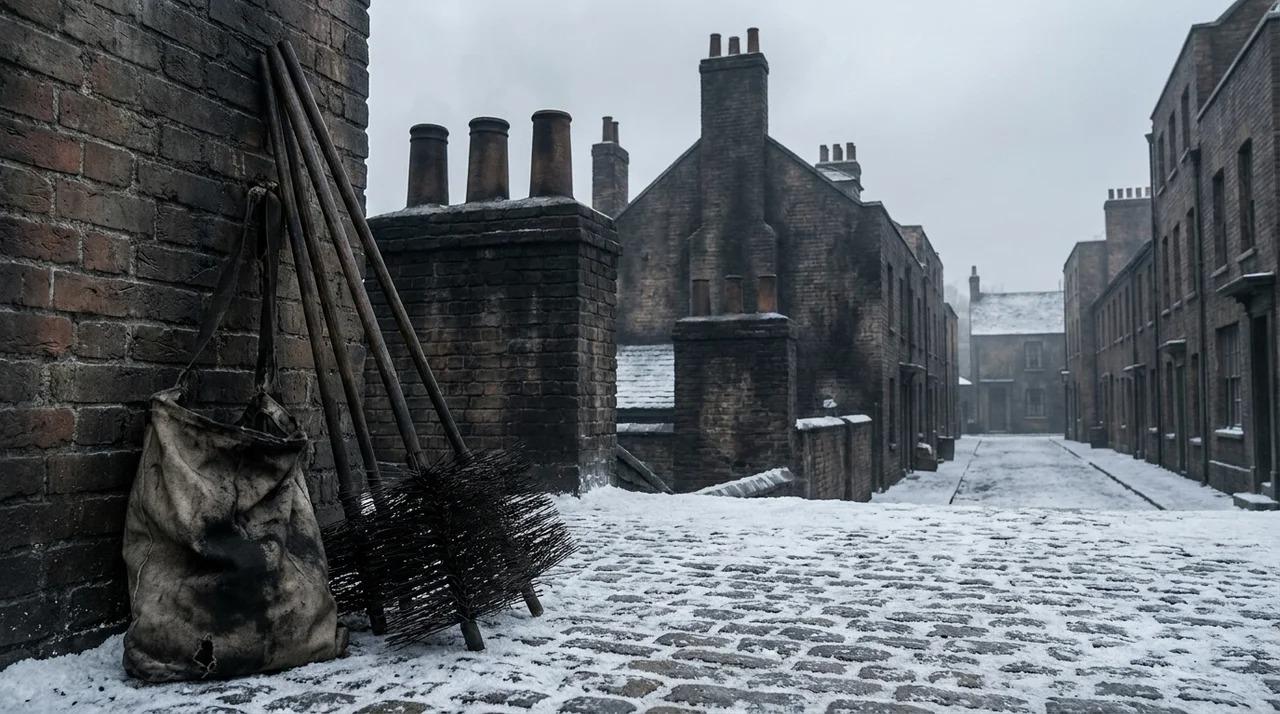
These two poems share a title but not a voice. The speaker changes, the setting changes, and so does everything the reader is allowed to feel.
The Chimney Sweeper: Songs of Innocence (1789)
When my mother died I was very young,
And my father sold me while yet my tongue
Could scarcely cry ‘weep! weep! weep! weep!’
So your chimneys I sweep, and in soot I sleep.
There’s little Tom Dacre, who cried when his head,
That curled like a lamb’s back, was shaved: so I said,
‘Hush, Tom! never mind it, for when your head’s bare
You know that the soot cannot spoil your white hair.’
And so he was quiet; and that very night,
As Tom was a-sleeping, he had such a sight!
That thousands of sweepers, Dick, Joe, Ned, and Jack,
Were all of them locked up in coffins of black.
And by came an Angel who had a bright key,
And he opened the coffins and set them all free;
Then down a green plain leaping, laughing, they run,
And wash in a river, and shine in the sun.
Then naked and white, all their bags left behind,
They rise upon clouds and sport in the wind;
And the Angel told Tom, if he’d be a good boy,
He’d have God for his Father, and never want joy.
And so Tom awoke; and we rose in the dark,
And got with our bags and our brushes to work.
Though the morning was cold, Tom was happy and warm;
So if all do their duty they need not fear harm.
Story
The narrator is a young boy sold into a chimney sweeping by his own father after his mother died. He isn’t telling his own grief, though. He’s comforting Tom Dacre, a newer boy upset about having his curly hair shaved off.
That night Tom dreams. An angel frees thousands of sweeps from black coffins and leads them into sunlight. The angel tells Tom to be good, and God will be his father. Tom wakes up happy and goes straight to work.
Speaker
The speaker is the sweep himself, a child living inside the situation. He has no distance from it. That’s what makes his calm so unsettling. He isn’t rescued. He’s just decided it will be fine.
Setting
The poem lives in soot and darkness: chimneys, sleep on the floor, rising before dawn. The dream briefly opens into light and green fields. But morning comes, and the bags and brushes are still there.
The Chimney Sweeper: Songs of Experience (1794)
A little black thing among the snow,
Crying ‘weep! weep!’ in notes of woe!
‘Where are thy father and mother? Say!
”They are both gone up to the church to pray.
Because I was happy upon the heath,
And smiled among the winter’s snow,
They clothed me in the clothes of death,
And taught me to sing the notes of woe.
And because I am happy and dance and sing,
They think they have done me no injury,
And are gone to praise God and his priest and king,
Who make up a heaven of our misery.’
Story
A passing observer spots a small black figure alone in the snow, crying. They ask where his parents are. The child answers: they went to church to pray.
He explains what happened. He used to be happy, dancing and playing outside in the cold. His parents dressed him in “clothes of death” and taught him to sing “notes of woe.” Then they left for church, convinced they had done nothing wrong.
Speaker
This poem has two voices. An outside observer opens it, someone who sees the child but isn’t the child. Then the boy speaks for himself. That shift matters. Blake moved the narrator outside the situation. There’s no dream, no comfort, no morning warmth to soften what the child says.
Setting
The child stands alone in the snow, small and black with soot, crying. Blake isn’t inside a warm dream this time. He’s standing outside in the cold, showing what the system actually produces.
How the Two Chimney Sweeper Poems Differ
Put side by side, the two halves of William Blake’s “The Chimney Sweeper” make opposite choices about voice, form and blame. The Innocence poem condemns the system through a child who doesn’t see it, and the Experience poem condemns it through a child who does.
| Songs of Innocence (1789) | Songs of Experience (1794) | |
| Speaker | A sold sweep, mostly telling Tom’s story | An adult passer-by, then the sweep himself |
| Setting | Soot and darkness, with a dream of green fields | A child alone in the snow |
| Tone | Calm, trusting | Bitter, accusing |
| Form | Six quatrains, AABB couplets, bouncing rhythm | Three quatrains, rhyme pattern shifts after the first stanza, harsher beat |
| Role of religion | Offers comfort (the angel, God as father) | Part of the cause (“God & his Priest & King”) |
| Who is blamed | No one directly | Parents, priest and king |
| Ending | Tom goes to work “happy and warm” | The parents praise those who profit from the child’s misery |
Read as a pair, each poem completes the other. The Innocence poem needs the Experience poem to expose what its comfort hides. The Experience poem needs the Innocence poem to show the trust that was used against the child.
Key Symbols and What They Are Doing in Each Poem
The same images appear across both poems, but each symbol carries different weight depending on which poem it sits in a pattern worth understanding through figurative language in poetry more broadly and who is doing the imagining.
- Coffins of black. In Tom’s dream, the coffins stand for the chimneys and for the early deaths of the boys who climbed them. The angel opens them, but only in sleep. If Tom believes they will open in the next life, nobody needs to open them in this one.
- The angel with a bright key. The angel looks like a rescue, yet it attaches a condition: be good, and God will be your father. It leaves the chimneys in place and offers a reward for surviving them.
- Soot and snow. In the Experience poem, a child blackened by soot stands in white snow. Blake’s own illustrated plate shows the same picture, so the reader sees the contrast before reading a word.
- Clothes of death and notes of woe. These appear only in the Experience poem, and they come from outside the child. His parents dressed him and taught him the cry. In the Innocence poem, the consolation comes from Tom’s own dreaming mind. In the Experience poem, the misery was put on the child by adults.
Final Verdict
Blake didn’t write “The Chimney Sweeper” once because once wasn’t enough.
The Innocence poem shows you a child who has learned to be fine with what’s being done to him. The Experience poem shows you what that looks like from the outside. The real argument only lands when you hold both at once.
That’s the insight most readings miss: the comfort in the first poem isn’t a flaw in Blake’s thinking. That’s the point.
If this changed how you read either poem, share it with someone studying Blake. They’ll need both versions too.
Frequently Asked Questions
What is William Blake’s most famous poem?
Blake is best known for “The Tyger,” “The Lamb,” and both versions of “The Chimney Sweeper.” “The Tyger” is arguably the most widely recognized, but the Chimney Sweeper poems remain his most studied.
What age were real chimney sweeps in Blake’s time?
Children as young as four or five were used as chimney sweeps in 18th century England. Their small size made them useful for climbing narrow flues, and the work caused serious physical harm.
What collection are the Chimney Sweeper poems from?
Both poems come from Songs of Innocence and of Experience. The first appeared in 1789, the second was added when Blake combined both collections into one volume in 1794.
Did William Blake oppose child labor?
Blake was openly opposed to the exploitation of the poor and the innocent. His Chimney Sweeper poems were among the earliest literary voices to treat child labor as a moral failure rather than an economic necessity.