Nikki-Rosa Poem Explained: Themes and Meaning Guide

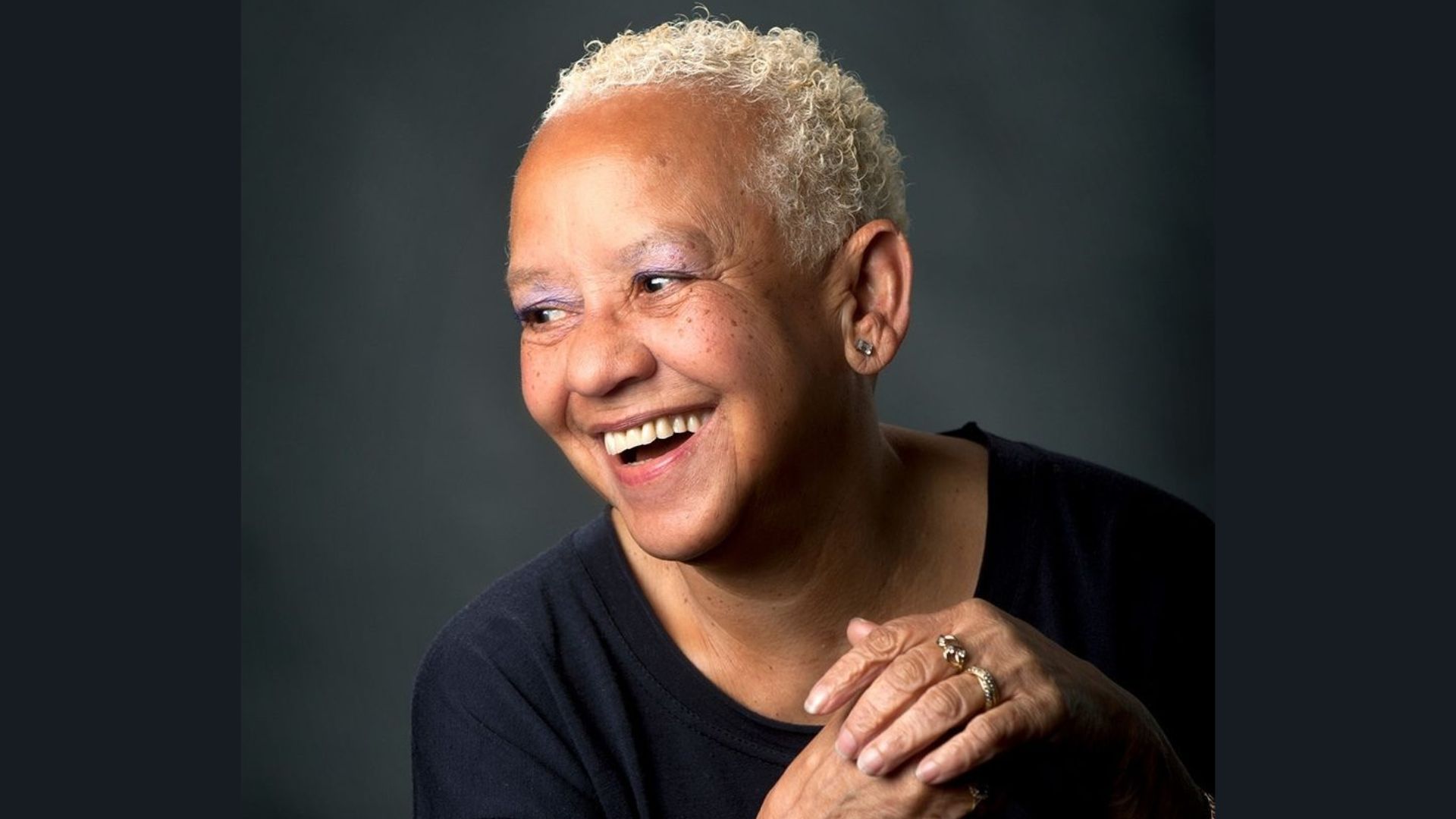
Nikki Giovanniis the Author Nikki Rosa.

Table of Contents

If you have ever read the Nikki-Rosa poem by Nikki Giovanni and felt like it said something deep but could not quite put it into words, you are not alone.

Many readers feel that way. This poem carries a lot of meaning beneath its calm, conversational surface.

In this article, I will walk you through the full poem, its summary, its meaning, and all the major themes and literary devices. I will also cover the historical and cultural background that makes this poem so powerful.

I have spent a good amount of time studying this poem and breaking it down in a way that actually makes sense, so you can walk away with a clear understanding.

Nikki-Rosa Poem by Nikki Giovanni (Full Text)

This is the “Nikki Rosa” Poem.

Here is the complete text of the Nikki-Rosa poem for your reference.

Childhood remembrances are

always a drag if you're Black

you always remember things like

living in Woodlawn with no inside toilet

and if you become famous or something

They never talk about how happy

you were to have your mother

all to yourself and how good the

water felt when you got your bath

from one of those

Big tubs that folk in chicago barbeque

in and somehow when you talk

about home

it never gets across how much you

understood their feelings as the

whole family attended meetings

About Hollydale and even though you

remember your biographers never

understand your father's pain as he

sells his stock and another

dream goes

And though your're poor it isn't

poverty that concerns you and

though they fought a lot

it isn't your father's drinking that

makes any difference but only that

Everybody is together and you

and your sister have happy birthdays

and very good Christmasses and I

really hope no white person ever has

cause to write about me

because they never understand

Black love is Black wealth and they'll

probably talk about my hard childhood

and never understand that

all the while I was quite happy

Printable Version of Nikki Rosa Poem

Sometimes you want a poem you can hold in your hands. Visit trusted poetry sites like the Poetry Foundation or Academy of American Poets for a clean, full-text version. Copy it into a Word document, adjust the font, and print it on white or cream paper for a polished result.

For school projects, print it alongside a short author bio and personal notes. For home use, some readers frame it or keep it in a journal.

Before printing, remember the poem is protected by copyright. Use it only for personal or educational purposes, not commercial distribution.

Listen to a Performance of Nikki Rosa Poem

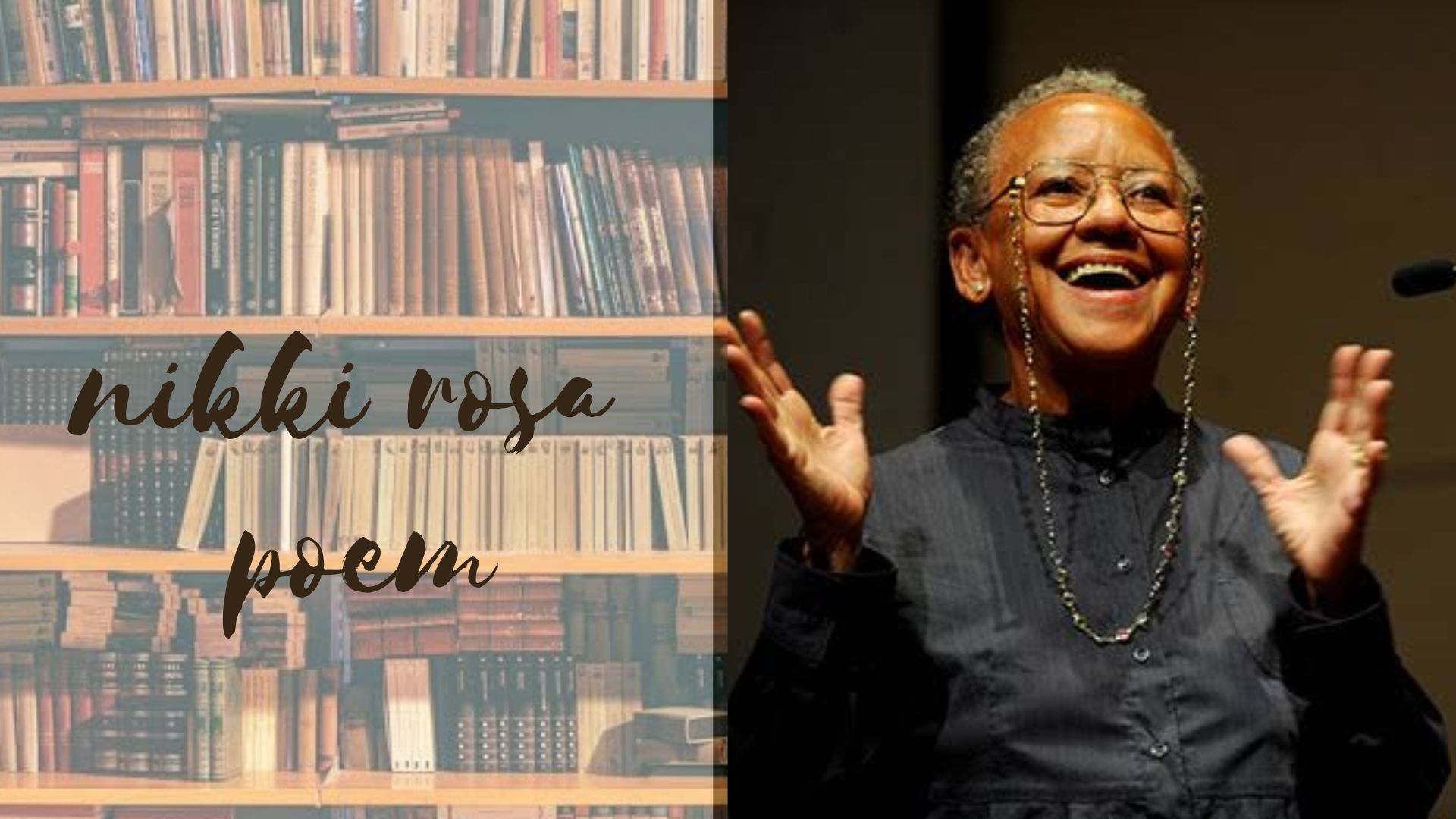
Hearing Nikki Rosa performed adds a layer that reading alone cannot match. Nikki Giovanni's spoken word style is warm, direct, and unhurried, and her own readings bring the poem's emotion fully to life.

Search YouTube for "Nikki Giovanni Nikki Rosa reading" to find authentic performances. Some university channels and poetry foundation pages also host recordings with short introductions from Giovanni herself.

If you are teaching the poem, play a performance before discussing it. Students connect faster when they hear it first.

Giovanni's pauses and emphasis also reveal meaning that is easy to miss on the page.

Nikki-Rosa Poem Summary

This poem is a window into what it means to grow up Black in America and be misread by the world.

In the Nikki-Rosa poem, Giovanni reflects on her own childhood. She talks about growing up without certain comforts, like an indoor toilet, but she does not frame those memories as painful.

To her, those years were filled with family, warmth, and love.

Celebrating Childhood Beyond Poverty

Giovanni does not deny that her family faced financial hardship. She mentions the lack of an indoor toilet and the small tub used for baths. But she does not dwell on these things as sources of shame or sadness.

Instead, she places them alongside warmth and happiness. The bath in a big tub, the family meetings, the birthdays and Christmases.

These are the memories that mattered. The hardship was there, but it did not define the experience.

The Importance of Family and Community

The poem puts family at the center of everything. Giovanni talks about having her mother all to herself, about the whole family attending meetings together, and about everyone being together as the thing that made life good.

This sense of togetherness is not accidental. It is the core of what Giovanni is trying to say. The love between family members, the shared experiences, and the sense of community were the real source of richness in her childhood.

EBSCO describes the poem's images as drawn specifically from a working-class setting. That matters because Giovanni is not writing about poverty in the abstract. She is writing about the everyday texture of one Black family's real life.

Challenging Stereotypes About Black Life

Giovanni is aware that her story will be told by others. And she is not confident they will get it right. She specifically says she hopes no white person writes about her because they will focus on the wrong things.

This is not just a personal concern. It is a broader statement about how Black lives are often filtered through an outside lens that cannot fully understand or represent the experience from the inside.

The title itself hints at this tension. "Nikki-Rosa" is seen by many scholars as a nod to Rosa Parks, suggesting the merging of a personal Black identity with a public, political one.

The Message Behind "Black Love is Black Wealth"

This line is the heart of the poem. It challenges the idea that wealth is only financial. It says that love, family, and community are forms of wealth that matter just as much, if not more.

For Giovanni, her childhood was rich in what actually counts. The warmth of her home, the love of her family, and the togetherness she felt were her true inheritance. No biographer who only counts dollars and hardships will ever capture that.

Themes in Nikki-Rosa Poem

The Nikki-Rosa poem carries several themes that run through every line.

Family Love

Family love is the foundation of the entire poem. Giovanni's memories are wrapped in the presence of her mother, father, and sister.

The love shared in that household is what she holds onto as the truest form of wealth.

Childhood Memories

The poem is rooted in memory. Giovanni revisits specific details like the tub, the meetings, the holidays. These are not grand or glamorous moments.

They are small and ordinary, but they carry deep meaning because of the feeling tied to them. Notably, the poem is written from a second-person point of view.

Giovanni addresses her childhood self as "you," which creates a thoughtful distance between the adult poet and the girl she once was.

Black Identity

Giovanni writes from a very specific place. Her identity as a Black woman shapes how she sees her past and how she expects others to misread it.

The poem is an assertion of what Black life actually looks and feels like from the inside.

Community and Belonging

The poem references community-level events, like family meetings about Hollydale, a housing development in Cleveland.

These details show that Giovanni's world extended beyond her home. She was part of something larger, and that sense of belonging added to her feeling of happiness.

Poverty vs. Happiness

This is one of the most direct themes in the poem. Giovanni acknowledges poverty without accepting the idea that poverty equals misery.

She separates the two clearly. Being poor and being unhappy are not the same thing, and her childhood is proof of that.

Racial Bias and Misrepresentation

The poem ends with a pointed commentary on how Black stories get told and by whom. Giovanni names the risk of being written about by someone who will see the surface and miss the soul.

This theme speaks to a much larger problem of racial bias in storytelling and history.

Literary Devices Used in Nikki-Rosa Poem

Giovanni uses several literary devices to make this poem feel real, personal, and powerful.

Free Verse

The poem has no fixed rhyme scheme or meter. This makes it feel like a genuine personal reflection rather than a structured, formal piece.

The freedom of the form matches the honesty of the content. It also works as an autobiographical lyric poem, because the events described are drawn from Giovanni's own life.

Imagery

Giovanni uses concrete, everyday images to bring her memories to life. The big tub, the indoor toilet, the birthday celebrations.

These details paint a clear picture of her childhood world without exaggeration.

Symbolism

The big bathtub is more than just a bathtub. It becomes a symbol of a simpler life that still held warmth and comfort.

The Hollydale meetings symbolize community action and shared hope. These symbols carry meaning beyond their literal details.

Repetition

Giovanni repeats phrases like "and though" and "and even though" throughout the poem. This repetition builds a rhythm and also reinforces her argument.

She keeps acknowledging the hardship and then pushing past it to something more important.

Contrast

The poem is built on contrast. Poverty vs. happiness. Outsider view vs. insider truth. What a biographer would write vs. what actually happened.

These contrasts are what give the poem its tension and its point.

Enjambment

Lines in this poem run into each other without stopping. There are no full stops at the end of most lines, which keeps the poem moving forward like a flowing thought.

This makes it feel natural and unforced.

Alliteration

Giovanni also uses alliteration throughout the poem. You can hear it in phrases like "like living," "how happy," and "he sells his."

This sound device adds subtle rhythm without making the poem feel formal or stiff.

Irony

There is irony in the idea that Giovanni, a celebrated poet, would be misrepresented by the very people writing about her success.

The more famous she becomes, the more likely she is to be reduced to a story of hardship. That gap between reality and how others will see it is deeply ironic.

Conversational Tone

The poem reads like someone talking to you directly. Giovanni uses "I" and speaks in a natural, relaxed voice. This tone is rooted in an oral tradition.

Giovanni's language has always been direct and working-class. That is part of why her public readings, including her well-known Def Jam Poetry performance of this poem, connect with so many people.

The tone makes the poem feel honest and personal rather than distant or literary.

Historical and Cultural Context

The Nikki-Rosa poem was written in 1968, a period of enormous social change in the United States. The Civil Rights Movement had been shaping the country through the 1950s and 1960s. Black Americans were fighting for equal rights, representation, and dignity.

Giovanni was part of the Black Arts Movement, a cultural and literary movement that ran from the mid-1960s to the mid-1970s.

This movement pushed Black writers and artists to speak directly to their communities, to tell their own stories, and to reject the standards of a white literary establishment that had long ignored or misrepresented Black voices.

In this context, the Nikki-Rosa poem is not just personal. It is political. Giovanni is not only writing about her own childhood.

She is making a statement about the right of Black people to define their own experiences, to tell their own stories, and to refuse the narratives that others have forced onto them.

About the Author

Nikki Giovanniis the Author Nikki Rosa.

Nikki Giovanni is one of the most celebrated voices in American poetry. Born in Knoxville, Tennessee in 1943, she grew up in Cincinnati, Ohio.

She studied at Fisk University and became a leading figure in the Black Arts Movement. Her work is known for being direct, honest, and deeply rooted in Black experience.

She has written dozens of poetry collections, essays, and children's books.

Giovanni has received numerous awards and honorary degrees throughout her career and continues to be a widely read and respected poet.

Conclusion

The Nikki-Rosa poem by Nikki Giovanni is a reminder that happiness is not something you can measure from the outside.

Giovanni grew up in a home without many material comforts, but she was surrounded by love, family, and community, and that made all the difference.

If this breakdown helped you see the poem in a new way, I would love to hear your thoughts in the comments below.

Share this article with someone who loves poetry, or check out other poem analyses on the blog for more.

Frequently Asked Question

Is Nikki-Rosa based on a true story?

Yes, the poem draws from Giovanni's real childhood experiences growing up in a Black family in Cincinnati, Ohio. It is considered an autobiographical lyric poem.

Who is the speaker of the Nikki-Rosa poem?

The speaker is the poet herself, Nikki Giovanni, reflecting on her own childhood memories and personal identity. She uses second-person to address her younger self.

What does Hollydale represent in the poem?

Hollydale refers to a real housing development in Ohio that was central to Black community activism during Giovanni's childhood years. Her family was blocked from buying there due to racial lending practices.

Why does Giovanni not want a white biographer?

She fears an outside perspective will reduce her story to hardship alone, missing the love and happiness that shaped her most.

Share to: -

Leave a Reply

Your email address will not be published. Required fields are marked *

Table of Contents

Today's Published