


Maya Angelou poems speak honestly about grief, injustice, identity, survival, and joy.These seven poem picks offer meaningful words for difficult moments and everyday reflection.
Her writing stands out for its direct, grounded voice and emotional honesty. Rather than forcing simple answers to pain, Angelou gives readers language for feelings they may struggle to express.
Whether you are looking for a Maya Angelou poem for comfort, inspiration, or a deeper look at her work, these selections highlight why her poetry continues to connect with readers.
Why Maya Angelou's Poems Still Matter Today
Maya Angelou's poems still matter because they address race, identity, womanhood, and survival, themes that remain relevant today.
Her words continue to connect with readers because they speak to struggles that many people still experience.
Her work appears in classrooms, public events, and conversations about social change, showing how widely her writing continues to reach.
Readers can also connect with her poems without knowing much about the period in which she wrote them.
The emotions and ideas remain clear on their own. Still I Rise is especially remembered for its message of strength and resilience, making it a poem many people turn to during difficult or uncertain times.
7 Powerful Maya Angelou Poems You Must Read
These seven poems cover the full range of what makes Maya Angelou's poems so lasting. Each one takes on a different angle, but they all carry that same unmistakable voice.
1. Still I Rise: Full Poem and Meaning
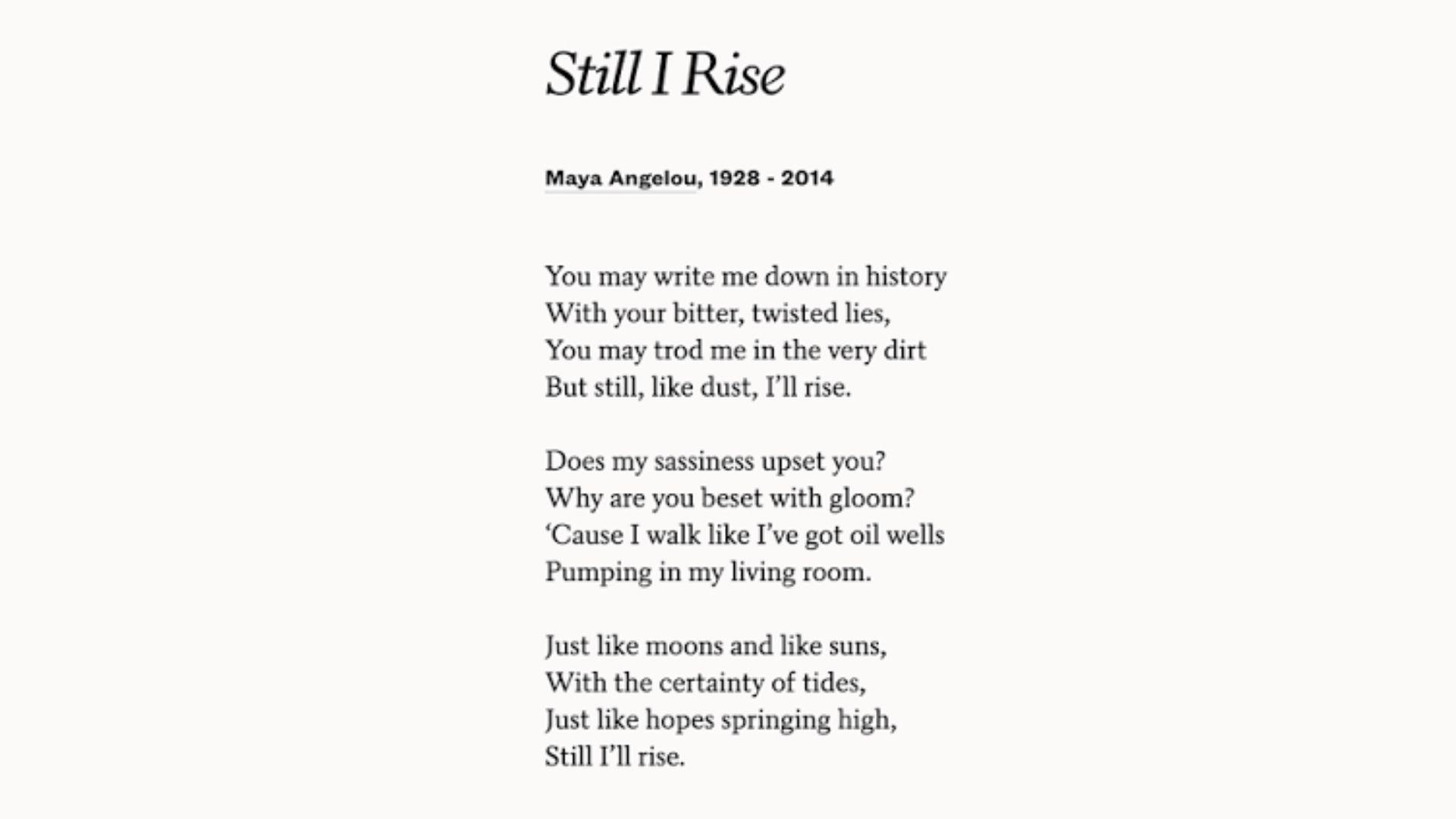
“Still I Rise” is one of Maya Angelou’s best-known poems. Published in 1978 in And Still I Rise, it speaks about facing people and systems that try to diminish or erase you.
Its central message goes beyond survival, focusing on resilience, confidence, and thriving despite hardship.
The poem’s triumphant and sometimes playful tone makes its message especially powerful. The full text is available in Angelou’s poetry collections and through verified literary platforms.
2. Phenomenal Woman: Full Poem and Meaning
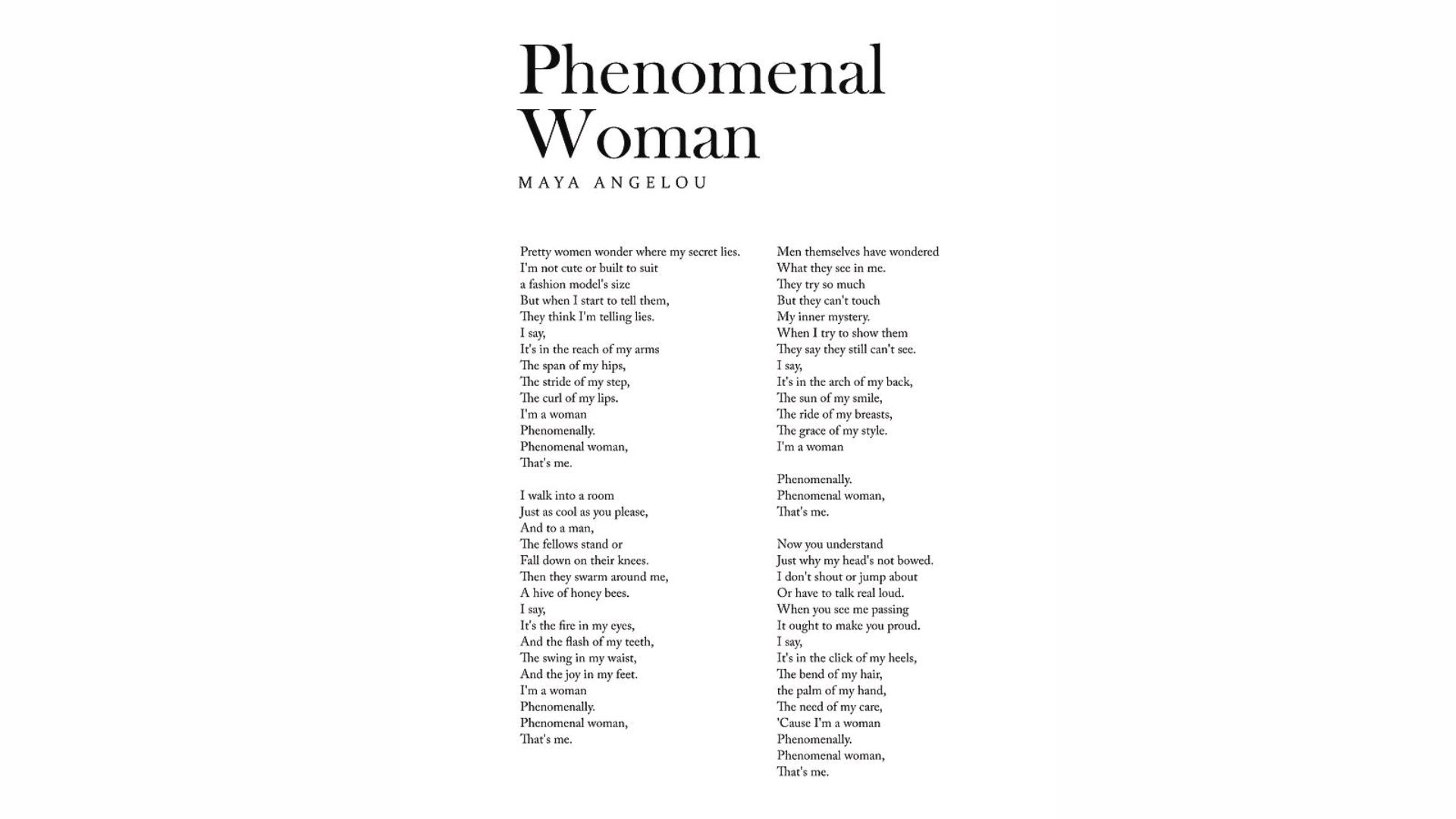
“Phenomenal Woman” celebrates confidence beyond conventional beauty standards. Angelou presents a woman whose presence, energy, and self-assurance command attention.
Rather than focusing on appearance, the poem shows how confidence can come from within. Its direct and personal style has helped it resonate with women around the world.
The full poem is available in Angelou’s collected works and through major literary platforms.
3. Caged Bird: Full Poem and Meaning
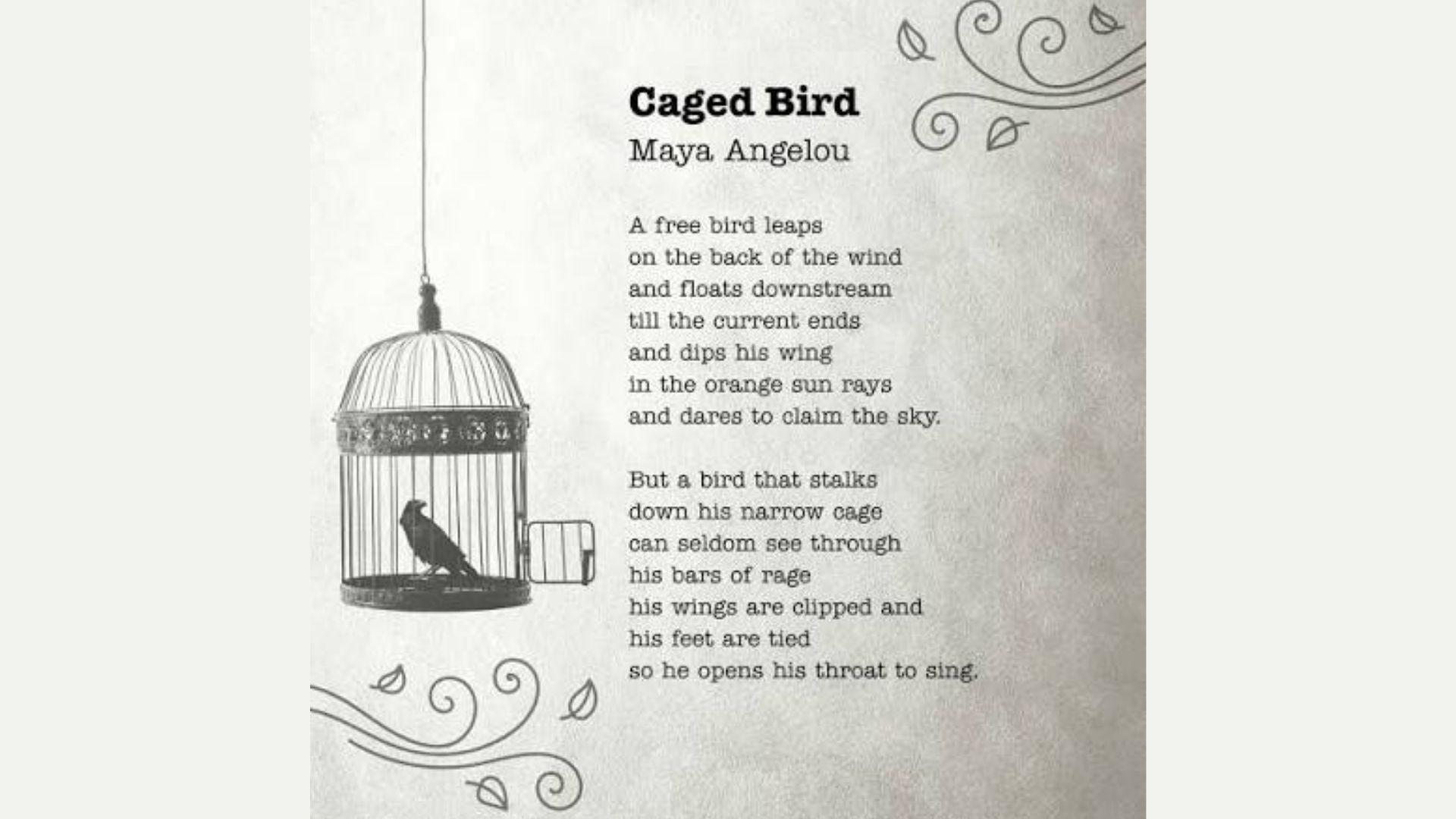
“Caged Bird” contrasts a free bird with one trapped in a cage to explore freedom and oppression.
The caged bird continues to sing, making its voice a symbol of hope and self-expression despite restriction.
The poem connects strongly to racial injustice in America while also speaking to anyone who has experienced feeling trapped or silenced. Its simple but powerful symbolism makes it one of Angelou’s most recognized poems.
4. On the Pulse of Morning: Full Poem and Meaning
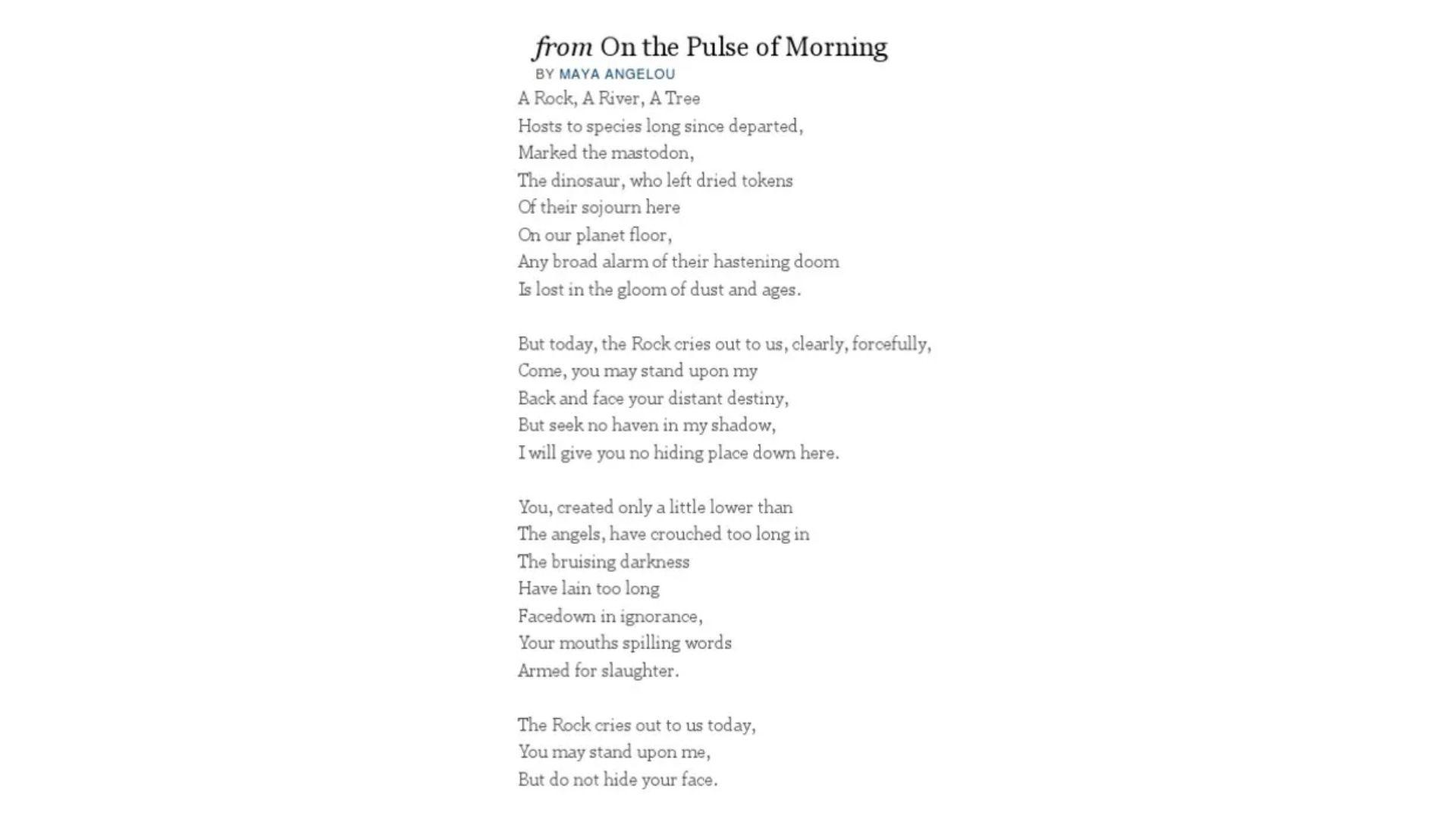
Maya Angelou read “On the Pulse of Morning” at President Bill Clinton’s inauguration in January 1993.
The poem reflects on America’s complicated history while looking toward unity and a better future. Its central images of a rock, river, and tree represent endurance, change, and new beginnings.
The poem became widely known after the inauguration and remains an important part of Angelou’s public legacy.
5. Alone: Full Poem and Meaning
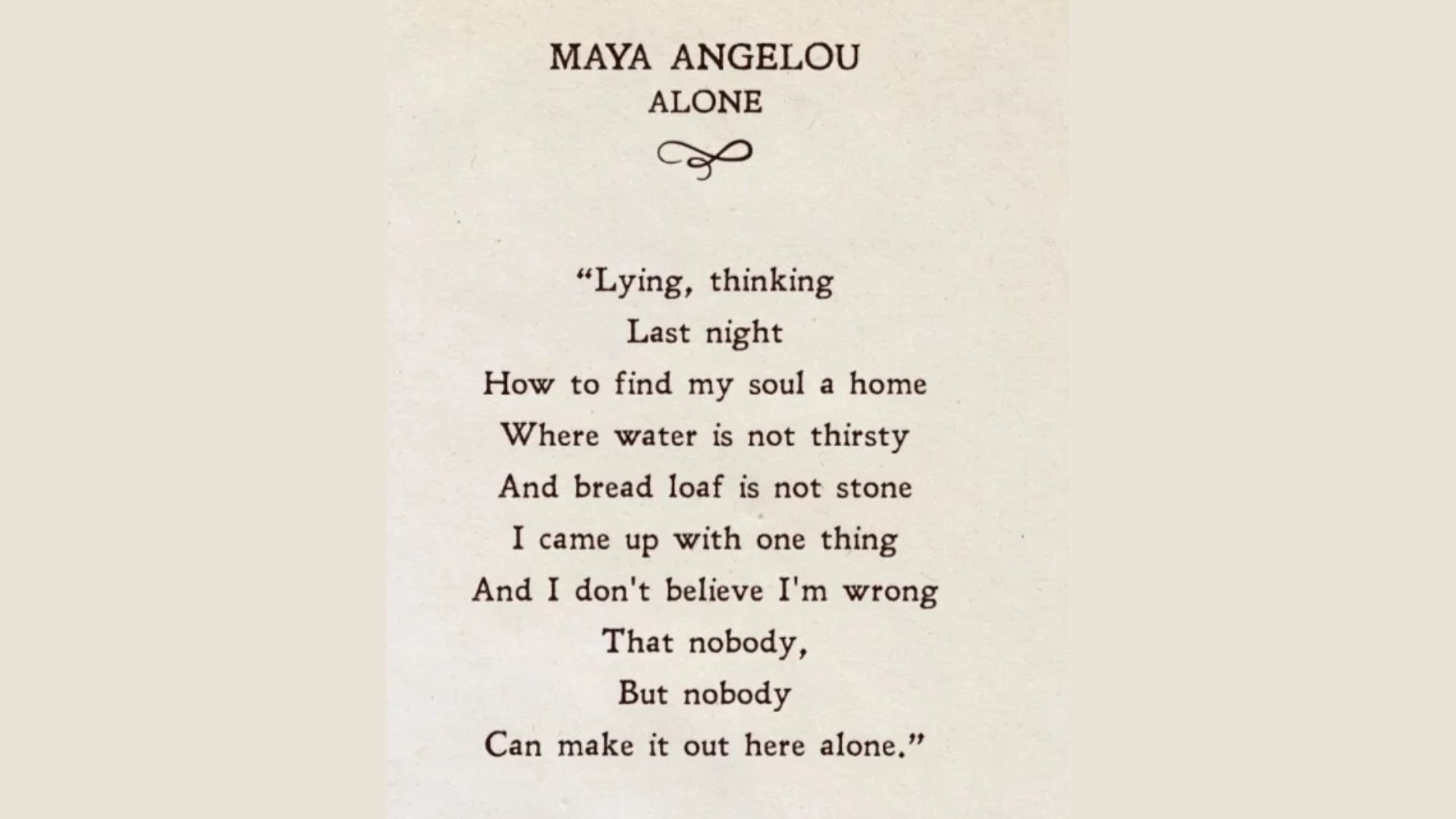
“Alone” focuses on loneliness and the importance of human connection. Angelou argues that wealth, status, and achievement cannot replace the need for other people.
The repeated idea that nobody can make it through life alone gives the poem its strong, urgent rhythm.
Its message feels universal because loneliness can affect anyone, while meaningful relationships remain an important part of life. The poem appears in Oh Pray My Wings Are Gonna Fit Me Well.
6. Equality: Full Poem and Meaning
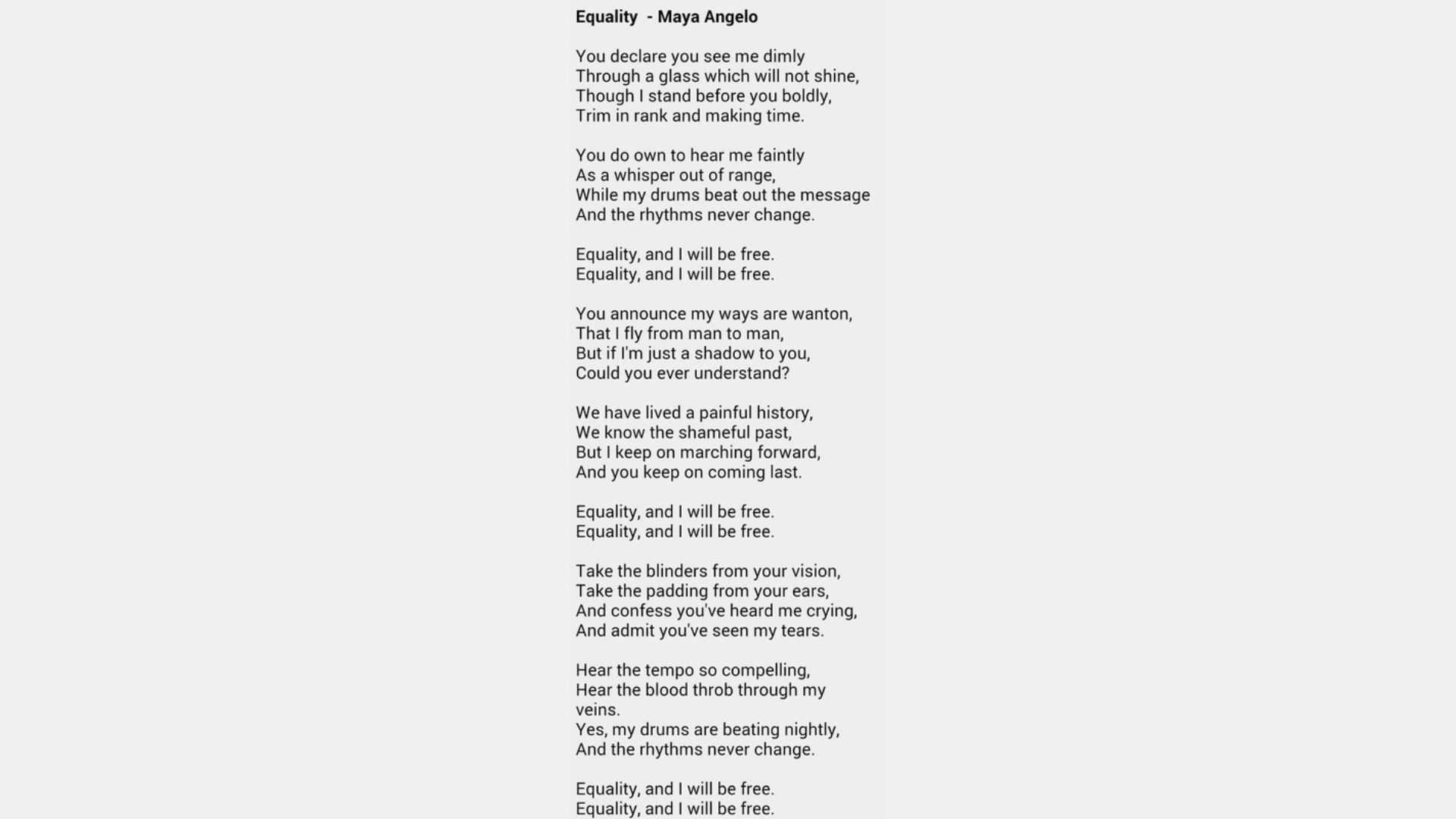
“Equality” is a direct call for equal treatment and civil rights. Angelou uses repetition and strong rhythm to create a sense of urgency, making the poem feel more like a demand than a request.
Its message connects closely with the struggle against racial inequality while remaining relevant to readers today.
The poem’s straightforward language and forceful structure make its central message difficult to overlook.
7. Woman Work: Full Poem and Meaning
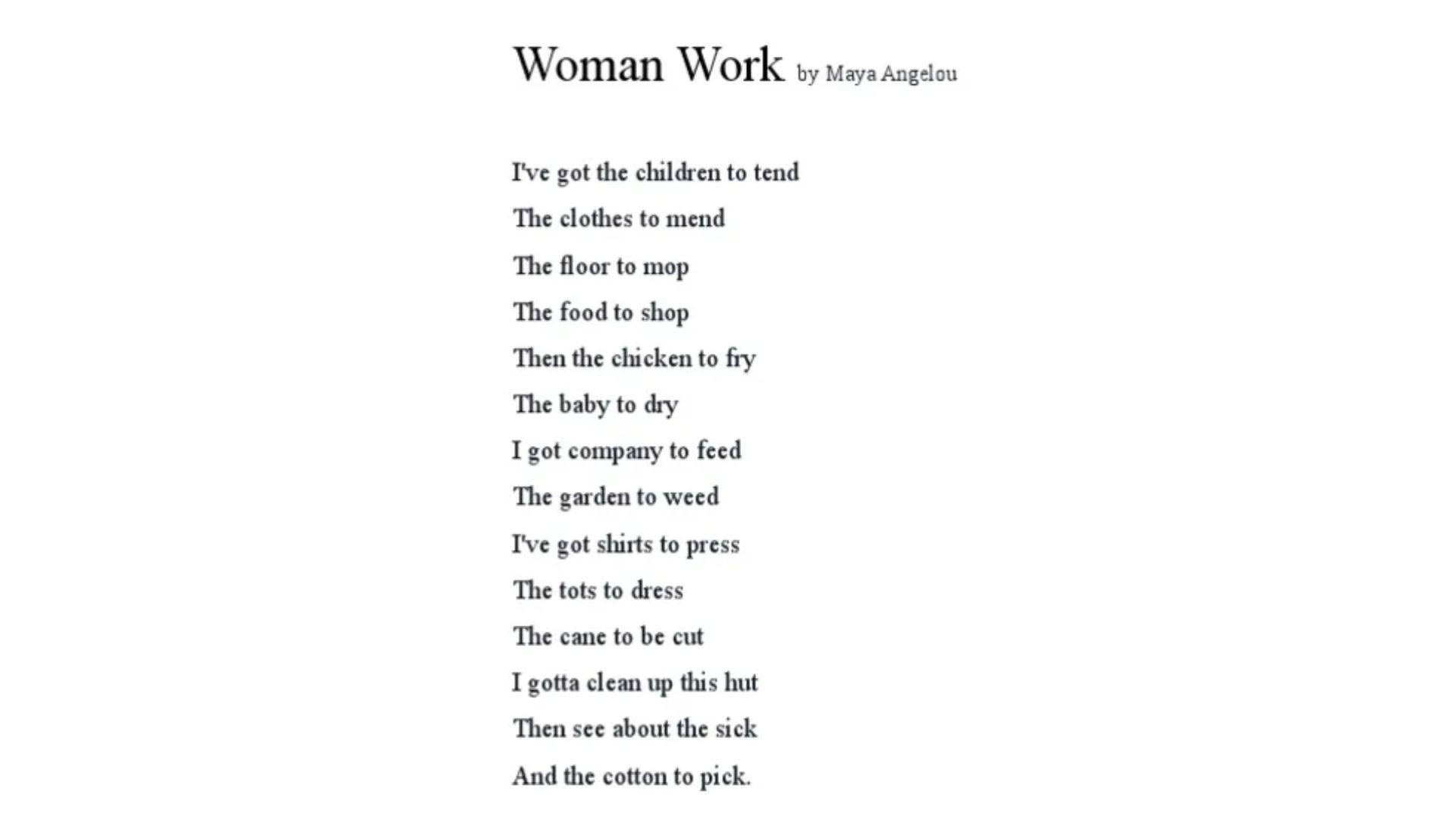
“Woman Work” describes the constant responsibilities and demands placed on a working woman.
The poem begins with a long list of daily tasks before shifting toward nature as a source of rest and relief. This contrast highlights exhaustion and the need for escape from endless responsibilities.
Its portrayal of everyday labor remains relatable, particularly for readers familiar with the pressure of balancing work, home, and personal needs.
Themes Found in Every Maya Angelou Poem
Maya Angelou’s poetry often returns to a few powerful themes that reflect her experiences and the issues she cared about most.
Strength and resilience: Her speakers face hardship but continue moving forward with courage and determination.
Racial identity and justice: Her poems openly address the experiences of Black people and the struggle for equality.
Feminism and empowerment: Her female speakers express confidence, independence, and the freedom to take up space without apology.
Freedom and voice: Many poems focus on the need to speak openly, live freely, and claim one’s own identity.
Hope and survival: Even when addressing pain, her writing often leaves room for strength, dignity, and hope.
About Maya Angelou
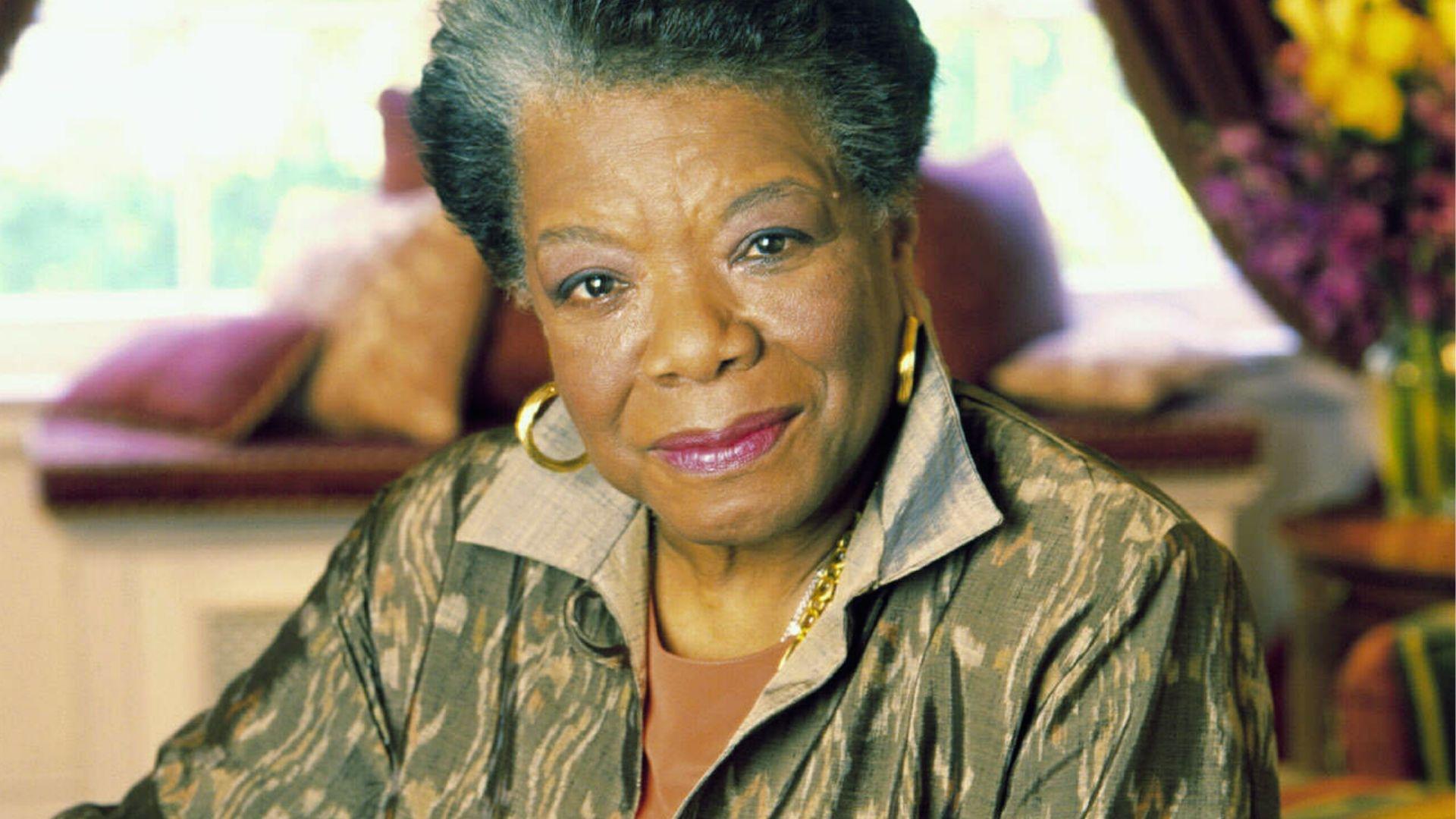
Maya Angelou was born on April 4, 1928, in St. Louis, Missouri, and grew up in Stamps, Arkansas, and San Francisco. Her difficult childhood later shaped much of her writing.
She is best known as a poet and author of “I Know Why the Caged Bird Sings”, her landmark 1969 autobiography. Angelou was also active in the civil rights movement, working alongside figures such as Martin Luther King Jr. and Malcolm X.
She died on May 28, 2014, but her influence remains strong. Her poems continue to appear in classrooms, at funerals, protests, and graduation ceremonies.
In Summary
Seven poems, one unmistakable voice. From the defiant triumph of "Still I Rise" to the quiet exhaustion in "Woman Work," every Maya Angelou poem carries the same honesty that makes her writing feel personal no matter when or where you read it.
Her themes of resilience, racial identity, womanhood, and freedom were never confined to a single era.
They were written for the long run. If one poem on this list stayed with you, go back and read it again slowly. Which one hit closest to home?
Leave it in the comments. And if someone in your life is going through something hard, share this with them. Sometimes the right words at the right time change everything.
Frequently Asked Questions
When did Maya Angelou begin publishing poetry?
Maya Angelou published her first poetry collection, Just Give Me a Cool Drink of Water ’fore I Diiie, in 1971. The collection helped establish her as a major literary voice before several of her best-known poems appeared in later books.
Which Maya Angelou book contains "Woman Work"?
“Woman Work” appears in Still I Rise, the 1978 collection that also includes several of Angelou’s most recognized poems. The collection explores identity, race, womanhood, resilience, and personal strength.
Did Maya Angelou write poetry as well as autobiographies?
Yes. Poetry was an important part of Angelou’s literary career alongside her autobiographical writing. Her work includes multiple poetry collections, while I Know Why the Caged Bird Sings remains her best-known autobiography.
What is Maya Angelou's most inspirational quote?
One of her most quoted lines comes from "Still I Rise": rising like dust despite being trodden in the dirt. It appears frequently in speeches and memorial settings.
Did Maya Angelou write poems specifically about love?
Yes. While she is best known for poems on race and resilience, she also wrote about romantic and spiritual love, including in poems like "Touched by an Angel."