
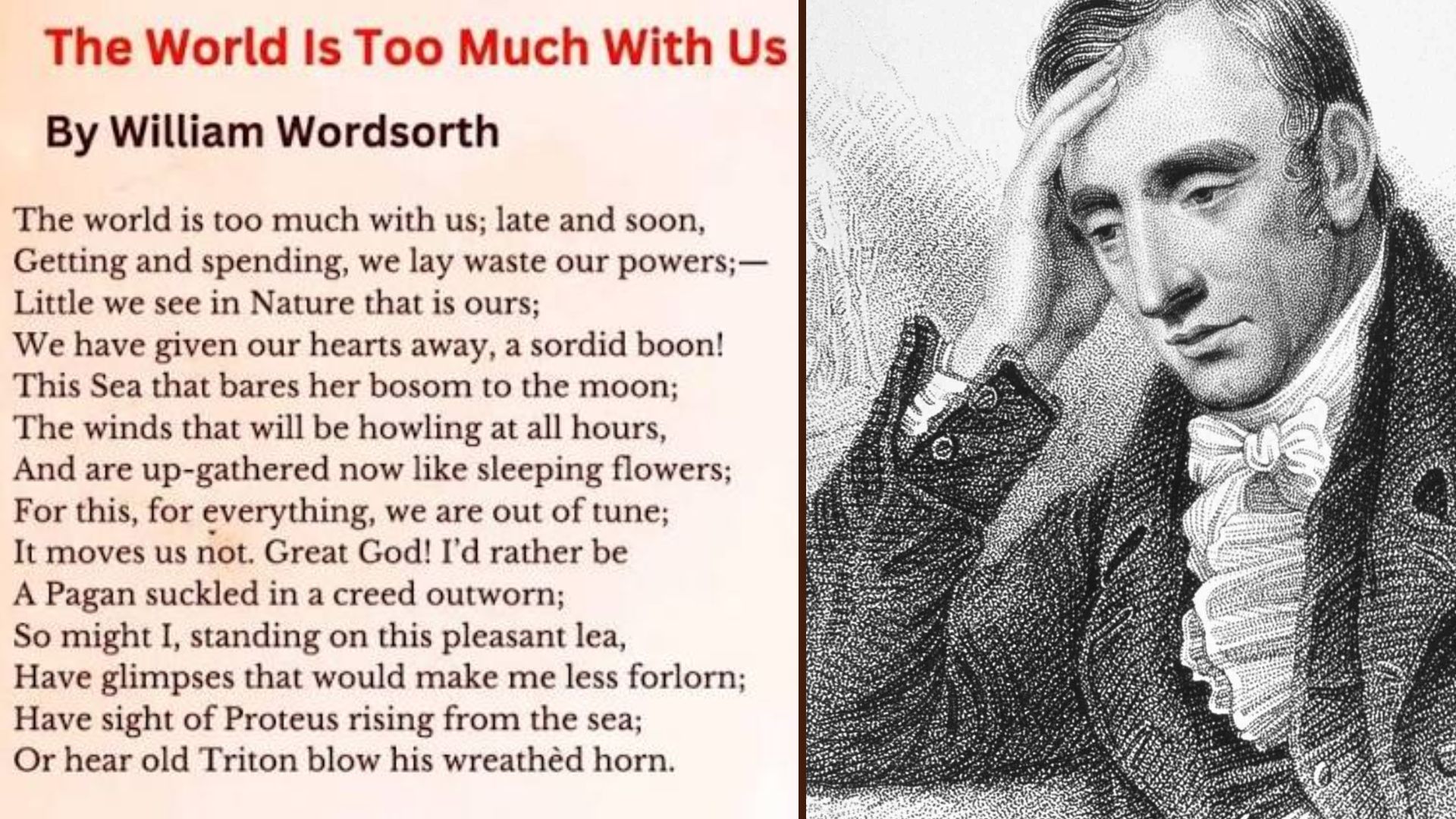
Have you ever read a line of poetry that stopped you cold? That's what "sordid boon" does in William Wordsworth's The World Is Too Much With Us.
This short phrase carries a heavy warning about how we live our lives. In this post, you'll learn what the phrase means, why Wordsworth chose it, and how it connects to the poem's bigger message.
We'll also walk through the full poem, break down its themes, and look at the literary devices that make it work.
You don't need a background in poetry to follow along. I've read this poem many times, and I'll share what stood out to me along the way.
What Does "Sordid Boon" Mean?

A phrase that turns a gift into a warning.
The words "sordid boon" seem to contradict each other. A boon is something good, a gift or a blessing. Sordid means dirty or shameful. Wordsworth puts these two words together on purpose. He wants readers to feel the tension right away.
In the poem, "sordid boon" describes what people get in exchange for giving up their connection to nature. Society offers money, comfort, and things to buy. But Wordsworth sees this trade as a bad deal. We gain material things, but we lose something more important along the way.
This phrase sits at the heart of the poem's message. It sums up the cost of chasing wealth while ignoring the natural world around us.
The World Is Too Much With Us (Full Poem)
The world is too much with us; late and soon, Getting and spending, we lay waste our powers: Little we see in Nature that is ours; We have given our hearts away, a sordid boon! This Sea that bares her bosom to the moon; The winds that will be howling at all hours, And are up-gathered now like sleeping flowers; For this, for everything, we are out of tune; It moves us not. Great God! I'd rather be A Pagan suckled in a creed outworn; So might I, standing on this pleasant lea, Have glimpses that would make me less forlorn; Have sight of Proteus rising from the sea; Or hear old Triton blow his wreathed horn.
Synopsis of The World Is Too Much With Us
A brief overview of the poem's central message.
What Happens in the Poem?
The speaker looks at the world around him and feels a deep sense of loss. He notices the sea, the wind, and the moon, but he can't feel joy in any of it. He blames this on how busy people have become with earning and buying. By the end, he says he would rather follow an old pagan belief system if it meant feeling close to nature again.
Why the Speaker Feels Disconnected from Nature
The speaker feels cut off because his mind stays fixed on daily tasks and material goals. He walks past beautiful sights without really seeing them. This disconnect isn't about the world changing. It's about people losing the ability to notice what's already there.
Major Themes in The World Is Too Much With Us
The ideas that have kept this poem relevant for generations.
Materialism vs. Nature
Wordsworth places human greed directly against the calm beauty of nature. The poem suggests that the more we focus on getting and spending, the less room we leave for anything else. This clash sits at the center of the entire sonnet.
Spiritual Emptiness
The speaker admits he feels nothing when he looks at the sea or hears the wind. This emptiness points to a loss of feeling, not just a loss of time. Wordsworth suggests that chasing wealth leaves little space for wonder.
The Romantic Love of Nature
Like much of his other work, this poem shows Wordsworth's deep respect for the natural world. As a leading voice of Romanticism, he treats nature as something alive and worth paying attention to, not just scenery in the background.
Mythology and Lost Wonder
The speaker brings up old myths like Proteus and Triton near the end. These figures come from Greek mythology, and he says he would rather believe in them than live without any sense of magic in the world.
Analysis of "Sordid Boon"
Why this single phrase captures the poem's core message.
"We Have Given Our Hearts Away" Explained
This line comes right before "sordid boon" and sets up its meaning. Wordsworth says people have handed over their hearts, their true feelings, in exchange for something far less valuable. The poem treats this trade as a quiet tragedy.
The Cost of "Getting and Spending"
The opening lines mention "getting and spending" as the main cause of this loss. Wordsworth isn't against work or money on their own. He's pointing at what happens when these things take over completely, leaving no room for anything else.
What Wordsworth Wants Readers to Realize
The poem asks readers to slow down and notice what they might be missing. Wordsworth wants people to see that a full bank account doesn't guarantee a full life. Real connection to the world takes attention, not just effort.
Literary Devices Used in the Poem
The techniques that make the poem so powerful.
Oxymoron
"Sordid boon" is the clearest example. Pairing a shameful word with a positive one creates instant tension and forces readers to stop and think.
Imagery
Wordsworth paints clear pictures with the sea baring "her bosom to the moon" and winds "howling at all hours." These images make nature feel alive and close.
Symbolism
The sea and wind stand for the natural world as a whole. Proteus and Triton stand for wonder and myth, the things the speaker feels he has lost.
Classical Allusions
References to Proteus and Triton pull from Greek mythology. These figures represent a time when people felt closer to nature and its mysteries.
Personification
Wordsworth gives human traits to nature, describing the sea's "bosom" and calling the wind's sound "howling." This makes the natural world feel like a living presence.
Form
The poem is a Petrarchan sonnet, fourteen lines built on a set rhyme scheme. That tight structure forces every word, including "sordid boon," to carry extra weight.
Why The World Is Too Much With Us Still Matters
The poem's message in today's fast-paced world.
Consumerism in the Modern Age
Wordsworth wrote this poem around 1802, during the early Industrial Revolution, when factories and city work were already pulling people away from the countryside. Over two hundred years later, the warning still fits. Constant buying and busy schedules can pull attention away from simple things worth noticing.
Reconnecting with Nature
The poem serves as a gentle nudge to step outside and pay attention. A walk, a quiet moment outdoors, or even a few minutes without a screen can bring back some of that lost connection.
Lessons Readers Can Take Away
The biggest lesson here is about balance. Working and earning matter, but so does making space for rest, nature, and quiet reflection.
My Reading Experience
What stood out to me after reading the poem.
Why "Sordid Boon" Is the Most Powerful Line
Out of the whole poem, this phrase stuck with me the most. It's short, but it carries so much weight. Writers still borrow the title today for their own work about modern life, which tells you how much these two words hold. I found myself thinking about it long after I finished reading, especially when I noticed how often I check my phone instead of looking around.
What Makes the Poem Timeless
What strikes me most is how little the core problem has changed. People still trade quiet moments for busy schedules. Reading this poem felt like a reminder to slow down, something I think most of us could use.
About The Author: William Wordsworth

William Wordsworth lived from 1770 to 1850 and became one of the most recognized poets of the Romantic period. Born in Cockermouth, Cumberland, he shared a home with his sister Dorothy, who supported his writing and love of the outdoors.
He published Lyrical Ballads alongside Samuel Taylor Coleridge, a collection that helped shape English poetry for generations. He became Poet Laureate in 1843.
Growing up in the Lake District, surrounded by hills, lakes, and open countryside, shaped nearly all of his major works, including this sonnet.
Conclusion
Reading this poem always brings me back to the same question: what am I missing while I stay busy? "Sordid boon" reminds me that not every gain is worth its cost. I still think about this poem on quiet walks, when the noise of daily life fades a bit. If this post helped you see the poem differently, leave a comment and share your thoughts. Feel free to share this post with someone who might need the reminder too.
Frequently Asked Questions
What does "sordid boon" mean in the poem?
It describes something that looks like a gift but comes at a shameful cost. Wordsworth uses it to show what people lose when they chase money and comfort.
Why did Wordsworth write The World Is Too Much With Us?
He wanted to show how people were losing touch with nature during a time of growing industry and materialism. The poem serves as a warning against that shift.
What type of poem is The World Is Too Much With Us?
It's a Petrarchan sonnet, made up of fourteen lines with a set rhyme scheme. This form was common during the Romantic period.
Why does the speaker mention Proteus and Triton?
These figures come from Greek mythology and represent wonder and connection to nature. The speaker says he would rather believe in old myths than feel nothing at all.