

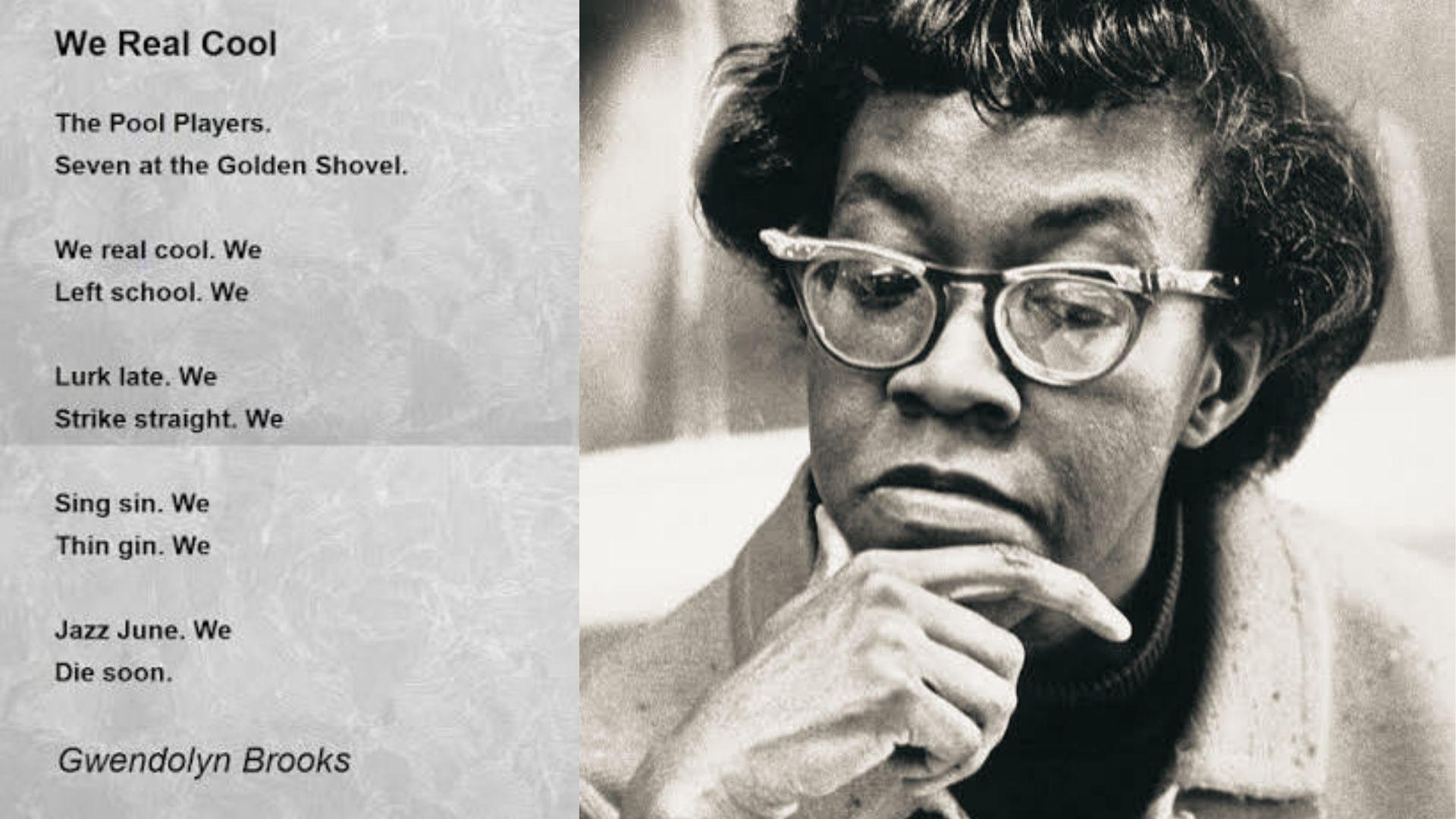
Looking for a clear breakdown of "We Real Cool"? You're in the right spot.
This article walks you through the poem's meaning, its themes, and the reason its ending still hits hard decades later.
We'll also cover the structure, the sound, and why the word "We" carries so much weight.
I've studied this poem in classrooms and on my own, and I know how confusing short poems like this can feel. By the end, you'll understand exactly what Gwendolyn Brooks was saying, and why. No filler, just answers.
About We Real Cool

"We Real Cool" is a short poem by Gwendolyn Brooks, published in 1959. It has just eight lines, but it says a lot in a small space.
Brooks wrote it after seeing young men playing pool instead of going to school. The poem captures their voice, their pride, and the risks tied to their choices.
It's become one of the most taught and quoted poems in American schools. Its short lines and strong beat make it easy to remember, but its meaning runs much deeper than it first appears.
We Real Cool Poem (Complete Text)
The Pool Players. Seven at the Golden Shovel.
We real cool. We
Left school. We
Lurk late. We
Strike straight. We
Sing sin. We
Thin gin. We
Jazz June. We
Die soon.
Meaning of We Real Cool
The poem speaks through the pool players themselves, giving readers direct access to their view.
At its core, the poem is about young people choosing rebellion over rules. The speakers brag about their freedom, their lifestyle, and their independence from school and adults.
But underneath that pride, there's a warning. Brooks doesn't judge the boys outright. Instead, she lets their own words show both their confidence and the danger they're walking into.
The poem asks readers to think about what happens when young people are pushed to the margins, with few paths open to them.
Themes in We Real Cool
Freedom, mortality, and identity all sit inside these eight short lines.
The poem touches on several ideas at once:
- Youthful rebellion: shown through skipping school and chasing a good time
- Mortality: the poem ends with a stark line about death
- Community and belonging: the boys speak as a group, not individuals
- Missed opportunity: their choices come from having few better options in front of them
Why the Ending Is So Powerful
The final line lands like a gut punch after seven lines of swagger and fun.
Right up until the end, the poem sounds confident and even fun. The boys brag about their nights out and their bold lifestyle. Then, in the last line, the tone shifts completely.
Brooks reveals that this lifestyle may lead to an early death. That sudden change catches readers off guard. It forces you to look back at every earlier line differently. The confidence now feels fragile, and the fun now feels risky.
Literary Analysis of We Real Cool
The poem's power comes from what it leaves unsaid as much as what it states directly.
Brooks builds this poem using tight control over sound, rhythm, and word choice. Every word matters because there are so few of them.
She uses short, blunt phrases to mimic real speech, especially the way young people might talk among friends. The structure itself acts like a drumbeat, echoing music styles like jazz and blues.
Structure and Form
Eight lines. Four couplets. Almost no wasted words anywhere in the poem.
The poem is made of four rhymed couplets, totaling eight short lines. Each line is brief, often just a handful of words. This tight structure mirrors the fast, clipped way the boys might actually talk.
Rhythm, Repetition, and Sound
The repeated word "We" creates a steady beat that drives the whole poem forward.
The word "We" appears at the end of nearly every line, creating a steady, chant-like rhythm. This repetition mimics the sound of pool balls clicking or a drumbeat in jazz music.
Brooks even said she wanted readers to hear the "We" almost like a hum.
Symbolism and Imagery
Pool halls, late nights, and jazz rhythms all point to a specific time and place.
The pool hall setting works as a symbol for spaces outside mainstream expectations, places where rules feel looser.
These images connect to real experiences in mid-century Black urban communities, where limited opportunities pushed some young people toward the streets.
The Significance of "We"
Using "we" instead of "I" turns this into a story about a group, not one person.
Brooks chose "We" instead of "I" for a clear reason. It turns the poem into a group statement, not a personal confession.
It also makes the ending feel heavier, since the risk described applies to the whole group speaking as one voice.
About the Author

Born in Topeka, Kansas, and raised in Chicago, she began writing poetry as a child and published her first poem at just thirteen years old.
In 1950, Brooks became the first Black author to win the Pulitzer Prize, awarded for her poetry collection Annie Allen. She went on to serve as Poet Laureate of Illinois and later as Poet Laureate Consultant in Poetry to the Library of Congress, becoming the first Black woman to hold that national role.
Brooks wrote "We Real Cool" in 1959 for her collection The Bean Eaters, drawing inspiration from real young men she saw playing pool during school hours in Chicago.
Her work often focused on urban life, identity, and the struggles facing Black Americans, told through short, powerful lines that stayed close to real, everyday speech.
Brooks passed away in 2000, but her poems remain some of the most taught and quoted in American classrooms today.
Conclusion
"We Real Cool" still surprises readers every time, and honestly, it caught me off guard the first time I read it too. Those eight lines carry more weight than most full-length poems.
I hope this guide helped you see the meaning behind the swagger and the sting behind that final line. Next time you read "We Real Cool," notice how the rhythm pulls you in before the ending pulls the rug out.
Got thoughts on the poem? Drop a comment below, share this with a friend who loves poetry, or check out our other poem breakdowns.
Frequently Asked Questions
Who wrote "We Real Cool" and when was it published?
Gwendolyn Brooks wrote "We Real Cool." It appeared in 1959 as part of her poetry collection titled The Bean Eaters.
Is "We Real Cool" based on a true event?
Yes, in part. Brooks said she was inspired after seeing real boys playing pool during school hours in Chicago.
Why is "We Real Cool" considered a famous poem?
Its short length, strong rhythm, and sudden emotional turn make it memorable, widely taught, and easy to quote from memory.
What poetic devices does Gwendolyn Brooks use most in this poem?
Brooks relies heavily on repetition, enjambment, and internal rhyme to build rhythm and mimic natural, casual speech patterns.