

If you have ever lost someone you love, you know how heavy that grief can feel.
The “I’m Free” poem has brought comfort to millions of people during their darkest moments. You have probably heard it at a funeral or read it on a memorial card.
This poem carries a gentle message. It asks us to let go of sorrow and find peace instead.
In this post, you will read the full text of the poem. You will also learn what it truly means, who wrote it, and why so many people turn to it when saying goodbye.
Full Text of the “I’m Free” Poem
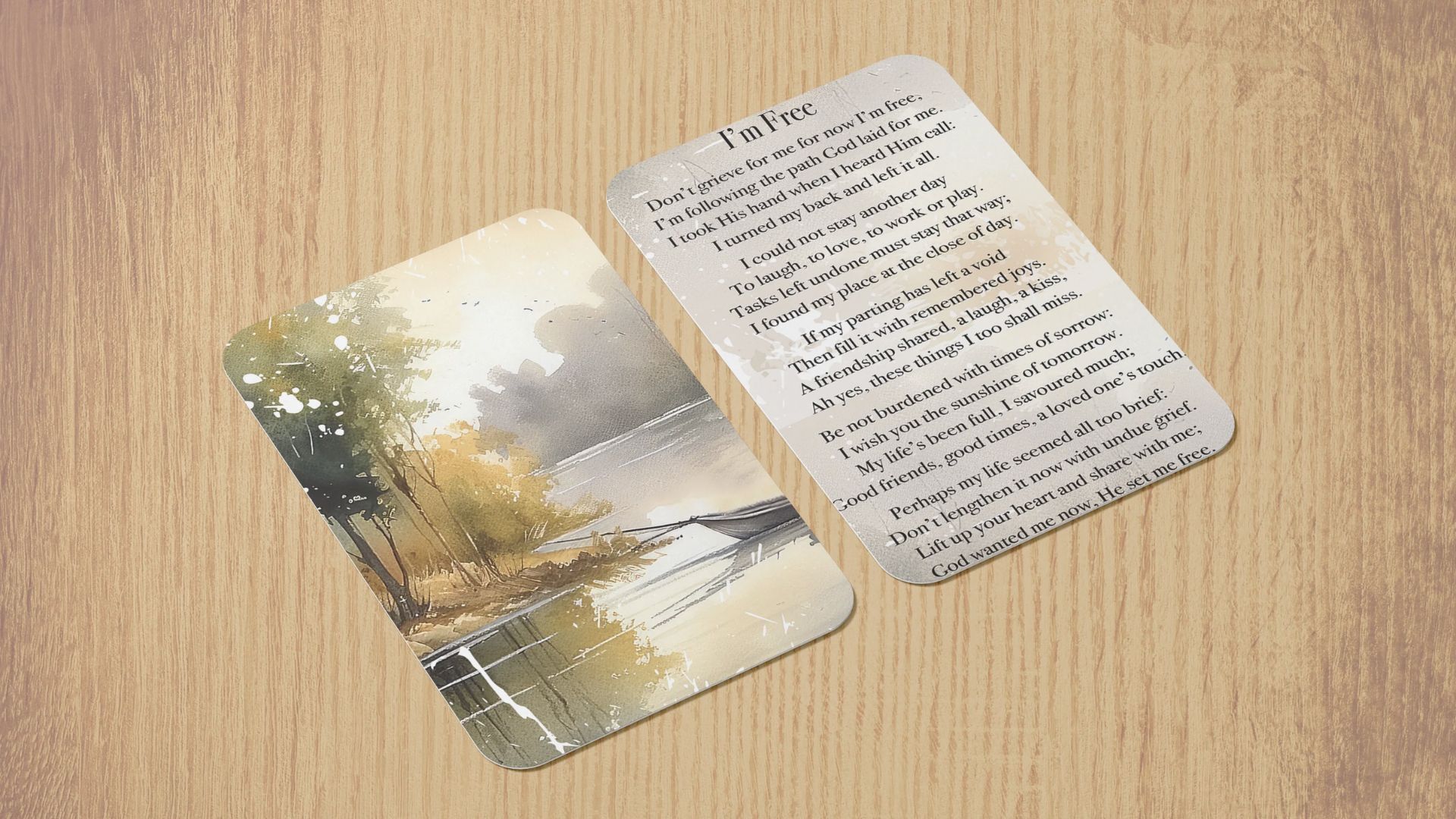
Read the complete and original version of this beloved poem, word for word, as written by the author.
Read the Complete Poem
Here is the complete and original version of the “I’m Free” poem by Anne Lindgren Davison. She wrote this piece in 1974, and it has since become one of the most shared funeral poems in the world.
Don’t grieve for me for now I’m free,
I’m following the path God laid for me
I took his hand when I heard him call,
I turned my back and left it all
I could not stay another day,
To laugh, to love, to work or play
Tasks left undone must stay that way,
I’ve found that peace at the close of day
If my parting has left a void,
Then fill it with remembered joy
A friendship shared, a laugh, a kiss,
Ah yes, these things I too will miss
Be not burdened with times of sorrow,
I wish for you the sunshine of tomorrow
My life’s been full, I’ve savored much,
Good friends, good times, my loved one‘s touch
If my time seemed all too brief,
Don’t lengthen it now with undue grief
Lift up your heart, rejoice with me,
God wanted me now, He set me free.
This version stays true to the original text as written by Anne Lindgren Davison. If you plan to use it at a service or on a memorial card, please credit her name alongside the poem.
The History of the “I’m Free” Poem
Every great poem has a story behind it. Here is how this one came to life and why the author’s name still gets lost online.
Origin and Creation Story
Anne Lindgren Davison wrote this poem on June 22, 1974. She was just 35 years old at the time, living her life as a wife and mother.
The poem came from a personal moment of reflection on mortality. She thought about what she would want to say to loved ones if she were no longer here. That quiet thought became this lasting piece of comfort.
Copyright and Recognition
The poem had no formal copyright for years. Anne’s mother pushed her to register it, but Anne did not think it would gain wide attention.
She finally received copyright protection on May 9, 1994, under registration number TX 3-837-377. By then, the poem had already spread across funeral services and memorial pages worldwide.
Misattribution Issues Online
As the poem grew popular online, Anne’s name slowly disappeared from it. Most websites listed it as “author unknown.” Some even credited other writers entirely.
Anne has made one simple request. Do not alter the words, and always include her name when sharing it.
Meaning of the “I’m Free” Poem
This poem carries a clear and gentle message. It is about finding peace after death and letting go of the pain of earthly life.
The speaker has accepted their passing. They are not afraid. Instead, they feel free and at rest.
But the poem is also written for the living. It asks loved ones to stop carrying heavy grief. Instead of sorrow, it encourages you to hold on to happy memories. The laughter, the friendship, the love you shared: those are what truly matter.
It is a poem that gives permission to heal.
Why “I’m Free” Is Popular at Funerals
Most funeral poems carry a heavy and sorrowful tone. This one does the opposite. It offers hope, peace, and a sense of release.
That is why so many families choose it for memorial services. It fits naturally into funeral readings, printed programs, and tribute cards. The simple language also makes it easy for anyone to read aloud without stumbling over complex words.
Can You Use the “I’m Free” Poem?
This poem carries a message of comfort, and the author wants people to share it freely in the right way.
Personal and Noncommercial Use
Yes, you can use this poem at funerals, memorial services, and personal tributes. Anne Lindgren Davison has given open permission for noncommercial use. You are free to print it on funeral programs, memorial cards, or tribute pages for loved ones.
Rules to Follow When Using the Poem
Anne has two simple requests. First, do not change or alter the original words. Second, always credit her name alongside the poem. These are small steps that respect her work.
Commercial Use Permissions
If you plan to use the poem for any commercial purpose, you must contact the author directly for permission. This includes books, merchandise, or paid publications. You can reach her through her official website at imfreepoem.org.
How to Use the “I’m Free” Poem in a Funeral
There are many ways to include this poem in a funeral. You can print it inside programs, pamphlets, or order of service booklets. It also works well as a reading during the ceremony, especially near the closing when the tone shifts toward peace and hope.
Beyond the service, families often use it on memorial cards, framed prints, or keepsake items. These small tributes keep the poem close to the hearts of those who are grieving.
About the Author of the “I’m Free” Poem
Anne Lindgren Davison is the poet behind this widely loved funeral poem. She wrote it on June 22, 1974, at the age of 35. At the time, she was a wife and mother who reflected on her own mortality after attending a funeral.
Her goal was simple. She wanted her loved ones to feel peace, not sadness, if she passed away. She copyrighted the poem in 1994 and asks that her name always be credited when it is shared.
Final Thoughts on the “I’m Free” Poem
Some poems stay with you long after you read them. The “I’m Free” poem is one of those rare pieces. It reminds us that death does not have to be the end of love. It can be the start of peace.
If this poem brought you comfort, share it with someone who needs it. Just remember to credit the author, Anne Lindgren Davison, and keep the original words intact.
Have you used this poem at a service? Tell us your story in the comments below.
Frequently Asked Questions
Who wrote the “I’m Free” poem?
Anne Lindgren Davison wrote this poem on June 22, 1974. She was 35 years old at the time, living as a wife and mother.
What is the meaning of the “I’m Free” poem?
The poem is about finding peace after death. It asks loved ones to let go of grief and hold on to happy memories instead.
Can I use the “I’m Free” poem at a funeral?
Yes, the author allows free use for funerals and memorial services. Just make sure to credit Anne Lindgren Davison and keep the original words unchanged.
Why is the “I’m Free” poem so popular?
It carries a hopeful and calming tone that stands apart from most funeral poems. The simple language makes it easy to read aloud at any service.
Is the “I’m Free” poem copyrighted?
Yes, it was officially copyrighted in 1994 under registration number TX 3-837-377. For any commercial use, you need to contact the author directly.