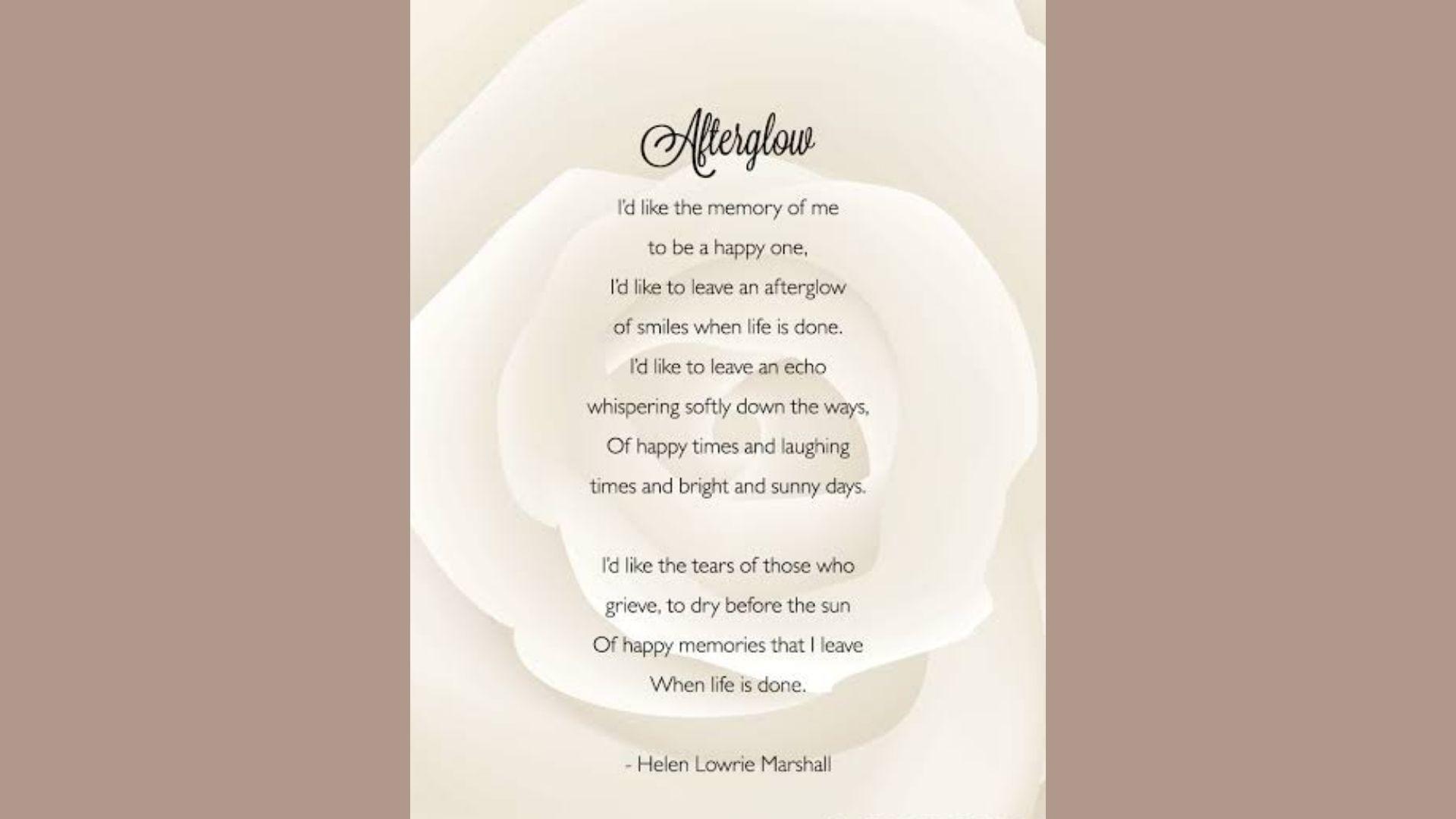


I have read this poem more than once at moments of loss. It helped me breathe a little easier. If you are looking for the Do Not Weep For Me poem, you are in the right place.
This article covers the full text, summary, themes, and a line-by-line explanation. I have worked with grief-related content for years, so I know what people need in hard times.
You will also learn about the poet and why this poem is read at funerals.
Let’s get into it.
Overview of Do Not Weep For Me Poem

The Do Not Weep For Me poem holds a simple but powerful idea at its heart. It tells us that death is not a final goodbye.
The speaker, who has passed, gently asks the living to stop weeping. They say they are still present in sunlight, wind, and rain.
Death, in this poem, is just a change of form. The message is one of peace and remembrance. It asks the grieving to release their sorrow and hold onto love instead.
Remembrance here does not hurt. It feels soft, warm, and full of quiet hope.
Full Text of Do Not Weep For Me Poem
Read the complete poem here, written by Colin Ian Jeffery.
Do not weep me
Grieving over my fall from grace
For he forgave
As I outpaced echoes
Of each demon’s stalking stride.
Once upon a time
I shared the bread he broke
And sipped the wine he blessed.
These lines carry a lot of weight. Short, but full of meaning.
Summary of Do Not Weep For Me
Breaking down the poem’s meaning in plain, simple language.
Simple Explanation in Easy Words
A person who has died is speaking. They tell their loved ones to stop grieving. They say they are not gone. They have become part of nature.
They are in the snow, the rain, the birds, and the sun. The tone is calm and loving. The speaker does not want sadness. They want the living to feel at peace.
What the Poem Teaches About Loss
This poem teaches that loss does not have to mean emptiness. When someone we love dies, they do not fully disappear.
They live in small moments. In the sound of rain. In the morning light. It teaches that grief can soften over time. That love stays even when a person is gone.
Themes in Do Not Weep For Me
The poem carries deep themes that speak to the human heart in times of loss.
Acceptance and Letting Go
One major theme is acceptance. The speaker has accepted their own death. They are not bitter. They are not afraid. They speak calmly.
They ask the living to do the same. To accept. To let go of heavy grief. To keep living.
Faith and Forgiveness
There is a quiet faith running through the poem. A belief that life does not fully end. That love moves beyond the body.
Forgiveness also plays a part. Forgiving yourself for still being alive. Forgiving yourself for feeling pain. The poem offers that gently.
Emotional Healing
The poem is, at its core, about healing. It does not rush it. It just opens a door.
It says: you can feel better. You can remember with love instead of pain.
Line-by-Line Explanation of the Poem
A closer look at what each part of the poem is really saying.
Understanding the Opening Lines
The opening lines set the tone right away.
The speaker says: Do not weep for me. Do not stand at my grave in sorrow.
This is a direct address to the grieving. It is tender. It is firm. The speaker wants to comfort, not be mourned.
Meaning of the Middle Lines
The middle lines list places where the speaker now lives. Wind. Rain. Snow. Sunlight. Corn fields. Morning quiet.
These are not random. They are things we all experience.
The poem is saying: every time you step outside, I am there. Every time you feel the breeze, that is me.
Final Message Explained
The final lines bring everything together. The speaker says they did not die. They are still present in the world around us.
This ending brings peace without denying reality. It does not say death is fake. It says love is bigger than death.
Why This Poem Brings Comfort
A look at why so many people turn to this poem when words feel hard to find.
Connection to Grief and Healing
Grief is heavy. Words often fail. This poem fills that gap. It speaks what many grieving people feel but cannot say.
It gives the bereaved permission to heal. Permission to not stand at a grave forever. Permission to live and still love the one who passed.
Why It Is Popular at Memorials
This poem is popular at funerals and memorials because it is short, clear, and deeply moving. It does not need explanation. It lands right in the heart.
It also works for many beliefs. It is not tied to one religion. It speaks of nature and love. Most people can connect to that.
About the Poet – Colin Ian Jeffery

Colin Ian Jeffery is a British poet whose work has touched many hearts around the world. He writes about love, loss, memory, and the human experience in a way that feels honest and real.
His style is simple and direct. No heavy words. No complex ideas. Just feelings that most people already carry inside them. That is what makes his writing land so well.
His poems have been shared widely online, especially during times of grief. Many readers turn to his work when they cannot find their own words.
He often writes from the view of someone who has passed, speaking softly to those still living.
This gives his poems a deeply personal and comforting tone that stays with readers long after they finish reading.
Conclusion
The Do Not Weep For Me poem is a gift for anyone facing loss. I have read it during some of the hardest moments, and those few simple lines always ease something heavy inside.
It stays with you long after the funeral. Long after the quiet settles in. It reminds you that love does not end. It just changes shape.
If this helped you today, drop a comment below and share it with someone who needs it. You are not alone in this, and more posts on grief and healing are waiting for you here.
Frequently Asked Questions
Who Wrote the Poem Do Not Weep For Me?
The poem was written by Colin Ian Jeffery, a British poet known for his simple and moving writing. He has written many poems on themes of loss, love, and nature.
What Is the Main Message of Do Not Weep For Me?
The main message is that death is not the end of presence. The speaker asks loved ones not to grieve, saying they live on in wind, rain, and sunlight.
Why Do Not Weep For Me Read at Funerals?
It is read at funerals because it brings calm and comfort. It speaks directly to the grieving and gently encourages them to find peace in nature and memory.
Is Do Not Weep For Me a Religious Poem?
The poem is not tied to any one religion. It speaks of nature and love, which makes it easy for people of many faiths and backgrounds to connect with it.
What Are the Themes in Do Not Weep For Me?
The main themes are acceptance, emotional healing, faith, and remembrance. The poem teaches that love outlasts life and that grief can give way to peace over time.