

Losing someone is hard. Finding the right words feels even harder.
I’ve been there. Grief leaves you speechless. You don’t know what to say or where to turn. That’s exactly why goodbye poems about death carry so much weight. They speak when you can’t.
In this article, I’ll share 21 poems that help you grieve, remember, and slowly heal. You’ll find poems for funerals, quiet nights, and the moments when loss hits without warning.
Many of these work as funeral readings, eulogy companions, or heartfelt words inside a condolence card.
These poems have comforted people for generations. They hold your pain without making it worse.
Whatever you’re feeling right now, you are not alone.
Why Goodbye Poems About Death Bring Comfort

Words carry weight during grief. A good poem doesn’t fix your pain, but it holds it with you. Goodbye poems about death have been shared for centuries because they put feelings into language that most of us struggle to find alone.
In fact, funeral poetry traces back to ancient Egypt, where chants and verses guided the deceased through the afterlife. Greek and Roman epitaphs did the same, honoring lives in just a few carved lines.
They remind you that others have felt this exact ache. That you are not broken. That love doesn’t stop just because someone is gone. Reading a poem out loud or silently can feel like a small exhale.
A moment of release. That is why these words still matter, long after they were first written.
List of 21 Goodbye Poems About Death
From classic verses to quiet farewells, here are 21 poems that speak to loss, love, and letting go.
1. Do Not Stand at My Grave and Weep by Mary Elizabeth Frye

Overview: This poem asks mourners not to grieve at a grave but to find comfort in nature instead.
Why it is comforting: It shifts the focus from absence to presence. The person is not gone, they are in the wind, the rain, and the light. That idea brings real peace.
Best suited for: Funerals, memorial cards, or anyone who finds comfort in nature.
2. Funeral Blues by W. H. Auden

Overview: This poem expresses raw, overwhelming grief in a way few others do.
Emotional message: It says that grief is total. That when someone dies, the whole world should stop. Most people who are grieving deeply feel exactly that way.
Best suited for: Anyone who wants their pain acknowledged without softening. It also works well as a funeral reading for those who don’t want a polished or pretty goodbye.
3. Remember by Christina Rossetti

Overview: A tender poem that asks loved ones to remember, but also to move on without guilt.
Themes of remembrance and acceptance: It balances holding on and letting go. The writer gives you permission to smile again, even through loss.
Best suited for: Those who struggle with guilt after losing someone close. It also fits naturally in an order of service as a printed reading.
4. Death Is Nothing at All by Henry Scott-Holland

Overview: This poem suggests that death is just like stepping into another room.
Message of hope: It brings comfort by framing death as a gentle pause, not an ending. The connection between people stays intact.
Best suited for: Religious services, memorial gatherings, and those who believe in life after death.
5. She Is Gone (He Is Gone) by David Harkins
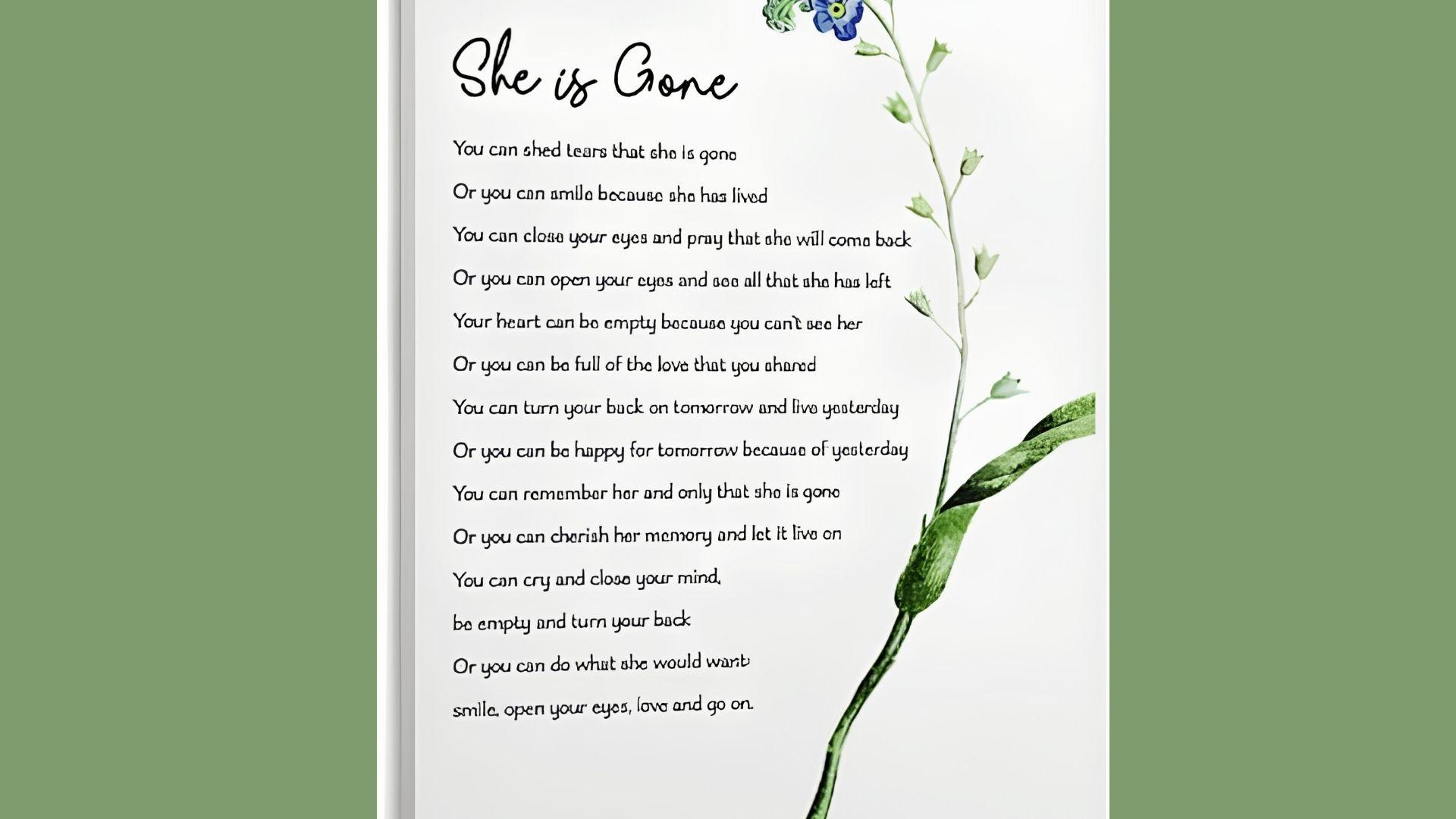
Overview: A poem that offers two ways to grieve, and asks you to choose the hopeful one.
Positive perspective on loss: Instead of sinking into sadness, it invites you to celebrate the life that was lived. That shift in thinking helps.
Best suited for: Eulogies and anyone looking for a forward-looking perspective on loss.
6. Nothing Gold Can Stay by Robert Frost

Overview: A short, quiet poem that speaks to how all things, including life, pass quickly.
Reflection on life’s impermanence: It doesn’t sugarcoat. Life is brief and precious. This poem makes you stop and think about what really matters.
Best suited for: Those processing the loss of someone who lived a full life.
7. If I Should Go by Joyce Grenfell

Overview: A warm, gentle farewell written as if the person who passed is speaking directly to you.
Gentle farewell: The tone is light and kind. It asks those left behind not to weep but to smile, remember, and carry on.
Best suited for: Memorial services and anyone who wants a comforting, light-hearted goodbye.
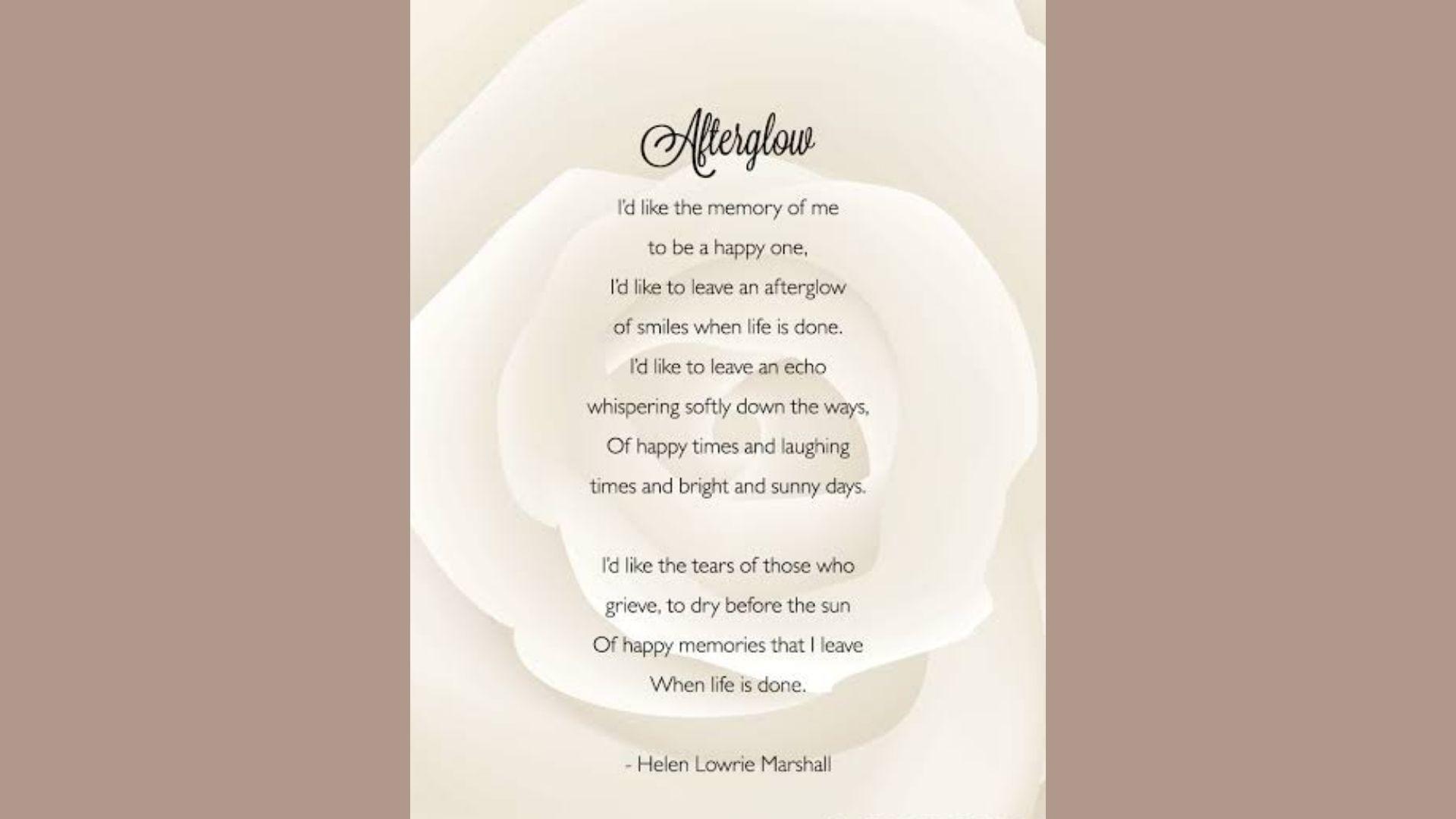
8. Afterglow by Helen Lowrie Marshall

Overview: This poem asks loved ones to focus on happy memories instead of sadness.
Celebrating cherished memories: It talks about laughter, warmth, and shared moments. Grief doesn’t have to mean only tears. This poem reminds you of that.
Best suited for: Those who want to honor joyful memories at a memorial or celebration of life gathering.
9. Gone From My Sight (The Ship) by Henry Van Dyke
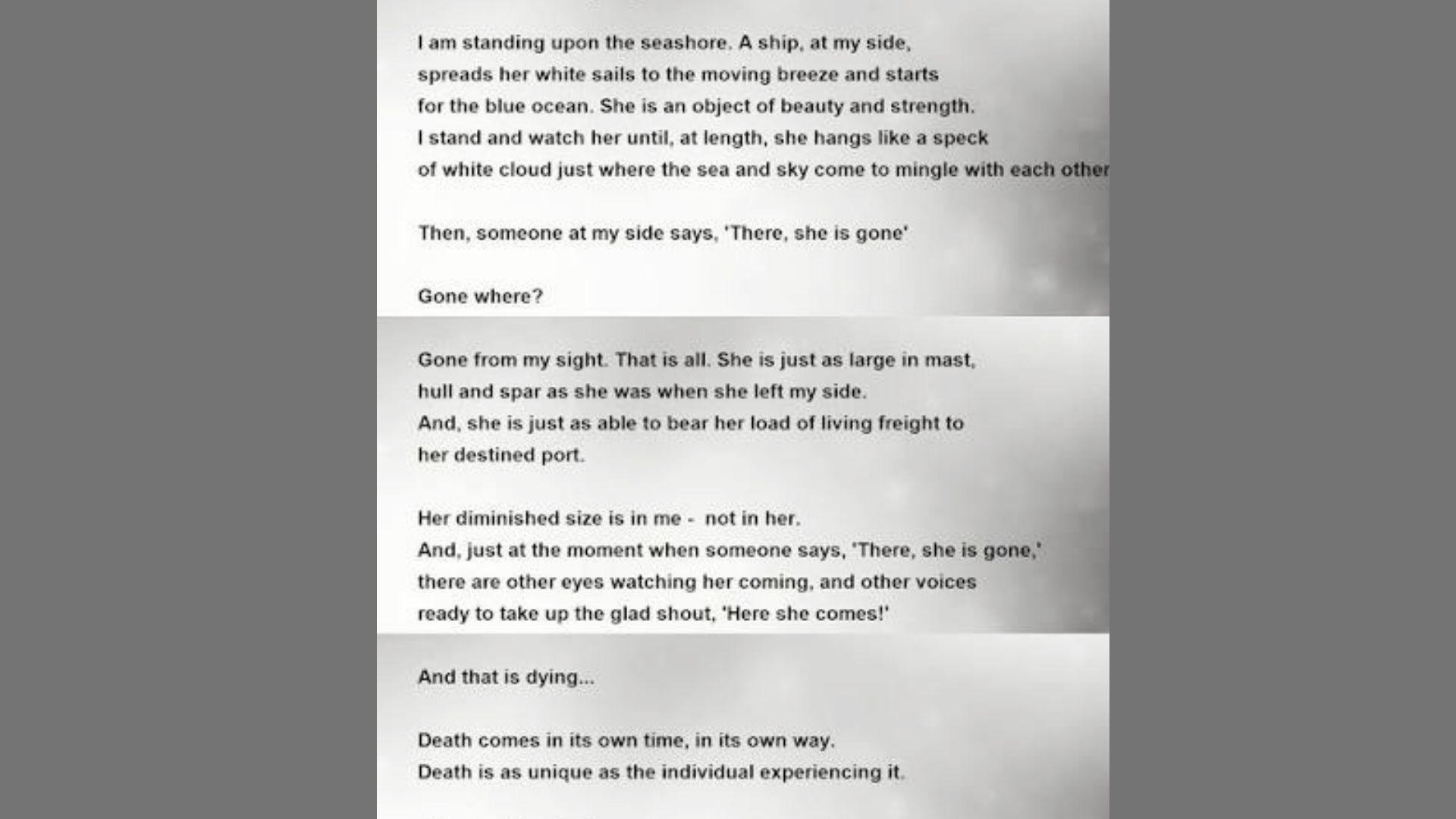
Overview: It compares death to a ship sailing out of sight over the horizon.
Symbolism and meaning: The ship doesn’t disappear. It just moves beyond what your eyes can see. That image is deeply comforting for many people.
Best suited for: Those who find comfort in metaphors and visual imagery.
10. Do Not Go Gentle into That Good Night by Dylan Thomas

Overview: One of the most well-known poems about death, written as a plea to fight against dying.
Themes of courage: It captures the frustration and love of watching a parent or loved one fade. It doesn’t ask for peace. It asks for fight.
Best suited for: Anyone who has watched a loved one struggle with illness or age.
11. On the Death of the Beloved by John O’Donohue

Overview: A blessing-style poem that surrounds a grieving heart with gentleness and care.
Comfort and hope: O’Donohue, an Irish poet and philosopher, writes with a rare kind of stillness. It speaks to the sacred space between life and death. The language is soft, and the message is one of holding and being held.
Best suited for: Quiet personal moments of grief and reflection.
12. For Grief by John O’Donohue
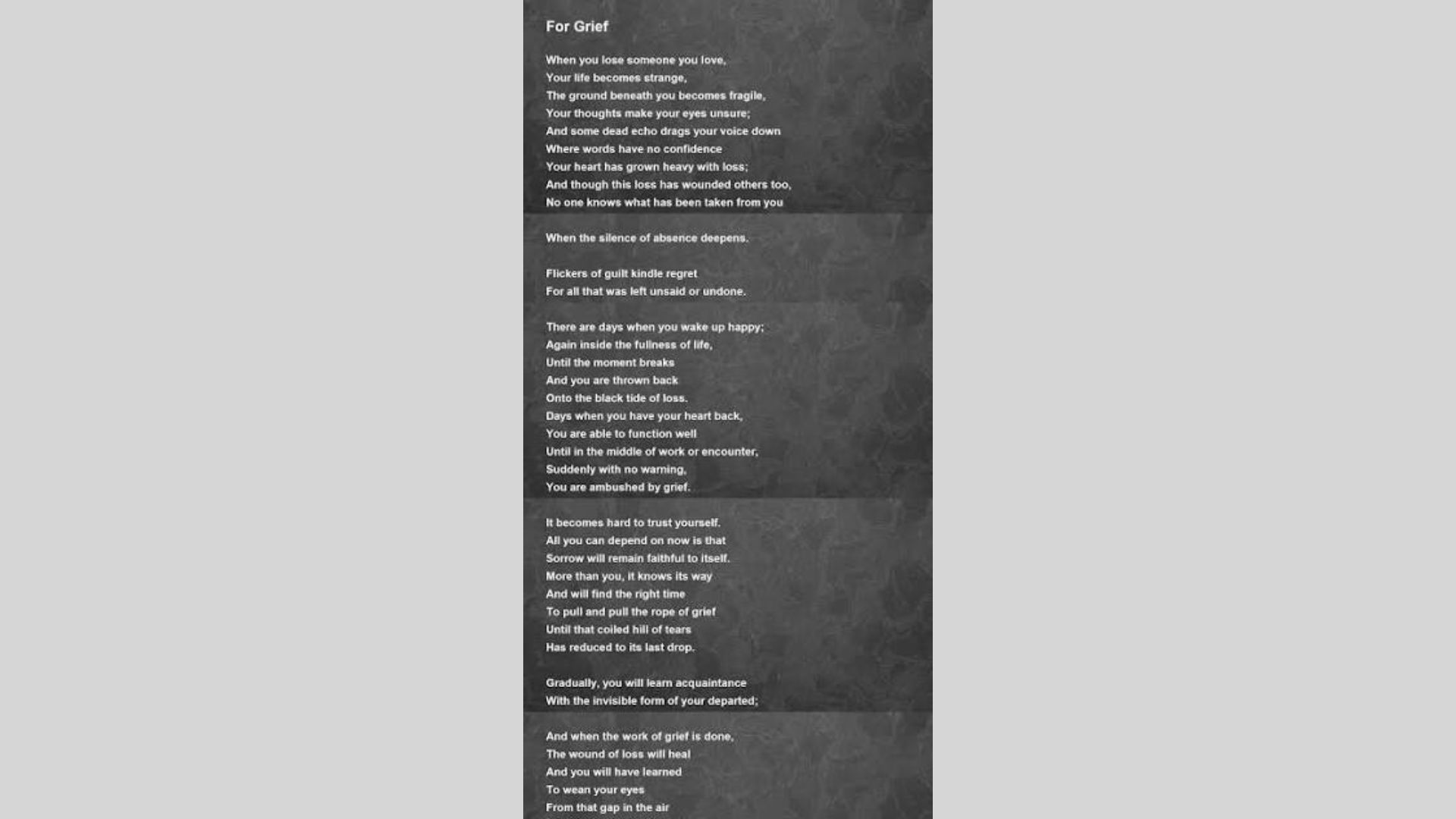
Overview: This poem speaks directly to the process of living with loss, not just feeling it once.
Living with loss: Grief changes shape over time. It does not follow a schedule, and bereavement looks different for every person. This poem acknowledges that, and asks you to be patient with yourself as you heal.
Best suited for: Anyone who is still carrying grief long after others expect them to be “over it.”
13. In Blackwater Woods by Mary Oliver

Overview: A poem about learning to love fully while also being willing to let go.
Love, loss, and letting go: Mary Oliver writes about holding things loosely. That means loving deeply but accepting that everything passes. The nature imagery she uses, fire, trees, the body, makes it feel both wild and tender.
Best suited for: Those who are working through loss and need permission to both grieve and release.
14. Separation by W. S. Merwin
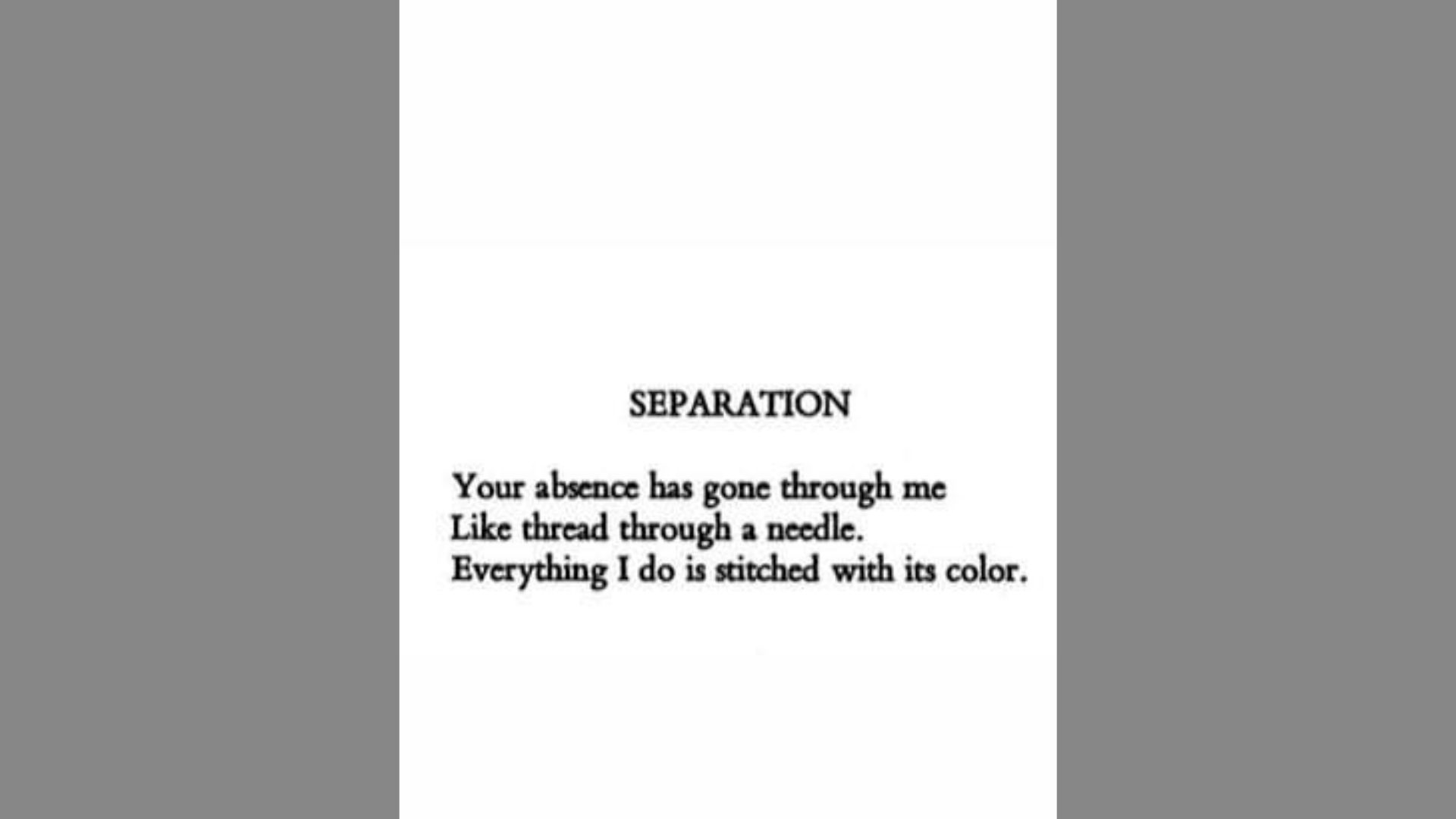
Overview: A very short poem that speaks volumes in just a few lines.
Short yet powerful message: It captures how loss leaves a silence that words can’t fill. Its brevity is exactly what makes it so powerful.
Best suited for: Those who want a poem that says a lot without saying too much. It also works well printed on a memorial card.
15. The Window by Rumi

Overview: Rumi writes about the soul continuing beyond the body, using the image of a window and light.
Spiritual connection: The poem suggests that death opens something rather than closes it. It’s a deeply spiritual and calming way to think about loss.
Best suited for: Those with a spiritual or religious view of death and the afterlife.
16. When Great Trees Fall by Maya Angelou

Overview: A poem about the profound impact a person’s death has on those around them.
Legacy and remembrance: When someone great passes, the world feels smaller. But Angelou also says something hopeful: their spirit lives on in us.
Best suited for: Honoring someone who made a big impact on a community or family. It works powerfully when read as part of a eulogy.
17. The Dash by Linda Ellis
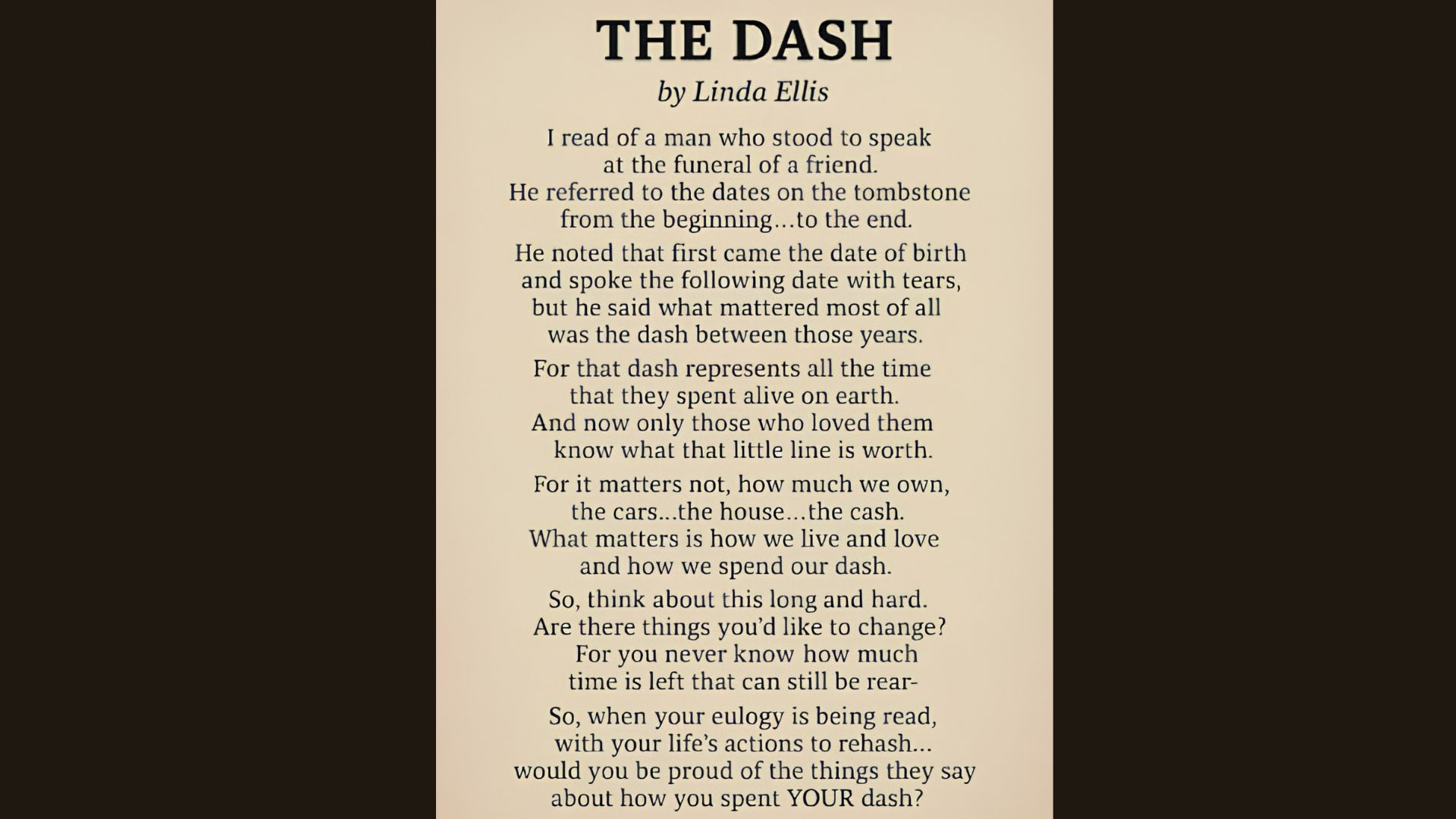
Overview: This poem reflects on the dash between birth and death dates on a gravestone.
Living a meaningful life: That small dash represents an entire life. The poem asks what you will fill yours with. It is both a goodbye and a gentle reminder to live well.
Best suited for: Memorial services and anyone reflecting on purpose and meaning.
18. The Life That I Have by Leo Marks

Overview: Originally a wartime code, this poem became one of the most moving love poems tied to loss.
Enduring love: It says that love does not stop when someone is gone. It stays, quiet and steady, in everything you do.
Best suited for: Those who have lost a partner, spouse, or deep romantic love.
19. Farewell My Friends by Rabindranath Tagore
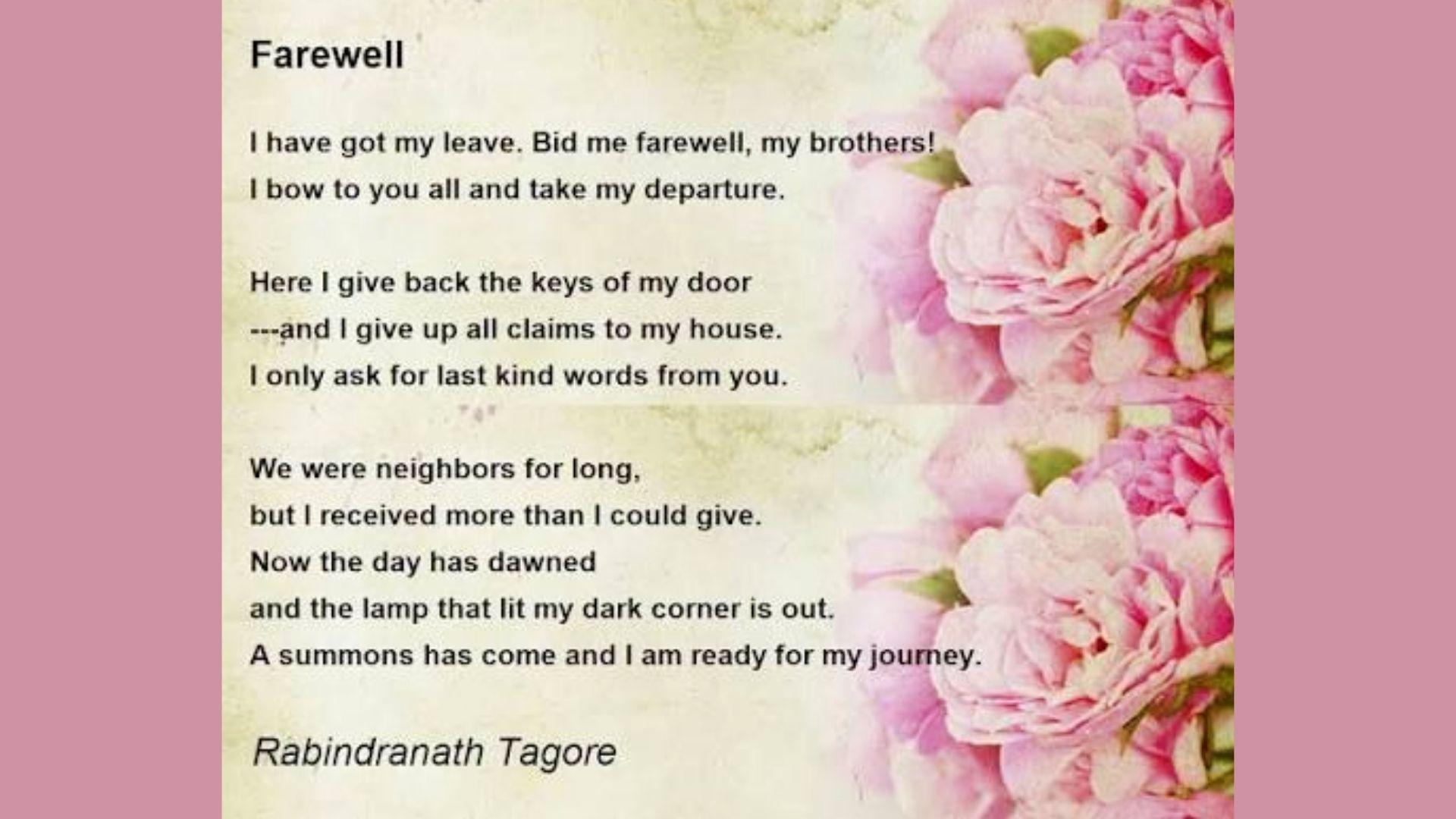
Overview: A calm and peaceful farewell that speaks of parting without sadness.
Peaceful goodbye: Tagore writes with acceptance. The goodbye is not bitter. It is quiet, grateful, and full of love for the life lived.
Best suited for: Those seeking peace in goodbye, not just grief.
20. To Those Whom I Love by Anonymous
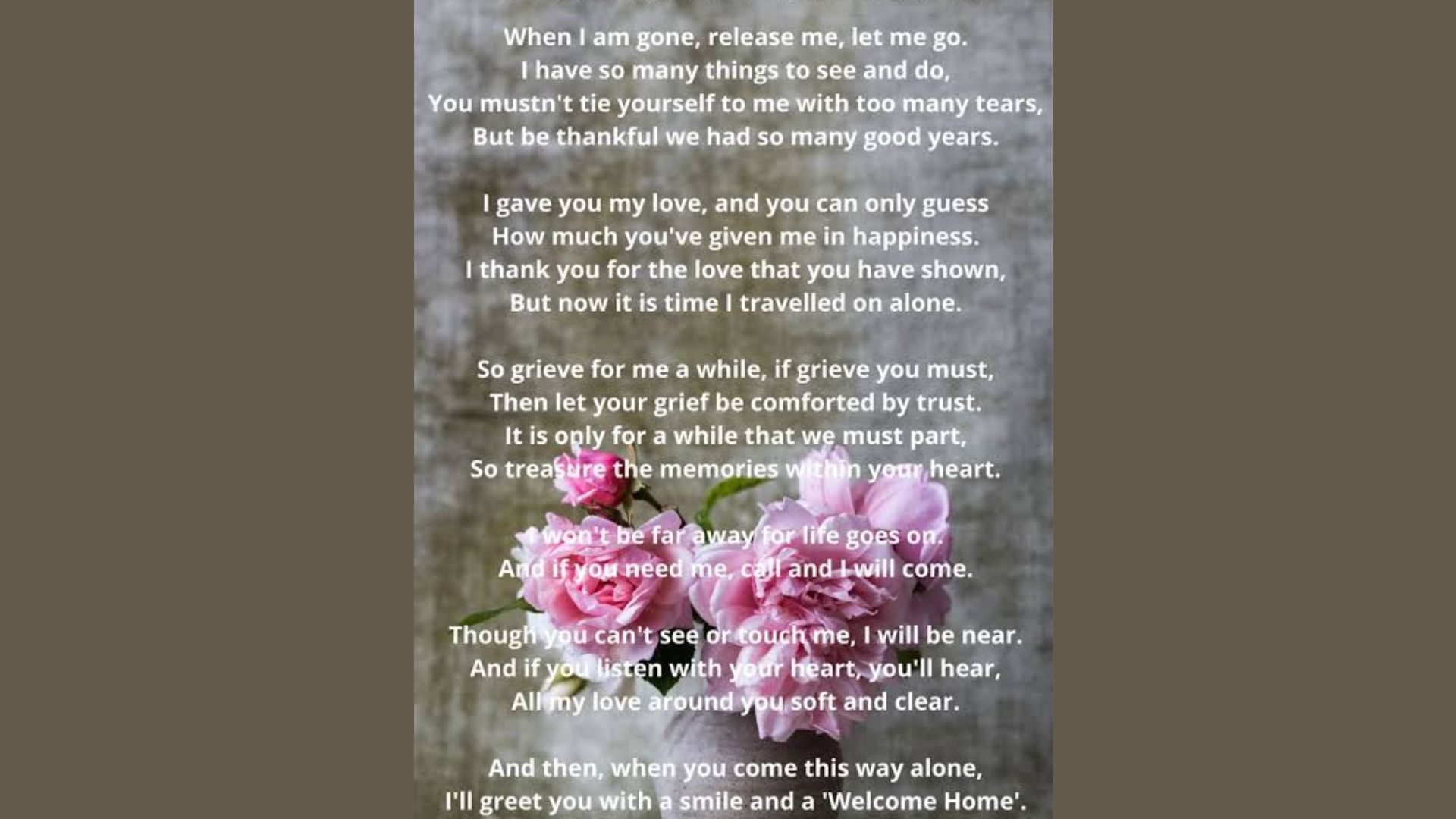
Overview: Written from the perspective of the person who has passed, this poem speaks directly to those left behind.
Comfort for mourners: It asks family and friends not to grieve too long. It wants them to live fully, even in their sadness. That message feels like a gift.
Best suited for: Funeral programs, memorial cards, and grief support groups.
21. God’s Garden by Melissa Shreve
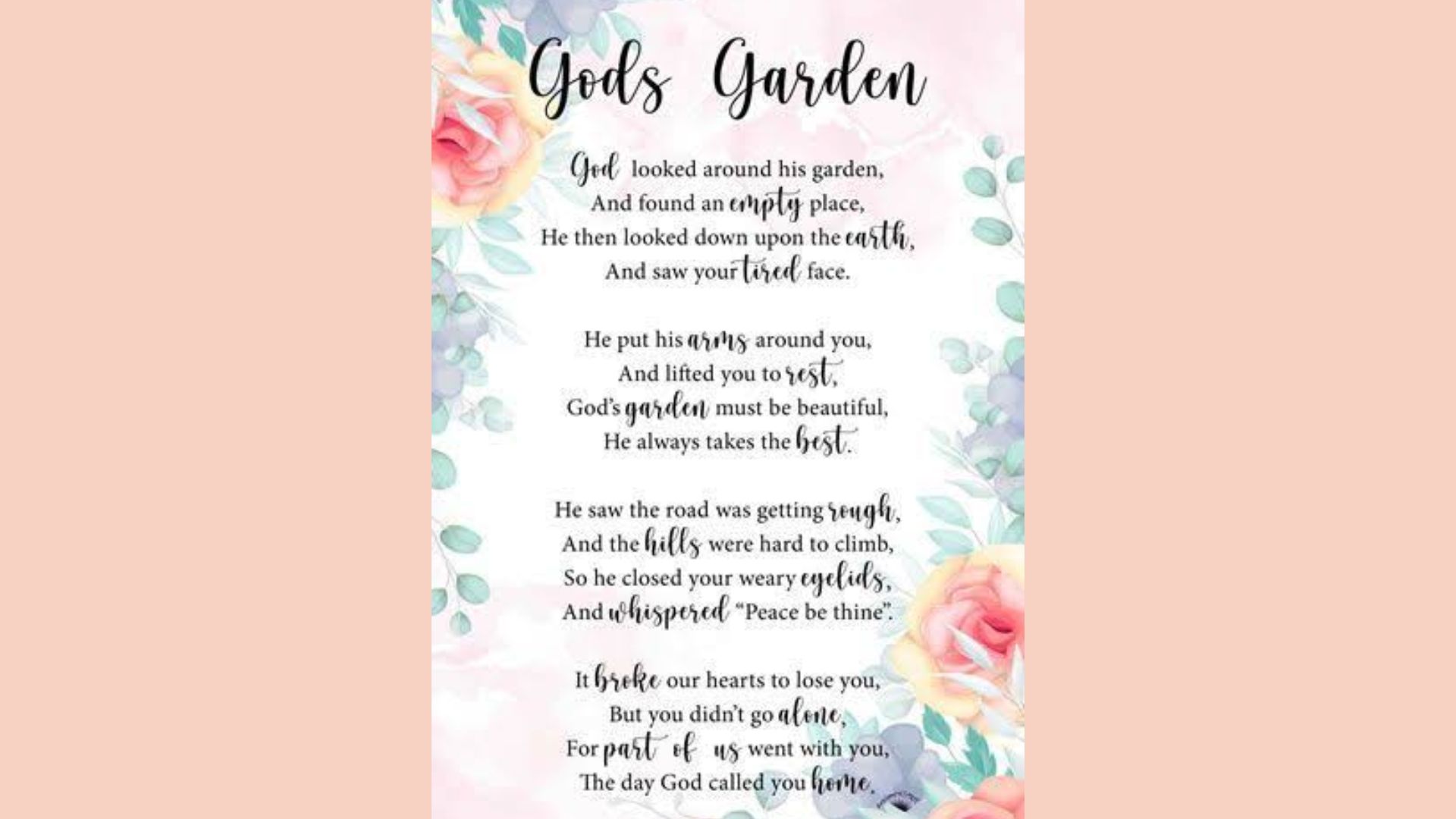
Overview: A faith-based poem that places death within the hands of a loving God.
Religious message of peace: It frames death as being called home. For those with strong faith, this poem brings deep comfort and a sense of divine care.
Best suited for: Religious funerals and those who find peace in their faith during grief. It also suits humanist families looking for a gentle, spiritual alternative to traditional hymns.
When to Read Goodbye Poems About Death
There is no wrong time to read a goodbye poem. Some people read them at funerals, as part of the order of service or alongside a spoken eulogy.
Others reach for them in the middle of the night when grief feels too heavy to carry alone.You might read one on an anniversary, a birthday, or just a random Tuesday when missing someone hits hard.
These poems work for quiet reflection, for sharing at a memorial, or for writing in a sympathy card when you don’t know what else to say.
Grief doesn’t follow a schedule, and neither does the bereavement that comes after. Read these poems whenever you need them.
Conclusion
Goodbye poems about death don’t take pain away. But they sit with you in it.
I remember reading a few of these during my own seasons of loss, and I was surprised by how much a few lines could steady me.
If you’ve found one that speaks to you, save it. Share it. Read it again. I’d love to know which poem meant the most to you.
Drop it in the comments below. And if this helped, share it with someone who might need it today.
Frequently Asked Questions
Can a goodbye poem be read at a graveside service?
Yes, graveside readings feel more personal than a formal service, and a short poem works better than a long speech in that setting.
Can I write my own goodbye poem for someone who died?
Yes, and it doesn’t have to be perfect. Write down what you remember, how they laughed, what they said, what you’ll miss most. That honesty is what makes a poem land.
How long should a poem be for a funeral reading?
One to two minutes is ideal. Most mourners are already emotionally full, so a short poem that says one true thing hits harder than a long one.
Are goodbye poems only for funerals?
No. Many people read them on anniversaries, birthdays, or quiet nights when grief returns unexpectedly and they need something to hold onto.