

Folks learned Humpty Dumpty before they learned to read. It just got in there somehow, passed down through classrooms and bedtime routines until the lines felt like background noise.
Which is probably why so few people have ever looked at it closely. It is four lines long, has no confirmed author, and ends in a way that quietly unsettles if you think about it for more than a second.
Here is the full poem, where it actually comes from, and what it does and does not mean.
The Full Humpty Dumpty Poem
Humpty Dumpty is a quatrain poem, and those four lines are the complete poem, nothing more.
Humpty Dumpty sat on a wall,
Humpty Dumpty had a great fall;
All the king’s horses and all the king’s men
Couldn’t put Humpty together again.
Traditionally attributed to “Mother Goose,” the collective label for anonymous English nursery verse, no named author has ever been verified. The text above is the standard version reproduced across major poetry archives including the Poetry Foundation.
Where This Rhyme Comes From
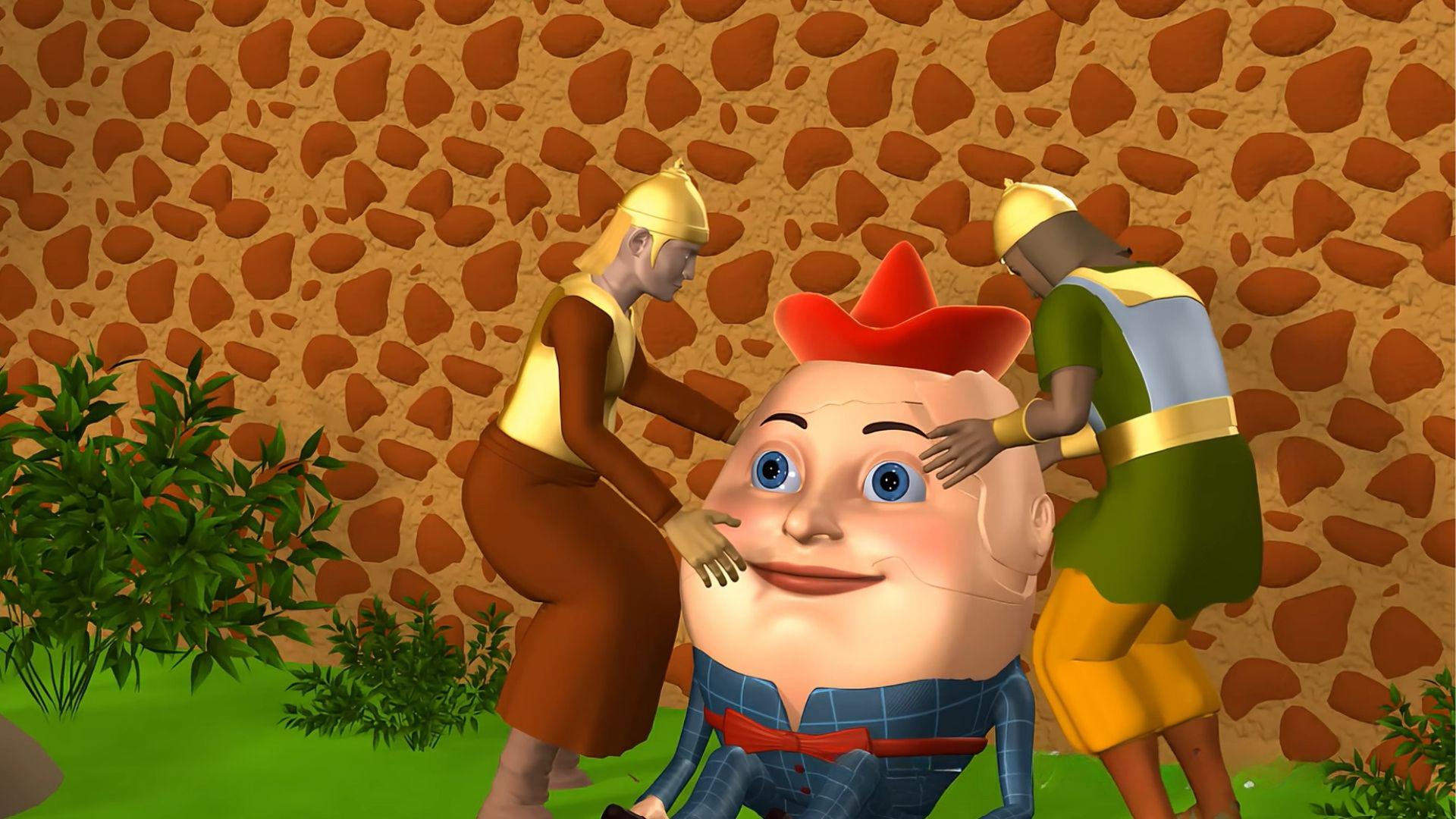
The earliest confirmed appearance of Humpty Dumpty in print is 1797, in Samuel Arnold’s Juvenile Amusements, where it was published without a named author.
What most retellings of this fact leave out is what the rhyme actually was in that publication: a riddle. No answer was printed alongside it because the reader was expected to supply one.
The answer is an egg. That context matters for understanding why the poem ends the way it does. The final line, “couldn’t put Humpty together again,” only lands as a complete thought if you know Humpty is an egg.
Without that, the ending feels abrupt, as though something is missing. Nothing is missing. The riddle format withholds the subject deliberately.
Beyond that 1797 record, the documented history gets thin. The rhyme may have circulated in oral tradition before it appeared in print, but no earlier written source has been found.
Popular theories connect the rhyme to historical events, most often to a large cannon used during the Siege of Colchester in 1648; it’s the same kind of legend-as-history situation you get with the Lizzie Borden poem.
This theory is widely repeated but has no contemporary documentation tying it to the rhyme. It is folklore about the poem, not the history of it.
Is There a Longer Version?
The complete Humpty Dumpty poem is four lines, and no authoritative longer version exists.
Some collections include a comic extension that ends with the king’s horses and men sitting down to scrambled eggs for breakfast.
This is a later addition written for humour, not a recovered original verse, and it does not appear in early documented sources.
The more common source of confusion is the riddle structure of the poem itself. Because the rhyme never names what Humpty Dumpty is, modern readers often sense a gap, as though a line of explanation was dropped somewhere along the way.
That gap is intentional. The original audience was meant to puzzle out the answer on their own. Once you know Humpty is an egg, the four lines are entirely self-contained.
The abrupt ending is the point: of course no one could put it together again. Nothing has been lost or suppressed. The poem is complete as written.
What Does the Rhyme Mean?

At face value, Humpty Dumpty describes something fragile falling and breaking beyond repair; the political theories layered onto it came much later and have no documented connection to the original text.
Read as a riddle about an egg, the poem is complete and coherent. Something sat in a precarious place, fell, and could not be restored, not even by the most powerful forces available.
That is the whole story, and it holds together without any additional meaning attached to it.
The theories that cast Humpty as a historical figure, a siege cannon, or a symbol of a fallen monarchy are retrofitted interpretations. They are interesting as folklore, but none of them appears in sources contemporary with the rhyme.
No writer from the period recorded the rhyme as political commentary. The political readings emerged centuries later and spread largely because they feel plausible, not because evidence supports them.
What has kept the image alive is simpler than any conspiracy: the idea of something irreversibly broken, and the futility of throwing power at a problem that cannot be solved, is genuinely resonant. “Humpty Dumpty” survives as a phrase in English precisely because that feeling needs a name.
Final Verdict
The Humpty Dumpty full poem is four lines, and those four lines have been doing quiet work for over two centuries.
What makes it stick is not a hidden meaning or a lost verse but something simpler: an image of irreversible breakage that needs no explanation.
You already understood it before anyone told you what it meant. If this one surprised you, the history behind other familiar nursery rhymes tends to be equally unexpected.
Start with the ones you think you already know.
Frequently Asked Questions
What is the original Humpty Dumpty rhyme?
The four lines most people know are the complete, original poem. It first appeared in print in 1797 in Samuel Arnold’s Juvenile Amusements, published as a riddle with the expected answer being an egg.
Is there a long version of Humpty Dumpty?
No. The poem has always been four lines. A comic fifth line appears in some later collections but is a humorous addition, not a recovered original verse.
What is the dark meaning behind Humpty Dumpty?
There is no documented dark meaning. Political theories exist but have no contemporary evidence. At face value, the rhyme describes something fragile breaking beyond repair.
Who wrote Humpty Dumpty?
No individual author is known. However, it is attributed to Mother Goose, the traditional label for anonymous English nursery verse, and first appeared in print in 1797.


