


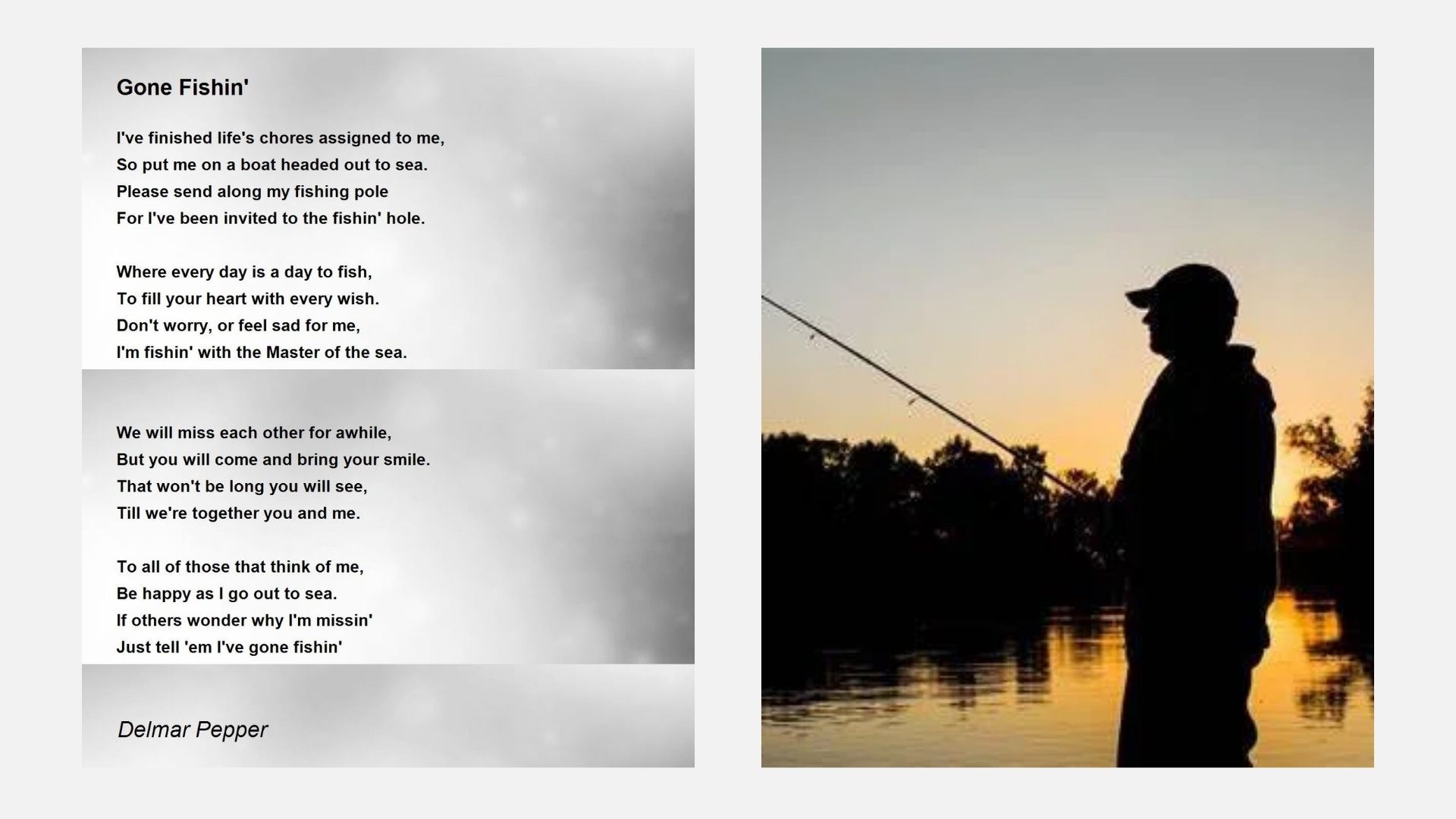
Losing someone is hard. Finding the right words for their memorial is even harder.
I have been there, searching for a poem that feels real and calm at the same time. That is exactly why I put this guide together for you.
Here, I will cover the full meaning of the “Gone Fishing” poem, its key themes, and the literary devices that make it work so well at funerals and memorials.
I will walk you through everything step by step.
By the end, you will know exactly what this poem means and how to use it.
Meaning of the Poem
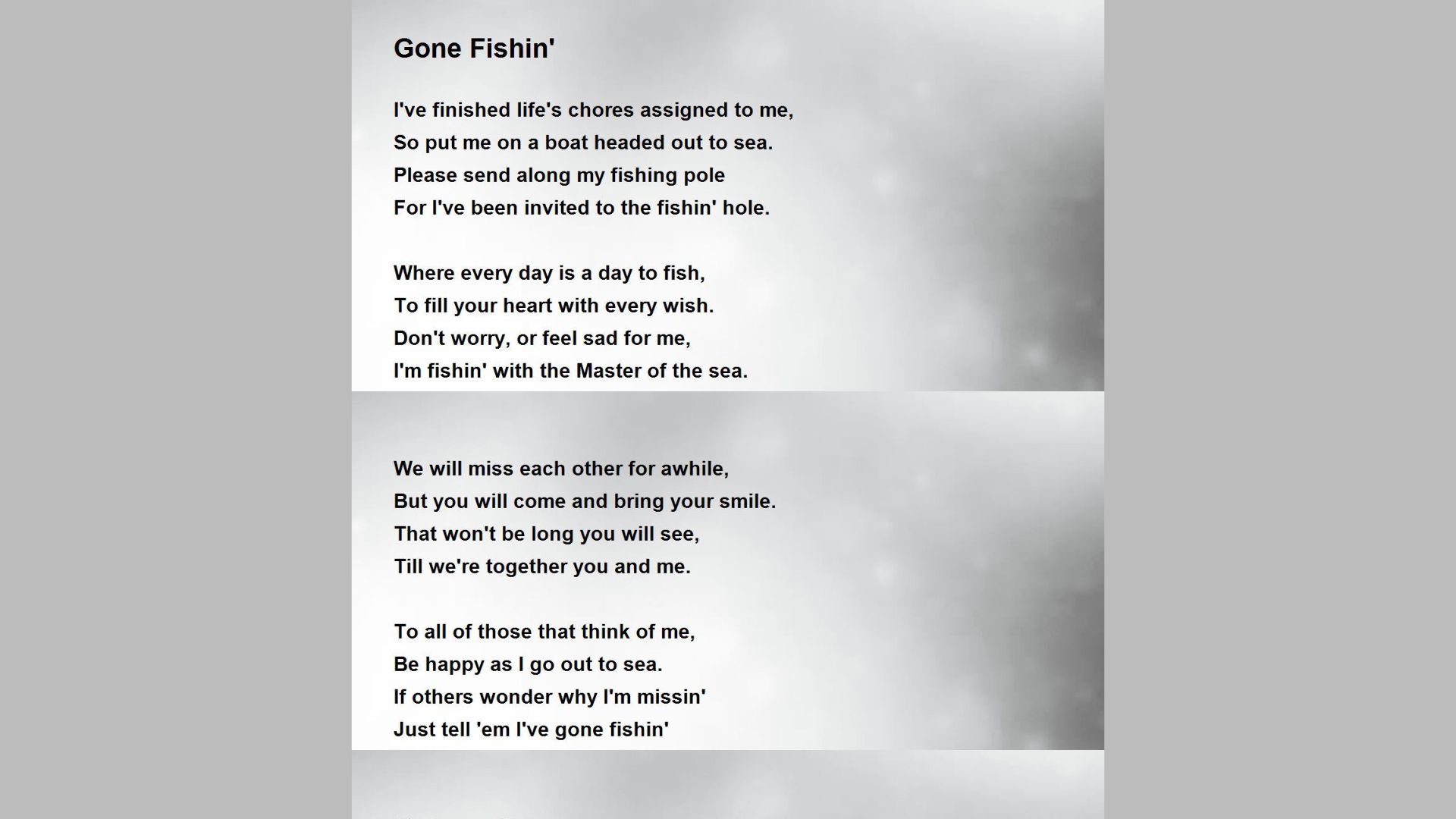
The “Gone Fishing” poem by Dalmar Pepper takes you to a quiet, peaceful place.
The speaker reflects on a life well lived and imagines spending the afterlife by the water, fishing in calm and still surroundings.
There is no sorrow in these words. Instead, the poem gently tells loved ones not to grieve. It promises that the person is at peace, resting in a place they always loved.
The tone stays soft and hopeful throughout. It ends with a warm farewell that feels more like a reassurance than a goodbye.
Key Themes
This poem carries three core messages that speak directly to the heart of loss and peace.
Peaceful Afterlife
Fishing in this poem stands for eternal rest. The calm waters and quiet fishing hole are not just settings. They are symbols.
The speaker is not gone, they are simply somewhere still and peaceful. The imagery of a boat on calm water gives readers a sense that death is not frightening.
It is a place of stillness, comfort, and rest. That feeling alone makes this poem powerful at any memorial.
Comfort for Loved Ones
Dalmar Pepper wrote this poem with grieving families in mind. The speaker asks you not to cry.
Instead, you are encouraged to feel happy, knowing your loved one is doing what they loved most. There is even a quiet promise of reunion woven into the lines.
That promise does not feel forced. It feels genuine. It gives families something to hold onto when grief gets heavy and words feel impossible to find.
Love for the Outdoors
Fishing is not just a hobby in this poem. It is a way of life. The natural setting plays a central role from start to finish.
The sea, the fishing pole, the boat, the hole in the water, all of it honors the life of someone who found peace outdoors.
This theme makes the poem deeply personal for families of anglers and nature lovers. It does not feel like a generic farewell. It feels like it was written for someone specific.
Literary Devices & Analysis
These are the tools Dalmar Pepper used to make this poem hit differently.
Imagery
The poem is full of clear, simple images. A boat on the water. A fishing pole in hand. A quiet fishing hole. These details are easy to see in your mind.
That is the point. Imagery makes the poem feel real and familiar, especially to families who watched their loved one spend hours by the water.
The scenes feel calm and natural, which is exactly the mood needed for a memorial reading.
Personification
Pepper uses nature and the act of fishing to stand in for something much bigger, the idea of a peaceful afterlife. Fishing becomes a living thing.
It breathes and moves and holds meaning beyond a weekend hobby. This technique helps readers accept the idea of death without fear.
When something as ordinary as fishing represents eternal peace, the concept feels softer and more human. That is what makes this device work so well here.
Symbolism
Fishing is the heart of this poem’s symbolism. It does not just mean fishing. It means rest, calm, and joy without worry. The fishing hole stands for a place beyond this life.
The still water represents a peace that the living cannot fully feel yet. These symbols work because they are drawn from real life.
They are not abstract ideas. They are things people have actually seen and felt, which gives the poem its quiet power.
Rhyme Scheme & Structure
The poem uses simple rhyming couplets. Two lines rhyme, then two more. It keeps reading easy and smooth.
This structure works perfectly for memorial readings because it does not feel complicated or hard to follow. The calm rhythm matches the peaceful message.
When someone reads it aloud at a funeral, it flows naturally. It does not stumble. The simplicity is a strength, not a weakness, and families respond well to that ease.
Historical & Literary Context
The “Gone Fishing” poem has been shared in funeral readings and memorial settings for years. It became popular because it speaks directly to families of loved ones who lived outdoors.
Fishermen, hunters, and nature lovers all found meaning in its words. The poem reflects a deep cultural connection to the land and water.
It appears in celebration of life ceremonies and has been adapted for different memorial formats over time.
Its wide use comes from one simple fact: it offers real comfort without feeling heavy or hard to hear.
Why Read This Poem
This poem gives you something most memorial readings do not: a peaceful image to hold onto. It shifts the focus from grief to comfort.
It reminds you that the person you lost is at rest, doing something they loved. That shift matters more than you might expect during a service.
The poem is also easy to read aloud, even when emotions run high. It honors personal passions in a way that feels real and specific.
For families of fishing lovers, it makes the memorial feel personal, warm, and true.
About the Poet
Dalmar Pepper is the writer behind “Gone Fishing,” one of the most widely used funeral poems for fishermen and outdoor lovers.
His poem has become a trusted choice at memorial services and celebration of life events across the world.
Not much is publicly known about Pepper’s personal background or other works, but his impact is clear. The warmth and simplicity of “Gone Fishing” speak for themselves.
Families return to this poem again and again because it says what they cannot.
It gives voice to peace, love for nature, and the quiet hope of reunion. His words have brought real comfort to many.
Conclusion
I hope this guide helped you understand what makes “Gone Fishing” such a meaningful poem.
It is about peace, love, and the quiet hope that our loved ones are somewhere calm and happy. If you are planning a memorial for someone who loved the water, read this poem aloud.
I think it will feel just right.
Have you used it at a service before? Drop your experience in the comments below and share this post with anyone who may need it.
Frequently Asked Questions
Who wrote the “Gone Fishing” poem?
The poem was written by Dalmar Pepper and is widely used at memorials for fishing lovers.
What is the “Gone Fishing” poem about?
It is about a person imagining the afterlife as a peaceful fishing spot and asking loved ones not to grieve.
Is “Gone Fishing” suitable for any funeral?
It works best for those who love fishing, the outdoors, or spending time near water.
What is the tone of the “Gone Fishing” poem?
The tone is gentle, hopeful, and comforting, making it ideal for emotional memorial readings.
Can I read “Gone Fishing” at a celebration of life ceremony?
Yes, its simple structure and calm rhythm make it a great fit for both funerals and celebration of life events.