


Have you ever read a poem that felt like a standing ovation? I have. That was the first time I came across an ode, and it stayed with me.
In this blog, I will explain what an ode poem is, walk through its three main types and structure, and share 5 famous examples you will genuinely enjoy.
I have studied poetry for years. You can count on me to keep this simple and clear.
By the end, you will know what an ode is, how it is built, and how to write one on your own.
What Is an Ode Poem?
An ode poem is a type of lyric poetry written to express deep praise or admiration for a subject. That subject can be a person, an object, a place, or even an idea.
Odes come from ancient Greek poetry and have been part of literature for thousands of years.
Originally, odes were performed with music and dance, which is why they carry such a celebratory, almost ceremonial feeling even today. The tone is usually warm, formal, and full of emotion.
Poets use rich language and strong imagery to show how much they value their subject. Some odes follow a strict structure, while others are written more freely.
But the heart of an ode is always the same:celebration.
Key Characteristics of an Ode Poem
An ode poem has a few clear traits that set it apart from other types of poetry you may read.
Formal and Celebratory Tone
An ode poem usually carries a serious and celebratory tone. The poet is not just describing something. They are honoring it.
The words feel purposeful and thoughtful. Even when the subject is simple, like a pair of socks, the tone lifts it into something worth celebrating.
This formal style is one of the first things you notice when reading an ode.
Focus on Praise or Admiration
The heart of an ode is praise. The poet picks a subject they deeply admire and then spends the poem showing why.
This admiration comes through in every line. It could be admiration for nature, a person, or even an emotion.
The reader is meant to feel that same sense of wonder and respect by the end of the poem.
Structured Stanzas and Poetic Devices
Most odes use structured stanzas, meaning the poem is divided into sections that follow a pattern.
Poets also use devices like metaphor, simile, and personification to bring the subject to life. These tools make the poem feel rich and layered.
The structure gives the poem a sense of balance, while the devices add depth and feeling to every line.
Direct Address
An ode often speaks directly to its subject as if it were listening. The poet does not just describe the thing they admire.
They talk to it. You can see this in Keats writing to a Grecian urn or Shelley addressing the west wind.
This direct voice is one of the most recognisable features of the ode form.
Elevated Language
Ode poets choose words with care and weight. The language is serious, dignified, and imaginative, even when the subject is something simple.
This elevated quality is what separates an ode from a casual poem. The words feel chosen, not thrown together.
Structure of an Ode Poem
The structure of a classical ode follows three key parts that work together to build meaning and emotion.
The Strophe
The strophe is the first part of a classical ode. It sets up the main idea or subject of the poem. Think of it as the opening argument.
The poet introduces what they are celebrating and begins to build the emotional tone. In Greek theater, this section was performed as the chorus moved in one direction across the stage.
The Antistrophe
The antistrophe follows the strophe and mirrors its structure. It often offers a different angle or contrast to what was said in the strophe.
This section adds depth by showing another side of the subject. In Greek performances, the chorus moved in the opposite direction during this part of the ode.
The Epode
The epode is the final section of the classical ode. It brings together the ideas from the strophe and antistrophe and offers a kind of resolution.
The epode is usually shorter and has a different metrical pattern. It wraps up the poem with a sense of conclusion, leaving the reader with a clear feeling or takeaway from the piece.
Types of Ode Poems
There are three main types of ode poems, each with its own style, structure, and feel.
Pindaric Ode
The Pindaric ode comes from the Greek poet Pindar. It follows a strict three-part structure: the strophe, antistrophe, and epode.
Ben Jonson and Thomas Gray are among the English poets who wrote in this style, keeping the sense of ceremony alive in their work.
These odes were originally performed with a chorus and dance at athletic celebrations in ancient Greece, which explains their grand, ceremonial tone.
Horatian Ode
The Horatian ode takes its name from the Roman poet Horace. It is calmer and more personal than the Pindaric style.
Instead of grand celebration, it reflects on life, nature, and quiet pleasures. Each stanza follows the same pattern throughout the poem.
Keats and other Romantic poets were influenced by this style, using it to write some of the most loved odes in English literature.
Irregular Ode
The irregular ode does not follow a fixed structure. Poets write these freely, changing stanza length and rhyme patterns as they see fit.
This gives the poet more room to express feelings in a natural way. William Wordsworth’s “Ode: Intimations of Immortality” is a well-known example.
The freedom of the irregular ode makes it a favorite for modern poets who want to write without strict rules.
Which Ode Structure Should You Use?
If you are writing your first ode, here is a simple way to choose your structure.
If you are a beginner, go with a simple modern format. Open with a statement of admiration, follow with emotional description and a personal memory, then close with a powerful final line. No rules, just feeling.
If your subject feels grand or ceremonial, the traditional Pindaric structure works well.
Open with the strophe, respond with the antistrophe, and wrap up with the epode. This suits subjects like nature, a country, or a person you deeply respect.
If you want complete freedom, write in free verse. No rhyme, no fixed stanza length, no pressure.
This is the most popular choice among modern poets and is perfect if you just want to get your feelings out without worrying about form.
5 Famous Examples of Ode Poems
These five famous ode poems show just how wide and expressive this form of poetry can be but if you want to explore even more famous ode poem examples before diving in, that list is worth a look.
1. Ode on a Grecian Urn by John Keats
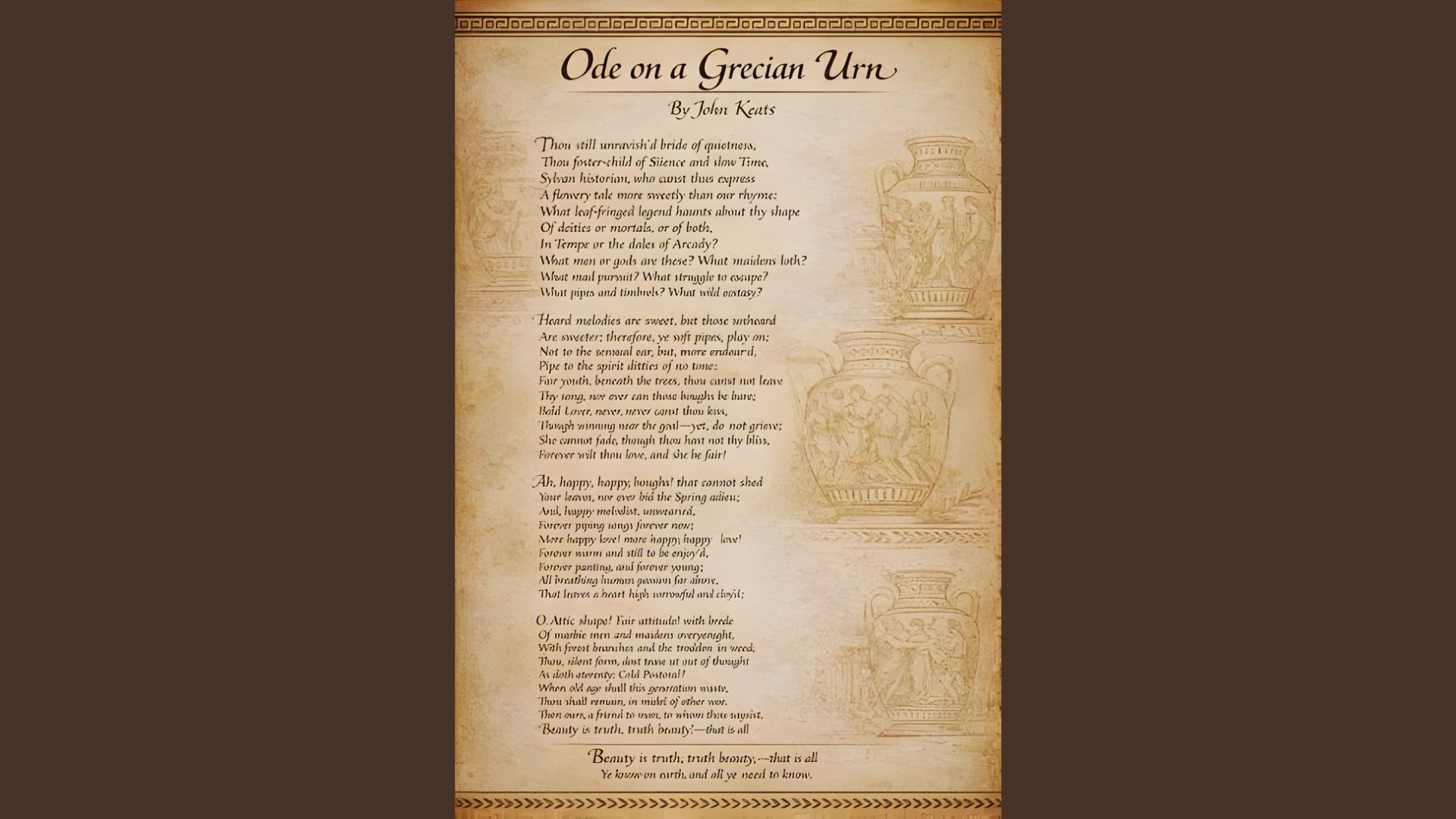
Written in 1819, this ode celebrates an ancient Greek urn and the scenes painted on it. Keats praises the urn for capturing moments that will never fade.
The poem reflects on art, time, and beauty. Its final lines suggest that truth and beauty are one.
These words have been discussed by readers and scholars for over two centuries, making it one of the most analyzed poems in the English language.
2. Ode to a Nightingale by John Keats
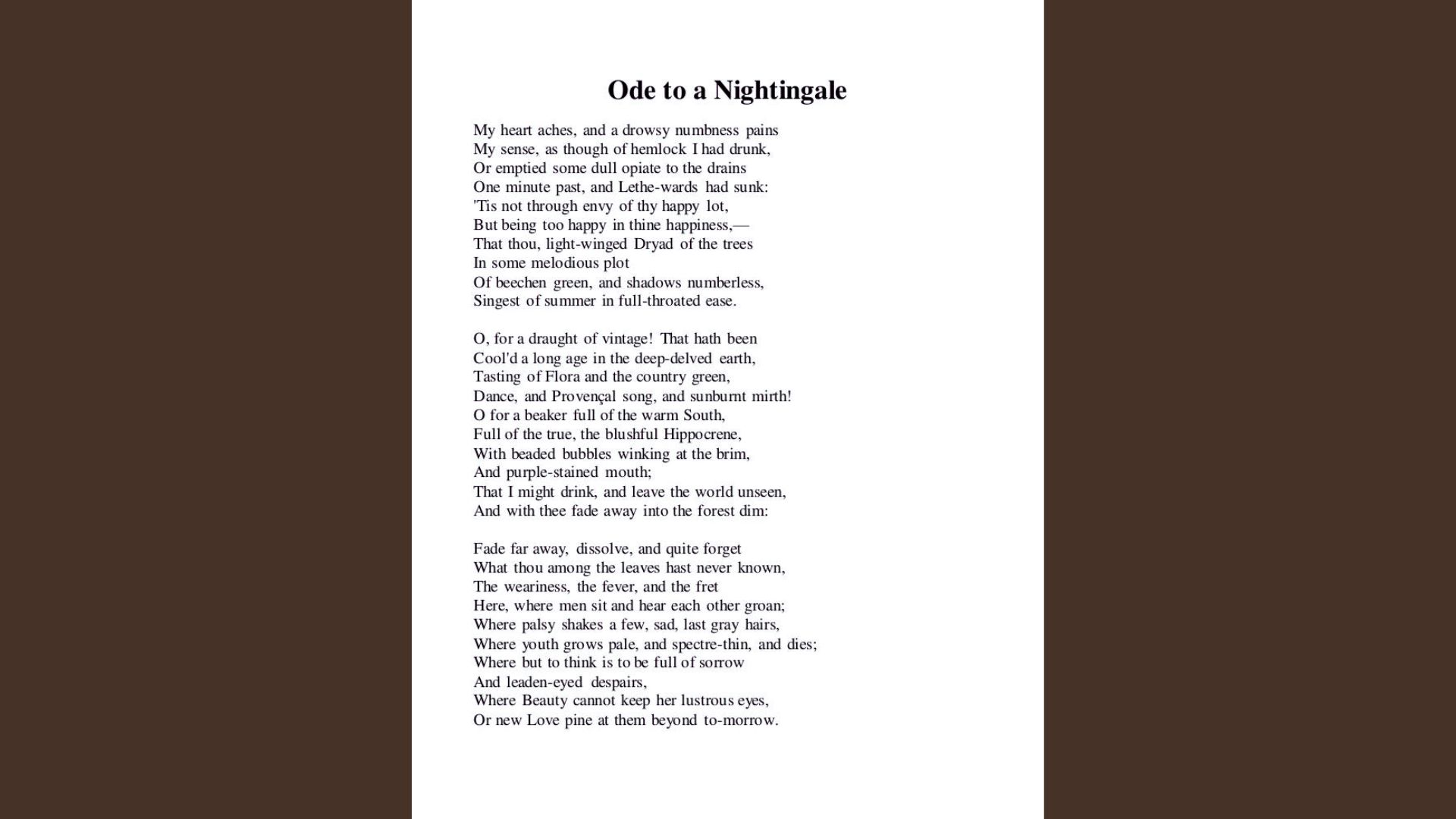
In this ode, Keats listens to a nightingale singing and reflects on life, death, and the power of art. He longs to escape the pain of the real world and live inside the bird’s song.
The poem moves between joy and sadness in a very honest way. Written in 1819, it shows Keats at his most personal.
Many readers feel deeply moved by how real and human the emotions are throughout this poem.
3. Ode to the West Wind by Percy Bysshe Shelley
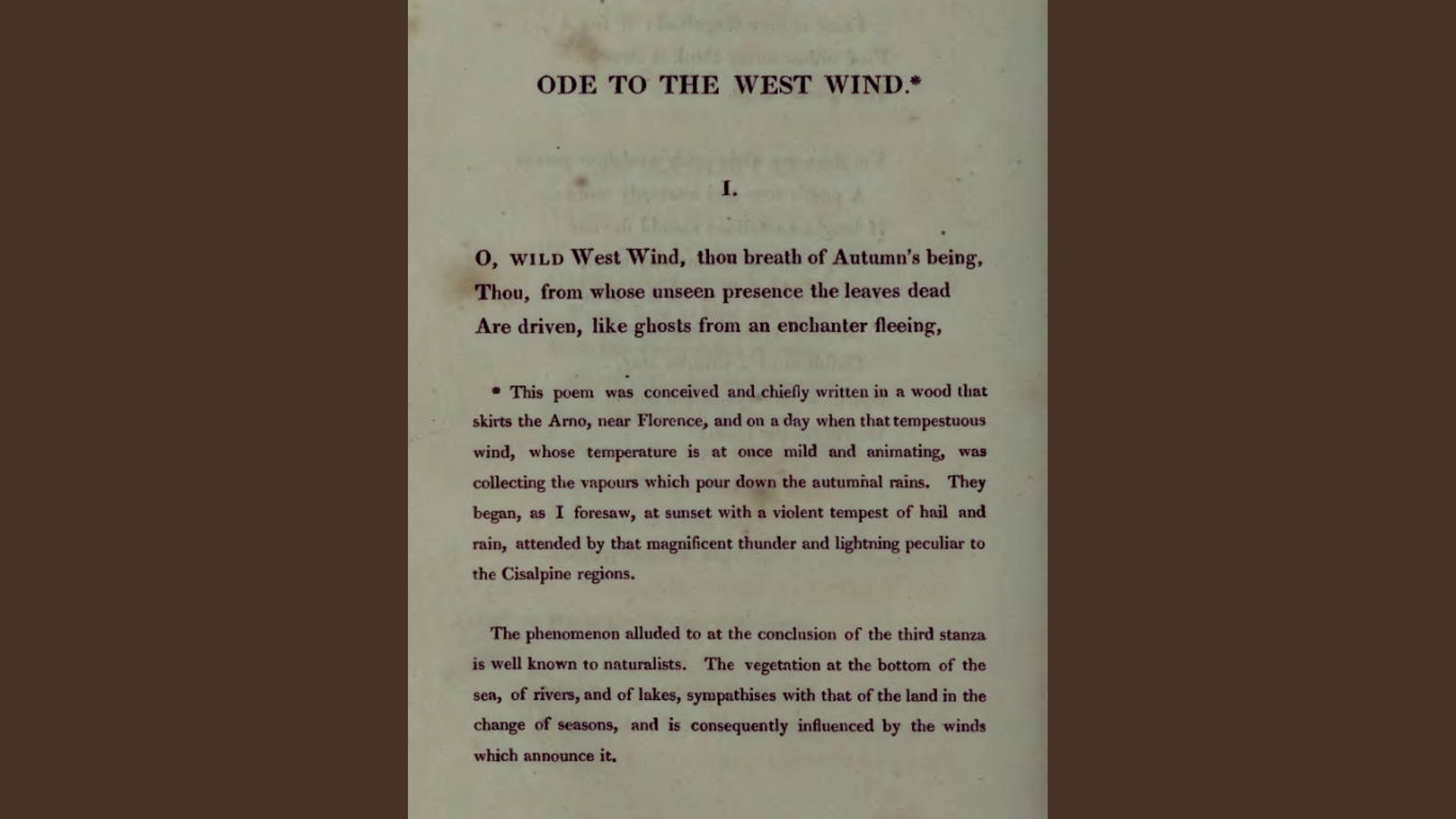
Shelley wrote this ode in 1819 and addressed it directly to the west wind. He saw the wind as both a force of destruction and a force of creation.
The poem is passionate and intense, with Shelley asking the wind to carry his words out into the world.
The structure is tight, with each section building on the last. It ends with one of the most celebrated lines in English poetry.
4. To Autumn by John Keats
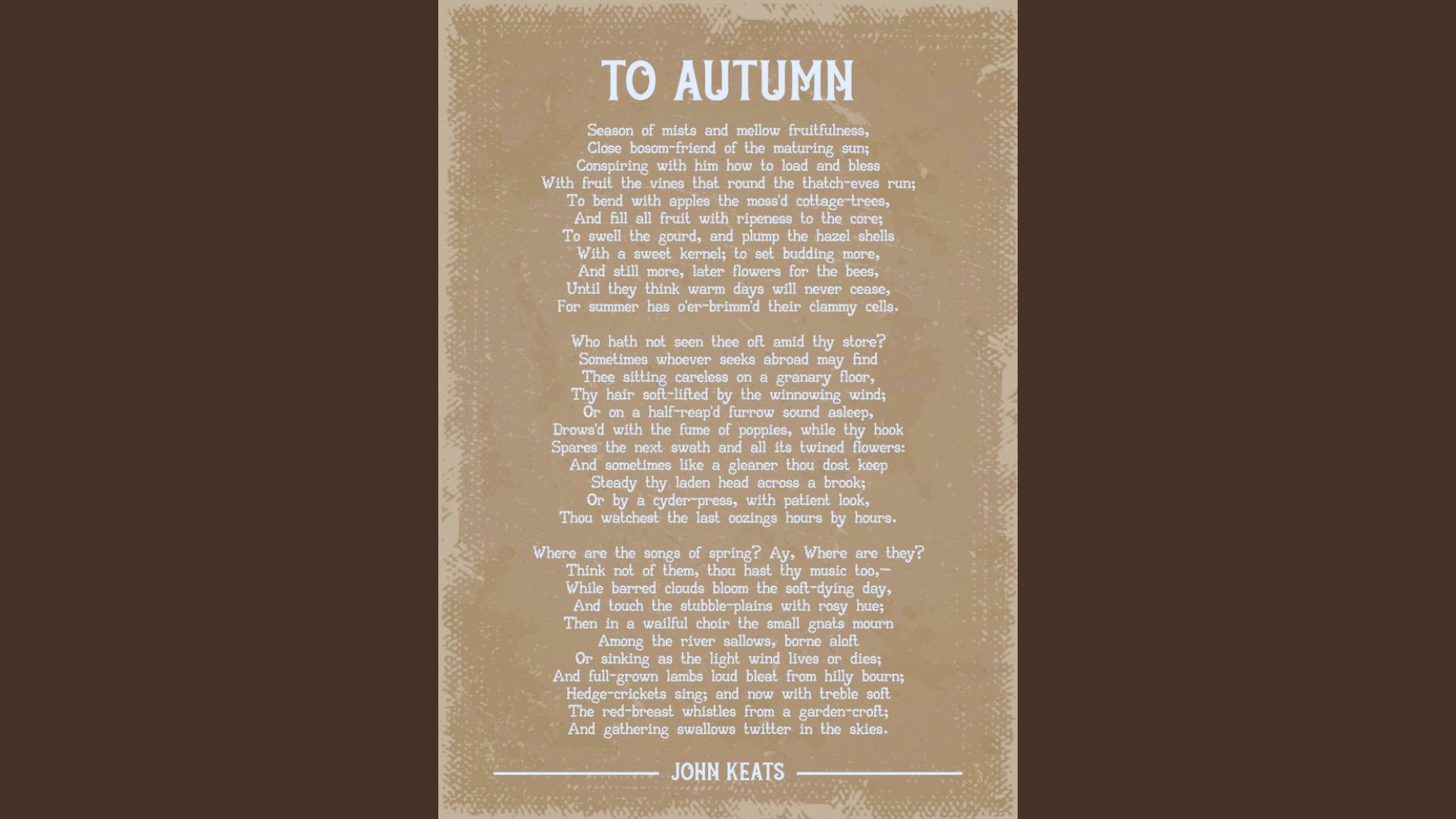
This ode is a celebration of the autumn season and all that comes with it. Keats describes the sights, sounds, and feelings of autumn in rich, sensory detail.
He does not treat autumn as a season of loss. Instead, he finds fullness and warmth in it. Written in 1819, it is often called Keats’ most perfect poem.
Its calm and measured tone makes it stand apart from his other, more intense odes.
5. Ode to My Socks by Pablo Neruda
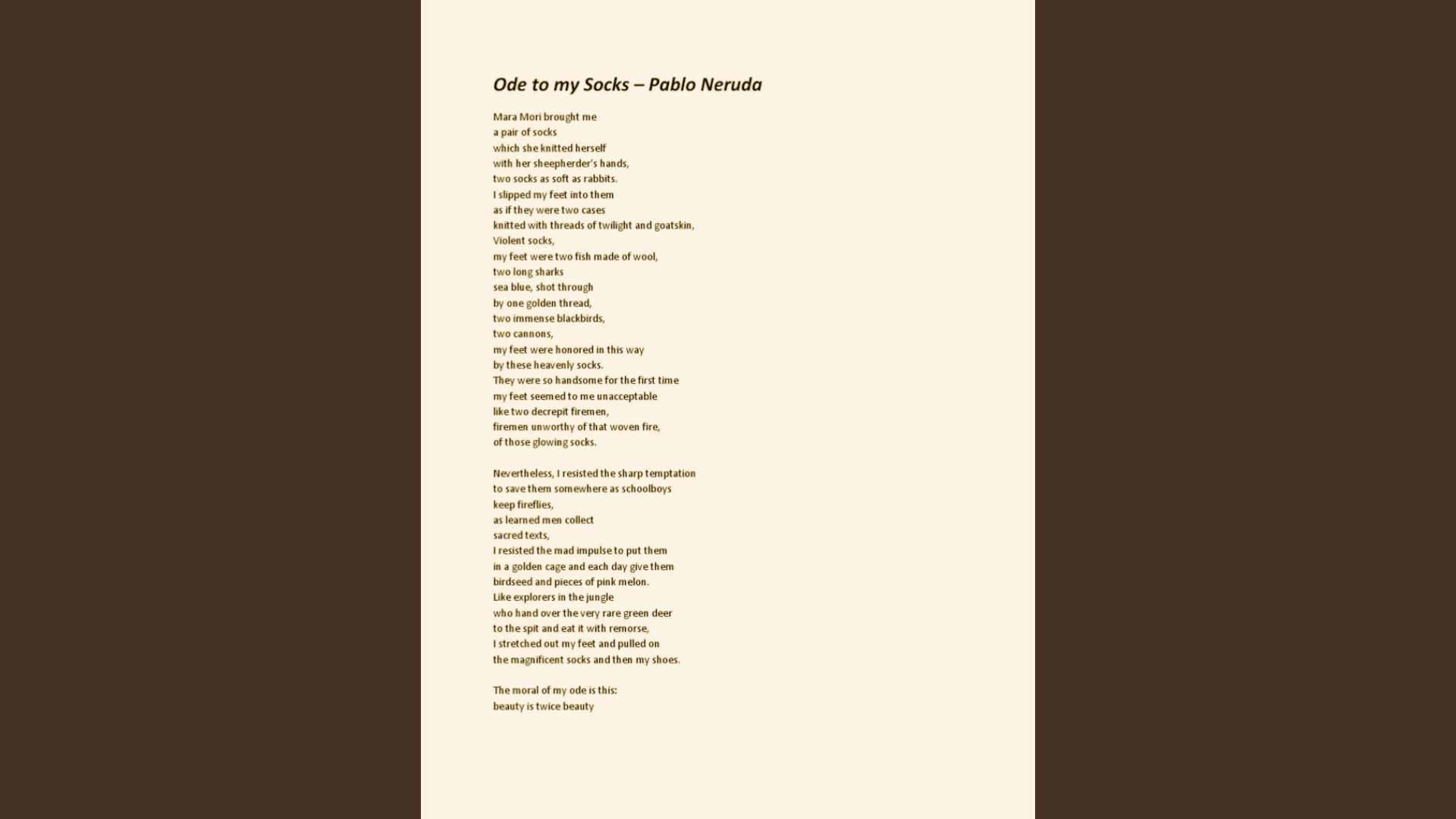
Pablo Neruda wrote this playful ode to a pair of hand-knitted socks given to him by a friend. He treats the socks as if they are a great treasure, using over-the-top comparisons and warm humor.
The poem shows that odes do not have to be about grand subjects. Even everyday objects deserve praise.
Neruda’s ode is a great example of how this form can be light, fun, and full of genuine feeling.
How to Write an Ode Poem: Step-by-Step Guide
Writing an ode is simpler than you think. If you’d like a dedicated walkthrough, our full guide on how to write an ode poem covers every step in detail. These steps below will also help you write one with confidence.
Step 1: Choose a Subject You Admire
Start by picking something you genuinely care about. It can be a person, a place, an object, or even a feeling.
The more you care about it, the easier it will be to write with real feeling. Your subject does not have to be grand or serious.
As Neruda showed us, even socks can make a great ode if you write from the heart.
Step 2: Decide the Tone and Emotion
Before you write a single word, decide how you want your ode to feel. Should it be joyful, nostalgic, reflective, or celebratory?
Your tone shapes everything. It influences the words you pick, the images you create, and how the reader feels by the final line.
A joyful ode about your grandmother will sound completely different from a nostalgic one about the same person.
Get clear on your tone before you start, and the rest will follow much more naturally.
Step 3: List the Qualities You Want to Praise
Before you write, take a few minutes to list what you love about your subject. What makes it special?
What does it do, feel like, or mean to you? These notes will become the backbone of your poem.
Writing down specific details will make your ode feel personal and real, rather than vague or generic. The more specific you are, the stronger your poem will be.
Step 4: Decide the Structure or Style
Choose the type of ode you want to write. You can follow the Pindaric structure with three clear parts, use the Horatian style with repeated stanzas, or write freely as an irregular ode.
There is no wrong choice. What matters is that your structure supports what you want to say. If your topic is formal and grand, Pindaric works well. If it is personal, go with Horatian or irregular.
Step 5: Use Imagery and Descriptive Language
Good imagery pulls the reader in and makes them feel what you feel. Instead of saying something vague, say something specific and sensory.
Here are two quick examples of how that works:
Vague:The rain was heavy.Vivid:The rain hit the roof like someone was pouring gravel from the sky.
Vague: I love the ocean.Vivid: The water pulls at my feet like it wants to take me with it.
Use metaphors, similes, and personification to bring your subject to life. The more specific you are, the more real it feels.
Step 6: Write From Genuine Emotion
The best ode poems are not the most technically perfect ones. They are the ones that feel real. You do not need a big vocabulary.
You need honest emotion. Write what you actually feel, not what you think sounds poetic. Pull from your own experiences.
Use a specific memory, a smell, a sound, something only you would know. That specificity is what makes readers connect.
Step 7: Create Rhythm and Flow
Poetry has music to it, even when it does not rhyme. Pay attention to how your lines sound when read out loud.
Use line breaks thoughtfully. A well-placed break can create pause, emphasis, or surprise. Repetition also builds rhythm.
Try repeating a phrase at the start of each stanza to give your ode a steady, confident pulse.
Step 8: Edit and Refine Your Ode
Your first draft is never your final draft. Go back through your poem and look for anything flat or out of place.
Check for weak word choices and lines that break the rhythm. Read your poem out loud. Your ears will catch things your eyes miss.
If a line trips you up while reading, it will trip up your reader too. Come back to it after a short break. Fresh eyes catch far more than tired ones.
Why Ode Poetry Still Matters
Ode poems connect with people because they are rooted in real emotion. In schools, ode writing is used to build vocabulary and creative thinking.
Spoken word performers use ode-style writing to honour people and moments in front of live audiences.
On Instagram and TikTok, poets have brought the form to a new generation by writing odes about coffee, old photos, and lost friendships.
The ode survives because it is flexible enough to hold any emotion without breaking.
Final Thoughts
I hope this blog made what is an ode poem feel clear and exciting to you.
When I first read an ode, I did not realize how much feeling could fit into one poem. Now I see odes everywhere. In music. In speeches. Even in everyday conversations.
If you are thinking about writing your own ode, please go ahead. Start small. Pick something you love and see what comes out.
I would love to hear your thoughts. Try writing a 3-stanza ode about something you love right now.
It does not have to be perfect. Just start. Then drop it in the comments below. I would love to read what you come up with.
Frequently Asked Questions
What is the difference between a poem and an ode?
All odes are poems, but not all poems are odes. The difference is the purpose a poem observes or expresses, an ode always honours.
What is the difference between an ode and a sonnet?
A sonnet is always 14 lines with a strict rhyme scheme. An ode has no fixed length and celebrates a subject rather than expressing personal feeling.
Does an ode have to be about a person?
No. An ode can celebrate a place, an object, an emotion, or an idea. Neruda wrote odes about socks and tomatoes. The subject just needs to mean something to the poet.