You’ve probably seen it at a funeral, shared in a speech, or quoted on social media and if you’ve come across another take on The Dash, you’ll know how widely this poem travels.
The Dash Poem by Linda Ellis is one of those rare pieces that stops you in your tracks. It makes you think about how you’re actually living your life.
The Dash poem by Linda Ellis is about the small dash on a tombstone between a person’s birth year and death year.
Written in 1996, it asks one question: are you spending that time on the things that truly matter?
Overview of The Dash Poem
The Dash Poem by Linda Ellis is a short but deeply moving piece about the small dash on a tombstone that sits between a birth year and a death year.
That dash represents an entire life. Every choice, every relationship, every moment lived. The poem asks one honest question, how are you spending yours? Written in 1996, it has been read at funerals, memorials, and life events worldwide.
It uses plain language but carries a powerful message. It reminds readers that what you own means far less than how you love and how you live.
The Dash Poem by Linda Ellis (Full Text)
Here is the complete poem by Linda Ellis,
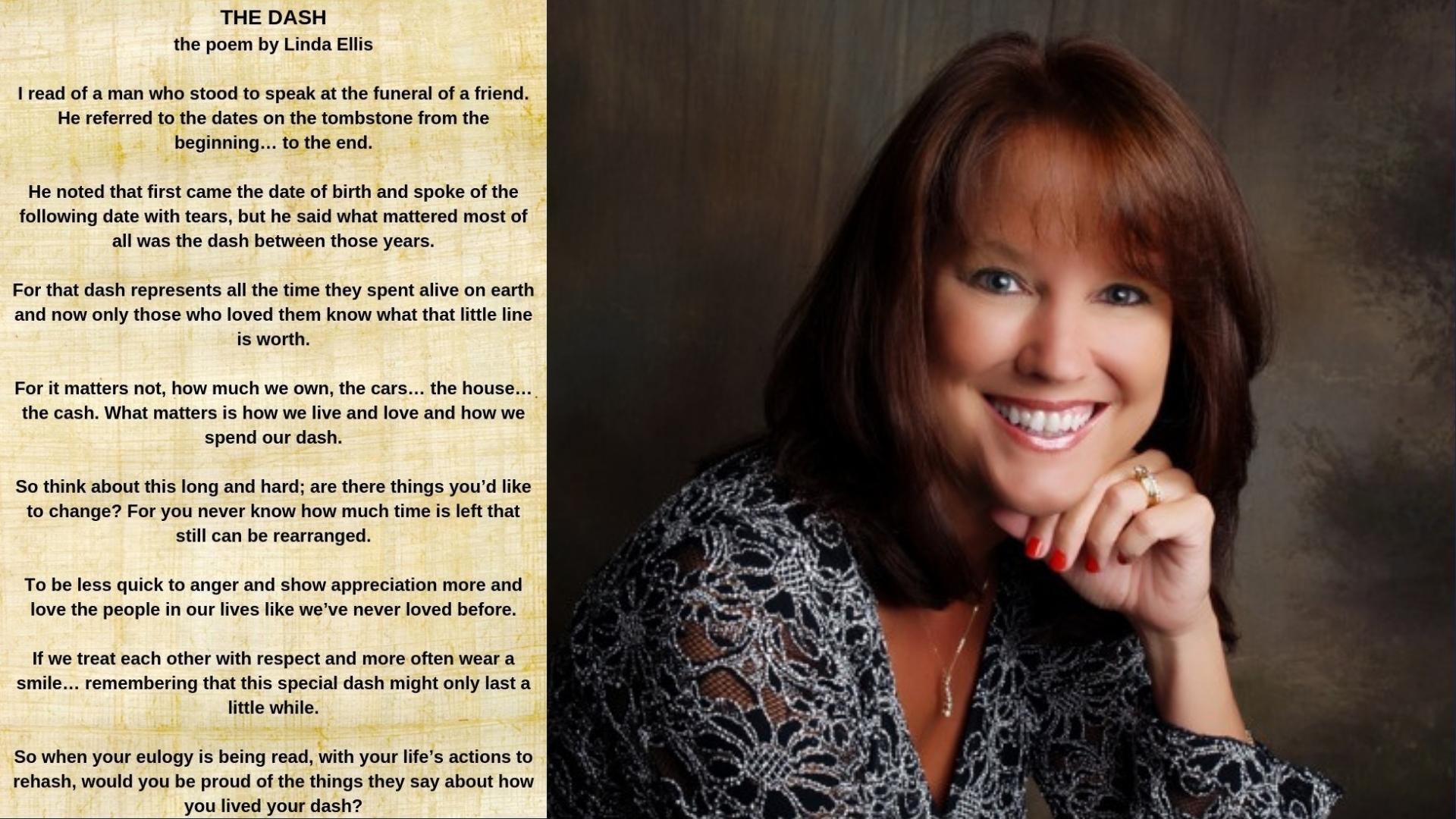
I read of a man who stood to speakat the funeral of a friend.He referred to the dates on the tombstonefrom the beginning…to the end.
He noted that first came the date of birthand spoke the following date with tears,but he said what mattered most of allwas the dash between those years.
For that dash represents all the timethat they spent alive on earth.And now only those who loved themknow what that little line is worth.
For it matters not, how much we own,the cars…the house…the cash.What matters is how we live and loveand how we spend our dash.
So, think about this long and hard.Are there things you’d like to change?For you never know how much time is leftthat can still be rearranged.
If we could just slow down enoughto consider what’s true and realand always try to understand?the way other people feel.
And be less quick to angerand show appreciation moreand love the people in our liveslike we’ve never loved before.
If we treat each other with respectand more often wear a smile,remembering that this special dashmight only last a little while.
So, when your eulogy is being read,with your life’s actions to rehash…would you be proud of the things they sayabout how you spent YOUR dash?
The Story Behind The Dash Poem
The poem didn’t appear overnight. It has a rich, emotional history worth knowing.
How the Poem Was First Shared
Linda Ellis wrote “The Dash” in 1996. It was first read publicly on a radio show. The response was immediate. Listeners called in, moved by the words.
From there, it spread through emails, church bulletins, and memorial services. Long before social media, this poem traveled the world through word of mouth and printed copies.
What Inspired Linda Ellis to Write It
Linda worked in a corporate setting early in her career. She noticed how people focused so much on work, money, and status.
Very little attention went to what actually made life meaningful. That contrast stayed with her.
She began reflecting on what truly counts when a life is over. The poem grew out of that honest thinking.
The Letter That Changed Everything
A key moment came when Linda received a letter from a woman who was dying. The woman had read the poem and said it changed how she spent her final days.
She chose to focus on love, forgiveness, and time with family. That letter deeply affected Linda. It confirmed for her that the poem was reaching people in ways she hadn’t expected.
Emotional Moments That Gave It Meaning
Two moments stand out in the poem’s history. The first was after the Columbine school shooting in 1999.
The poem was read at memorial services, giving grieving families a way to process unimaginable loss.
The second was Linda reading it at her own father’s funeral. That personal moment brought the poem full circle and showed that even its author lives by its message.
Meaning of The Dash Poem Explained
A simple symbol carries a profound message about how we choose to live.
What the “Dash” Represents
On any tombstone, you’ll find two dates. A birth year and a death year. Between them sits a small dash. That dash holds everything.
Every morning, every relationship, every choice, every laugh, every tear.
The poem asks you to look at that tiny mark and ask:what did it contain?
The Core Message
The poem’s message is clear. How you live matters more than what you own.
It asks you to love deeply, act with kindness, and spend your time on things that will mean something when it’s over. It’s not about being perfect. It’s about being present and intentional.
Why The Dash Poem Resonates with Millions
Few poems have reached as many hearts across as many cultures as this one.
Why Plain Language Makes It Hit Harder
The poem uses no complex metaphors and no difficult words. Anyone, at any age, reads it and understands it immediately. That simplicity is not a limitation. That is the whole point.
Most poems about life and death create distance through elevated language. This one does the opposite. It speaks the way people actually think.
That is what lets it meet readers exactly where they are, standing at a funeral, wondering about their own life, without ever feeling lectured or talked down to.
Plain language also removes every reason to disengage. There is nothing to decode. Nothing to reread for comprehension.
The only thing left to do is feel the question it is asking. And that question lands because it is honest, direct, and impossible to deflect.
Why It Works at Funerals Specifically
Grief leaves people without words for what they feel, which is why funeral poems like Miss Me But Let Me Go often get read alongside The Dash at memorial services.
It does not try to explain death or make loss easier to accept. It redirects everyone in the room toward the life that was lived, which is what mourners actually need in that moment.
It works for the bereaved, the eulogist, and the people who barely knew the deceased, because the question it asks is the same for all of them.
The poem was read at memorial services following the Columbine school shooting in 1999.
That moment marked its transition from widely shared poem to something people reach for specifically when words fail.
Why It Still Lands Today
The poem was written in 1996 but the world it is pushing back against has only gotten louder.
Phones, deadlines, and a constant stream of tasks pull attention away from the people and moments that actually matter.
The poem does not reference any of that. It does not need to. It simply asks one clear question and leaves the reader sitting with it.
That question is just as sharp now as it was when it first aired on a radio show to a room full of people who immediately called in.
Life Lessons from The Dash Poem
Practical takeaways you can start applying today, not someday.
Value Time and Relationships
Time is the one thing you can’t get back. The poem pushes you to spend it with people who matter and if you’re looking for more words that carry that same weight, these goodbye poems about death are worth reading.
Visit the parent while you still can. Don’t wait for the right moment. Make this moment the right one.
Show More Love and Kindness
The poem specifically mentions being less quick to anger and showing more appreciation. Small acts of kindness carry more weight than most people realize.
A kind word, a genuine smile, or a moment of patience can leave a lasting impression.
Reflect and Make Positive Changes
The poem ends with a question, would you be proud of how you spent your dash? That question is worth sitting with.
Not to feel guilty, but to make changes while there is still time. Reflection is only useful when it leads to action.
Take Ownership of Your Legacy
The poem does not name circumstances, bad luck, or other people as the reason a dash goes unfilled.
It speaks directly to the reader as the one responsible. No one else decides what goes into your dash.
Every choice you make, every relationship you invest in, every moment you show up fully adds to it.
You are still writing yours right now. That is not a comfort. It is a challenge. And that is exactly what gives the poem its weight long after you finish reading it.
About the Poet – Linda Ellis

Linda Ellis is an American poet, author, and motivational speaker best known for writing “The Dash” in 1996.
Her work centers on living with purpose and leaving behind something that matters. What makes her story interesting is how the poem spread. No campaign pushed it. No publisher promoted it.
People simply shared it because it moved them. It crossed cultural and religious lines because its message is purely human.
Linda continues to write and speak publicly, carrying the same message she put into that poem years ago. Her words found millions of people, and those people kept passing them on.
Final Thoughts
The Dash Poem by Linda Ellis is more than a piece of writing. It’s a quiet reminder that how you live is what you leave behind.
I remember reading it for the first time and feeling a shift in how I looked at my own daily choices. It’s the kind of poem that stays with you.
If it moved you too, share it with someone who needs to hear it. Drop a comment below and tell me what your dash means to you. I’d love to know.
Frequently Asked Questions
What are the words to The Dash poem?
The Dash is a copyrighted work and cannot be reproduced without permission from Linda Ellis. The full licensed text is available at lindaellis.life.
How do I get permission to use The Dash poem at an event or in print?
Contact Linda Ellis through lindaellis.life to request a license. Private funeral readings are generally fine, but anything printed or recorded needs written approval first.
Is there a short version of The Dash poem?
There is only one version of the poem. What circulates online as a short version is usually an unlicensed excerpt. The full text is available at lindaellis.life.