


Some poems don’t comfort you. They sit with you in the hard place and tell the truth about it. That’s what draws people to dark poems, and once you find the right one, you don’t forget it.
Dark poems are verses that centre on grief, death, dread, or moral darkness without flinching away at the end.
The list below covers 21 of them, organised by the type of darkness they carry. Grief and loss, horror and dread, war, existential emptiness, gothic and macabre. Some of these will unsettle you. A few might stop you completely.
Most people know two or three of these by name. What they don’t know is what makes each one actually work. That’s what this list gets into.
What is a Dark Poem?
A dark poem isn’t just a sad one. Sad poetry moves toward something. Acceptance, memory, the slow return of light. Dark poetry doesn’t. It holds you inside the difficult experience and doesn’t offer a way out.
The darkness isn’t the atmosphere. That’s the whole point.
What makes dark poems work isn’t just subject matter. It’s craft. The image that lands before your brain catches up. The line that stops before comfort arrives. The pacing that keeps you slightly unsettled throughout.
Dark poetry covers several distinct registers. Grief verse, war poetry, gothic horror, existential writing. They don’t all feel the same, but they share one quality. They don’t lie to you about how hard certain experiences are.
That’s why people return to them.
Why People Turn to Dark Poetry
Most people assume dark poetry is for a certain type of person. Someone who enjoys being miserable, or who romanticises pain. That’s not really how it works.
People turn to dark poetry because it names things that are hard to name.
When you’re grieving, most of the world wants you to feel better quickly. Dark poetry doesn’t ask that of you. It sits where you are and says, yes, this is real, and it’s as heavy as you think it is. That kind of honesty is rare.
There’s also something in the form itself. A poem gives shapeless emotion a container. A beginning, a rhythm, an ending. That structure doesn’t fix anything, but it makes the feeling easier to hold.
Reading about darkness isn’t the same as dwelling in it. The poem processes it for you, at a safe distance.
That’s the function. Not misery. Relief.
List of Dark Poems Worth Reading and What Makes Each One Work
Grief & Loss

These poems don’t try to fix the feeling. They just sit with you inside it.
1. “The Raven” by Edgar Allan Poe
A grieving man is visited by a raven that speaks one word: “Nevermore.” The darkness isn’t the bird. It’s the repetition. Every question he asks, he already knows the answer to. He’s not seeking comfort. He’s torturing himself with the absence of it.
The raven doesn’t leave. The grief doesn’t lift. The poem ends where it began, only heavier.
2. “Out, Out” by Robert Frost
A boy loses his hand in a farming accident and dies. What makes it devastating is the last two lines. The people around him turn back to their work. No mourning. No ceremony. Just absence, and then continuation.
Frost uses plainness as the craft weapon. That indifference is the darkest thing in the poem.
3. “Funeral Blues” by W.H. Auden
Auden writes about wanting the entire world to stop because one person has died. The clocks, the telephone, the traffic.
What makes it dark is how unreasonable that wish is, and how completely you understand it anyway.
He doesn’t describe grief in abstract terms. He lists the exact things that feel unbearable. That precision is what makes readers feel seen rather than described.
4. “The Cremation of Sam McGee” by Robert W. Service
Unusual on a dark poetry list because it carries dark humor that most grief poems avoid.
A man promises his dying friend he will cremate him despite the bitter Yukon cold. He keeps the promise.
The darkness is in the loyalty, not the death. Proof that dark poetry doesn’t have to be humourless to be honest.
5. “A Hero” by Anonymous
This short poem works because it doesn’t explain itself.
Heroism is described not as glory but as quiet, unseen sacrifice. Flat tone, matter-of-fact delivery, no celebration. Just the acknowledgement that some people carry enormous things and nobody notices.
The darkness is in that gap.
Horror & Dread
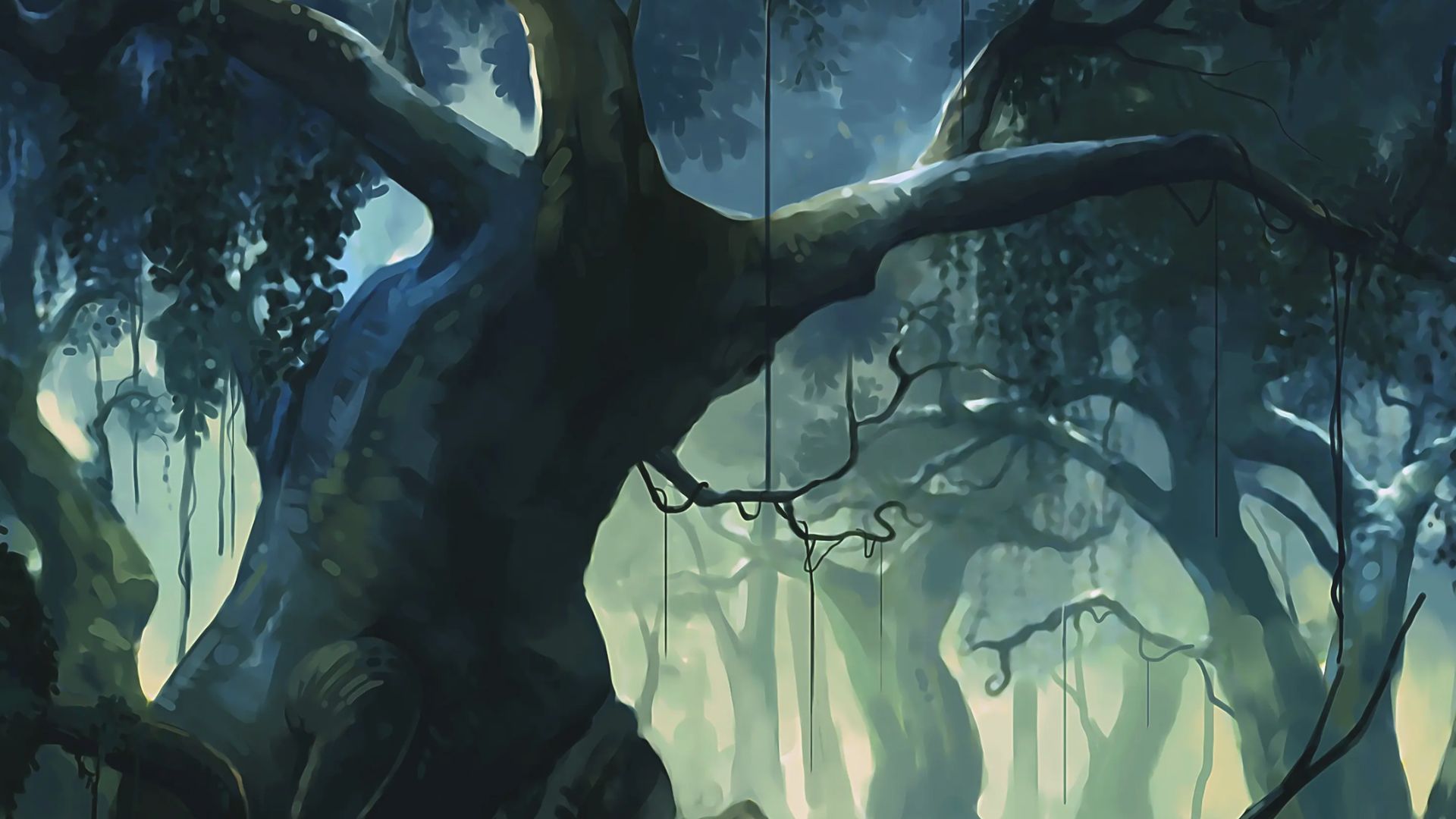
These poems don’t rely on cheap shock. They build unease quietly, and it stays.
6. “Darkness” by Lord Byron
Byron wrote this in 1816 after a volcanic eruption blocked sunlight across the Northern Hemisphere. The poem imagines the sun going out permanently.
Cold, slow, and final. Humans burn everything they have, then each other, then there is nothing. Byron doesn’t sensationalise.
He describes the end of the world in an almost clinical tone, and that distance makes it far more disturbing than theatrical horror would.
7. “The Haunted Palace” by Edgar Allan Poe
On the surface, a poem about a palace falling into ruin. It isn’t.
The palace is a mind. The haunted state is mental collapse. Poe maps the architecture of a building onto a human being losing coherence.
The poem shows you the palace in its glory first, then what it becomes. Poe never states what the poem is actually about. He doesn’t need to.
8. “Circus in Three Rings” by Sylvia Plath
The circus is a performance of feeling, not feeling itself. Three rings, three emotional states, none of them real. Dissociation dressed up as spectacle.
The imagery is bright and carnival-like. The emotional undertone is hollow. That gap is where the darkness lives.
9. “Resume” by Dorothy Parker
Parker lists every way to die and then explains why she has decided to keep living, with deadpan delivery that makes you laugh and then feel bad about laughing.
Possibly the most efficient dark poem ever written. Every word is doing something. Nothing is there for padding.
10. “I Lived as Best I Could” — Traditional
Two lines. No definitive author. It surfaces repeatedly in dark poetry communities for good reason.
It gives you just enough to land the weight and stops before it explains itself. The reader fills the silence. That’s the specific power of compression in dark verse. The cut is the mechanism.
War & Atrocity
These poems were written by people who were there, or who understood what being there actually meant.
11. “Dulce et Decorum Est” by Wilfred Owen
Owen describes a gas attack in World War One with physical specificity that was almost unpublishable at the time. He is not describing war. He is making you smell it.
Abstract descriptions of war let readers maintain distance. Owen removes that option.
By the final lines, when he invokes the old lie that dying for one’s country is sweet and fitting, the irony has become devastating rather than rhetorical.
12. “The Death of the Ball Turret Gunner” by Randall Jarrell
Five lines. One of the most compressed antiwar statements ever written.
A gunner describes his life from birth to death in the belly of a bomber. Jarrell uses the contrast between the language of birth and the reality of industrial death. That contrast is the whole poem.
13. “Grass” by Carl Sandburg
The grass speaks. It tells the reader to pile the bodies high, because it will cover them and no one will remember what happened here.
Austerlitz, Waterloo, Gettysburg. Treated the same way. The grass grew back. The darkness isn’t in the violence. It’s in the indifference of time.
14. “Break of Day in the Trenches” by Isaac Rosenberg
Rosenberg wrote this from inside the trenches in 1916. He died two years later.
A rat crosses between the German and British lines. It moves freely between enemies who will kill each other by afternoon. It doesn’t know sides.
Just moves through the mud looking for food. That image communicates the absurdity of war better than most full-length essays.
Existential & Nihilistic
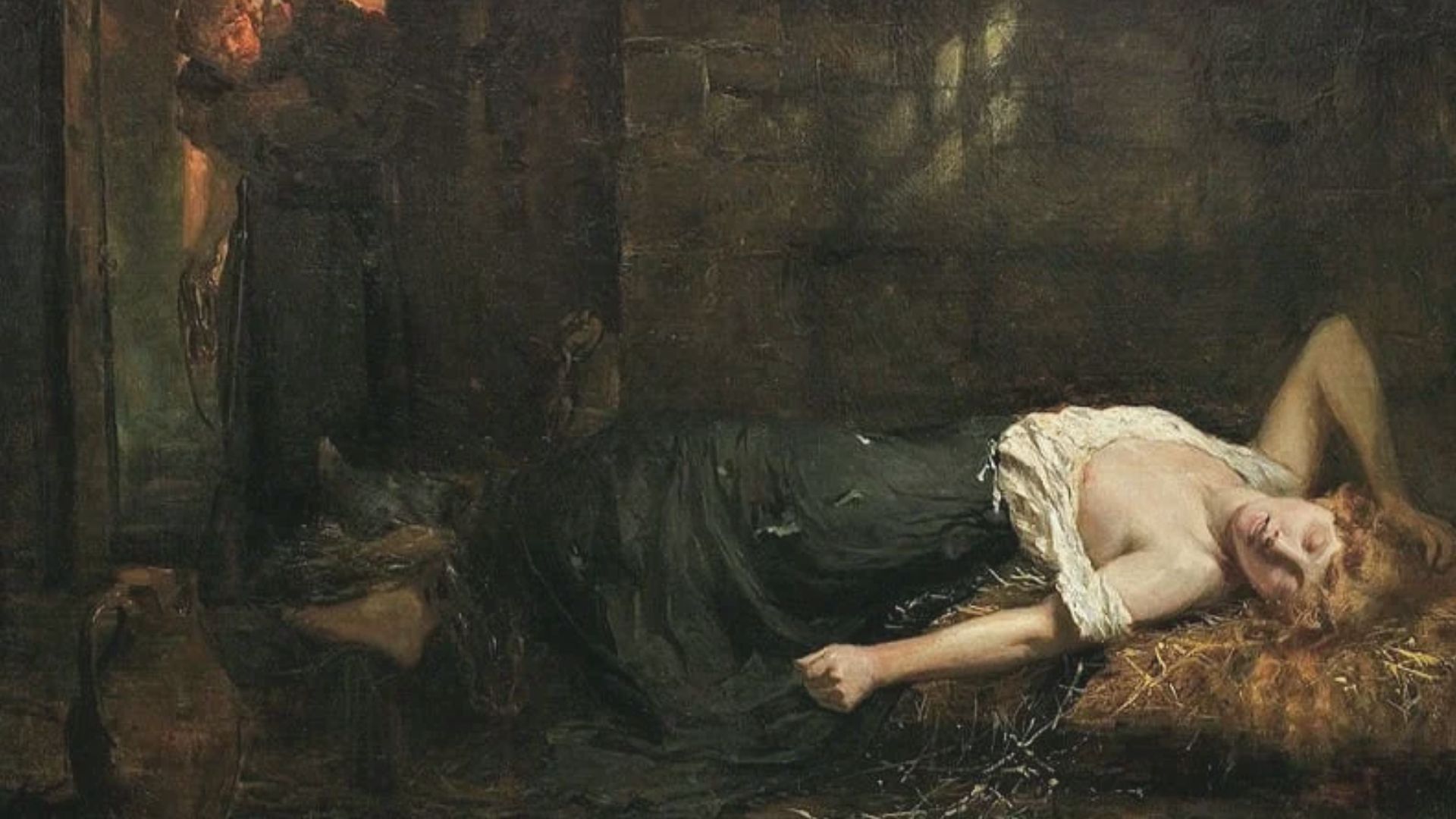
These poems don’t ask why life is hard. They go deeper and question whether meaning exists at all.
15. “The Hollow Men” by T.S. Eliot
Eliot describes spiritual emptiness that isn’t dramatic. It’s dry. Flat.
The hollow men exist between intention and action, between the idea and the reality. Not suffering. Simply absent from themselves.
The disturbing craft choice is the nursery rhyme rhythm near the end. That childlike cadence carrying those particular words creates an unease no conventionally dark tone could match.
16. “Desert Places” by Robert Frost
A man watches snow fall on an empty field at night. Then Frost turns inward. He has desert places inside him that make the empty field look populated by comparison.
The first half is landscape. The second half is something else entirely. That structural pivot is what makes it land as existential rather than scenic.
17. “Annabel Lee” by Edgar Allan Poe
A love so total that even death couldn’t end it. Which sounds romantic until you realise the narrator is sleeping beside a tomb.
The darkness is in what Poe presents as devotion. The reader has to decide where devotion ends, and obsession begins. He never tells you.
18. “The Sect of the Idiot” by Thomas Ligotti
Ligotti argues that consciousness itself is the source of suffering. Not circumstances. Not loss. Just the fact of being aware.
Existence is not something to be celebrated or mourned. It simply continues, indifferently. Read it if you want dark poetry that operates philosophically rather than emotionally.
Gothic & Macabre

These poems move slowly and deliberately. The darkness feels ancient, like it was always there waiting to be noticed.
19. “Cold” by Anonymous
Cold is used as a sustained metaphor for emotional numbness after loss. It never explains the metaphor. The cold is just there. In the room, in the hands, in the spaces where warmth used to be.
Poems that trust their readers land harder than poems that explain themselves.
20. “A Thin Moon Faints” from Dappled Things
A churchyard, a faint moon, the dead lying silent beneath. What makes it gothic rather than simply morbid is the quality of attention. The specific pallor of the moon. The particular quality of the silence.
Gothic poetry earns its atmosphere through detail, not declaration.
21. “Night Sky with Exit Wounds” by Ocean Vuong
Vuong’s work covers war legacy, family, survival and loss in language that is both precise and lyrical.
He proves dark poetry is not a historical artefact. It is still being written, still evolving, still doing the same work it has always done. Start with his collection of the same name and read until something stops you.
How to Find More Dark Poems That Match Your Mood
Start with your mood, not a title.
Processing grief? Look toward elegy poets like W.H. Auden and Ted Hughes. Want dread without emotional weight? Poe’s collected works and 19th-century Gothic verse are the better starting point.
For finding poems online, three sources are worth bookmarking. The Poetry Foundation has a searchable archive you can filter by subject and tone. Reddit’s r/Poetry surfaces lesser-known work that standard anthologies miss. Family Friend Poems covers more accessible, emotionally direct writing.
One thing worth knowing. Single poems online are good for discovery. A curated anthology gives you depth that casual browsing rarely does. If dark poetry keeps pulling you back, a physical collection is worth it.
Start with what you’re feeling. The right poem finds you from there.
Closing Thoughts
Dark poems don’t fix anything. They just make difficult things easier to carry by putting them into words.
The list of poems covers grief, dread, war, and existential emptiness. Each one earns its darkness through craft, not just subject matter. That’s the distinction worth remembering.
If one of these stops you, sit with it. Read it again. And if you want to keep exploring, the section on finding more dark poems by mood is a good next step.
Which one hit you hardest? Drop it in the comments.
Frequently Asked Questions
Are dark poems suitable for children?
Most are not. Dark poems deal with death, war, and grief in ways better suited to older teens and adults who can process heavy themes.
What is the shortest dark poem ever written?
Dorothy Parker’s “Resume” is among the shortest at eight lines. Some uncredited two-line poems circulating online rival it for compression and emotional weight.
Is dark poetry considered a separate literary genre?
Not officially. It is a tonal and thematic category that cuts across multiple genres, including gothic, war poetry, elegy, and confessional verse.
Can writing dark poetry help with mental health?
For some people, yes. Putting difficult emotions into structured form can create distance and clarity. It works differently for everyone and is not a substitute for professional support.
Which poets are most associated with dark poetry today?
Ocean Vuong, Warsan Shire, and Ada Limón are among the most read contemporary poets working in emotionally dark and elegiac registers right now.