

You read the first line and something in you goes still, and if you’re looking for other goodbye poems about death that carry the same weight, there are more worth knowing.
Auden wrote it in 1936, reworked it quietly, and it spent decades known only to a small group of readers.
Then one actor read it aloud in a film with no drama, no performance and a whole audience felt it hit somewhere deep. Sixteen lines. No comfort. No happy ending. Just grief, described exactly as it feels when you’re inside it.
By the end of this guide, you’ll know what each stanza is really saying, why this poem works at an actual funeral better than most spoken words do, and what that final line means the one that refuses to tell you it gets better.
The Full Text of Funeral Blues
Written in 1936 by W.H. Auden, this is one of the most recognised elegies in the English language. Read it once before the analysis. It lands differently when you come to it fresh.
Stop all the clocks, cut off the telephone,
Prevent the dog from barking with a juicy bone,
Silence the pianos and with muffled drum
Bring out the coffin,let the mourners come.
Let aeroplanes circle moaning overhead
Scribbling on the sky the message He Is Dead.
Put crêpe bows round the white necks of the public doves,
Let the traffic policemen wear black cotton gloves.
He was my North, my South, my East and West,
My working week and my Sunday rest,
My noon, my midnight, my talk, my song;
I thought that love was lasting: I was wrong.
The stars are not wanted now; put out every one,
Pack up the moon and dismantle the sun,
Pour away the ocean and sweep up the wood;
For nothing now can ever come to any good.
Poem: Funeral BluesAuthor: W.H. AudenYear: 1936
What “Funeral Blues” Is About
“Funeral Blues” is a poem about losing the person you loved most. No allegory, no hidden meaning, just grief, raw and total.
The speaker isn’t reflecting on loss from a distance. They’re inside it. From that place, they want the world to stop, and of course, it won’t.
That gap is what drives the whole poem. Life keeps going. The speaker demands it doesn’t. Anyone who has lost someone close knows that feeling exactly.
It’s an elegy, a poem of mourning. But it earns that label by putting you inside the grief, not above it. The speaker moves from silencing clocks to wanting the sun dismantled. That arc is what grief actually feels like.
The Story Behind the Poem
Alt text: A vintage grey typewriter with a blank sheet of white paper inserted sits on a wooden surface against a plain background File name: vintage-typewriter-with-blank-paper
“Funeral Blues” didn’t begin as a poem about personal grief. Auden and Christopher Isherwood wrote it in 1936 for their play The Ascent of F6, where it was sung as a satirical jab at the exaggerated mourning that follows powerful men’s deaths.
Auden later revised it, stripping the political context and reshaping it into something private and sincere. That matters, because the poem’s emotional weight was earned through reworking, not written in a single burst of feeling.
Sincerity was a choice. It reached a global audience in 1994, when actor John Hannah read it quietly and without drama at a funeral scene in Four Weddings and a Funeral, a reminder of how a single moment can do for a poem what decades of publishing cannot, similar to how Miss Me But Let Me Go found its audience through word of mouth at gravesides.
The film was a hit, and the poem travelled with it. Auden’s collection Tell Me the Truth About Love sold hundreds of thousands of copies shortly after.
What the film proved wasn’t just that the poem was good. It proved the poem worked in a real room, at a real moment of loss, for people who had never read Auden before.
A Stanza-by-Stanza Meaning
The poem moves in a clear emotional direction from demanding the world stop, to wanting the entire universe dismantled. Each stanza widens the radius of grief.
Stanza One – Silencing the Ordinary World
Stop all the clocks, cut off the telephone,
Prevent the dog from barking with a juicy bone,
Silence the pianos and with muffled drum
Bring out the coffin, let the mourners come.
The speaker demands silence: clocks, phones, a barking dog. These are ordinary sounds, but in grief, ordinary life feels offensive. The world keeps going when it shouldn’t. The coffin only appears at the end because facing the real loss comes last, not first.
Stanza Two – Demanding the World Bear Witness
Let aeroplanes circle moaning overhead
Scribbling on the sky the message He Is Dead.
Put crêpe bows round the white necks of the public doves,
Let the traffic policemen wear black cotton gloves.
The grief expands outward. The speaker wants public acknowledgement: skywriting, doves in mourning ribbon, police in black gloves. The loss feels too large to stay private. The blunt line “He Is Dead” cuts through all the imagery. That’s the fact everything else is built around.
Stanza Three – He Was My Everything
He was my North, my South, my East and West,
My working week and my Sunday rest,
My noon, my midnight, my talk, my song;
I thought that love was lasting: I was wrong.
The speaker describes what the person meant in every direction, every hour, every kind of day. The imagery is deliberately broad so any reader can place their own person into it. Then one plain sentence closes it: “I was wrong.” Nothing poetic. Just true.
Stanza Four – Dismantling All Comfort
The stars are not wanted now; put out every one,
Pack up the moon and dismantle the sun,
Pour away the ocean and sweep up the wood;
For nothing now can ever come to any good.
The speaker rejects every traditional symbol of comfort moon, stars, ocean. These are things poetry uses to console. Auden’s speaker wants none of it. The final line refuses all hope entirely. It doesn’t say grief will pass. It says nothing will ever be good again.
Themes in Funeral Blues
The poem carries three themes that work together. Each one deepens the others.
Grief and the Indifference of the World
The speaker demands the clocks stop, but the world doesn’t pause for anyone’s grief. That’s the frustration underneath the whole poem.
Life keeps going: the phone rings, the dog needs feeding, strangers walk past as if nothing happened. Auden shows this by making the speaker’s demands impossible. Stop the clocks. Silence the pianos.
The world won’t do any of it, and the speaker knows that. But the need for it to stop is real. That gap between what grief demands and what the world delivers is something most bereaved people recognise immediately.
Private Loss vs. Public Mourning
The poem moves from silencing the household to wanting the news written in the sky. That’s a real pattern in grief: it starts intensely private, then searches for acknowledgement from the world around it. The speaker isn’t being dramatic.
They’re saying: this loss was as large as the world, so the world should respond accordingly. Most of us don’t get that response.
The mourning stays ours to carry, quiet and unsupported, even when it feels too large for one person. The poem holds that tension without resolving it.
Love Without the Promise of Forever
“I thought that love was lasting: I was wrong.” That single line does more than any other in the poem. The speaker doesn’t argue, explain, or soften it; they just state the fact plainly.
Love ended because the person died. And once that person was gone, everything that held meaning to the moon, the stars, the ocean became worthless too.
That’s what the final stanza is really saying. It’s not despair as a pose. It’s the honest logic of someone whose entire world was built around one person, and that person is no longer there.
Why People Read It at Funerals
People read this poem at funerals because it doesn’t try to comfort anyone. It just tells the truth about grief.
When someone dies, people around you say well-meaning things that time heals, that they’re at peace, that life goes on. None of that matches where most people actually are on the day of a funeral. This poem does.
It doesn’t offer hope or resolution. It sits inside the feeling and stays there. That’s rare, and that’s exactly why it works in a room full of people who are genuinely grieving.
It fits best when the loss is a partner, spouse, or someone who was at the centre of another person’s life. The “He was my North, my South” language describes that kind of total, structural love. Read it slowly, without drama; the words carry the weight on their own.
On a day when you can’t find your own words, a poem that already knows what you’re feeling is enough.
About W.H. Auden
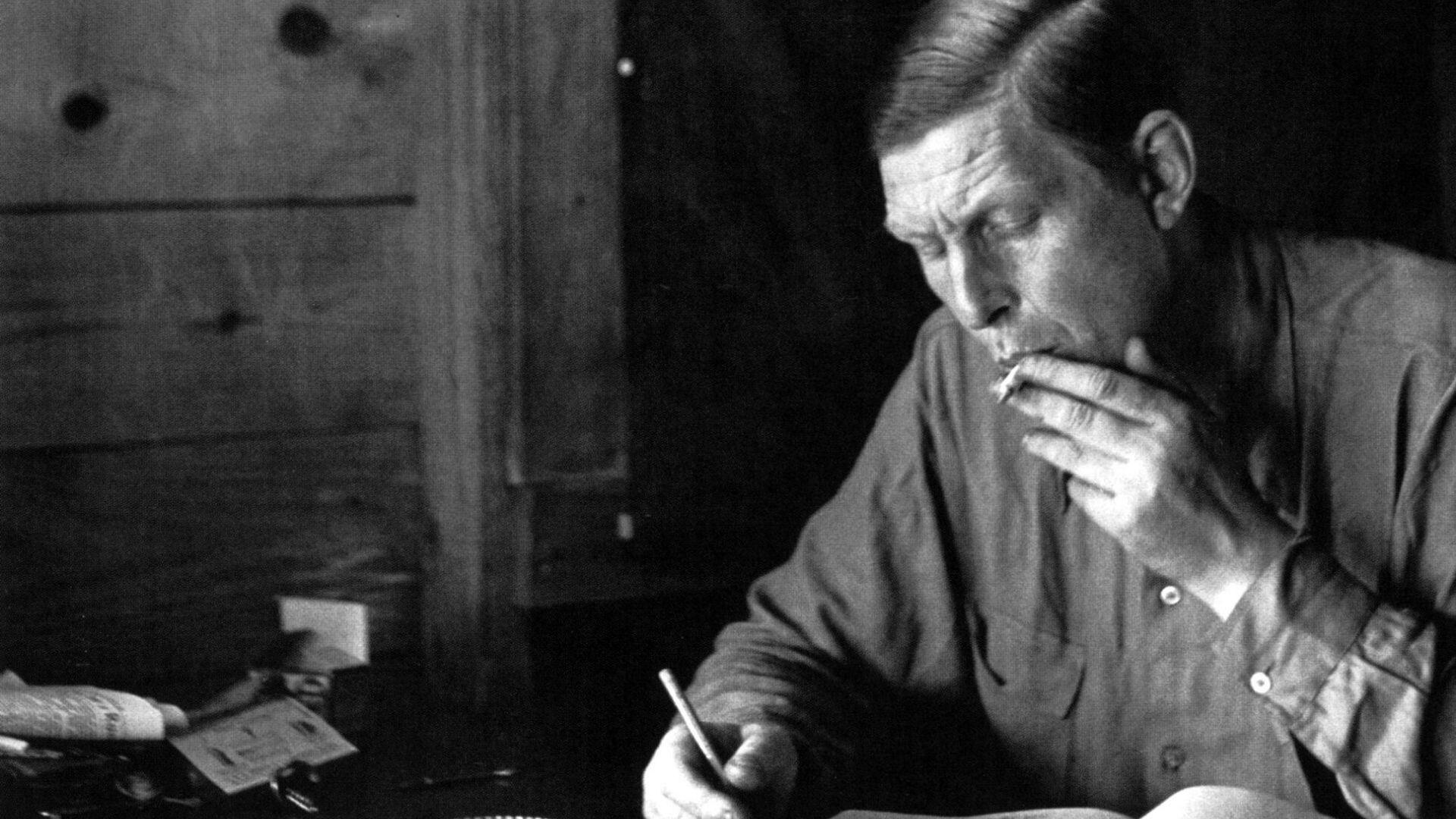
W.H. Auden was born on 21 February 1907 in York, England. He published approximately 400 poems and 400 essays across his lifetime, working also as a playwright and documentary filmmaker.
He rose to early fame in the 1930s as a politically engaged voice during the Great Depression, writing many of his verse dramas in collaboration with Christopher Isherwood. In 1939, he moved to the United States and became an American citizen.
His work is known for its technical range, its engagement with moral and political questions, and its variety of tone and form.
The central themes running through his poetry are love, politics, religion, and the relationship between individual human beings and the wider world.
He won the Pulitzer Prize in 1948, and also served as Professor of Poetry at Oxford University.
After his death, several of his poems, most notably “Funeral Blues”, became widely known through film, broadcast, and popular media.
He remains one of the most read English-language poets of the twentieth century. He died in his sleep on 28 September 1973, in Vienna.
Wrapping up
Grief doesn’t follow a script, and neither does Funeral Blues. That’s exactly why it has stayed with readers for nearly ninety years.
Auden didn’t write something soft or reassuring. He wrote something true, and truth is what people actually need when they’re sitting in a room saying goodbye to someone they loved.
If this poem hit you somewhere real, save it. Share it. Read it again when words feel impossible. And if you want to keep exploring poems that hold grief without rushing past it, check out some of the other pieces I’ve covered on the blog. Got a question or a thought? Drop it in the comments below. I read every single one.
Frequently Asked QuestionsWhat Is the Irony in the Poem “Funeral Blues”?
The irony is that the speaker demands the whole world stop clocks, stars, oceans, knowing full well it won’t. The impossibility of the demands is the point.
Was W.H. Auden LGBTQ?
Yes. Auden was gay and open about it within his personal life. His relationship with Chester Kallman, whom he met in 1939, lasted until his death.
Is “Funeral Blues” About a Breakup?
No. The poem is about death, not a breakup. The line “He Is Dead” makes that clear. It’s a grief poem, not a heartbreak poem.