



A couple sails off in a pea-green boat, a whole family goes to sea in a sieve, and a lonely man wanders a dark plain with a lamp burning inside a nose he wove himself.
All three scenes come from Edward Lear poems, the nonsense songs and limericks of an English landscape painter published between 1846 and 1877.
The complete text of 11 of them appears below, from “The Owl and the Pussy-Cat” to the limericks of A Book of Nonsense, each with its book, its year, and a short note on what to listen for.
Read on for a brief biography, a quick list of the poems by book, the poems themselves, and a look at the sadness that runs under the jokes.
Who Was Edward Lear?
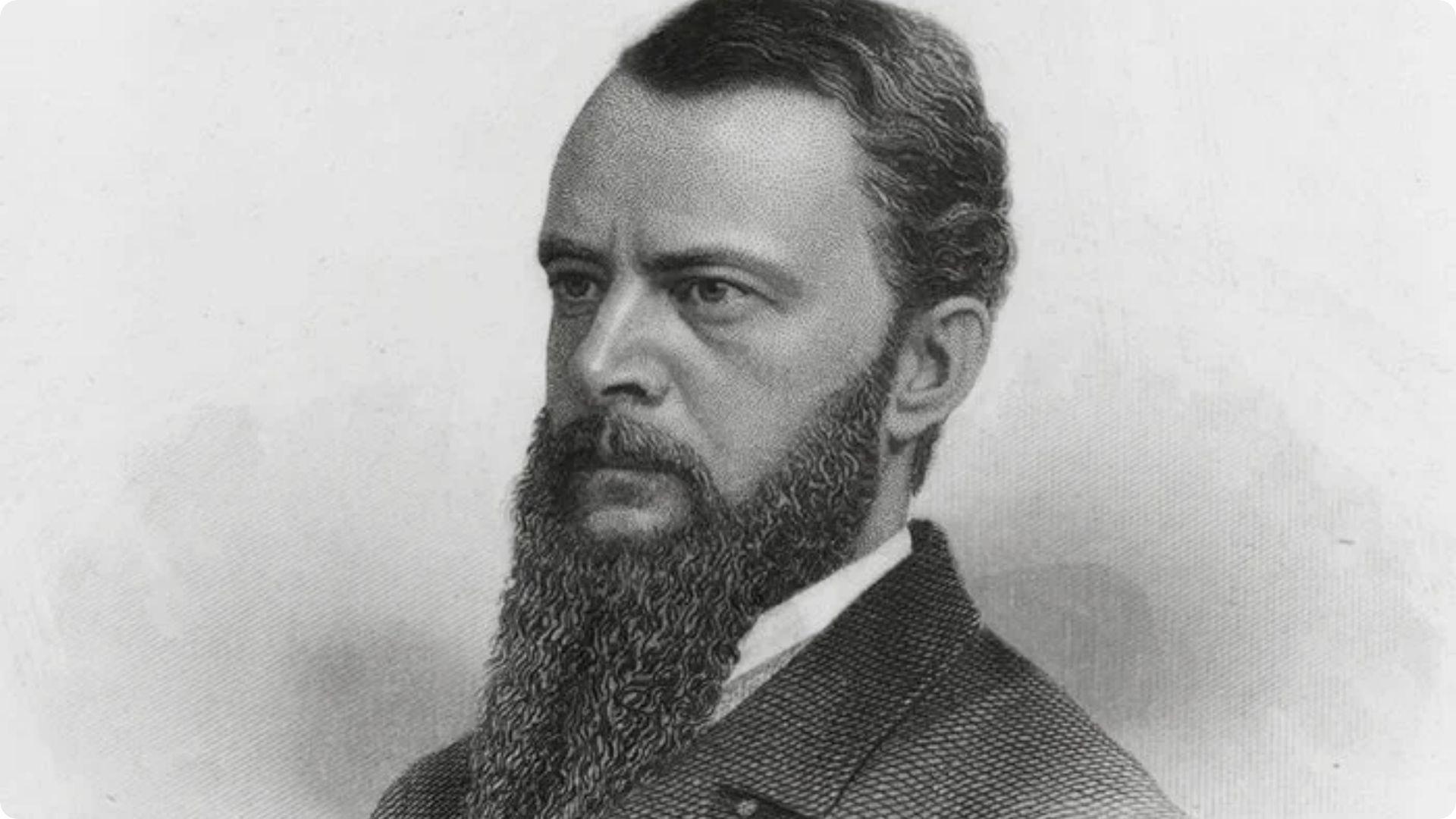
Edward Lear (1812-1888) was an English poet, illustrator, and landscape painter who popularized the limerick and wrote the longer nonsense songs behind “The Owl and the Pussy-Cat.”
He published four nonsense books between 1846 and 1877 and died in San Remo, Italy, on January 29, 1888.
According to the Poetry Foundation’s Edward Lear biography, he was the 20th of 21 children and had his first epileptic seizure at five.
He drew parrots and menagerie animals for a living, and while staying at the Earl of Derby’s Knowsley estate from 1832 to 1837, he made nonsense verse for the children there.
He hoped for fame as a painter and treated the poems as a source of fun and money, yet they are the work that lasted, and many carry the loneliness of a constant traveler. His four books, listed next, make the poems easier to place.
Edward Lear Poems List by Book and Year
Edward Lear published four nonsense books in his lifetime: A Book of Nonsense (1846), Nonsense Songs, Stories, Botany, and Alphabets (1871), More Nonsense (1872), and Laughable Lyrics (1877).
His long poems come from the 1871 and 1877 books, and the limericks fill the 1846 and 1872 volumes. Our guide to how the limerick works explains that form, and the table below lists each poem in this post by book and year.
| Poem | Collection | Year |
| “The Owl and the Pussy-Cat” | Nonsense Songs, Stories, Botany, and Alphabets | 1871 |
| “The Jumblies” | Nonsense Songs, Stories, Botany, and Alphabets | 1871 |
| “The Dong with a Luminous Nose” | Laughable Lyrics | 1877 |
| “The Pobble Who Has No Toes” | Laughable Lyrics | 1877 |
| “The Quangle Wangle’s Hat” | Laughable Lyrics | 1877 |
| “The Courtship of the Yonghy-Bonghy-Bò” | Laughable Lyrics | 1877 |
| “The Akond of Swat” | Laughable Lyrics | 1877 |
| “There Was an Old Man with a Beard” | A Book of Nonsense | 1846 |
| “There Was an Old Man in a Tree” | A Book of Nonsense | 1846 |
| “There Was an Old Person of Fife” | More Nonsense | 1872 |
| “How Pleasant to Know Mr. Lear” | Nonsense Books (1894 edition) | 1894 |
Lear’s Best-Known Nonsense Songs From 1871

Nonsense Songs, Stories, Botany, and Alphabets gathered Lear’s first run of long poems, and the two below are the ones most often named among his best-known works.
“The Owl and the Pussy-Cat”
Each of the three stanzas ends on a tail of repeated words, “You are,” “His nose,” and “The moon,” which echoes the line before it and gives the poem the feel of a sung refrain.
The plot moves quickly: a proposal, a sail of a year and a day, a pig with a ring in his nose, and a wedding presided over by a turkey.
Lear began a sequel, “The Children of the Owl and the Pussy-cat,” which was published only after his death, in 1938.
The supper that follows the wedding has its own place among the poems about food in our wider roundup.
The Owl and the Pussy-Cat went to sea
In a beautiful pea-green boat:
They took some honey, and plenty of money
Wrapped up in a five-pound note.
The Owl looked up to the stars above,
And sang to a small guitar,
“O lovely Pussy, O Pussy, my love,
What a beautiful Pussy you are,
You are,
You are!
What a beautiful Pussy you are!”
Pussy said to the Owl, “You elegant fowl,
How charmingly sweet you sing!
Oh! let us be married; too long we have tarried:
But what shall we do for a ring?”
They sailed away, for a year and a day,
To the land where the bong-tree grows;
And there in a wood a Piggy-wig stood,
With a ring at the end of his nose,
His nose,
His nose,
With a ring at the end of his nose.
“Dear Pig, are you willing to sell for one shilling
Your ring?” Said the Piggy, “I will.”
So they took it away, and were married next day
By the Turkey who lives on the hill.
They dined on mince and slices of quince,
Which they ate with a runcible spoon;
And hand in hand, on the edge of the sand,
They danced by the light of the moon,
The moon,
The moon,
They danced by the light of the moon.
Credit: Edward Lear, “The Owl and the Pussy-Cat,” first published in the American magazine Our Young Folks, February 1870, collected in Nonsense Songs, Stories, Botany, and Alphabets (1871). Public domain, text via Project Gutenberg.
“The Jumblies”
The same four-line refrain closes all six stanzas, so the poem moves forward in the lines before it while the ending stays fixed, much like the chorus of a song.
In the first two stanzas, the onlookers predict drowning and capsizing, and the Jumblies answer with a cheerful “we don’t care a button.”
The prediction never comes true, since they return after twenty years and the neighbors remark on how tall they have grown.
They went to sea in a sieve, they did;
In a sieve they went to sea:
In spite of all their friends could say,
On a winter’s morn, on a stormy day,
In a sieve they went to sea.
And when the sieve turned round and round,
And every one cried, “You’ll all be drowned!”
They called aloud, “Our sieve ain’t big;
But we don’t care a button, we don’t care a fig:
In a sieve we’ll go to sea!”
Far and few, far and few,
Are the lands where the Jumblies live:
Their heads are green, and their hands are blue
And they went to sea in a sieve.
They sailed away in a sieve, they did,
In a sieve they sailed so fast,
With only a beautiful pea-green veil
Tied with a ribbon, by way of a sail,
To a small tobacco-pipe mast.
And every one said who saw them go,
“Oh! won’t they be soon upset, you know?
For the sky is dark, and the voyage is long;
And, happen what may, it’s extremely wrong
In a sieve to sail so fast.”
Far and few, far and few,
Are the lands where the Jumblies live:
Their heads are green, and their hands are blue;
And they went to sea in a sieve.
The water it soon came in, it did;
The water it soon came in:
So, to keep them dry, they wrapped their feet
In a pinky paper all folded neat;
And they fastened it down with a pin.
And they passed the night in a crockery-jar;
And each of them said, “How wise we are!
Though the sky be dark, and the voyage be long,
Yet we never can think we were rash or wrong,
While round in our sieve we spin.”
Far and few, far and few,
Are the lands where the Jumblies live:
Their heads are green, and their hands are blue;
And they went to sea in a sieve.
And all night long they sailed away;
And when the sun went down,
They whistled and warbled a moony song
To the echoing sound of a coppery gong,
In the shade of the mountains brown.
“O Timballoo! How happy we are
When we live in a sieve and a crockery-jar!
And all night long, in the moonlight pale,
We sail away with a pea-green sail
In the shade of the mountains brown.”
Far and few, far and few,
Are the lands where the Jumblies live:
Their heads are green, and their hands are blue;
And they went to sea in a sieve.
They sailed to the Western Sea, they did,–
To a land all covered with trees:
And they bought an owl, and a useful cart,
And a pound of rice, and a cranberry-tart,
And a hive of silvery bees;
And they bought a pig, and some green jackdaws,
And a lovely monkey with lollipop paws,
And forty bottles of ring-bo-ree,
And no end of Stilton cheese.
Far and few, far and few,
Are the lands where the Jumblies live:
Their heads are green, and their hands are blue;
And they went to sea in a sieve.
And in twenty years they all came back,–
In twenty years or more;
And every one said, “How tall they’ve grown!
For they’ve been to the Lakes, and the Torrible Zone,
And the hills of the Chankly Bore.”
And they drank their health, and gave them a feast
Of dumplings made of beautiful yeast;
And every one said, “If we only live,
We, too, will go to sea in a sieve,
To the hills of the Chankly Bore.”
Far and few, far and few,
Are the lands where the Jumblies live:
Their heads are green, and their hands are blue;
And they went to sea in a sieve.
Credit: Edward Lear, “The Jumblies,” from Nonsense Songs, Stories, Botany, and Alphabets (1871). Public domain; text from Nonsense Songs on Gutenberg.
Poems From Laughable Lyrics (1877)

Laughable Lyrics was Lear’s last volume of verse, and the Poetry Foundation notes that its title misleads, since most of the poems deal with loss in some form.
Five of them follow, taken from the Laughable Lyrics on Gutenberg edition.
“The Dong with a Luminous Nose”
The poem opens on the glowing nose from a distance, as watchers on towers see a meteor crossing the dark, and only then turns back to explain who the Dong is and why he roams.
A reviewer reprinted in the 1894 Nonsense Books called his story a nonsense version of Nausicaa’s love for Ulysses with the sexes inverted, which shows how Lear could borrow an epic situation of longing for someone who sails away.
When awful darkness and silence reign
Over the great Gromboolian plain,
Through the long, long wintry nights;
When the angry breakers roar
As they beat on the rocky shore;
When Storm-clouds brood on the towering heights
Of the Hills of the Chankly Bore,–
Then, through the vast and gloomy dark
There moves what seems a fiery spark,–
A lonely spark with silvery rays
Piercing the coal-black night,–
A Meteor strange and bright:
Hither and thither the vision strays,
A single lurid light.
Slowly it wanders, pauses, creeps,–
Anon it sparkles, flashes, and leaps;
And ever as onward it gleaming goes
A light on the Bong-tree stems it throws.
And those who watch at that midnight hour
From Hall or Terrace or lofty Tower,
Cry, as the wild light passes along,–
“The Dong! the Dong!
The wandering Dong through the forest goes!
The Dong! the Dong!
The Dong with a luminous Nose!”
Long years ago
The Dong was happy and gay,
Till he fell in love with a Jumbly Girl
Who came to those shores one day.
For the Jumblies came in a sieve, they did,–
Landing at eve near the Zemmery Fidd
Where the Oblong Oysters grow,
And the rocks are smooth and gray.
And all the woods and the valleys rang
With the Chorus they daily and nightly sang,–
“Far and few, far and few,
Are the lands where the Jumblies live;
Their heads are green, and their hands are blue,
And they went to sea in a sieve.”
Happily, happily passed those days!
While the cheerful Jumblies staid;
They danced in circlets all night long,
To the plaintive pipe of the lively Dong,
In moonlight, shine, or shade.
For day and night he was always there
By the side of the Jumbly Girl so fair,
With her sky-blue hands and her sea-green hair;
Till the morning came of that hateful day
When the Jumblies sailed in their sieve away,
And the Dong was left on the cruel shore
Gazing, gazing for evermore,–
Ever keeping his weary eyes on
That pea-green sail on the far horizon,–
Singing the Jumbly Chorus still
As he sate all day on the grassy hill,–
“Far and few, far and few,
Are the lands where the Jumblies live;
Their heads are green, and their hands are blue,
And they went to sea in a sieve.”
But when the sun was low in the West,
The Dong arose and said,–
“What little sense I once possessed
Has quite gone out of my head!”
And since that day he wanders still
By lake and forest, marsh and hill,
Singing, “O somewhere, in valley or plain,
Might I find my Jumbly Girl again!
For ever I’ll seek by lake and shore
Till I find my Jumbly Girl once more!”
Playing a pipe with silvery squeaks,
Since then his Jumbly Girl he seeks;
And because by night he could not see,
He gathered the bark of the Twangum Tree
On the flowery plain that grows.
And he wove him a wondrous Nose,–
A Nose as strange as a Nose could be!
Of vast proportions and painted red,
And tied with cords to the back of his head.
In a hollow rounded space it ended
With a luminous Lamp within suspended,
All fenced about
With a bandage stout
To prevent the wind from blowing it out;
And with holes all round to send the light
In gleaming rays on the dismal night
And now each night, and all night long,
Over those plains still roams the Dong;
And above the wail of the Chimp and Snipe
You may hear the squeak of his plaintive pipe,
While ever he seeks, but seeks in vain,
To meet with his Jumbly Girl again;
Lonely and wild, all night he goes,–
The Dong with a luminous Nose!
And all who watch at the midnight hour,
From Hall or Terrace or lofty Tower,
Cry, as they trace the Meteor bright,
Moving along through the dreary night,–
“This is the hour when forth he goes,
The Dong with a luminous Nose!
Yonder, over the plain he goes,–
He goes!
He goes,–
The Dong with a luminous Nose!”
Credit: Edward Lear, “The Dong with a Luminous Nose,” from Laughable Lyrics (1877). Public domain, text via Project Gutenberg.
“The Pobble Who Has No Toes”
Aunt Jobiska’s advice rests on a guess that a warm nose will protect the toes, and the poem never reveals who took them, offering shrimps, crawfish, and mermaids as suspects.
The last stanza turns the loss into consolation, with the aunt declaring that Pobbles are happier without their toes.
The same 1894 reviewer singled out “tinkledy-binkledy-winkled,” from the third stanza, as the best example of Lear’s habit of stacking playful sounds.
The Pobble who has no toes
Had once as many as we;
When they said, “Some day you may lose them all;”
He replied, “Fish fiddle de-dee!”
And his Aunt Jobiska made him drink
Lavender water tinged with pink;
For she said, “The World in general knows
There’s nothing so good for a Pobble’s toes!”
The Pobble who has no toes,
Swam across the Bristol Channel;
But before he set out he wrapped his nose
In a piece of scarlet flannel.
For his Aunt Jobiska said, “No harm
Can come to his toes if his nose is warm;
And it’s perfectly known that a Pobble’s toes
Are safe–provided he minds his nose.”
The Pobble swam fast and well,
And when boats or ships came near him,
He tinkledy-binkledy-winkled a bell
So that all the world could hear him.
And all the Sailors and Admirals cried,
When they saw him nearing the further side,–
“He has gone to fish, for his Aunt Jobiska’s
Runcible Cat with crimson whiskers!”
But before he touched the shore,–
The shore of the Bristol Channel,
A sea-green Porpoise carried away
His wrapper of scarlet flannel.
And when he came to observe his feet,
Formerly garnished with toes so neat,
His face at once became forlorn
On perceiving that all his toes were gone!
And nobody ever knew,
From that dark day to the present,
Whoso had taken the Pobble’s toes,
In a manner so far from pleasant.
Whether the shrimps or crawfish gray,
Or crafty Mermaids stole them away,
Nobody knew; and nobody knows
How the Pobble was robbed of his twice five toes!
The Pobble who has no toes
Was placed in a friendly Bark,
And they rowed him back, and carried him up
To his Aunt Jobiska’s Park.
And she made him a feast, at his earnest wish,
Of eggs and buttercups fried with fish;
And she said, “It’s a fact the whole world knows,
That Pobbles are happier without their toes.”
Credit: Edward Lear, “The Pobble Who Has No Toes,” from Laughable Lyrics (1877). Public domain, text via Project Gutenberg.
“The Quangle Wangle’s Hat”
The hat is 102 feet wide, so no one can see the Quangle Wangle’s face, and he begins the poem convinced that few people come his way and that life is far from gay.
Then the arrivals begin, in lists that grow stanza by stanza, a pair of canaries first and a stork, a duck, and an owl after them, until the last stanza ends in a dance under the Mulberry moon.
On the top of the Crumpetty Tree
The Quangle Wangle sat,
But his face you could not see,
On account of his Beaver Hat.
For his Hat was a hundred and two feet wide,
With ribbons and bibbons on every side,
And bells, and buttons, and loops, and lace,
So that nobody ever could see the face
Of the Quangle Wangle Quee.
The Quangle Wangle said
To himself on the Crumpetty Tree,
“Jam, and jelly, and bread
Are the best of food for me!
But the longer I live on this Crumpetty Tree
The plainer than ever it seems to me
That very few people come this way
And that life on the whole is far from gay!”
Said the Quangle Wangle Quee.
But there came to the Crumpetty Tree
Mr. and Mrs. Canary;
And they said, “Did ever you see
Any spot so charmingly airy?
May we build a nest on your lovely Hat?
Mr. Quangle Wangle, grant us that!
O please let us come and build a nest
Of whatever material suits you best,
Mr. Quangle Wangle Quee!”
And besides, to the Crumpetty Tree
Came the Stork, the Duck, and the Owl;
The Snail and the Bumble-Bee,
The Frog and the Fimble Fowl
(The Fimble Fowl, with a Corkscrew leg);
And all of them said, “We humbly beg
We may build our homes on your lovely Hat,–
Mr. Quangle Wangle, grant us that!
Mr. Quangle Wangle Quee!”
And the Golden Grouse came there,
And the Pobble who has no toes,
And the small Olympian bear,
And the Dong with a luminous nose.
And the Blue Baboon who played the flute,
And the Orient Calf from the Land of Tute,
And the Attery Squash, and the Bisky Bat,–
All came and built on the lovely Hat
Of the Quangle Wangle Quee.
And the Quangle Wangle said
To himself on the Crumpetty Tree,
“When all these creatures move
What a wonderful noise there’ll be!”
And at night by the light of the Mulberry moon
They danced to the Flute of the Blue Baboon,
On the broad green leaves of the Crumpetty Tree,
And all were as happy as happy could be,
With the Quangle Wangle Quee.
Credit: Edward Lear, “The Quangle Wangle’s Hat,” from Laughable Lyrics (1877). Public domain, text via Project Gutenberg.
“The Courtship of the Yonghy-Bonghy-Bò”
The refrain built on his name closes every stanza, and the poem turns in the fifth, when Lady Jingly Jones says she would marry him gladly but already has a mate in England.
The refusal rests on timing rather than feeling, which makes the ending read to me less as a joke than as a small, sad story about being too late.
Lear wrote the tune himself, and Laughable Lyrics prints it as sheet music arranged for piano by Professor Pomè of San Remo.
On the Coast of Coromandel
Where the early pumpkins blow,
In the middle of the woods
Lived the Yonghy-Bonghy-Bò.
Two old chairs, and half a candle,
One old jug without a handle,–
These were all his worldly goods:
In the middle of the woods,
These were all the worldly goods
Of the Yonghy-Bonghy-Bò,
Of the Yonghy-Bonghy-Bò.
Once, among the Bong-trees walking
Where the early pumpkins blow,
To a little heap of stones
Came the Yonghy-Bonghy-Bò.
There he heard a Lady talking,
To some milk-white Hens of Dorking,–
“‘Tis the Lady Jingly Jones!
On that little heap of stones
Sits the Lady Jingly Jones!”
Said the Yonghy-Bonghy-Bò,
Said the Yonghy-Bonghy-Bò.
“Lady Jingly! Lady Jingly!
Sitting where the pumpkins blow,
Will you come and be my wife?”
Said the Yonghy-Bonghy-Bò.
“I am tired of living singly–
On this coast so wild and shingly,–
I’m a-weary of my life;
If you’ll come and be my wife,
Quite serene would be my life!”
Said the Yonghy-Bonghy-Bò,
Said the Yonghy-Bonghy-Bò.
“On this Coast of Coromandel
Shrimps and watercresses grow,
Prawns are plentiful and cheap,”
Said the Yonghy-Bonghy-Bò.
“You shall have my chairs and candle,
And my jug without a handle!
Gaze upon the rolling deep
(Fish is plentiful and cheap);
As the sea, my love is deep!”
Said the Yonghy-Bonghy-Bò,
Said the Yonghy-Bonghy-Bò.
Lady Jingly answered sadly,
And her tears began to flow,–
“Your proposal comes too late,
Mr. Yonghy-Bonghy-Bò!
I would be your wife most gladly!”
(Here she twirled her fingers madly,)
“But in England I’ve a mate!
Yes! you’ve asked me far too late,
For in England I’ve a mate,
Mr. Yonghy-Bonghy-Bò!
Mr. Yonghy-Bonghy-Bò!
“Mr. Jones (his name is Handel,–
Handel Jones, Esquire, & Co.)
Dorking fowls delights to send,
Mr. Yonghy-Bonghy-Bò!
Keep, oh, keep your chairs and candle,
And your jug without a handle,–
I can merely be your friend!
Should my Jones more Dorkings send,
I will give you three, my friend!
Mr. Yonghy-Bonghy-Bò!
Mr. Yonghy-Bonghy-Bò!
“Though you’ve such a tiny body,
And your head so large doth grow,–
Though your hat may blow away,
Mr. Yonghy-Bonghy-Bò!
Though you’re such a Hoddy Doddy,
Yet I wish that I could modi-
fy the words I needs must say!
Will you please to go away?
That is all I have to say,
Mr. Yonghy-Bonghy-Bò!
Mr. Yonghy-Bonghy-Bò!”
Down the slippery slopes of Myrtle,
Where the early pumpkins blow,
To the calm and silent sea
Fled the Yonghy-Bonghy-Bò.
There, beyond the Bay of Gurtle,
Lay a large and lively Turtle.
“You’re the Cove,” he said, “for me;
On your back beyond the sea,
Turtle, you shall carry me!”
Said the Yonghy-Bonghy-Bò,
Said the Yonghy-Bonghy-Bò.
Through the silent-roaring ocean
Did the Turtle swiftly go;
Holding fast upon his shell
Rode the Yonghy-Bonghy-Bò.
With a sad primaeval motion
Towards the sunset isles of Boshen
Still the Turtle bore him well.
Holding fast upon his shell,
“Lady Jingly Jones, farewell!”
Sang the Yonghy-Bonghy-Bò,
Sang the Yonghy-Bonghy-Bò.
From the Coast of Coromandel
Did that Lady never go;
On that heap of stones she mourns
For the Yonghy-Bonghy-Bò.
On that Coast of Coromandel,
In his jug without a handle
Still she weeps, and daily moans;
On that little heap of stones
To her Dorking Hens she moans,
For the Yonghy-Bonghy-Bò,
For the Yonghy-Bonghy-Bò.
Credit: Edward Lear, “The Courtship of the Yonghy-Bonghy-Bò,” from Laughable Lyrics (1877). Public domain, text via Project Gutenberg.
“The Akond of Swat” by Edward Lear
Instead of telling a story, the poem asks a long string of questions about a ruler it never describes, and every stanza lands on a one-syllable rhyme set in capitals, such as SQUAT, HOT, TROT, and COT.
Lear’s own note says the rhymes should be stressed heavily and shouted out by a chorus.
One question compares the Akond to “the lady who lived in that isle remote,” a nod to Tennyson’s “The Lady of Shalott.”
Who, or why, or which, or what,
Is the Akond of SWAT?
Is he tall or short, or dark or fair?
Does he sit on a stool or a sofa or chair,
or SQUAT,
The Akond of Swat?
Is he wise or foolish, young or old?
Does he drink his soup and his coffee cold,
or HOT,
The Akond of Swat?
Does he sing or whistle, jabber or talk,
And when riding abroad does he gallop or walk,
or TROT,
The Akond of Swat?
Does he wear a turban, a fez, or a hat?
Does he sleep on a mattress, a bed, or a mat,
or a COT,
The Akond of Swat?
When he writes a copy in round-hand size,
Does he cross his T’s and finish his I’s
with a DOT,
The Akond of Swat?
Can he write a letter concisely clear
Without a speck or a smudge or smear
or BLOT,
The Akond of Swat?
Do his people like him extremely well?
Or do they, whenever they can, rebel,
or PLOT,
At the Akond of Swat?
If he catches them then, either old or young,
Does he have them chopped in pieces or hung,
or shot,
The Akond of Swat?
Do his people prig in the lanes or park?
Or even at times, when days are dark,
GAROTTE?
O the Akond of Swat!
Does he study the wants of his own dominion?
Or doesn’t he care for public opinion
a JOT,
The Akond of Swat?
To amuse his mind do his people show him
Pictures, or any one’s last new poem,
or WHAT,
For the Akond of Swat?
At night if he suddenly screams and wakes,
Do they bring him only a few small cakes,
or a LOT,
For the Akond of Swat?
Does he live on turnips, tea, or tripe?
Does he like his shawl to be marked with a stripe,
or a DOT,
The Akond of Swat?
Does he like to lie on his back in a boat
Like the lady who lived in that isle remote,
SHALLOTT,
The Akond of Swat?
Is he quiet, or always making a fuss?
Is his steward a Swiss or a Swede or a Russ,
or a SCOT,
The Akond of Swat?
Does he like to sit by the calm blue wave?
Or to sleep and snore in a dark green cave,
or a GROTT,
The Akond of Swat?
Does he drink small beer from a silver jug?
Or a bowl? or a glass? or a cup? or a mug?
or a POT,
The Akond of Swat?
Does he beat his wife with a gold-topped pipe,
When she lets the gooseberries grow too ripe,
or ROT,
The Akond of Swat?
Does he wear a white tie when he dines with friends,
And tie it neat in a bow with ends,
or a KNOT,
The Akond of Swat?
Does he like new cream, and hate mince-pies?
When he looks at the sun does he wink his eyes,
or NOT,
The Akond of Swat?
Does he teach his subjects to roast and bake?
Does he sail about on an inland lake,
in a YACHT,
The Akond of Swat?
Some one, or nobody, knows I wot
Who or which or why or what
Is the Akond of Swat!
Credit: Edward Lear, “The Akond of Swat,” fromLaughable Lyrics(1877). Public domain, text via Project Gutenberg.
Short Edward Lear Poems and Limericks

Lear’s limericks usually end by repeating a word from the opening, rather than landing the surprise rhyme of a modern limerick, so the verse circles back to where it began.
Many of them also set one odd person against a faceless “they,” a pattern the Poetry Foundation traces across A Book of Nonsense.
The three below, plus Lear’s self-portrait, are the shortest poems in this post.
“There Was an Old Man with a Beard”
The third line is the one most often misquoted, with “cocks” swapped in for “owls,” a slip the 1894 introduction to Nonsense Books already complained about.
There was an Old Man with a beard,
Who said, “It is just as I feared!–
Two Owls and a Hen, four Larks and a Wren,
Have all built their nests in my beard.”
Credit: Edward Lear, “There Was an Old Man with a Beard,” from A Book of Nonsense (first edition 1846), text from the enlarged edition reprinted in Nonsense Books (1894). Public domain; text via Project Gutenberg.
“There Was an Old Man in a Tree”
Even the 1894 collection prints this one two ways: the verse itself says “horribly bored,” while the introduction quotes “terribly bored,” and the text here follows the verse.
The “they” of the third line ask whether the bee buzzes, and the reply is the whole joke.
There was an Old Man in a tree,
Who was horribly bored by a Bee;
When they said, “Does it buzz?” he replied, “Yes, it does!
It’s a regular brute of a Bee
Credit: Edward Lear, “There Was an Old Man in a Tree,” from A Book of Nonsense (first edition 1846), text from the enlarged edition reprinted in Nonsense Books (1894). Public domain, text via Project Gutenberg.
“There Was an Old Person of Fife”
Unlike the two limericks above, this one is printed in five lines, with the third and fourth split, and it comes from More Nonsense (1872) rather than the 1846 book.
The faceless “they” are kind here: they sing him a ballad and feed him salad, and the cure arrives with the repeated last line.
There was an old person of Fife,
Who was greatly disgusted with life;
They sang him a ballad,
And fed him on salad,
Which cured that old person of Fife.
Credit: Edward Lear, “There Was an Old Person of Fife,” from More Nonsense Pictures, Rhymes, Botany, etc. (1872). Public domain, text via the Edward Lear Home Page at nonsenselit.org.
“How Pleasant to Know Mr. Lear”
According to the note in the 1894 Nonsense Books, Lear wrote these eight stanzas for a young lady who had quoted to him what another young lady had said about him, and the poem opens with that remark in quotation marks.
The self-portrait gives his remarkably big nose, his cat Old Foss, and his dislike of ginger beer, but it also slips in a man who weeps by the side of the ocean and on the top of a hill.
“How pleasant to know Mr. Lear!”
Who has written such volumes of stuff!
Some think him ill-tempered and queer,
But a few think him pleasant enough.
His mind is concrete and fastidious,
His nose is remarkably big;
His visage is more or less hideous,
His beard it resembles a wig.
He has ears, and two eyes, and ten fingers,
Leastways if you reckon two thumbs;
Long ago he was one of the singers,
But now he is one of the dumbs.
He sits in a beautiful parlor,
With hundreds of books on the wall;
He drinks a great deal of Marsala,
But never gets tipsy at all.
He has many friends, lay men and clerical,
Old Foss is the name of his cat;
His body is perfectly spherical,
He weareth a runcible hat.
When he walks in waterproof white,
The children run after him so!
Calling out, “He’s come out in his night-
Gown, that crazy old Englishman, oh!”
He weeps by the side of the ocean,
He weeps on the top of the hill;
He purchases pancakes and lotion,
And chocolate shrimps from the mill.
He reads, but he cannot speak, Spanish,
He cannot abide ginger beer:
Ere the days of his pilgrimage vanish,
How pleasant to know Mr. Lear!
Credit: Edward Lear, “How Pleasant to Know Mr. Lear,” as printed in the 1894 edition of Nonsense Books. Public domain, text via Project Gutenberg.
Why Lear’s Nonsense Rewards a Second Reading
Edward Lear poems keep comedy and loss side by side, and a second reading is where that shows.
“The Owl and the Pussy-Cat” and “The Jumblies” end happily, while the Dong, the Pobble, and the Yonghy-Bonghy-Bò end in exile or consolation, and reading them back to back reveals how much feeling Lear tucked behind invented names.
Project Gutenberg’s Nonsense Books collection holds all four of his nonsense books if you want the poems that did not fit here.
Now try the form yourself: name an odd person in line one, give that person one habit, let a crowd react, and end by repeating the opening phrase. Share your limerick in the comments.


