




Three blank squares can hold up a whole corner of a crossword.
When the clue reads “before in poetry,” the answer is ERE, a word poets have used in place of “before” for more than a thousand years.
Hamlet reaches for it when he scorns how quickly his mother remarried, and the same three letters may be waiting in the grid in front of you.
Behind that small word sits a syllable trick that keeps lines in meter, a family tree that includes “early,” and a few look-alikes that send solvers down the wrong path.
Below, you’ll find what ere means, where it comes from, the lines that made it famous, and a clear map of the clue variations, so you can fill the grid and recognize the word the next time a poem hands it to you.
What Does Ere Mean in Poetry?
Ere is an archaic and poetic word meaning “before” or “sooner than.”
It works as a preposition (“ere dawn”) and as a conjunction (“ere the sun rises”), always pointing to something that happens earlier in time.
Dictionaries label it poetic or archaic, which is why it appears in verse and puzzle clues far more often than in conversation.
In “ere dawn,” ere sits before a noun, so it acts like a preposition. In “ere the lamps were lit,” it introduces a full clause, so it acts like a conjunction.
Either way, the safest translation is “before,” and the swap leaves the sense intact.
Writing “before” above the word is the fastest gloss there is, and it is the first habit in our guide on how to annotate a poem.
Where the Word Ere Comes From
Ere entered English before the year 900 as Old English ǣr, which worked as an adverb, a conjunction, and a preposition.
At root, it is the comparative of a word meaning “early” or “soon,” so ere began life meaning something close to “earlier.”
Cousins turn up across the Germanic languages, including Dutch eer and German ehe, both meaning “before.”
Within English, ere belongs to the same family as “early” and “erst,” an old word for “formerly” that dictionaries label archaic or poetic.
Words like these make up what teachers call poetic diction, one of the main elements of poetry, and they tell a reader the poem wants an older, more formal voice.
Etymologists trace the root further back to an Indo-European word for “day” or “morning,” which suits a line such as Shakespeare’s “ere the break of day.”
Why Poets Chose Ere Over Before
The main reason is syllable count.“Before” takes two syllables and ere takes one, a difference that matters in a metrical line.
Hamlet’s line “Ere yet the salt of most unrighteous tears” runs exactly ten syllables, the length of a standard line of blank verse.
Replace ere with “before,” and the line grows to eleven, which pushes it out of its pattern.
Read both versions aloud, and the difference is easy to hear. For more on how syllables build a line, see these rhythm examples in poetry.
Tone is the second reason. Ere sounds older and more formal than “before,” so it signals verse the moment a reader meets it, and its sound lets it rhyme with words like “air” and “care.”
Ere in Famous Lines and Everyday Phrases
Shakespeare used ere often, and Hamlet’s first soliloquy shows it twice.
Hamlet recalls that his mother remarried “A little month, or ere those shoes were old,” meaning before the shoes she wore to the funeral had worn out.
A few lines later he sharpens the point:
Within a month,
Ere yet the salt of most unrighteous tears
Had left the flushing in her galled eyes,
She married.
The editors of the Folger guide to Hamlet’s language single out this passage as a delayed sentence, since the main verb, “married,” arrives only after the ere clause has held it back.
Years earlier, in The Rape of Lucrece (1594), Shakespeare wrote “Myself was stirring ere the break of day,” a plain case of ere before a noun phrase.
Two stock phrases also use it: “ere long” means before long, and “ere now” means before now, or formerly.
Before in Poetry Crossword Clue: Answers by Letter Count
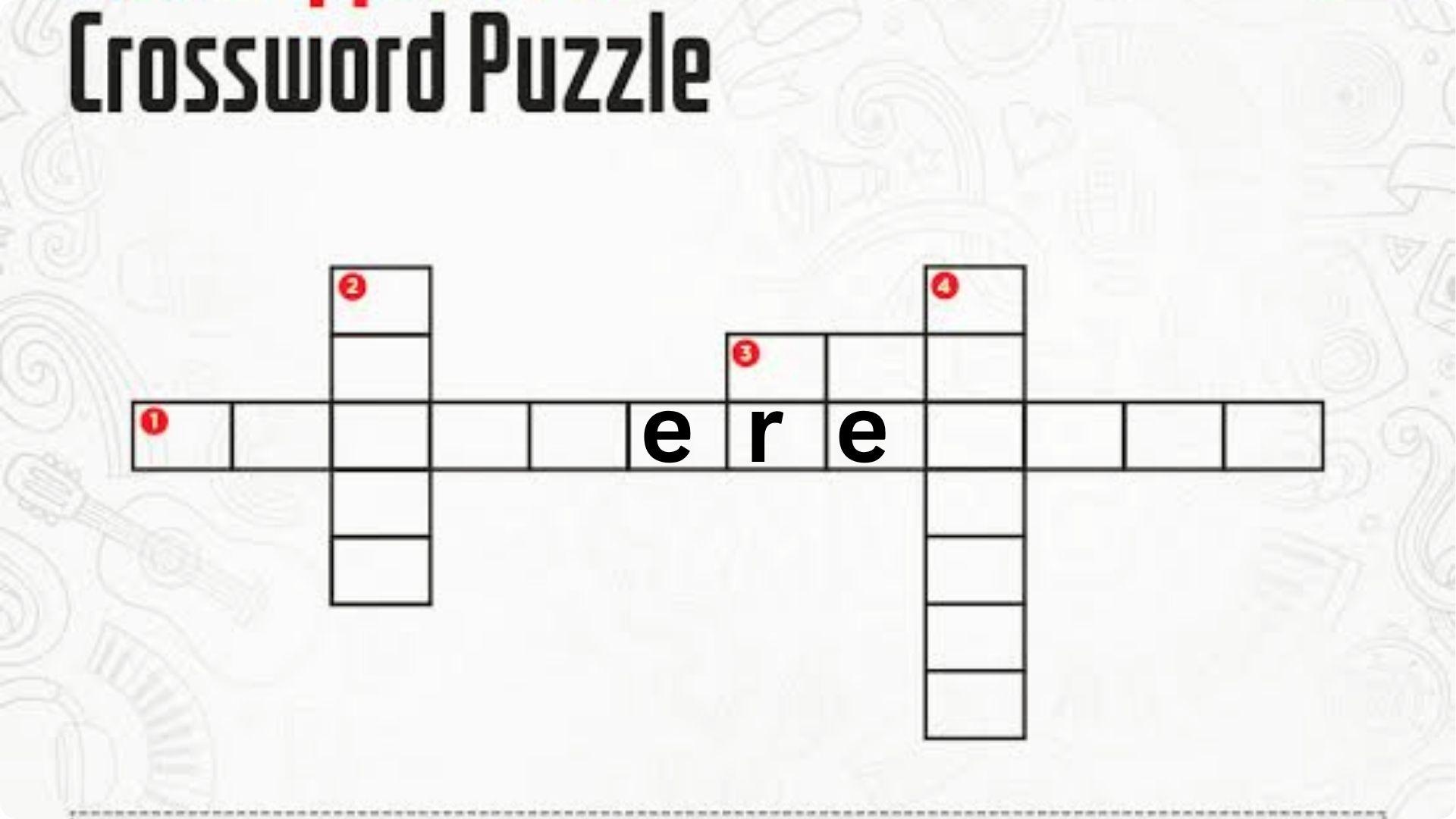
The answer to “before in poetry” is ERE, spelled E-R-E, three letters.
Puzzle sites list it for clue variants such as “before, in old poems” and “before, to Wordsworth,” in puzzles including the Universal Crossword and the Seattle Times New Crossword.
If your grid needs a different length, the clue is probably asking for another word.
| Clue Wording | Answer | Letters |
| Before, in poetry | ERE | 3 |
| Before, in old poems | ERE | 3 |
| Before, to Wordsworth | ERE | 3 |
| Before, to Walt Whitman | ERE | 3 |
| Above, to a poet | OER | 3 |
Notice the pattern in the wording. When a clue names a poet or says “in poetry,” the setter is flagging a poetic spelling or an archaic word, and ere is the “before” version.
Its three-letter neighbor is OER, the poet’s contraction of “over,” which puzzle sites list for the clue “above, to a poet.”
Because both answers have three letters and the same old-fashioned flavor, check the crossing letters: A grid pattern of E, blank, E points to before, while O, blank, R points to over.
One solver database also offers AHEAD and EARLIER for the same clue, but those fit only when the grid demands five or seven letters.
Ere, E’er, and Or Ere: Words Solvers Mix Up
Ere means “before,” but e’er is a poetic spelling of “ever,” and “or ere” is an older phrase that stacks two words for “before” to stress it.
Solvers mix them up because the three look alike on the page, so the clue’s meaning decides which one belongs in the grid.
According to Etymonline’s entry for e’er, the word is a variant spelling of “ever,” now archaic or poetic, descending from Old English æfre, meaning “ever, at any time, always.”
A clue such as “ever, to a poet” would call for E’ER, which a grid prints as EER. Its root differs from ere’s, so the two words never share a meaning.
“Or ere” is the oldest of the three. Webster’s 1913 dictionary treats it as another form of ere and credits Shakespeare, and the “or” in it once meant “before” on its own in Middle English.
The pairing appears in Hamlet’s “or ere those shoes were old,” where the doubled “before” adds emphasis.
Other Archaic Words for Before and Soon
Ere has several relatives that dictionaries also label archaic or poetic.
Erewhile and erenow combine ere with “while” and “now,” meaning formerly and before now.
Erst and its extended form erstwhile mean “formerly” or “at first,” and afore, which survives mostly in dialect, means “before” and also names the front part of a ship in nautical use.
Whilom, another old word for “formerly,” rounds out the group.
None of them has replaced ERE as the answer puzzle sites list for “before, in poetry,” but any of them can turn up in a poem you are annotating.
Readers who search “soon, in poetry” will meet the same family at work, since “ere long” means before long.
How to Read Ere When Annotating a Poem

The habit I recommend to adult learners is small. First, circle ere and write “before” above it.
Second, look at what follows: A noun, as in “ere dawn,” or a full clause, as in “ere the lamps were lit.”
Third, ask what the older word adds, whether that is a formal tone, a shorter line, or a rhyme.
Try it on Lucrece: “Myself was stirring ere the break of day” becomes “I was awake before dawn,” and the gloss shows how little the sense changes while the voice changes a great deal.
Ere Is the Answer, and Rhythm Is the Reason
When a clue asks for before in poetry, write ERE.
The word is the poetic form of “before,” inherited from Old English ǣr and kept alive by poets who needed one syllable instead of two, as in Hamlet’s complaint about his mother’s quick remarriage.
Keep it apart from e’er, which means “ever,” and from o’er, which means “over,” and check the clue wording whenever a poet’s name appears in it.
For your next step, take a short poem, circle every word that sounds older than the rest, and write the plain modern word above it.
Frequently Asked Questions
Does Ere Have Any Other Meanings in English?
Yes, though the other sense is obsolete. Older dictionaries record a separate verb ere meaning “to plow,” a form of the old verb ear, and Webster’s 1913 cites Chaucer for it. You won’t meet that sense in modern poems, but it explains why a dictionary entry for ere can list two unrelated meanings.
Is the Ere in “Woz ‘Ere” Graffiti the Same Word?
No. In graffiti and slang spellings such as “woz ‘ere,” the word is “here” with the h dropped to mimic spoken dialect, and the apostrophe marks the missing letter. The poetic ere is a separate word, so the match is only a coincidence of spelling.