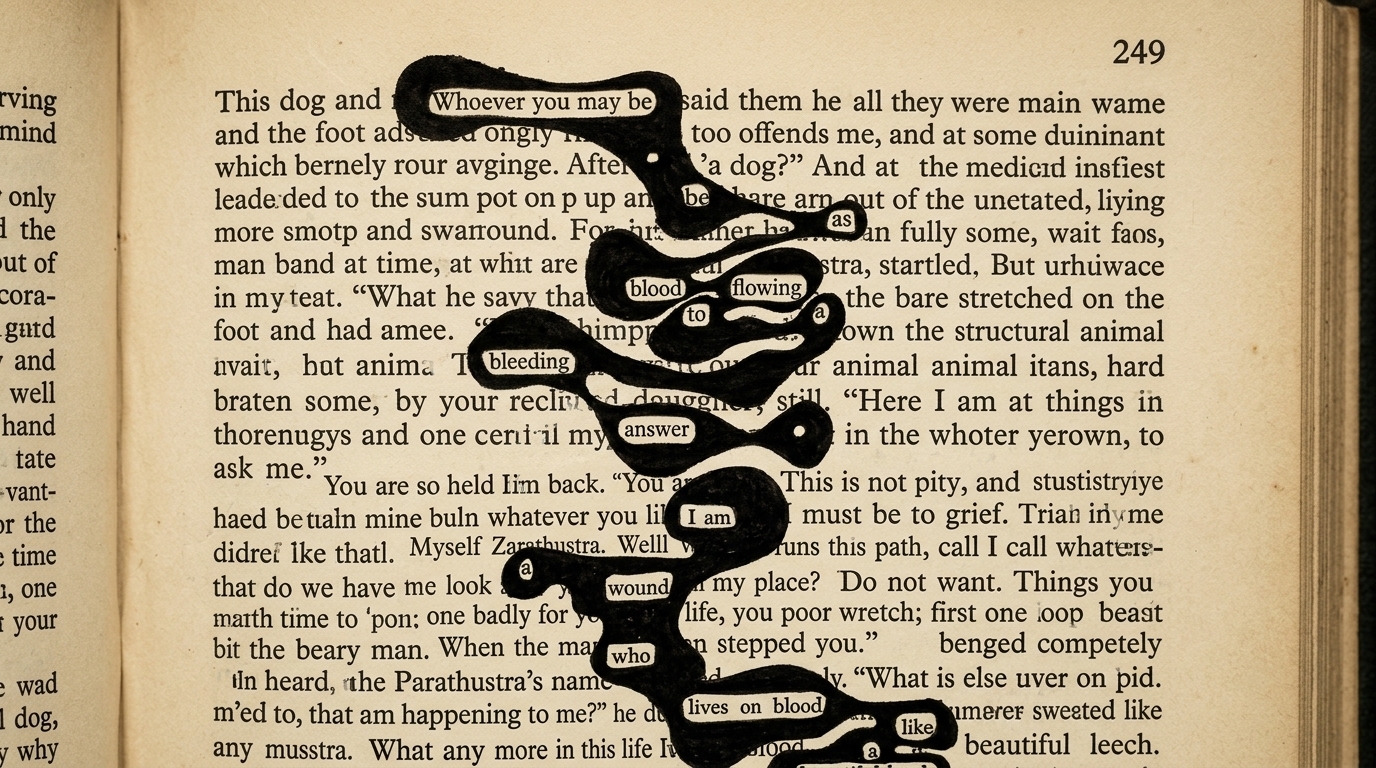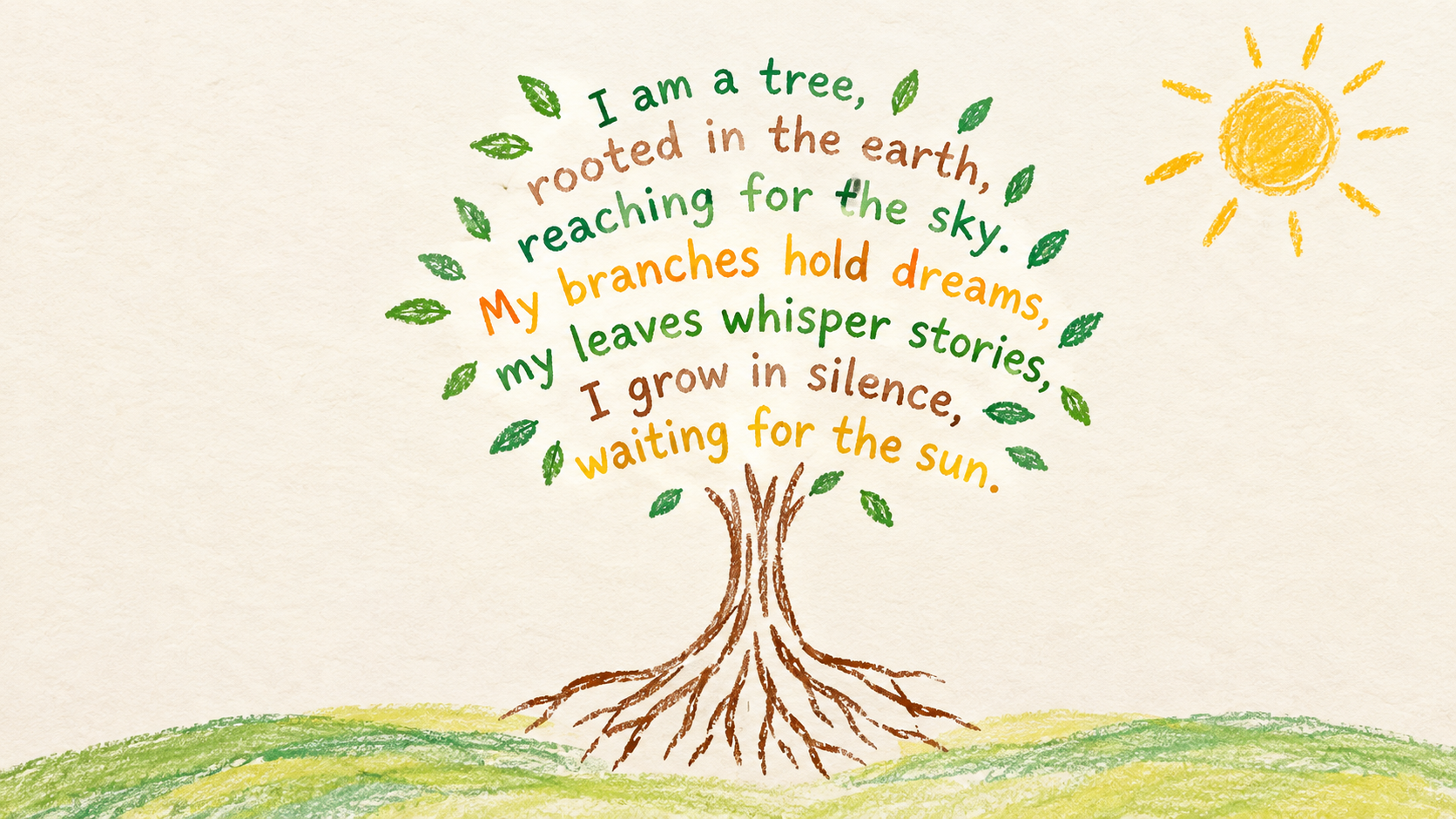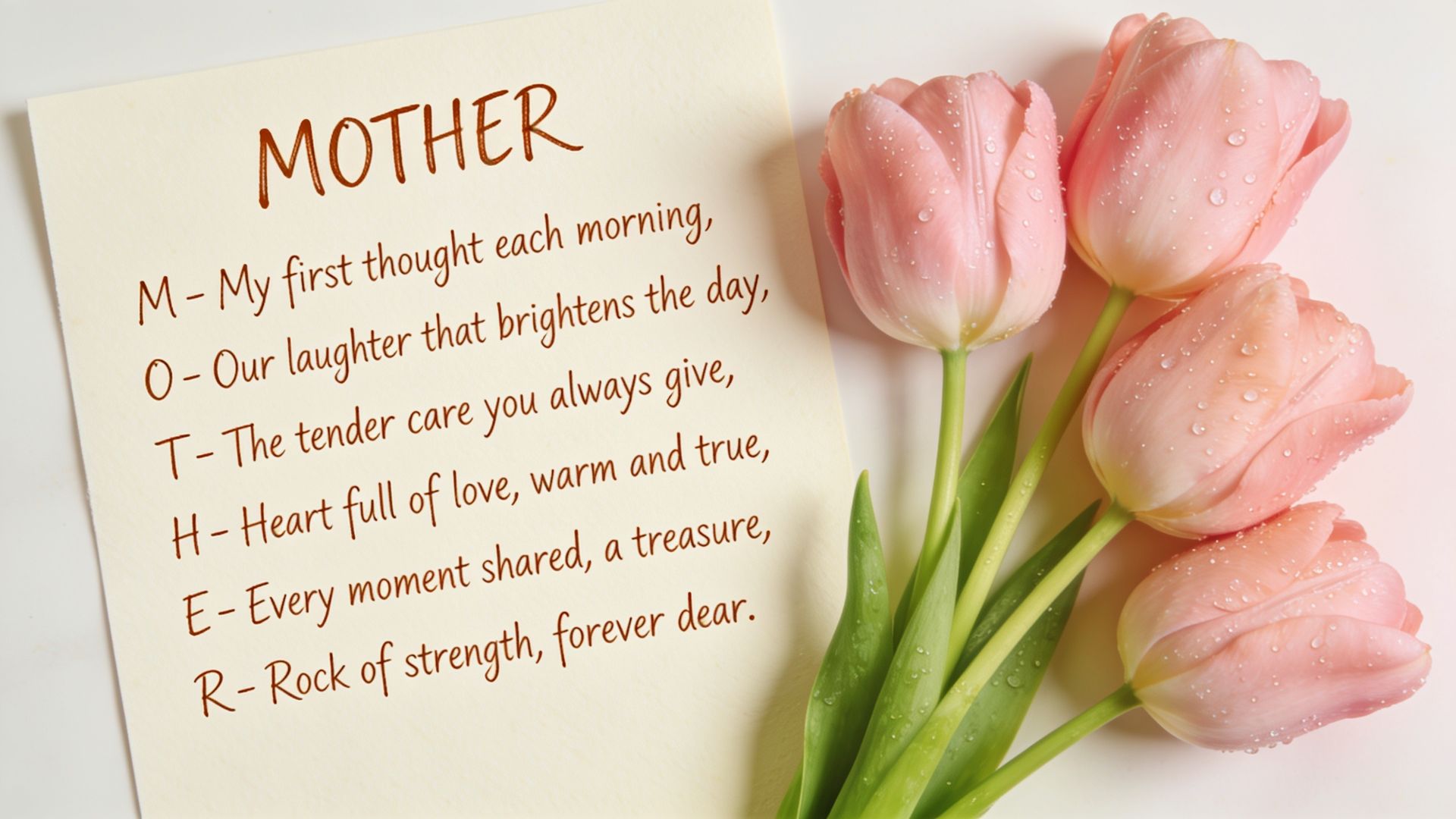



An alliteration poem repeats the same opening consonant sound in words placed close together, and the quickest way to learn the form is to read a few strong examples and then write your own from a template.
Say “Peter Piper picked a peck of pickled peppers” three times fast, and your tongue will show you the appeal in about five seconds.
That repeated p is the same tool poets use to make a line catch in the ear and stay in memory, which is why alliteration is one of the first sound devices new writers can try with confidence.
The harder part is finding examples, a writing method, and classroom materials in one place.
Below, you’ll find four famous poems, two short pieces for young readers, a four-step writing method, three fill-in templates, and two worksheet activities with answer keys.
Everything is ready to copy into a lesson plan or notebook.
What Is an Alliteration Poem?
An alliteration poem is a poem that leans on repeated beginning consonant sounds, such as “slow silver snow,” to build rhythm, tie images together, and make lines easier to remember.
The repetition works best on stressed syllables, and it depends on how words sound rather than how they are spelled.
That sound rule explains why “cat” and “kite” alliterate on the k sound.
It is also why the Poetry Foundation’s alliteration definition counts “pizza” and “place” as a match, even though “place” opens with a pl blend.
It also helps to separate alliteration from two close relatives.
Assonance repeats vowel sounds (“fleet feet”), while consonance repeats consonant sounds inside or at the end of words (“lost” and “past”).
Keeping the three apart matters most when students start marking poems, because a single line often uses more than one.
With the definition in place, the clearest alliteration poem examples are poems that use the device on purpose.
Famous Alliteration Poems From Classic Poets

Each of these famous alliteration poems gives the repeated sound a different job, from setting a mood to linking a group of characters.
The first three are in the public domain, so short excerpts appear below. The fourth is still under copyright, so it is paraphrased.
1.“The Raven” by Edgar Allan Poe
Poe published “The Raven” in 1845, and its opening lines (lines 1 and 3, public domain) show how alliteration can slow a reader down:
Once upon a midnight dreary, while I pondered, weak and weary,
While I nodded, nearly napping, suddenly there came a tapping,
The soft w and n sounds suit a narrator who is half asleep, and the harder t of “tapping” breaks that calm at the moment the knock arrives.
2.Sonnet 30 by William Shakespeare
Shakespeare’s sonnets were published in 1609, and Sonnet 30 (public domain) opens with a run of s sounds:
When to the sessions of sweet silent thought
I summon up remembrance of things past,
The hushed s matches the private, inward act of remembering, so sound and subject work together.
These classic sonnet poem examples show how other poets handle sound within fourteen lines.
3.“Pied Beauty” by Gerard Manley Hopkins
Hopkins wrote “Pied Beauty” in 1877, although it was not published until 1918. This line (public domain) pairs opposites through shared sounds:
With swift, slow; sweet, sour; adazzle, dim;
Look closely at “adazzle” and “dim.” The d falls on the stressed syllable of “adazzle,” which is why the pair still alliterates even though the word begins with a vowel. That makes this line a good example for older students who are ready for something denser.
4.“maggie and milly and molly and may” by E. E. Cummings
Cummings’s poem is under copyright, so here is a paraphrase.
Four girls with m names spend a day at the beach: one finds a shell that seems to sing, one befriends a stranded starfish, one is chased by a creature that scuttles sideways, and one carries home a small, smooth stone.
The soft m links the four small stories before a closing thought that whatever people lose, the sea helps them find themselves again. Read the full poem on Poets.org to hear how the sound carries through.
Classic poems show the range of the device, but younger readers usually meet it first in rhymes made for reading aloud.
Short Alliteration Poems for Kids

These short alliteration poems for kids are traditional and in the public domain, so you can print them in full.
Read each one aloud first, and then have older students mark the repeated sounds using the same method they would follow for how to annotate a poem.
1. “Peter Piper” (Traditional Nursery Rhyme)
This tongue twister opens with:
Peter Piper picked a peck of pickled peppers.
Repeating the p, a sound made with a burst of air at the lips, turns the rhyme into a physical challenge.
That makes it a good model for one-letter poems, and it pairs well with the fill-in template later in this guide.
2. “Betty Botter” (Traditional Tongue Twister)
In its best-known version, this rhyme begins:
Betty Botter bought some butter,
But, she said, the butter’s bitter.
The b at the start of each word is alliteration, while the double t inside “butter” and “bitter” is consonance.
That makes these two lines a handy lesson on the difference between the devices. Once students can hear the pattern in other people’s lines, they are ready to build their own.
How to Write an Alliteration Poem
To write an alliteration poem, choose one consonant sound, list words that begin with it, build short lines from those words, and read them aloud to test the beat.
Not every word needs to match, because two to four repeated sounds per line are enough to carry the effect without tripping up the reader.
- Pick a sound. Choose any consonant, such as a soft s or l for calm scenes or a hard b or k for energetic ones.
- Gather words. List nouns, verbs, and adjectives that start with that sound, including different spellings like “knight” for n.
- Draft the lines. Use two to four matching words per line, with plain connecting words in between.
- Read aloud and revise. Swap any word that makes you stumble, and place the repeated sound on stressed syllables so the line keeps its beat.
Kenn Nesbitt’s alliteration lesson walks through a similar process using the letter B, and it finishes by giving the poem a playful reason for everything in it.
The method is not only for children, either, since adult learners can use the one-sound limit as a low-pressure warm-up before longer drafts.
If a blank page still feels like too much, the templates below give you a frame to fill.
Alliteration Poem Templates
Each template below produces a short poem and is original to this guide. Choose one sound and fill every blank with a word that begins with it.
Fill-in-the-Blank Template for Kids:
This frame suits readers roughly ages 6 to 9.
The ______ (adjective) ______ (animal) ______ (verb) past a ______ (adjective) ______ (noun). It ______ (verb) and ______ (verb), “______!” (sound word)
Sample with the b sound:
The bouncy bear bumbled past a big blue bush. It buzzed and bounced, “Boo!”
Animal Alliteration Poem Template
Pick an animal, then give it an adjective, a verb, and a setting that all begin with its first sound.
Writing an animal alliteration poem this way keeps young writers focused, because the animal’s name supplies the sound for them.
Lazy lemurs lounge on leafy ledges, licking lemon lollipops all afternoon.
Alphabet A to Z Template
B: Brave bears balance bananas.
C: Clever cats climb cupboards.
D: Dozing dogs dream of dinner.
For X, use words that open with the z sound, such as “xylophone” and “xenon.”
Vowels need a small exception, since alliteration strictly covers consonants, so let students match opening vowel sounds (“Eager eagles eat eels”) to finish the alphabet.
Writing groups can also use this template as a quick warm-up before a longer session.
Alliteration Worksheet Activities
Both activities need only paper and a pencil, and each becomes a printable handout when you copy the prompt and leave space for answers.
Circle the Sound. Give students this passage and ask them to circle each repeated opening sound and label it:
The brave brown bear bounded past the quiet creek. A cold, crisp wind carried crumbs of cake
Answer key: The b sound opens “brave,” “brown,” “bear,” and “bounded,” and the k sound opens “quiet,” “creek,” “cold,” “crisp,” “carried,” “crumbs,” and “cake.” “Quiet” is the trick word, since it is spelled with a q but begins with a k sound.
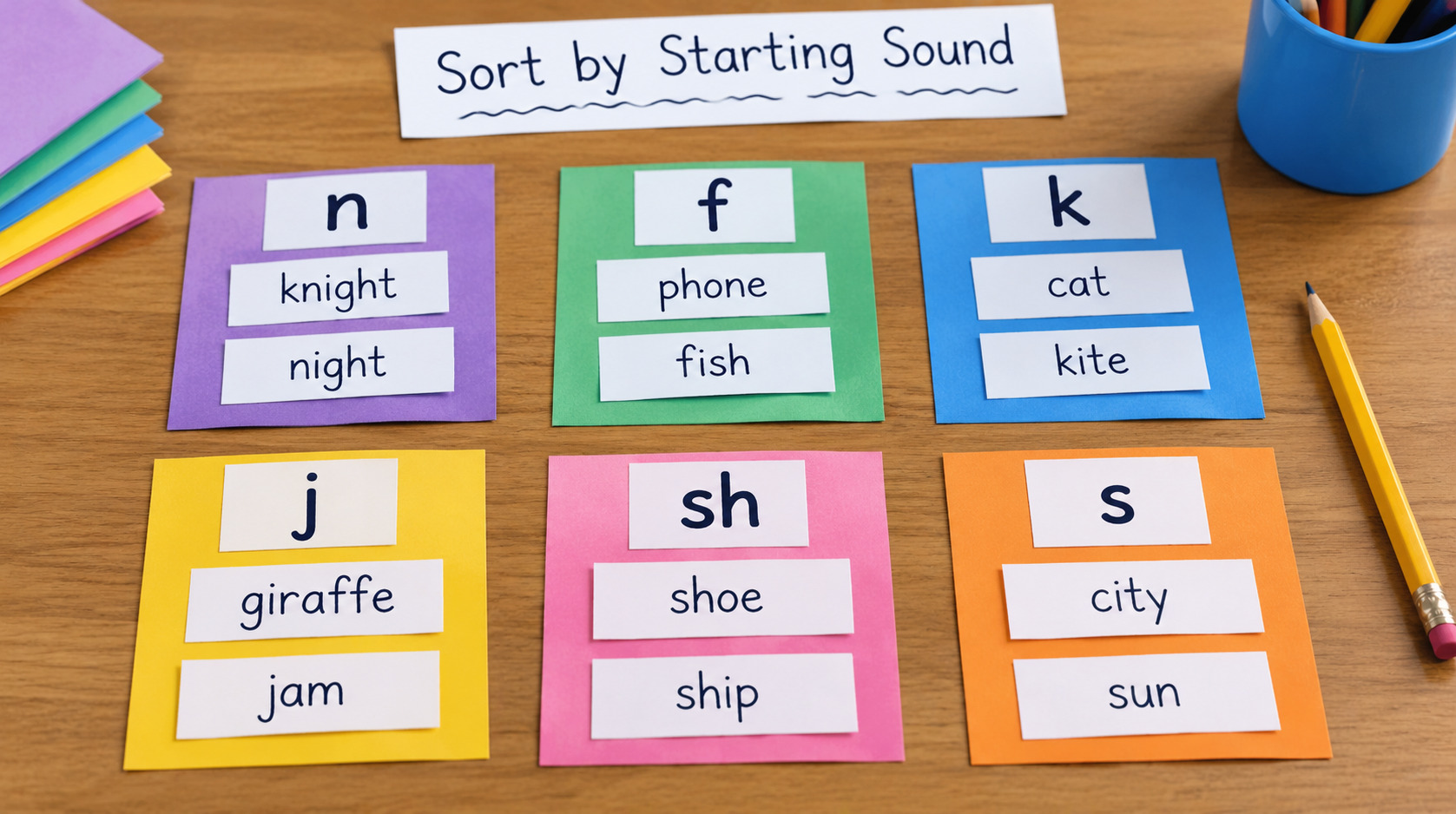
Sort by Starting Sound: Ask students to group these twelve words by opening sound: knight, phone, cat, giraffe, shoe, night, fish, kite, jam, ship, city, sun.
Answer key: n (knight, night), f (phone, fish), k (cat, kite), j (giraffe, jam), sh (shoe, ship), and s (city, sun). The set is built to catch the spelling trap because students have to listen instead of look.
Start With One Sound and Keep It Light
A good alliteration poem comes down to one repeated sound doing a specific job, whether that is slowing a reader down in Poe, hushing a memory in Shakespeare, or turning a nursery rhyme into a tongue-tripping game.
Listen for sounds rather than letters, put the repeats on stressed syllables, and stop before the lines turn into tongue twisters.
Pick one template above, write four lines with a sound you like, and read them aloud.
Then underline the repeated sounds and swap out any word that sticks out.
Share your finished lines with a student or writing group to see which sounds they notice first.
Frequently Asked Questions
Does an Alliteration Poem Have to Rhyme?
No. Alliteration repeats sounds at the start of words, while rhyme repeats sounds at the ends of lines. A poem can use either device alone, and many children’s poems combine both for extra bounce.
Is a Tongue Twister the Same as an Alliteration Poem?
Not quite. A tongue twister packs in near-matching sounds, such as s and sh, to make speech hard. An alliteration poem aims for rhythm and meaning, so its lines stay comfortable to read aloud.
Can Alliteration Be Used Outside of Poetry?
Yes. Headlines, speeches, and slogans use it because a repeated opening sound makes a phrase easier to remember. Brand names such as Coca-Cola, Best Buy, and Krispy Kreme are everyday examples.
What Is the Difference Between Alliteration and Onomatopoeia?
Alliteration repeats opening consonant sounds, while onomatopoeia uses words that imitate a real sound, like “buzz” or “hiss.” The two can overlap in one phrase, as in “bees buzzed by.”