

Ever stared at a printed page and wondered what it would look like with most of the words crossed out? That is what a blackout poem is. It is a type of found poetry, since you are not writing brand new words, just uncovering a found poem that was already hiding in an old page.
You take an old page, black out the words you do not need, and let the rest form something new.
This blog covers what a blackout poem is, different styles you can try, and the exact steps to make your own.
We will also point out common mistakes and clear up the confusion between blackout and erasure poetry.
I have turned old books into blackout poems for years, so I know how simple it really is. By the end, you will know exactly how to start your first poem today.
What is a Blackout Poem?
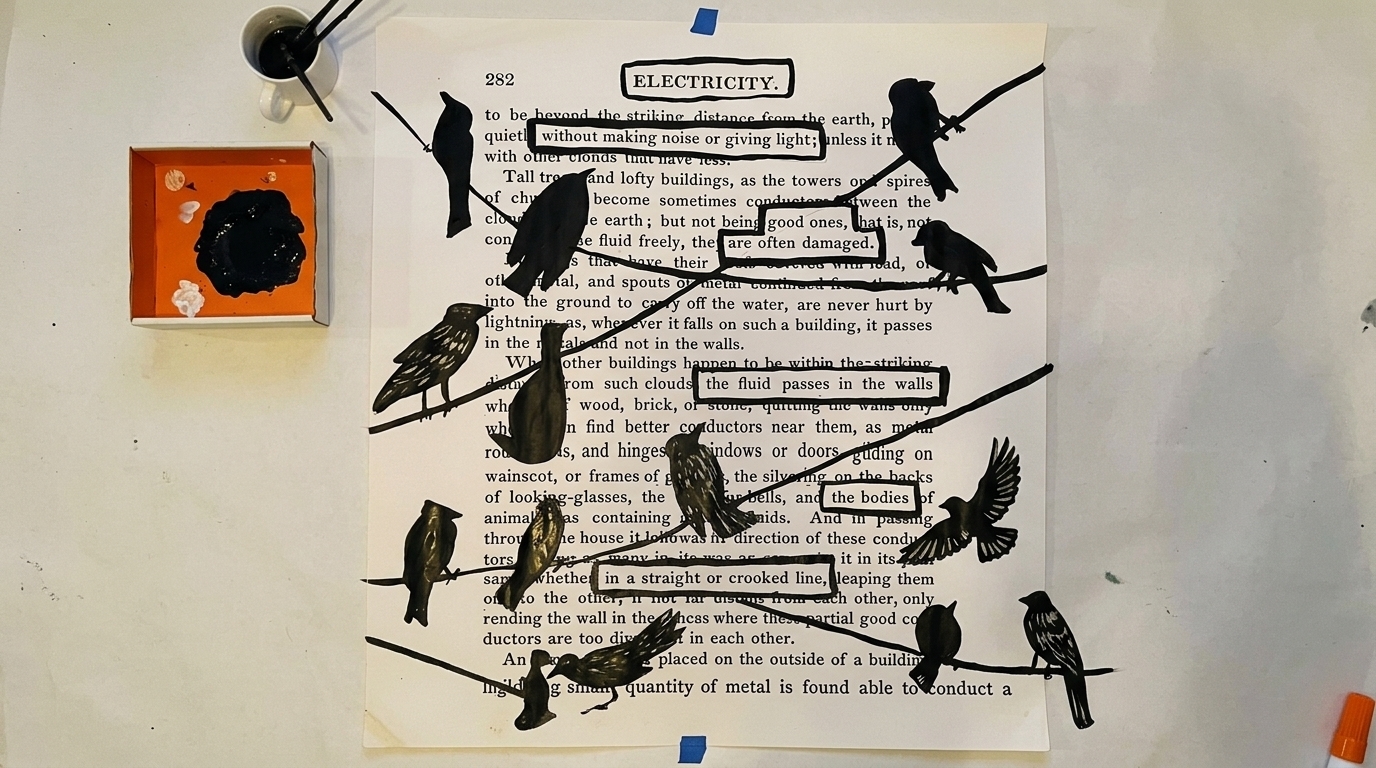
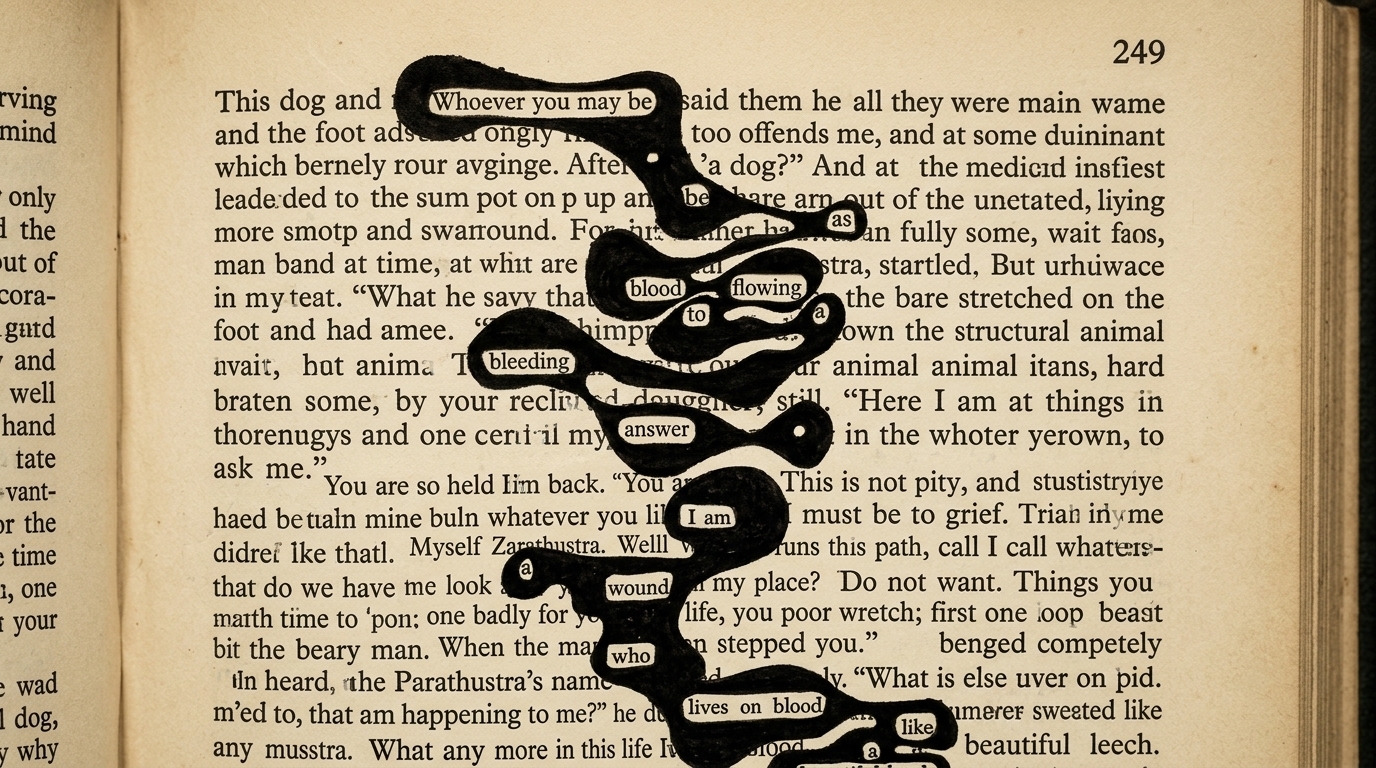
A blackout poem is a poem you make by taking a page from a book, newspaper, or any printed text, then blacking out most of the words with a marker. What remains becomes your poem.
You are not writing new words. You are finding a poem that was already hiding inside someone else's text.
The words you leave visible connect to form lines, and the rest gets covered in black ink.
This form of poetry mixes writing with art. Some people just black out words with a plain marker. Others turn the page into a small drawing or collage, adding shapes or images around the leftover words.
It started as a fun way to make something new from old pages.
Many writers use it to break free from a blank page, since the words are already given to them. Teachers also use it as a fun classroom activity, especially around National Poetry Month in April.
Blackout Poem Examples to Inspire Your Creativity
A collection of blackout poem styles and simple steps to help you make your own poem from any page.
Blackout poetry turns an ordinary page into something new. You take a page, often called your source text, from a book, magazine, or newspaper, then cross out most of the words. What is left behind becomes your poem. It sounds simple, but the results can surprise you.
In this post, we will look at different styles of blackout poems. We will also cover how to make one yourself, mistakes to watch for, and how this art form compares to erasure poetry.
Minimalist Blackout Poems
Minimalist blackout poems use very few words. The poet picks just a handful of words from the page and blacks out everything else. This style works well when you want a short, clear message. Less text means each word carries more weight. This kind of careful word choice makes a single line say more than a full paragraph.
Nature-Inspired Blackout Poems
Some poets choose pages that mention trees, rivers, weather, or animals. They pull out words connected to the outdoors and build small poems about the natural world. This style often feels calm and quiet.
It pairs well with soft artwork like leaves, birds, or simple line drawings around the blacked-out text.
Emotional and Reflective Blackout Poems
These poems focus on feelings. Poets search for words about love, loss, hope, or memory. The blacked-out page becomes a way to express something personal.
This style is popular because it lets people say hard things using someone else's original words as a starting point.
Storytelling Blackout Poems
Instead of a single feeling, some blackout poems tell a small story. The poet reads through a page and finds words that connect into a sequence of events.
This takes more planning, but the result reads like a tiny narrative hidden inside a bigger text.
Illustrated Blackout Poems
Illustrated blackout poems add drawings around or over the blacked-out sections. Instead of plain black marker lines, the artist might draw a face, a scene, or a pattern. Some poets build a small collage around their chosen words instead.
The artwork adds another layer to the poem and makes the page feel like a small piece of visual art, not just text.
Newspaper Blackout Poems
Newspapers are a common choice for this art form because the print is easy to work with and the paper is easy to find. Poets often pick pages with headlines or opinion pieces, since these tend to have varied word choices.
The columns and print style also give the poem a distinct look. Austin Kleon made this style famous with his book Newspaper Blackout, which turned newspaper pages into short poems and helped push the whole form into the spotlight.
Book Page Blackout Poems
Old or secondhand books work well for blackout poetry. A page from a novel or textbook already has a rhythm and tone, which can shape the poem in interesting ways.
Many people use pages from books they no longer read, giving old pages a second purpose.
How to Create Your Own Blackout Poem
A simple step-by-step guide covering how to pick a page, choose words, and finish your own blackout poem at home.
Making a blackout poem does not require any special training. Here is a simple process to follow.
Choose a Source Page
Start with any printed page. A newspaper, an old book, or a magazine all work fine. Pick a page with enough text to give you options. A page that is too short can limit your choices.
Find Words That Stand Out
Read through the page slowly. Look for words or short phrases that catch your attention. Do not worry about making sense of them yet. Just circle or lightly mark anything that feels interesting.
Black Out the Remaining Text
Once you have your words picked out, use a marker to cover the rest of the page. Go slowly and check if your marked words still make sense together before you finish. Some people prefer to use a pencil first to test the flow.
Add Simple Artwork (Optional)
If you want to add a visual touch, draw around the black sections or use small doodles connected to your poem's theme. This step is optional, but it can make the finished piece feel more complete.
Blackout Poetry vs. Erasure Poetry
A quick comparison explaining how blackout poetry and erasure poetry differ in method, style, and final appearance.
Blackout poetry and erasure poetry are often mentioned together, but they are not exactly the same.
| Aspect | Blackout Poetry | Erasure Poetry |
| Method | Covers unused words completely with black marker or paint | Removes words using white-out, cutting, or other methods |
| Background | Words remain visible on a dark background | Page often stays mostly white with gaps |
| Final Look | Bold and high-contrast | Light and open |
| Best For | Those who like a strong, dramatic look | Those who prefer a softer, open page |
Both styles use the same basic idea: finding a new poem hidden inside someone else's words. Trying both can help you decide which one matches your style.
Conclusion
I still remember the first blackout poem I made from an old paperback nobody wanted. I sat with a marker, crossed out lines, and somehow found six words that said more than the whole page ever did.
That is the fun part. You do not need fancy tools, just a page and a little patience.
Try making a blackout poem this week. Grab an old book or newspaper and see what words find you.
Then drop a comment below and tell me how it turned out, or share this post with someone who loves words too.
Frequently Asked Questions
What materials do I need to make a blackout poem?
You just need a printed page and a black marker. A pencil, pen, or small drawings can also help if you want to add extra detail.
Can I use any book or newspaper for blackout poetry?
Yes, almost any printed page works well for this. Old books, newspapers, and magazines all give you plenty of words to choose from.
How many words should a blackout poem have?
Most blackout poems work best with a small number of words. Keeping it short helps each word stand out and makes the message clearer.
Is blackout poetry the same as erasure poetry?
No, they are related but not the same thing. Blackout poetry covers unused words in black, while erasure poetry removes them in other ways.