
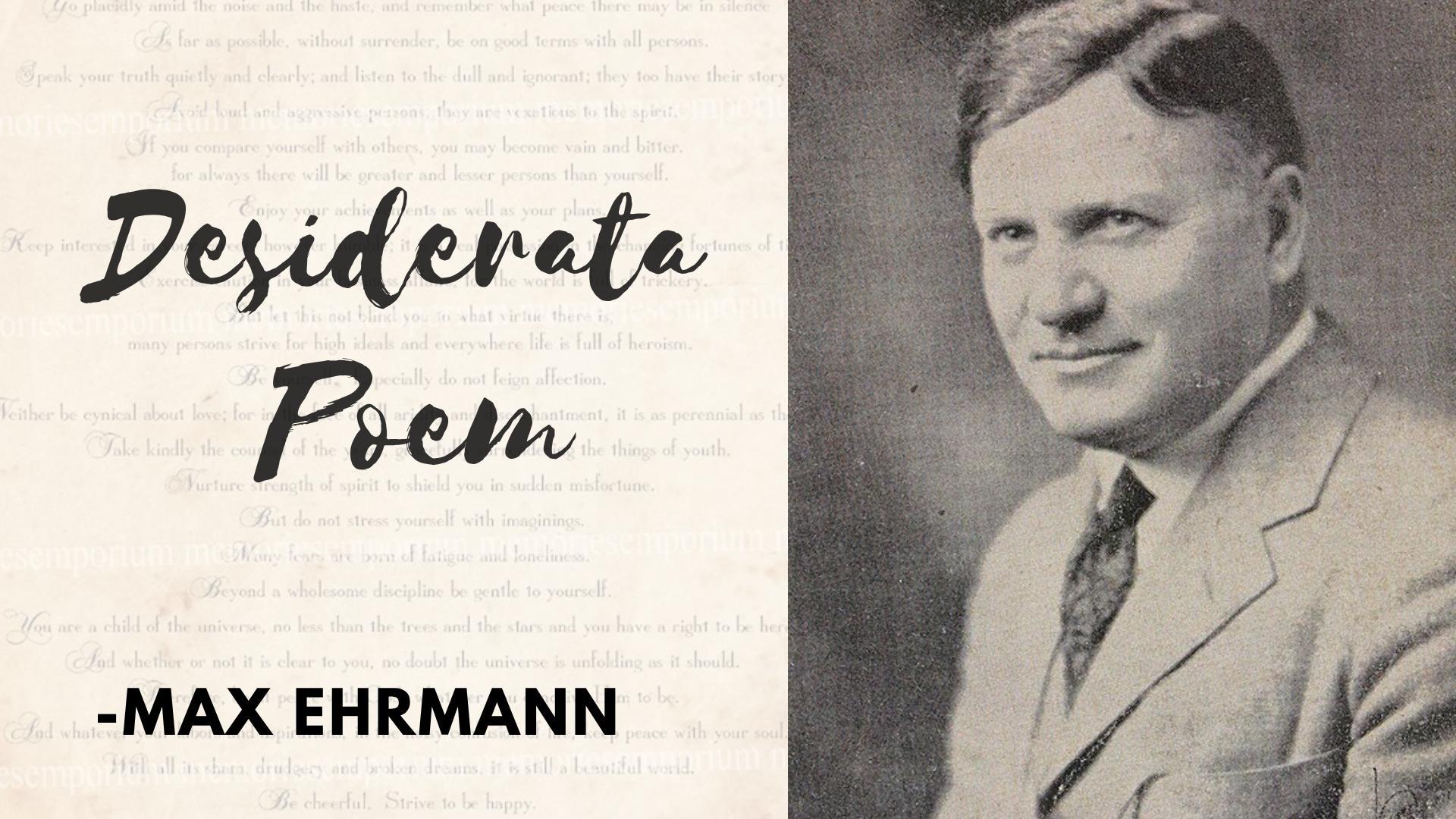
You’ve seen the words before. Maybe on a wall, maybe shared by someone going through something hard. You read a line, then another, and somewhere in the middle you stop scrolling.
That’s what the Desiderata poem does, and Max Ehrmann wrote it in 1927 not for an audience, but as a quiet note to himself about how he wanted to live.
That detail matters. Because once you know he was still working toward everything he wrote, every line reads differently.
Here you’ll find the full poem, what Ehrmann was really saying in each part, and the unlikely story of how something written in private ended up read at funerals, weddings, and bedsides across the world.
What Is the Desiderata Poem?
Desiderata is a prose poem written by Max Ehrmann in 1927. It offers simple, honest guidance on how to live, how to handle people, manage self-doubt, and find peace when life gets hard.
It’s just 276 words. But those words have shown up at funerals, weddings, and hospital bedsides for nearly a century. That kind of staying power doesn’t happen by accident.
One thing worth knowing before you read it: Ehrmann wrote this as one continuous paragraph. The line breaks and stanzas you usually see were added later by publishers, without his permission. The original flows more like a quiet meditation than a checklist.
Desiderata Poem Full Text
Here is the complete, original text of Desiderata by Max Ehrmann, exactly as he wrote it in 1927.
Go placidly amid the noise and the haste, and remember what peace there may be in silence.
As far as possible, without surrender, be on good terms with all persons.
Speak your truth quietly and clearly; and listen to others, even to the dull and the ignorant;
they too have their story.
Avoid loud and aggressive persons; they are vexatious to the spirit. If you compare yourself to
others, you may become vain or bitter, for there will always be greater and lesser persons than yourself.
Enjoy your achievements as well as your plans. Keep interested in your own career, however
humble; it is a real possession in the changing fortunes of time.
Exercise caution in your business affairs, for the world is full of trickery. But let this not blind you
to what virtue there is; many persons strive for high ideals, and everywhere life is full of heroism.
Be yourself. Especially do not feign affection. Neither be cynical about love, for in the face of all
aridity and disenchantment, it is as perennial as the grass.
Take kindly the counsel of the years, gracefully surrendering the things of youth. Nurture
strength of spirit to shield you in sudden misfortune. But do not distress yourself with dark
imaginings. Many fears are born of fatigue and loneliness.
Beyond a wholesome discipline, be gentle with yourself. You are a child of the universe no less
than the trees and the stars; you have a right to be here.
And whether or not it is clear to you, no doubt the universe is unfolding as it should. Therefore
be at peace with God, whatever you conceive Him to be. And whatever your labors and
aspirations, in the noisy confusion of life, keep peace in your soul.
With all its sham, drudgery and broken dreams, it is still a beautiful world. Be cheerful. Strive to
be happy.
– Max Ehrmann, 1927
Who Was Max Ehrmann?
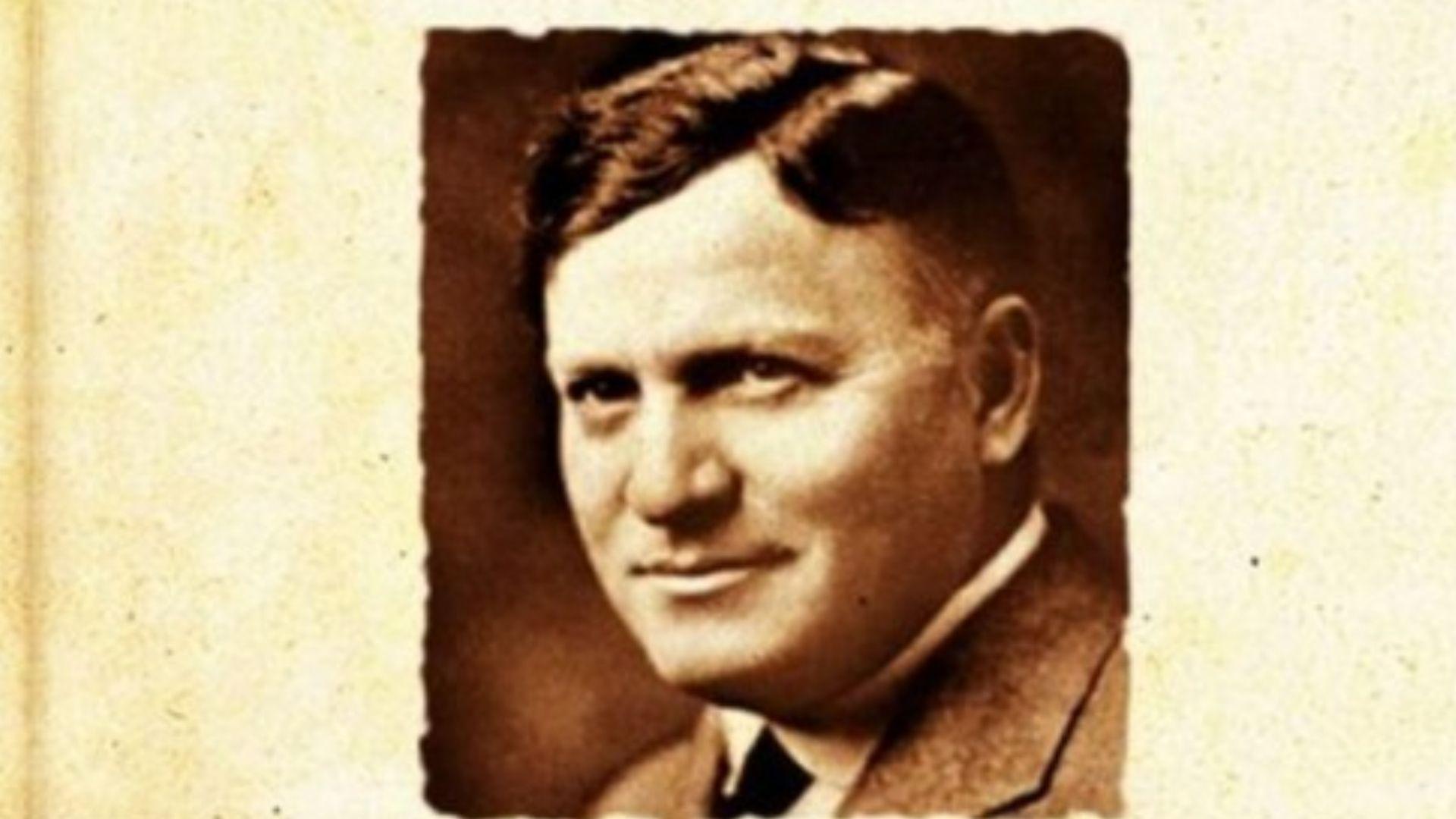
Max Ehrmann was an American lawyer and writer from Terre Haute, Indiana, who wrote Desiderata in 1927. He was born there in 1872, studied law and philosophy, and worked for a time as a lawyer before he turned to writing full time.
He was never a famous poet. He published a few small collections and wrote quietly for most of his life. Desiderata was one of many pieces he wrote for himself, a set of reminders about how he wanted to live and what he was still trying to get right.
He died in 1945. It was his wife, Bertha, who published the poem after his death, and it only became widely known in the 1960s. So he never saw it become famous, or saw his name get lost from it along the way.
Themes of the Desiderata Poem
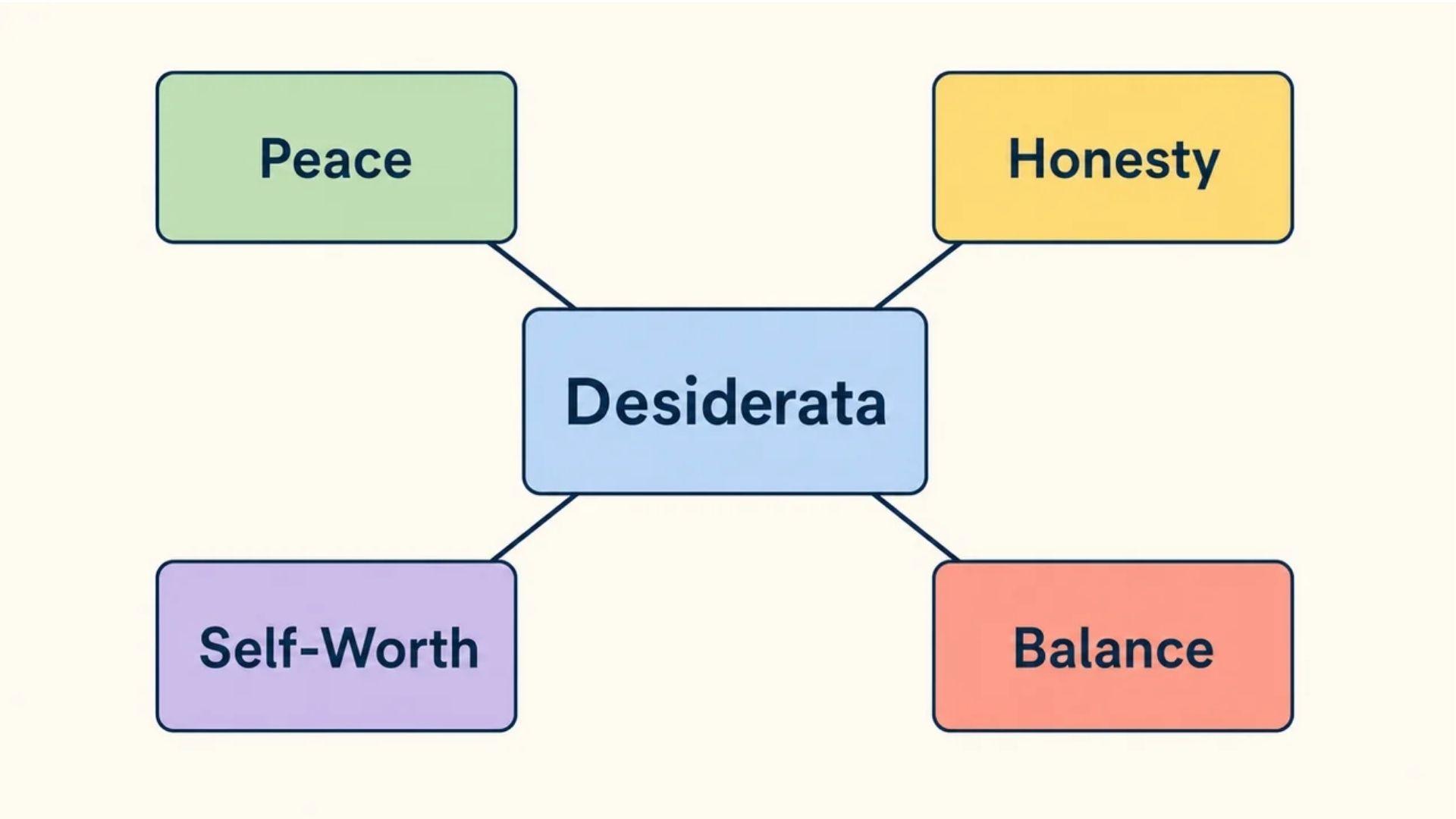
Desiderata isn’t built around one idea; it carries four core themes that work together throughout the poem.
Peace
Not the kind you find when life is easy, but the kind you hold onto when things are messy and uncertain.
Ehrmann keeps coming back to this: you can’t control what happens around you, but you can control how you carry yourself through it.
That’s why the poem opens with “go placidly amid the noise”not “wait until the noise stops.” The noise isn’t going anywhere. Your response to it is the only thing that’s yours to manage.
Honesty
With others and with yourself. Ehrmann quietly nudges you away from pretending. Don’t fake affection.
Don’t compare yourself to people just to feel better or worse. Don’t dread things that haven’t happened yet. See things as they actually are.
This kind of honesty isn’t harsh; it’s just clear. Ehrmann believed that most of the pain people carry comes from either fooling themselves or performing for others. Dropping both of those is harder than it sounds, but it’s what the poem keeps pointing toward.
Self-Worth
The poem pushes back against the idea that you have to earn your place in the world. Your work matters even if it looks humble.
You belong here even when you don’t feel like you do. That thread runs quietly from the first line to the last.
It shows up most directly in the line “you are a child of the universe no less than the trees and the stars”, which isn’t a motivational slogan; it’s a statement of fact. You don’t have to justify your existence to anyone, including yourself.
Balance
Ehrmann never swings too far in one direction. Be kind, but don’t be a pushover. Be careful, but don’t become cynical. Be disciplined, but be gentle with yourself too.
The whole poem is about holding two true things at once without letting either cancel the other out. That’s actually harder to write than it sounds; most advice tips fully one way or the other.
Ehrmann manages to hold the tension throughout, which is a big part of why the poem still feels useful rather than naive.
The Desiderata Poem’s Legacy in Culture
Desiderata didn’t stay on the page for long. In 1971, Les Crane recorded a spoken-word version that hit number 8 on the Billboard charts and won a Grammy. Leonard Nimoy had already recorded his own version in 1968.
When a National Lampoon parody called Deteriorata followed in 1972, it confirmed what everyone already knew the poem had fully arrived in popular culture.
In 2010, Ehrmann’s hometown of Terre Haute put up a bronze statue in his honour with lines from the poem alongside it. Today it’s read at weddings, funerals, and graduations across the world by people who may not even know his name.
One last thing worth knowing: Ehrmann registered the poem in 1927, which means it entered the US public domain in 2023.
It’s now free to print, share, and quote a fitting end for a poem that spent decades going around the world without its author’s name attached.
Wrapping up
The Desiderata poem has lasted nearly 100 years not because it’s pretty, but because it’s honest.
Ehrmann wrote it for himself, for the patience he didn’t have, the peace he was still working toward, and that’s exactly why it resonates with everyone else.
It doesn’t promise easy answers. It just quietly points you back to what actually matters. If a particular line hit you differently today than it would have a year ago, that’s worth paying attention to.
Share this with someone who’s going through a hard stretch. Sometimes the right words at the right time make a real difference.
Frequently Asked Questions
Why is Desiderata so popular?
Because it speaks to problems every person faces: self-doubt, comparison, difficult people, and the search for peace without being preachy or complicated.
What are the words for Desiderata?
The full text of Desiderata by Max Ehrmann begins with “Go placidly amid the noise and the haste” and ends with “With all its sham, drudgery and broken dreams, it is still a beautiful world. Be cheerful. Strive to be happy.” You can read the complete text above.
What is the best line in Desiderata?
Most people point to “You are a child of the universe no less than the trees and the stars; you have a right to be here”. It’s the one line that asks nothing of you and gives everything back.
What does “Desiderata” mean in English?
Desiderata is a Latin word that means “things desired” or “things wished for.” Ehrmann chose the plural form on purpose; the poem isn’t offering one rule to live by, but many desires that can exist together at the same time.