




There’s a reason “Good Timber” has stayed in circulation for over a hundred years. It’s not because it’s comforting. It’s because it’s honest.
Douglas Malloch didn’t write about surviving hardship. He wrote about what hardship actually does and why ease, for all its appeal, can’t produce the same result.
This piece walks through the poem, what it says, what it means, and why the argument holds up the way it does.
What is “Good Timber” by Douglas Malloch?
“Good Timber” is a short inspirational poem by Douglas Malloch. It argues that strength of character, like the strength of timber, is only produced through sustained exposure to difficulty.
Douglas Malloch (1877-1938) was an American poet and journalist. He spent years writing for and about the lumber industry, which earned him the nickname “the Lumberman’s Poet.” That background matters here.
When Malloch chose trees as his central image, it wasn’t decoration. It was the world he knew. He understood, practically, what made timber strong and he saw the same pattern in people.
The poem runs a single argument across its stanzas. Trees that grow in sheltered, easy conditions develop soft wood. Trees that grow against wind, cold, and competition develop dense, durable grain. Malloch treats human character the same way.
Ease, in his view, doesn’t just fail to build strength. It actively prevents it. That’s the claim the poem makes and it makes it without apology.
That’s the claim the poem makes and it makes it without apology. It sits in the same tradition as the man in the arena poem, the idea that real strength only shows up when something is actually demanding it.
What Does “Good Timber” Say?

“Good Timber” opens with the declaration that good timber does not grow with ease. Every image that follows stronger wind, greater storm, thicker forest builds the same logic: difficulty is not incidental to strength. It is the condition that produces it.
Here is the full poem, followed by a plain-language reading of each stanza.
The Poem
Good timber does not grow with ease,
The stronger wind, the stronger trees,
The further sky, the greater length,
The more the storm, the more the strength.
By sun and cold, by rain and snow,
In trees and men good timbers grow.
Where thickest stands the forest growth
We find the patriarchs of both;
And they hold counsel with the stars
Whose broken branches show the scars
Of many winds and much of strife –
This is the common law of life.
What Each Stanza Is Actually Saying?
Stanza one
lays out the core equation. Wind makes trees stronger. Distance makes them grow taller. Storm builds density. Sun, cold, rain, and snow all contribute not despite being harsh, but because they are. The final couplet closes the transfer plainly: what’s true for trees is true for people.
Stanza two
goes further. The oldest, most enduring trees grow where the forest is densest. They’ve competed for light and survived the most exposure. Their broken branches aren’t damaged, they’re evidence.
Notice what Malloch is not saying. He isn’t saying that any hardship produces strength. The pressure has to be sustained and directional. Wind that comes from every side and never stops is what builds tight grain.
A single storm doesn’t make good timber. Neither does a difficult year. It’s repeated resistance over time that does it. That’s the distinction the poem is built on.
What is the Central Message of “Good Timber”?
The central message of “Good Timber” is that genuine strength in trees and in people cannot develop without sustained resistance. Ease produces growth, but not the kind that holds under pressure.
Most readings stop there. They summarise the poem as “hard times make you stronger” and move on. That’s not wrong, but it’s not the full claim either.
Malloch is more specific than that.
He isn’t describing hardship in general. He’s describing a particular kind of pressure sustained, directional, environmental. Wind that never stops. Cold that comes every season. Competition for light that forces a tree upward instead of outward.
These aren’t random difficulties. They’re conditions that push the organism in one direction, consistently, over time.
That’s what produces dense grain. That’s what makes timber actually useful.
A tree that’s been struck by lightning once has been damaged. That’s not the same thing. Malloch isn’t saying damage builds strength. He’s saying the right kind of sustained resistance does.
The distinction matters when you apply the poem to your own life. It’s easy to read “Good Timber” and conclude that any suffering is productive and that hardship, by itself, is enough. But that’s not what the poem earns.
What it earns is this: if you are consistently pushed by something real, something that demands more than you currently have, and you keep growing through it, that’s what builds the kind of strength that holds.
Suffering without direction doesn’t appear in this poem. Malloch didn’t write about it because it wasn’t his point.
How Does Malloch Build the Argument?
Malloch builds “Good Timber” as a single unbroken extended metaphor. Every image stays inside the world of trees and forests until the final stanza, where the human application is stated directly. That restraint is what makes the transfer feel earned rather than forced.
The Extended Metaphor
The poem never switches registers. It stays botanical wind, trees, storms, forest growth, broken branches all the way through. The human meaning arrives by implication, not announcement.
You understand, reading stanza one, that Malloch isn’t only talking about trees. But he hasn’t said so yet. He lets the images do the work. By the time he writes “in trees and men good timbers grow,” the connection has already been made. He’s just confirming what the reader already feels.
That’s the metaphor working correctly. It doesn’t explain itself. It demonstrates.
Rhyme, Rhythm, and Tone
Malloch uses AABB rhyming couplets throughout. Each pair of lines closes on a rhyme, which gives every statement a finished, settled quality.
That structure produces the aphoristic effect. Each couplet sounds like something you could carve into wood and hang on a wall because it’s built to. The rhythm is steady and declarative. It doesn’t invite arguments. It states.
This is why individual lines travel so well outside the poem. They were constructed to stand alone. The see it through poem by Edgar Guest works the same way, same couplet logic, same take-it-with-you energy.
What the Poem Deliberately Leaves Unnamed
Malloch never specifies which human virtue the poem is building toward. “Strong men” is as precise as he gets.
That’s a choice. It makes the poem universally applicable; anyone can place their own struggle inside it. The trade-off is that the poem can feel vague when read too quickly, as if strength is the point rather than the process that produces it.
Why Has “Good Timber” Remained a Popular Inspirational Poem?
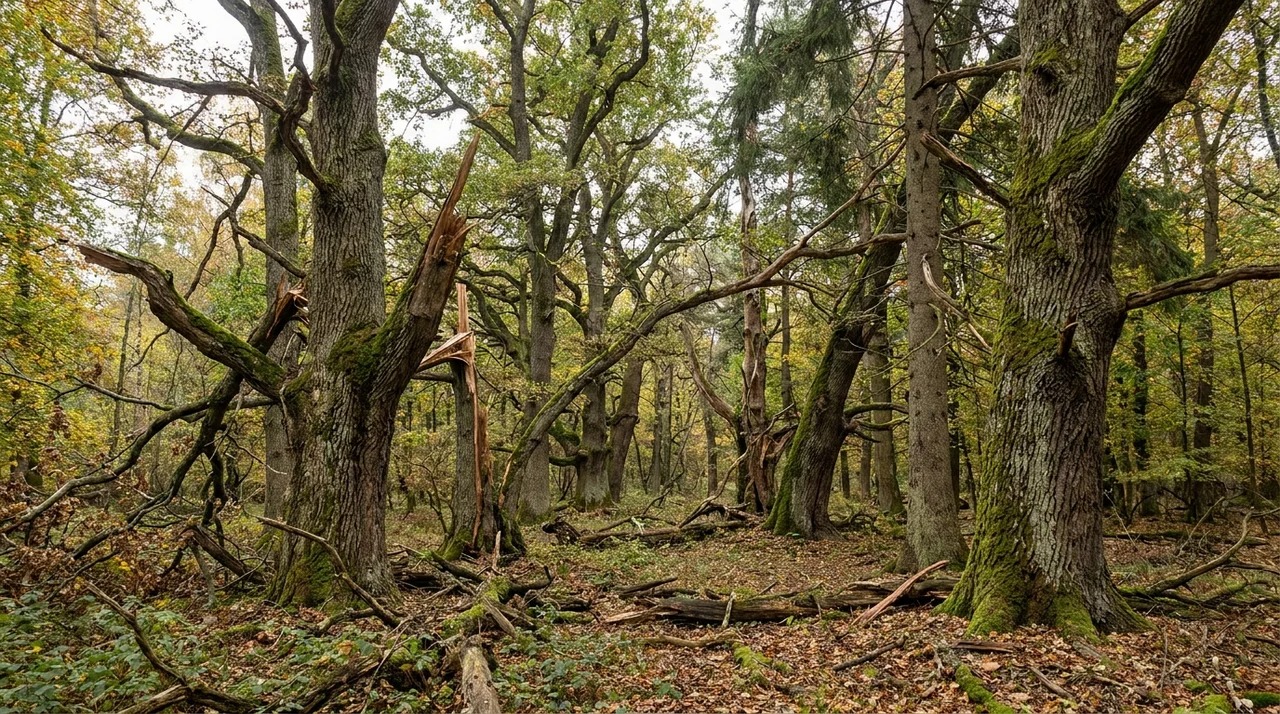
“Good Timber” has remained in circulation for over a century largely because its individual lines work as standalone aphorisms. They can be quoted, printed, and shared without the full poem and they still carry the argument.
That’s not accidental. As covered earlier, the AABB couplet structure was built for exactly this. Each pair of lines closes cleanly. Pull any couplet out of context and it still makes sense on its own.
That’s why you find the poem on wall prints, greeting cards, and wooden plaques. The lines travel.
The poem’s reach expanded significantly within LDS communities after Thomas S. Monson, then President of The Church of Jesus Christ of Latter-day Saints, quoted it during the General Conference in October 2013. His use of the poem introduced it to a large, engaged audience that shared and preserved it widely.
But the poem’s circulation predates that moment by decades. Monson amplified it; he didn’t create it.
What keeps it alive across different communities and contexts is simpler than any single endorsement. The poem names something people recognise. They’ve felt the pressure. They’ve come through something hard. And “Good Timber” gives that experience a shape they can hold onto.
Final Verdict
“Good Timber” doesn’t promise that hard times will work out. It makes a narrower, more honest claim that the conditions which feel the hardest are often the ones doing the most work.
Malloch wrote about trees because he knew them. But the logic transfers cleanly. Strength that holds under pressure doesn’t come from comfort. It comes from what you grew through.
If the poem resonated, read it again slowly. One stanza at a time. The argument lands differently when you’re not rushing past it.
Frequently Asked Questions
What is the message of the poem “Good Timber”?
Malloch’s point is that genuine strength only develops through sustained resistance. Easy conditions produce growth, but not the durable kind. Hardship isn’t the point; consistent pressure over time is.
Is “Good Timber” a famous poem?
Yes, though its fame is specific. It has circulated in inspirational and religious contexts for over a century. Thomas S. Monson quoting it in a 2013 General Conference address significantly expanded its reach within LDS communities.
What type of poem is “Good Timber”?
It’s a lyric poem built on a single extended metaphor. AABB rhyming couplets give it a declarative, aphoristic tone. That structure is why individual lines travel so well outside the full poem.
What does “good timber does not grow with ease” mean?
The strongest wood comes from trees that grew slowly under harsh conditions: wind, cold, dense competition. Malloch applies the same logic to people. Ease produces growth, but not the kind that holds under pressure.