


You searched for Love After Love because you want to understand it clearly, not wade through confusing explanations. I get it.
This poem looks gentle on the surface, but it carries something most people have never stopped to think about: the idea of coming back to yourself.
In this article, I will walk you through the meaning, themes, literary devices, structure, and a simple breakdown of the poet’s life.
I have studied English literature for years and I know how to make complex poems feel simple and clear.
No jargon. No confusion. Just honest, straightforward explanations that actually make sense.
Full Text of Love After Love
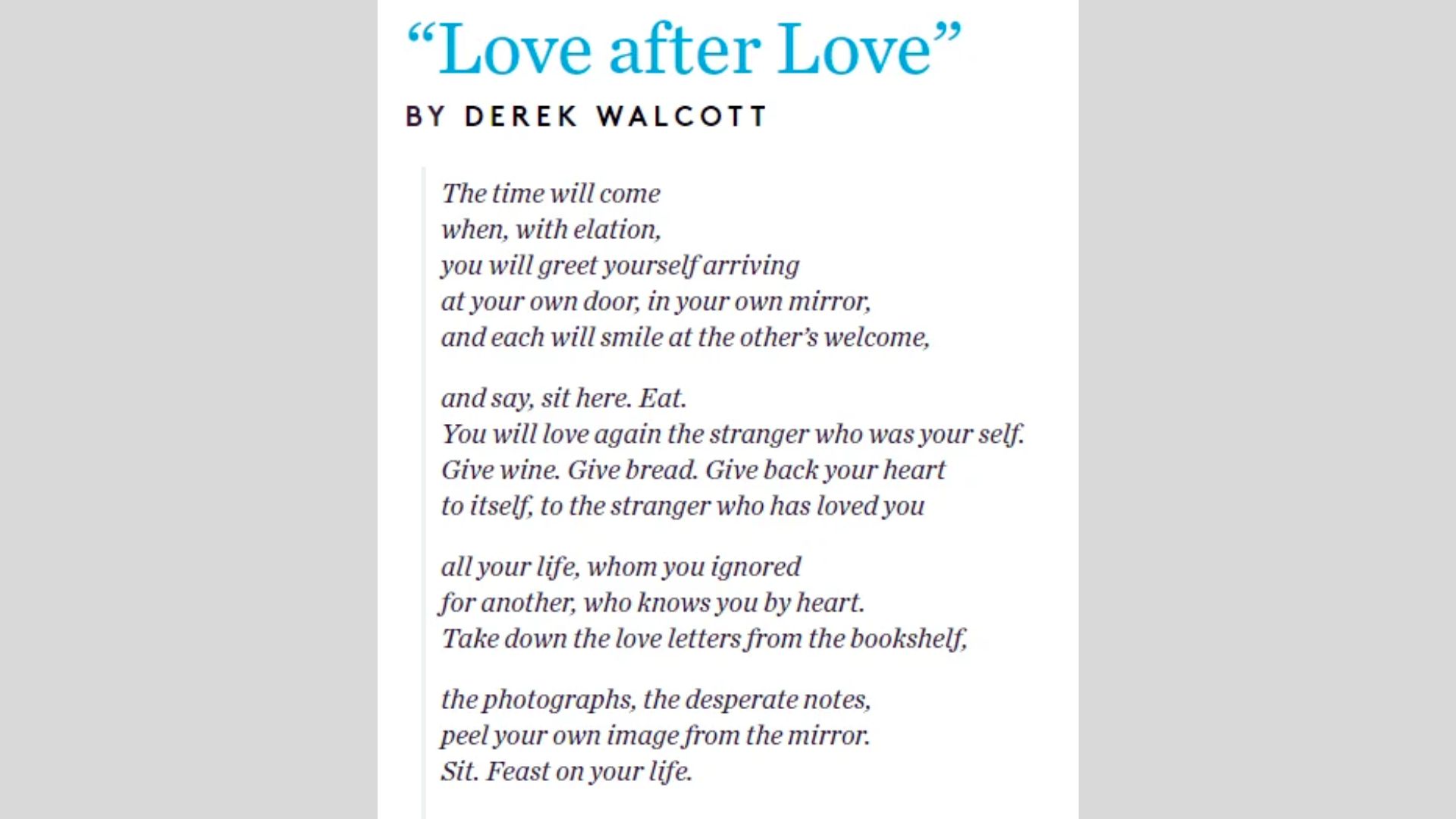
A look at the original words Walcott wrote, exactly as he wrote them.
The time will come
when, with elation
you will greet yourself arriving
at your own door, in your own mirror
and each will smile at the other’s welcome,
and say, sit here. Eat.
You will love again the stranger who was your self.
Give wine. Give bread. Give back your heart
to itself, to the stranger who has loved you
all your life, whom you ignored
for another, who knows you by heart.
Take down the love letters from the bookshelf,
the photographs, the desperate notes,
peel your own image from the mirror.
Sit. Feast on your life.
Meaning of Love After Love
What this poem is really saying, in plain and simple terms.
Short and Simple Meaning
A speaker addresses you directly and tells you that one day, you will stop chasing other people and finally return to yourself. You will sit down with the person you ignored for so long, which is you, and simply be at peace.
The simple message is this: self-love is not something you find. It is something you come back to.
After loss, heartbreak, or years of giving yourself away to others, there is still someone waiting for you at home. That someone is you.
Detailed Meaning of the Poem
The poem opens with a promise. “The time will come,” Walcott says, not maybe, but certainly. That certainty matters. It tells you this is a truth about how people heal, not wishful thinking.
Walcott then describes you greeting yourself at your own door, in your own mirror. Most people arrive home to someone else. Here, you arrive at yourself, showing how far people drift from who they truly are.
Walcott writes of the stranger who was your self. You gave your time and energy to others and lost track of the person underneath. He asks you to put down the love letters, photographs, and traces of old pain, and simply be present with yourself again.
The closing line, “Sit. Feast on your life,” is an instruction, not a suggestion. Stop moving. Stop chasing. Truly take in the life you have lived and the person you are.
Key Message in Love After Love
The key message is about returning to yourself after a period of loss or self-abandonment.
Many people lose themselves in relationships, in grief, in the effort to be what others need. Walcott is saying that when that is over, the work is not to find someone new.
The work is to welcome yourself back, with the same warmth and generosity you gave everyone else.
Themes in Love After Love
The big ideas that run through this poem and make it so meaningful.
Self-Love and Rediscovery
The central theme is the return to oneself. Walcott does not frame this return as sad or lonely. He frames it as something to look forward to, something filled with elation.
This reframing is the heart of the poem.
Most people think of being alone as a failure, especially after a relationship ends. Walcott turns that thinking completely around.
Being with yourself is not a consolation prize. It is something worth celebrating.
The Passage of Time and Healing
Time in this poem is not cruel. It is kind. The poem opens with “the time will come,” presenting the future as something good that is already on its way.
Healing is not questioned. It is promised.
This is different from many poems about loss, which dwell in pain or bitterness. Walcott skips past the suffering and focuses on what comes after it.
That choice alone makes the poem feel like relief to anyone who reads it during a hard time.
Identity and the Self
Throughout the poem, Walcott uses language that splits the self in two. You greet yourself. You love the stranger who is yourself. The person who has loved you all your life is also you.
This idea of the divided self, the version you show the world and the deeper version you left behind, is the emotional core of the poem.
Walcott is saying that your truest self never left. It waited. And now it is time to let it back in.
Hospitality as a Metaphor for Self-Acceptance
Walcott uses the language of hosting a guest throughout the poem. He tells you to offer wine, bread, and a seat at the table. These are acts of welcome.
Using that language for the way you treat yourself sends a clear message: you deserve the same care and generosity you would offer a beloved visitor.
This is not a dramatic or loud form of self-love. It is quiet, domestic, and deeply human. That is exactly what makes it land so hard.
Literary Devices Used in Love After Love
The writing tools Walcott used to make this short poem so powerful.
Direct Address (Apostrophe)
The entire poem speaks directly to “you.” This is one of the most powerful choices Walcott made. By addressing the reader directly, the poem feels personal in a way that most poems do not.
There is no narrator at a distance. Walcott is speaking to you, specifically, and that intimacy is what makes the poem feel like advice from someone who genuinely understands loss.
Metaphor and Extended Imagery
The central metaphor of the poem is hospitality. Walcott treats self-acceptance as welcoming a guest into your home. Wine. Bread. A seat at the table. This extended metaphor runs from beginning to end and gives the poem a sense of ritual and warmth.
The mirror is also used as a symbol of self-reflection, literally and emotionally. Greeting yourself in your own mirror is not vanity. It is honesty.
Repetition and Anaphora
Walcott repeats the word “give” in the lines “Give wine. Give bread. Give back your heart.” The repetition creates a sense of ceremony.
It feels like an instruction being pressed gently but firmly into your hands. Each repetition adds weight to what he is asking you to do.
Enjambment
Lines in this poem do not end neatly. They run into each other, which creates a sense of forward movement, of something building.
This mirrors the theme of time moving forward and the reader gradually arriving at a new understanding of themselves.
Tone
The tone is warm, patient, and certain. Walcott does not doubt that this moment will come. He does not ask if you are ready. He simply tells you it will happen, and that when it does, you should receive it fully.
Form, Structure, and Rhyme Scheme
How the poem is built, and why those choices matter.
Free Verse
Love After Love is written in free verse. There is no fixed rhyme scheme and no strict meter. This choice is intentional.
Walcott is writing about something intimate and personal, and a rigid formal structure would have felt too controlled, too distant.
Free verse allows the poem to breathe. It gives the language room to feel like speech, like something being said directly to you rather than performed.
Structure and Movement
The poem moves in three loose phases. The first opens with the promise that the time will come. The second moves through the scene of greeting yourself, offering hospitality, and recognising the stranger you became.
The third closes with the instructions to take down the old traces of love and simply feast on your life.
This movement mirrors emotional healing itself. First there is the promise of recovery. Then there is the act of returning to yourself. Finally, there is acceptance and stillness.
Line Length and Pacing
Walcott varies his line lengths throughout the poem. Some lines are long and flowing. Others are short and direct. The final two lines, “Sit. Feast on your life,” are among the shortest and most striking in the poem.
Their brevity after longer, slower lines makes them land with quiet force. The full stop after “Sit” forces you to pause, just as the poem is asking you to pause in your actual life.
About the Poet
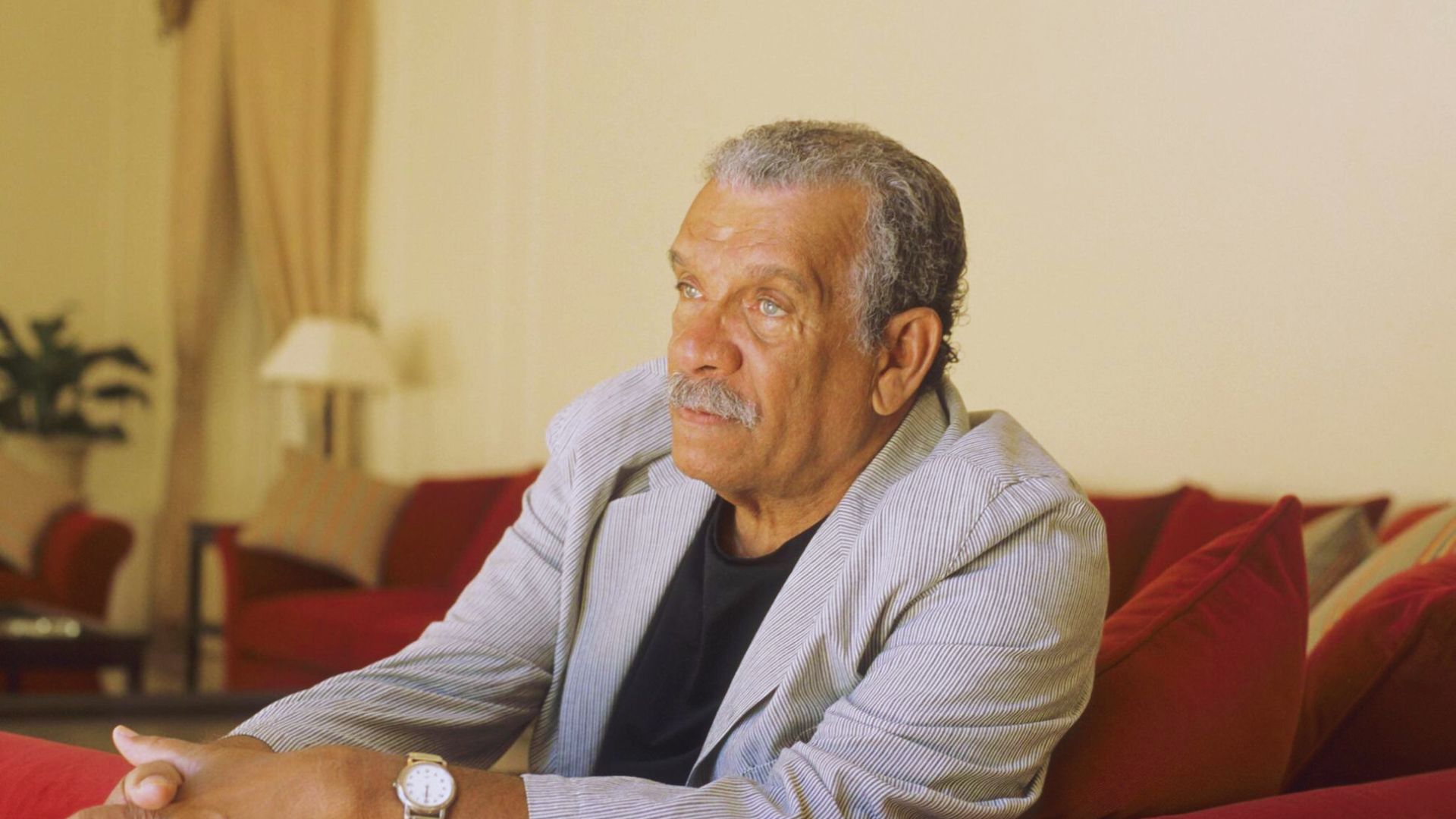
Derek Walcott was born in 1930 in Saint Lucia, Caribbean. He studied at the University of the West Indies and spent decades writing poetry, plays, and essays.
In 1959, he founded the Trinidad Theatre Workshop and went on to receive the Nobel Prize in Literature in 1992. Walcott wrote about identity, belonging, history, and love throughout his career.
Love After Love, taken from his 1976 collection Sea Grapes, is perhaps his most widely shared poem, appearing on walls, in therapy offices, and in wedding speeches.
He died in 2017 in Saint Lucia, the island where he was born.
Conclusion
I hope this breakdown made the Love After Love poem feel personal to you. Honestly, I came back to this poem after a difficult period in my own life, and that final line, “Sit.
Feast on your life,” hit differently than I expected. It felt like permission. If you are going through something hard right now, I hope it does the same for you.
Leave a comment below and share what line stayed with you. Share this with someone who needs it today.
Frequently Asked Questions
What is the main message of Love After Love?
The main message is that after loss or heartbreak, the most important thing you can do is return to yourself. Self-acceptance is not the end of love. It is the beginning of a deeper one.
Who wrote Love After Love?
Love After Love was written by Derek Walcott, the Nobel Prize-winning poet from Saint Lucia. It was published in his 1976 collection Sea Grapes.
What is the tone of Love After Love?
The tone is warm, reassuring, and calm. Walcott speaks with the steady certainty of someone telling you something they know to be true.
What does “the stranger who was your self” mean?
It refers to the version of yourself you left behind while focusing on others. Walcott calls this lost self a stranger who has been waiting patiently for you to return.
What literary form is Love After Love written in?
The poem is written in free verse with no fixed rhyme scheme or regular metre. This gives it a conversational, personal quality.