Robert Frost's "Mending Wall" is one of those poems that looks simple on the surface but carries real weight underneath.
I read it the first time thinking it was just about two neighbors fixing a fence. It is not.
The poem asks something deeper:why do we keep building walls between ourselves when nature itself keeps tearing them down?
Mending Wall Poem is a 1914 poem by Robert Frost that uses the act of rebuilding a stone wall to question why people maintain barriers without knowing the reason.
What "Mending Wall" Is Really About
The Mending Wall poem is not a celebration of fences. It is a question about why fences exist at all.
The Spring Ritual and What It Represents
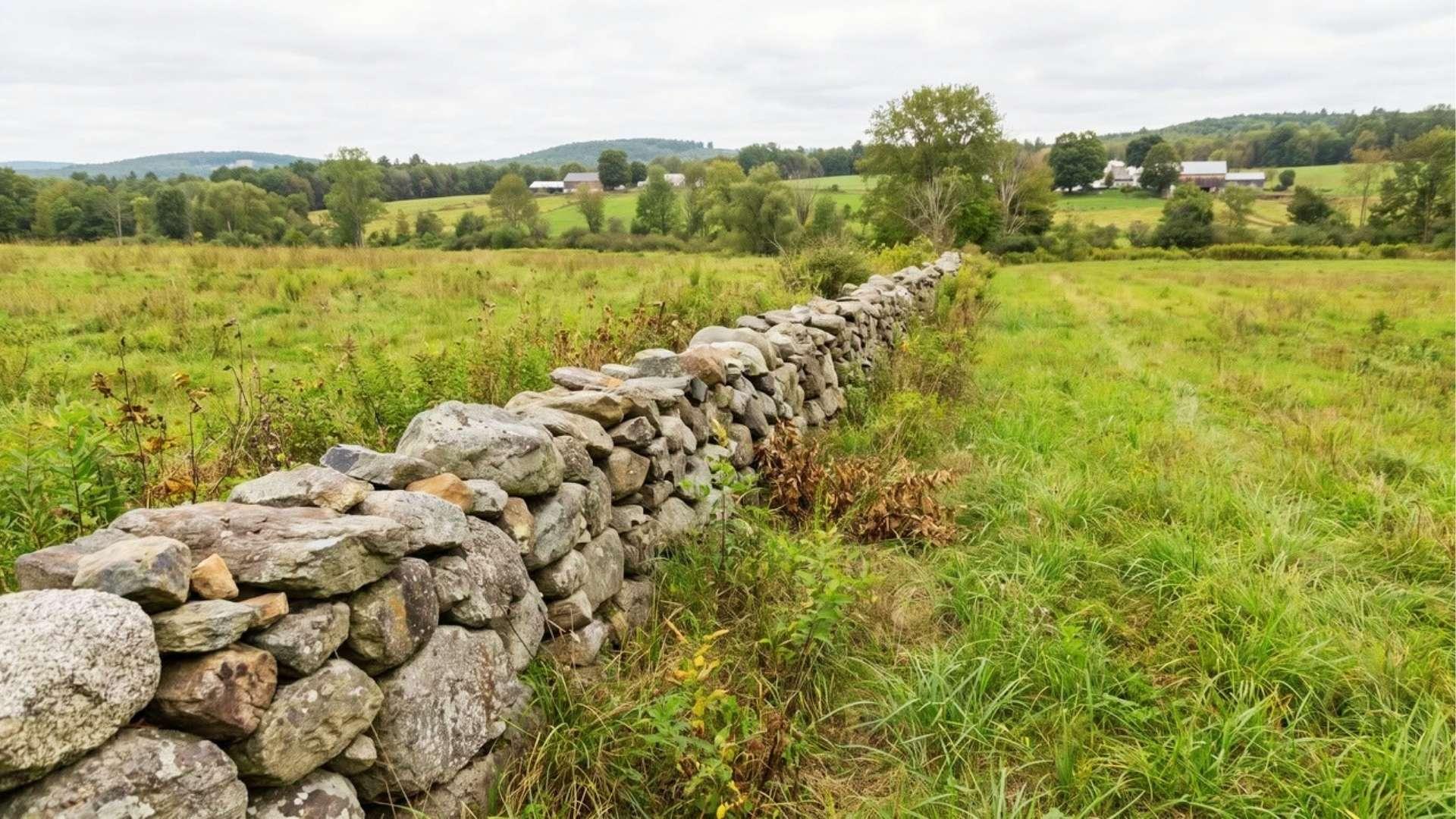
Every spring in the Mending Wall poem, the speaker and his neighbor walk the length of their shared wall and repair the gaps.
Stones fall during winter. Hunters knock sections down while chasing rabbits. Nature does not care about property lines.
The ritual itself is almost absurd. They fix what keeps breaking, without asking why they are fixing it.
The speaker notices this. He even points out that there are no cows to keep in or out. The wall serves no practical function on either side. Yet they rebuild it every year anyway.
That repetition is the point. The poem is not really about a wall. It is about the human habit of maintaining divisions out of routine, not logic.
The Speaker's Question vs. The Neighbor's Answer
The speaker asks: why do we need a wall here at all? He is the one questioning the tradition, even though he is the one who actually calls the neighbor each spring to do the work.
The neighbor does not entertain the question.
He just says what his father said: "Good fences make good neighbors." No explanation. No reasoning. Just repetition of what was handed down to him.
This back-and-forth is where the Mending Wall poem gets interesting.
Two people doing the exact same task, for completely different reasons. One sees the wall as pointless. The other sees it as something that should not be questioned.
The Two Neighbors as Opposing Worldviews
These are not just two men fixing a wall. In the Mending Wall poem, they represent two completely different ways of seeing the world.
Why the Speaker Is Not as Rational as He Thinks
It is easy to read the speaker as the clear-headed one and the neighbor as the stubborn traditionalist. But Frost does not let it be that clean.
The speaker is the one who initiates the mending each year. He calls the neighbor. He shows up. If he truly believed the wall was pointless, he would stop calling. He does not.
So the speaker questions the wall in theory but maintains it in practice. That gap between what he says and what he does matters. He is not free of tradition either. He just likes to think he is.
The Neighbor and the Weight of Inherited Tradition
The neighbor repeats his father's phrase twice in the Mending Wall poem:"Good fences make good neighbors." He does not explain it. He does not defend it. He simply holds to it.
Some readers see this as stubbornness. But it is also stable. He knows what he believes. He is not anxious about it. He has no need to question the wall because for him, the wall is not in question.
Frost compares him to "an old-stone savage armed." That is not a flattering image.
But it is also not completely negative. There is something solid about someone who knows where they stand, even if they cannot say why.
Major Themes in "Mending Wall"
Every theme in the poem connects back to one core tension:Connection vs. Separation.
Boundaries, Isolation, and Human Connection
The wall physically separates the two men. But the act of mending it is what brings them together. Without the wall, they might never meet at all.
Frost is doing something subtle here. The very thing that divides them is also what creates their relationship.
They only talk during the mending. Remove the wall, and the connection disappears too.
That is a sharp observation about how people work. Sometimes we maintain barriers that also happen to be the only thing holding a relationship in place.
Tradition Versus Independent Thought
The neighbor follows tradition without questioning it. The speaker questions it without fully breaking from it. Neither one is completely right or wrong.
Frost does not take sides in the Mending Wall poem. He presents both positions honestly.
Traditions exist for reasons, even when those reasons have faded. And questioning tradition is healthy, but only if it leads somewhere.
The speaker questions without acting. That is its own kind of failure.
Nature as a Force Against Division
Frost makes nature an active participant in the Mending Wall poem. The ground swells and buckles.
The winter damages the wall. Hunters tear sections out chasing game. Nature does not recognize human property lines.
This gives the poem an environmental lawyer. The physical world keeps rejecting division.
The two men keep putting it back. And that cycle is never resolved. The poem ends with the wall still standing.
Form, Structure, and Literary Devices
How Frost wrote the Mending Wall poem is just as deliberate as what he wrote about.
Why Frost Chose Blank Verse
The poem is written in blank verse: unrhymed iambic pentameter.
That means it follows a rhythm but does not rhyme. It sounds like natural speech, almost like someone talking to you directly.
That choice matters. A rhyming poem about walls might feel cute or decorative.
Blank verse feels serious, grounded, like a real conversation between real people. The form matches the content of the Mending Wall poem perfectly.
Personification, Metaphor, and Imagery
Frost personifies the wall's gaps, calling them things that "do not love a wall."
He gives nature agency. The boulders that fall are described as "loaves" and "balls," making them feel ordinary, even playful.
The wall itself is a metaphor for every barrier people put up between themselves:cultural, political, psychological.
You do not need to name those things for the Mending Wall poem to land. The image does the work.
The neighbor carrying a boulder in each hand, looking "like an old-stone savage armed," is one of the most striking images in the poem.
It connects his behavior to something primal. Not evil. Just old.
Why "Mending Wall" Still Matters
The Mending Wall poem was published in 1914. It is still being argued about, which tells you something.
The Misuse of "Good Fences Make Good Neighbors"
People quote "Good fences make good neighbors" all the time as if Frost invented it and approved of it.
He did not invent it. It was already a common proverb. And in the Mending Wall poem, the person saying it cannot explain why it is true.
Frost gives that line to the least reflective character in the poem. Using it as a defense of barriers, borders, or separation misses the entire point.
The Mending Wall poem is not endorsing fences. It is questioning them.
What the Poem Says About Borders Today
The Mending Wall poem is set against a stone wall in rural New England. But it is also about every debate over borders you have seen in the news for the past decade.
Who builds the walls? Who maintains them? What happens when no one can explain why they are there? Frost does not answer those questions. He just makes sure you sit with them.
That is why the Mending Wall poem holds up. It does not tell you what to think. It shows you two people doing something automatic and asks you whether it makes sense.
Final Takeaway
Frost never told you what to think about the wall. That was deliberate. Most poems give you a resolution.
This one hands you the tension and walks away. That is what makes the Mending Wall poem stay with you longer than most things you read in a classroom.
You finish it and still feel unsettled. Not because the poem failed. Because it worked.
If that unsettled feeling hit you too, drop a comment below with which side you landed on, the speaker or the neighbor.
Frequently Asked Questions
What is the first line of the Mending Wall poem?
The poem opens with "Something there is that doesn't love a wall." That single line sets the entire questioning tone Frost carries through all 45 lines.
What are Robert Frost's most famous poems?
Besides the Mending Wall poem, Frost is best known for The Road Not Taken, Stopping by Woods on a Snowy Evening, Birches, and After Apple-Picking.
What is the main difference between the White Woman and the Mending Wall poem?
The White Woman by Mary Coleridge also explores isolation and barriers but focuses on internal psychological imprisonment, while Frost's poem examines external social and physical division between people.