


You searched for Ozymandias because you want to understand it clearly, not wade through confusing explanations. I get it. This poem looks short, but it carries a lot of weight.
I’ve studied English literature for years, and I know how to make complex poems feel simple and clear.
No jargon. No confusion. Just honest, straightforward explanations that actually make sense.
In this article, I’ll walk you through the full poem text, what it actually means, its themes, literary devices, structure, and a simple breakdown of the poet’s life.
By the end, you’ll understand Ozymandias completely.
Full Text of Ozymandias
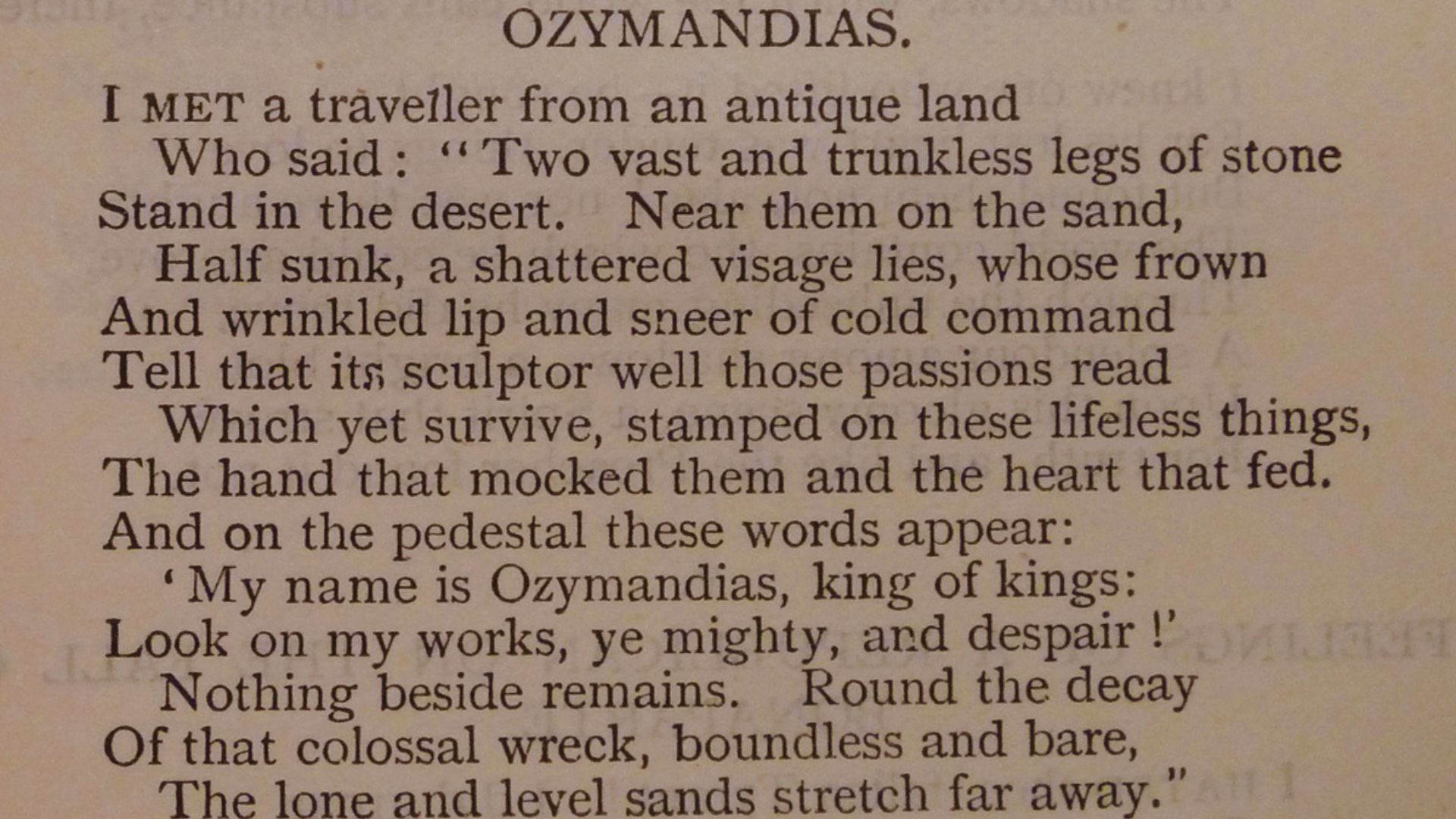
A look at the original words Shelley wrote, exactly as he wrote them:
I met a traveller from an antique land,
Who said—“Two vast and trunkless legs of stone
Stand in the desert. . . . Near them, on the sand,
Half sunk a shattered visage lies, whose frown,
And wrinkled lip, and sneer of cold command,
Tell that its sculptor well those passions read
Which yet survive, stamped on these lifeless things,
The hand that mocked them, and the heart that fed;
And on the pedestal, these words appear:
My name is Ozymandias, King of Kings;
Look on my Works, ye Mighty, and despair!
Nothing beside remains. Round the decay
Of that colossal Wreck, boundless and bare
The lone and level sands stretch far away.”
Meaning of Ozymandias
What this poem is really saying, in plain and simple terms.
Short and Simple Meaning
A traveller tells the speaker about a ruined statue in the desert. The statue once belonged to a mighty king named Ozymandias.
The king thought his power would last forever. But now, the statue is broken, the king is dead, and the desert is empty.
The simple message is this: no power lasts forever.
Kings, rulers, and empires all fall. Time wins every single time.
Detailed Meaning of the Poem
The poem opens with a traveller sharing a story. This framing device puts distance between the reader and the king. We hear about Ozymandias secondhand, which makes him feel even more distant and forgotten.
The statue’s face still shows arrogance. The sculptor captured the king’s personality perfectly. That “sneer of cold command” tells us Ozymandias was proud and harsh. Even in stone, his ego survives.
Then comes the twist.
The pedestal reads: “My name is Ozymandias, King of Kings; Look on my Works, ye Mighty, and despair!”
These words were meant to impress and intimidate. But now, there is nothing left to see. The “works” are gone. The land is empty. The boast became a joke.
The final three lines are powerful. The sands stretch on forever. The statue is just a wreck. Nothing else remains. Shelley uses this contrast to show how small even the greatest kings really are in the face of time and nature.
Key Message in Ozymandias
The key message is about the fall of power and human ego.
Ozymandias believed he was above everyone. He carved his pride into stone. But stone crumbles. Empires fall.
Shelley is telling us that no one escapes time. True legacy is not about control or force. It fades. What remains is often just silence.
Themes in Ozymandias
The big ideas that run through this poem and make it so meaningful.
The Transience of Power
The most obvious theme is that power does not last. Ozymandias was a king of kings. He ruled with total authority. Yet, nothing from his reign survived except a broken statue.
Shelley makes this point without being preachy. He simply shows us the empty desert. The silence does the work.
The reader draws the conclusion naturally: power is temporary.
This was also a political message. Shelley was writing at a time when kings and emperors ruled Europe. He was reminding them, and everyone else, that no ruler is permanent.
The Power of Art and Memory
Here is something interesting. The sculptor who made the statue is gone. The king is gone. But the art, even broken, still exists.
The sculptor “well those passions read.” He captured the king’s personality so well that we can still feel it today, thousands of years later. This shows that art outlasts rulers.
Shelley, himself an artist, was making a quiet argument: creativity is more lasting than control. A poem written in 1817 is still being read today. That is the real power.
Man vs Nature
Nature is the quiet winner in this poem. The desert surrounds the statue. The sand has swallowed almost everything. Wind and time did what no army could do. They brought a powerful king to nothing.
Shelley does not describe any dramatic battle. Nature did not fight Ozymandias. It simply waited. And eventually, nature always wins.
This theme connects to Romanticism, the literary movement Shelley was part of. Romantic poets often wrote about nature being more powerful and permanent than human achievement.
Literary Devices Used in Ozymandias
The writing tools Shelley used to make this short poem so powerful.
Irony and Juxtaposition
The biggest irony is the inscription on the pedestal. Ozymandias commands others to look at his great works, but the works are completely gone. This is dramatic irony. The boast has become meaningless.
Shelley also uses juxtaposition by placing the king’s arrogant words next to total emptiness.
Two opposites sit side by side: great ambition and total ruin.
Allusion and Allegory
“Ozymandias” is a Greek name for Ramesses II, one of the most powerful pharaohs in history. Shelley uses this as an allusion to give the poem real historical weight.
The poem also works as an allegory. Ozymandias represents any ruler or empire that believes it will last forever.
Imagery and Symbolism
Shelley’s images, “trunkless legs of stone,” “shattered visage,” and “lone and level sands,” build a strong picture of ruin.
The statue symbolizes fallen power. The desert represents time and nature’s indifference.
Sound Devices (Alliteration, Assonance, Caesura)
Alliteration in “boundless and bare” and “lone and level” creates a sweeping, wind-like feeling. Assonance in “cold command” slows the reader down.
Caesura in “Nothing beside remains. Round the decay.” forces a pause that mirrors the emptiness of the desert.
Form, Structure, and Rhyme Scheme
How the poem is built, and why those choices matter.
Sonnet Form and Iambic Pentameter
Ozymandias is a Petrarchan sonnet with 14 lines. Shelley used a form traditionally meant for love poems to write about power and decay. That contrast is intentional.
The poem loosely follows iambic pentameter, but Shelley breaks the pattern at key moments to create emphasis.
Inimitable Rhyme Scheme Explained
The rhyme scheme is ABABACDCEDEFEF, which differs from the standard Petrarchan form. It feels natural but controlled.
Some lines use slant rhymes like “stone” and “frown,” giving the poem an unsettled, broken quality that fits the theme.
Octave and Sestet Breakdown
The octave (lines 1 to 8) sets up the scene with the traveller, the broken statue, and the king’s arrogance.
The sestet (lines 9 to 14) is where the irony hits. We read the boastful inscription and then see nothing but empty desert around it.
The shift between the two is called the volta. This is where the poem’s meaning fully comes into focus.
About the Poet
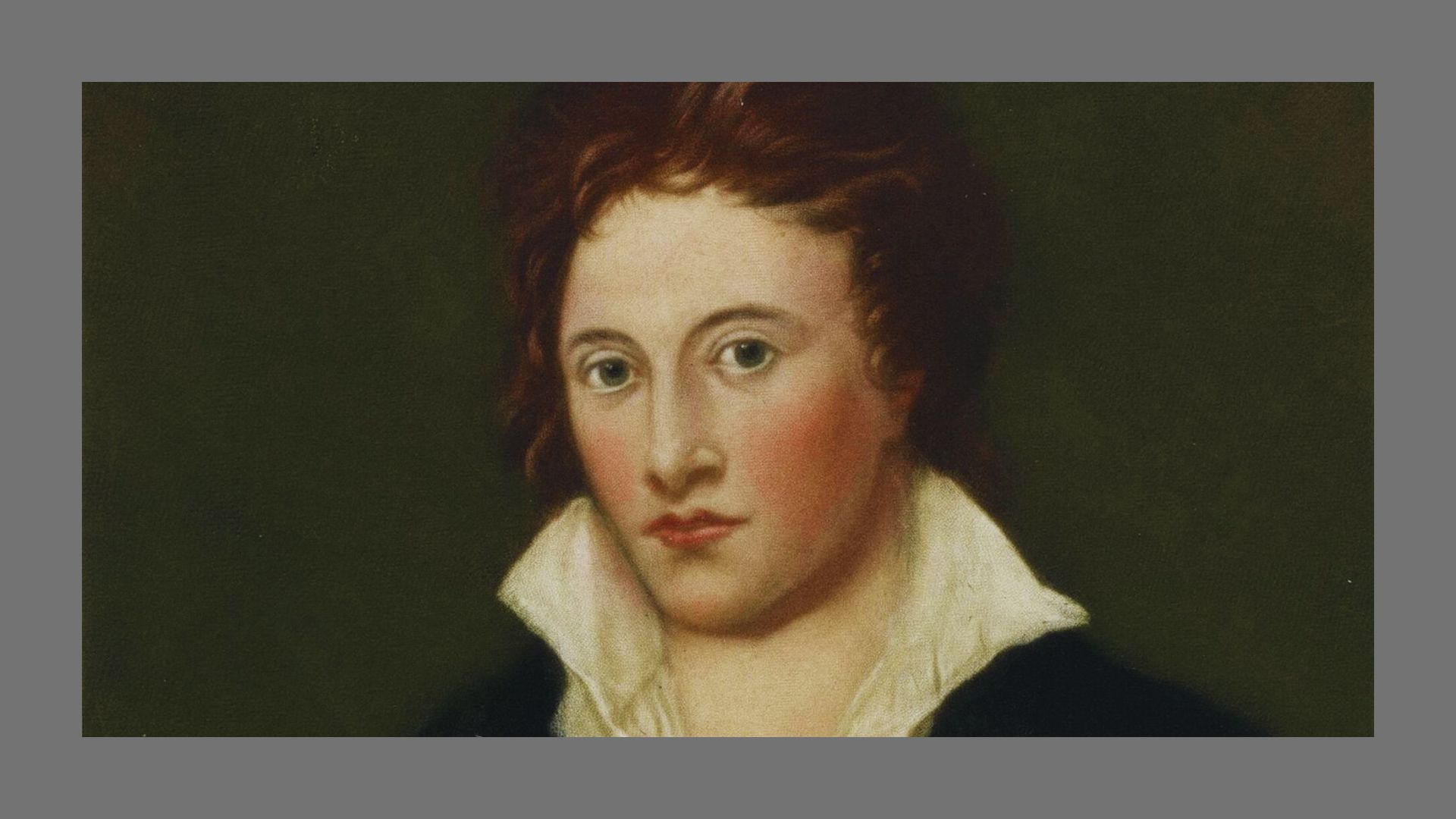
Percy Bysshe Shelley was born in 1792 in Sussex, England. He studied at Oxford but was expelled for publishing The Necessity of Atheism. He later married Mary Godwin, the author of Frankenstein, and died at just 29 in a boating accident in Italy.
His writing was bold, political, and full of strong imagery. He used poetry to challenge power and celebrate nature. Ozymandias is a clear example of that.
Shelley was a key figure in the Romantic movement, writing alongside poets like Keats, Byron, and Wordsworth. His voice still carries weight in poetry about power, time, and nature.
Conclusion
I hope this breakdown made Ozymandias feel less intimidating. Honestly, the first time I read it, I had to read it three times before the irony of that inscription hit me. Once it did, I never forgot it.
This poem is short, but it says something most people spend a lifetime figuring out: nothing lasts forever, and that is okay.
If this helped you, leave a comment below and let me know what you thought.
Share this post with a classmate who needs it too. And check out our other poem summaries for more clear, simple explanations.
Frequently Asked Questions
What is the main message of Ozymandias?
The main message is that no power lasts forever. Even the greatest rulers are forgotten by time, and nature outlasts all human ambition.
Who is Ozymandias based on?
Ozymandias is based on Ramesses II, the ancient Egyptian pharaoh. The name “Ozymandias” is the Greek version of one of his royal titles.
What is the tone of Ozymandias?
The tone is ironic and reflective. Shelley presents the king’s arrogance and then quietly shows how completely that arrogance has been destroyed by time.
Why did Shelley write Ozymandias?
Shelley wrote the poem partly as a political statement. He wanted to remind powerful rulers and governments that no authority is permanent. He had strong views against tyranny and monarchy.
What literary form is Ozymandias written in?
Ozymandias is written as a Petrarchan sonnet with 14 lines. It uses a modified rhyme scheme and loose iambic pentameter, giving it a slightly irregular but controlled structure.