

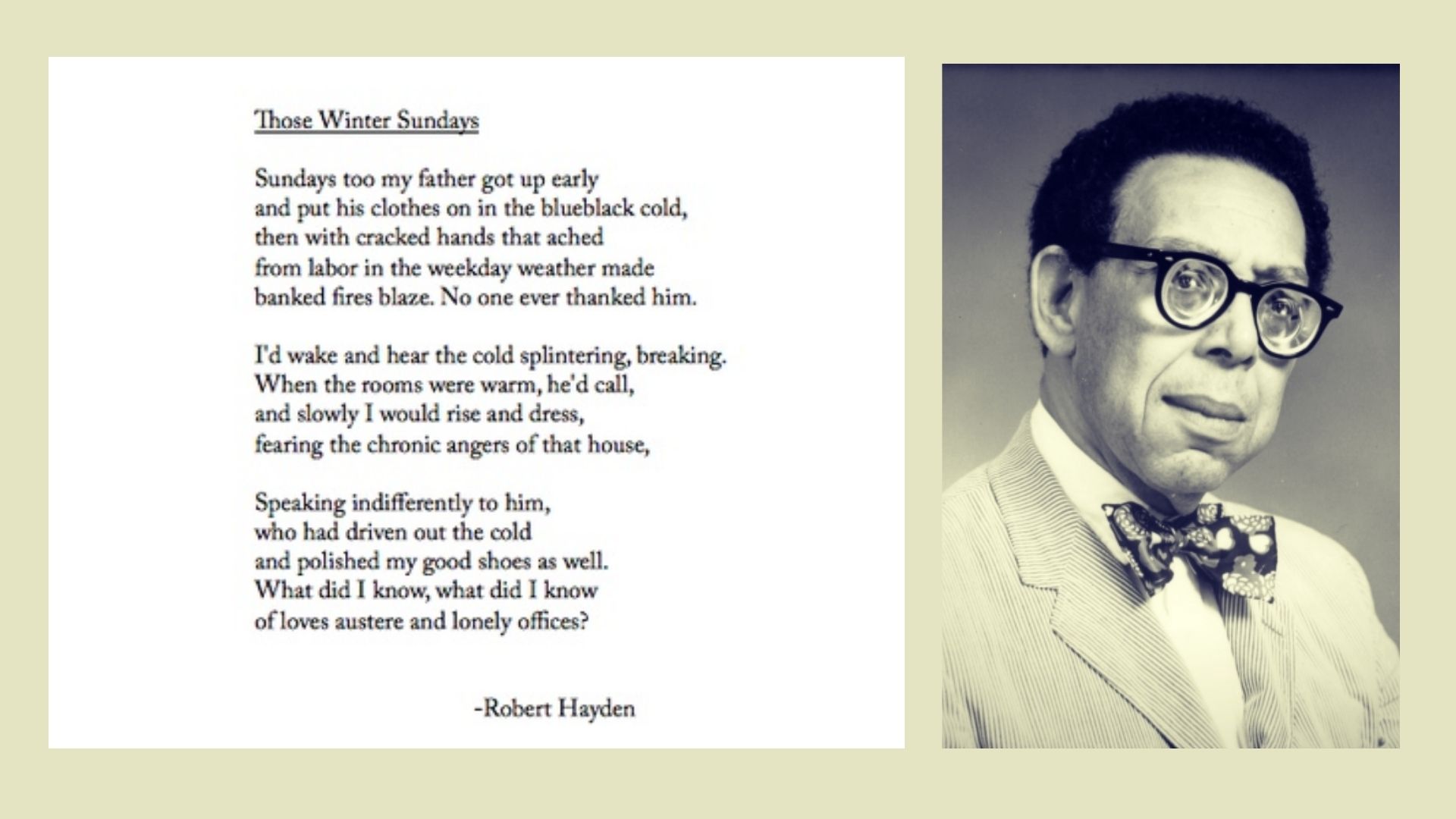
Some poems stay with you long after you finish reading them. Robert Hayden’s Those Winter Sundays is one of them.
Published in 1962, this short poem carries a heavy truth. It talks about a father who woke up early every day, worked with cracked hands, and made sure the house was warm. Nobody thanked him. Nobody even noticed.
In this post, I am breaking down the full summary, themes, and meaning of the poem. You will see why this one still hurts.
Full Summary of Those Winter Sundays
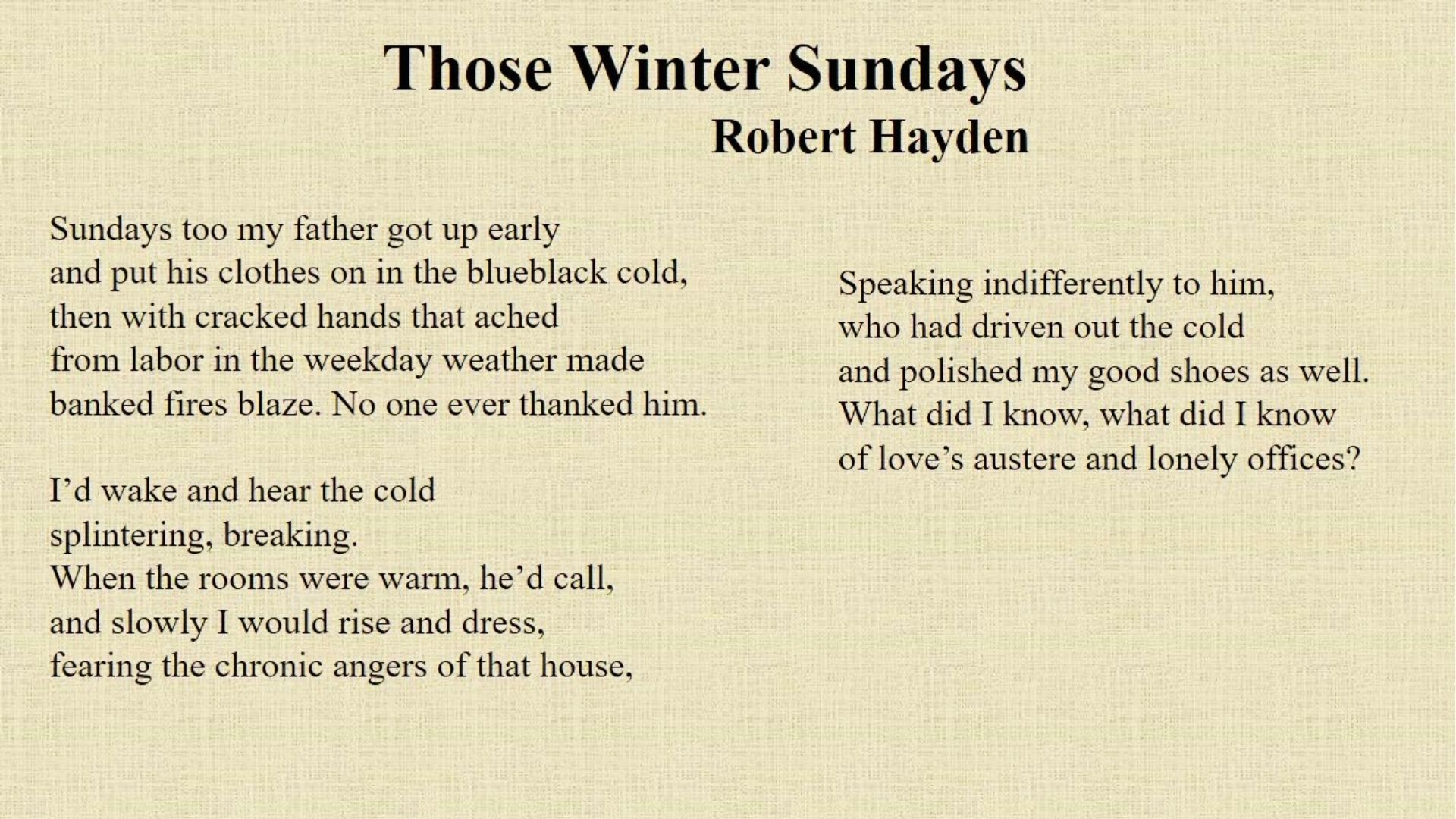
This poem is short but says a lot. Here is a breakdown of what happens in each part.
The Father’s Early Morning Routine
Every Sunday, the father wakes up before anyone else. The poem opens with the image of a “blueblack cold” morning. That phrase alone tells you how harsh and early it is.
He gets up anyway. His hands are cracked from hard labor during the week. But he still lights the fire to warm the house. No one asks him to. No one thanks him either.
The Child’s Perspective
The child in the poem does not rush to greet the father. He waits until the rooms are warm. There is a clear emotional distance between them.
The poem also mentions “chronic angers” in the house. This hints at tension, maybe arguments or stress that filled their home. The child feared that atmosphere. So he stayed away and said very little.
Adult Reflection and Regret
The most painful part comes at the end. The speaker is now grown up. Looking back, he finally sees what his father was doing all those years.
He was showing love. Not with words, but with cracked hands and early mornings. The speaker asks himself, “What did I know?” It is a line full of guilt and grief. He understands now, but it feels too late.
Here is the full section:
Line-by-Line Analysis of Those Winter Sundays
This poem has only 14 lines, but every single one carries weight. Here is what each part really means.
Lines 1–5 Analysis
The poem opens with “Sundays too my father got up early.” That word “too” is doing a lot of work. It tells you this was not just a Sunday thing. He did this every single day, including his one day of rest.
The “blueblack cold” is a strong image. It makes you feel the darkness and the chill of those early mornings. His hands were “cracked and aching” from weekday labor. Yet he still got up and lit the fire.
The line “No one ever thanked him” lands quietly. There is no drama in it. Just a plain, honest truth that stings.
Lines 6–9 Analysis
By lines 6 to 9, the house is warming up. The cold is breaking. But this warmth did not happen on its own. The father made it happen before anyone else was even awake.
He then called his child to wake up. Only after the rooms were warm. That is a small act, but it shows how much he cared about comfort he would never receive himself.
The phrase “chronic angers” is important. It suggests the household had ongoing stress or conflict. The child sensed this tension and kept his distance from the father because of it.
Lines 10–14 Analysis
In these final lines, the speaker admits he spoke “indifferently” to his father. He did not see what was right in front of him. A parent who polished his shoes, warmed his home, and asked for nothing back.
The poem ends with a rhetorical question. “What did I know, what did I know of love’s austere and lonely offices?” It is not really a question. It is regret, spoken out loud. The word “offices” here means duties or acts of service. Love, in this poem, looked like labor. And the child missed it entirely.
Major Themes in Those Winter Sundays
This poem packs several big themes into just 14 lines. Here is what Hayden is really talking about.
Parental Love and Sacrifice
The father never says “I love you.” But he shows it every morning. He wakes up in the cold, works through the pain, and warms the house before anyone is awake.
Love does not always sound like words. Sometimes it looks like cracked hands and an early alarm.
Regret and Realization
The speaker looks back as an adult and sees what he missed. His father was giving everything, and no one acknowledged it.
That realization comes with guilt. You cannot go back and say thank you. That is the quiet pain this poem carries.
Growing Up and Memory
As a child, the speaker took the warmth for granted. As an adult, he finally understands the cost of it.
Hayden shows how perspective shifts with age. What felt normal in childhood can look very different once you grow up.
Family Tension and Discipline
The “chronic angers” point to a home with real stress and distance. The child kept his guard up, maybe because of strict parenting or ongoing conflict.
That emotional gap made it hard to see the love that was already there. The tension and the tenderness existed together, but the child only noticed one.
Symbolism in the Poem
Hayden uses simple images to say something deeper.
Fire as a Symbol of Love
The fire the father lights every morning is not just about warmth. It stands for care and protection. He does the hard work silently, making sure his family is comfortable before they even wake up.
Cold as Emotional Distance
The “blueblack cold” is not just the weather. It reflects the emotional gap in the family. The harsh environment mirrors the distance between the father and child.
Structure, Form, and Style
The way Hayden wrote this poem is just as meaningful as the words themselves.
Three-Stanza Structure
The poem is split into three stanzas of uneven lengths. This progression mirrors the shift in the speaker’s thinking, from a child’s routine morning to an adult’s moment of regret.
Free Verse Form
There is no fixed rhyme scheme here. Hayden wrote in free verse, which gives the poem a natural, conversational feel. It reads like a memory, not a performance.
Sonnet Influence
The poem has 14 lines, just like a sonnet. This is likely intentional. Sonnets are traditionally linked to love, and Hayden uses that structure to frame a story about a love that was never spoken out loud.
About the Poet: Robert Hayden
Alt text: A man in a suit and glasses stands confidently in front of a boat, showcasing a professional demeanor.
Robert Hayden was an American poet born in 1913 in Detroit, Michigan. He grew up in a troubled foster home, which shaped much of his writing. He became the first African American to serve as U.S. Poet Laureate in 1976.
Those Winter Sundays draws directly from his own childhood. The distant father figure and the cold, tense home are not fictional. Hayden lived it, and that is exactly why the poem feels so real.
Conclusion
Those Winter Sundays is a small poem with a lasting punch.
Hayden captured something most of us have felt but never said out loud. Love is not always loud. Sometimes it is quiet, cold mornings and thankless work.
Reading this poem as an adult hits differently. It makes you think about the people who showed up for you without ever asking for anything back.
If this analysis helped you, share it with someone who loves poetry. And drop your thoughts in the comments below.
Frequently Asked Questions
What is “Those Winter Sundays” about?
It is about a father who silently sacrificed every morning to care for his family. The speaker, now an adult, looks back with regret for never appreciating it.
Who wrote “Those Winter Sundays” and when was it published?
Robert Hayden wrote this poem, and it was published in 1962. Hayden was an American poet and the first African American to serve as U.S. Poet Laureate.
What is the main theme of “Those Winter Sundays”?
The main theme is unspoken parental love and the regret that comes with realizing it too late. It also touches on emotional distance, sacrifice, and how perspective changes with age.
What does the “blueblack cold” mean in the poem?
It is a vivid image that describes the harsh, dark cold of early winter mornings. It also reflects the emotional chill and distance that existed within the family home.
What does the ending of “Those Winter Sundays” mean?
The final lines are a rhetorical question where the speaker admits he never understood his father’s love as a child. It is a moment of deep regret and adult self-awareness.