

Some poems stop you mid-scroll. Rudy Francisco’s “My Honest Poem” did exactly that to me.
I remember reading it for the first time and thinking, “Did he just say everything I have been feeling?” It is raw, real, and honest in a way that most poetry is not.
No fancy words. Just the truth.
In this blog, I’ll break down what the poem means, the key themes, literary devices, historical context, and everything about Rudy Francisco.
By the end, you’ll see this poem in a whole new way. I promise you.
Meaning of “My Honest” Poem
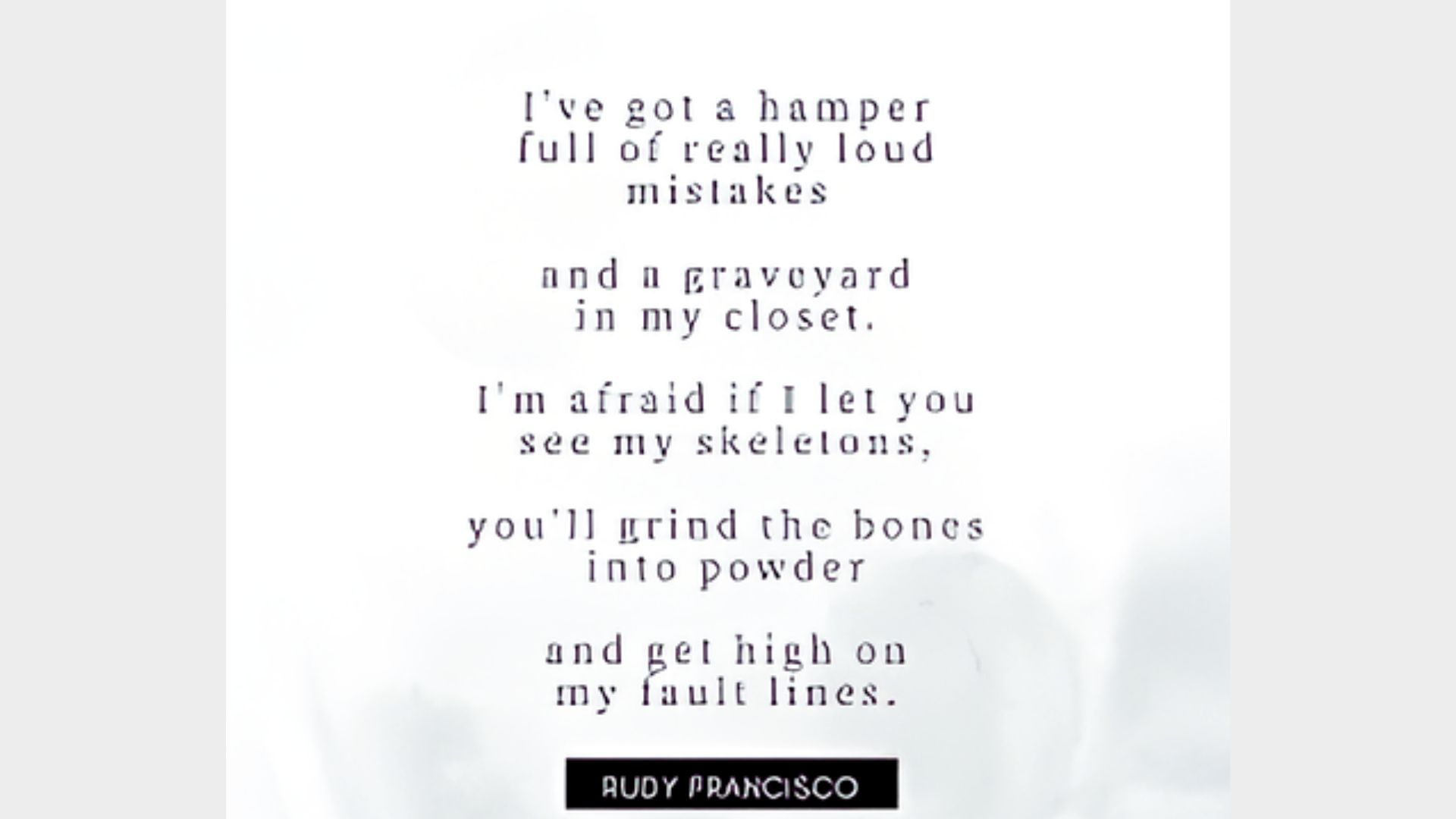
“My Honest Poem” by Rudy Francisco is a deeply personal piece. In it, Rudy lists truths about himself.
Some are funny. Some are sad. Some are awkward. That is the point. He talks about his fears, his habits, his love life, and his flaws.
The poem feels like a confession. Rudy does not try to sound cool or put-together. He just tells you who he is, without filters.
It is the kind of poem that makes you feel seen, especially if you have ever been afraid to show your real self to someone.
Key Themes in “My Honest Poem”
This poem covers big feelings in small, honest lines, and every theme hits close to home.
Identity and Self-Discovery
Rudy uses this poem to show who he really is, not who people expect him to be. He lists facts about himself that most people would hide.
This act of naming his own truths becomes a form of self-discovery.
The poem suggests that knowing yourself, including the messy parts, is both hard and freeing at the same time.
Vulnerability and Honesty
The whole poem is built on being open. Rudy shares things that feel too private to say out loud. He talks about his scars, his habits, and his fears without dressing them up.
This kind of honesty takes courage. It also makes the poem feel trustworthy.
When a poet tells you his truth without pretending, you start to trust him and maybe even yourself.
Self-Doubt and Insecurity
Rudy does not pretend he has it all figured out. He admits to second-guessing himself, worrying too much, and feeling unsure about who he is.
These lines land hard because most people carry the same feelings. Self-doubt is not a weakness in this poem.
It is a human truth. Rudy gives readers permission to feel unsure without feeling broken.
Fear of Love and Relationships
Love is complicated in Rudy’s world. He admits he gets too attached, falls too fast, or pulls back when things get real.
He is not afraid to say that love scares him. These lines are some of the most relatable in the poem.
Many readers have felt this exact tension, wanting connection but also being terrified of what it might cost.
Growth and Hope
Even with all the doubt and fear, the poem ends on a softer note. Rudy hints that he is trying. He is working on himself. He is not giving up.
This quiet hope makes the poem feel honest without being hopeless.
It shows that growth does not have to be loud. Sometimes it just looks like showing up and telling the truth.
Literary Devices & Analysis
Rudy Francisco uses simple language but packs each line with layers of meaning through strong literary techniques.
Figurative Language (Metaphor, Simile & Imagery)
Rudy uses sharp comparisons to paint clear pictures. He compares his heart to things readers can visualize.
His imagery is grounded in everyday life, not fancy or abstract. A simile might compare his feelings to something as ordinary as a coffee mug or a scar.
This keeps the poem accessible and real. The figurative language never feels forced. It feels like something you would actually say out loud to someone you trust.
Repetition & Tone
The poem uses repetition to build rhythm and weight. Rudy lists facts about himself one after another, which creates a confessional tone.
Each repeated structure adds another layer to who he is. The tone stays honest throughout, never angry or overly emotional. It feels like a calm conversation.
That steady tone makes the raw content easier to sit with. It invites the reader in rather than pushing them away.
Structure and Form
“My Honest Poem” does not follow a strict rhyme scheme or traditional form. It reads more like a spoken list than a classic poem.
The lines are short. The breaks feel natural. This loose structure mirrors the honesty of the content. Nothing is forced into a perfect shape. The poem looks like real thought, real feeling.
That informal structure is exactly what gives it its power and why it works so well as a spoken-word piece.
Historical & Literary Context
“My Honest Poem” sits at the center of three major poetry movements.
The spoken-word poetry movement grew in the 1980s and 1990s as a way to bring poetry back to real people through performance.
Modern confessional poetry, which began with poets like Sylvia Plath and Robert Lowell, pushed writers to share deeply personal truths.
Contemporary poetry trends have moved toward short, direct, social-media-friendly writing. Rudy Francisco blends all three.
His poem performs well on stage, reads like confession, and spreads easily online.
Related Versions and Adaptations of “My Honest Poem”
From live performances to classroom handouts, this poem has taken on many forms since Rudy first shared it.
Spoken-Word Performance Version
The most powerful version of this poem is Rudy performing it live. His delivery changes the poem completely.
His pauses, tone shifts, and facial expressions add meaning that cannot be captured on a page. Videos of his performances have spread widely on YouTube and social media.
Hearing him say the words out loud makes listeners feel like he is talking directly to them, which is exactly what spoken-word poetry is supposed to do.
Published and Written Versions
The poem also appears in Rudy’s published work, including his album Helium. In written form, readers can slow down and sit with each line.
The written version allows for rereading and reflection. Some readers prefer this format because it lets them mark their favorite lines and return to them later.
Both formats, spoken and written, carry the same emotional weight. The words do the work no matter how they reach you.
Classroom and Personal Adaptations
Teachers often use this poem in classrooms to teach confessional writing and self-expression. Students are sometimes asked to write their own “honest poem” after reading Rudy’s version.
This assignment encourages personal writing without pressure to sound poetic or polished.
On a personal level, many readers have written their own versions as a private exercise in honesty. The poem works as a writing prompt as much as it works as a piece of art.
Why Read “My Honest” Poem
“My Honest Poem” connects with readers because it tells the truth without trying too hard. Rudy does not use complex words or big ideas.
He talks about real feelings in simple language. Reading it feels like hearing your own thoughts spoken out loud by someone else. It makes you reflect on who you are and what you hide.
It also makes you want to write. If you are looking for a poem that feels human and honest, this one is worth your time.
About the Poet

Rudy Francisco is an American spoken-word poet born in San Diego, California.
He started performing poetry in his early twenties and quickly became one of the most recognized voices in the spoken-word world.
His writing style is direct, personal, and often funny, even when the topic is heavy. Rudy often writes about love, loss, race, identity, and the work of being human.
His album Helium, released in 2017, brought his work to a wider audience. “My Honest Poem” is one of his most well-known pieces.
It captures everything that makes his voice special: raw honesty, simple language, and feelings that are almost impossible to ignore.
Conclusion
If you made it here, this poem probably found you for a reason. Rudy Francisco’s “My Honest Poem” does something rare.
It makes you feel less alone. I read it during a time I was being way too hard on myself.
It reminded me that honesty is always worth something. Did any line hit close to home for you?
Drop a comment below. And if this helped, share it with someone who needs it today.
Frequently Asked Questions
What is “My Honest Poem” by Rudy Francisco about?
It is a personal confession where Rudy lists honest truths about his fears, habits, and feelings about love.
Why is “My Honest Poem” so popular?
It feels real and relatable, saying things most people feel but rarely speak aloud.
What type of poetry is “My Honest Poem”?
It is a spoken-word confessional poem with a loose, list-like structure and a direct tone.
Where can I read or watch “My Honest Poem”?
You can find it in his album Helium or watch his live performance on YouTube.
What literary devices does Rudy Francisco use in the poem?
He uses figurative language, repetition, imagery, and a conversational tone throughout.