

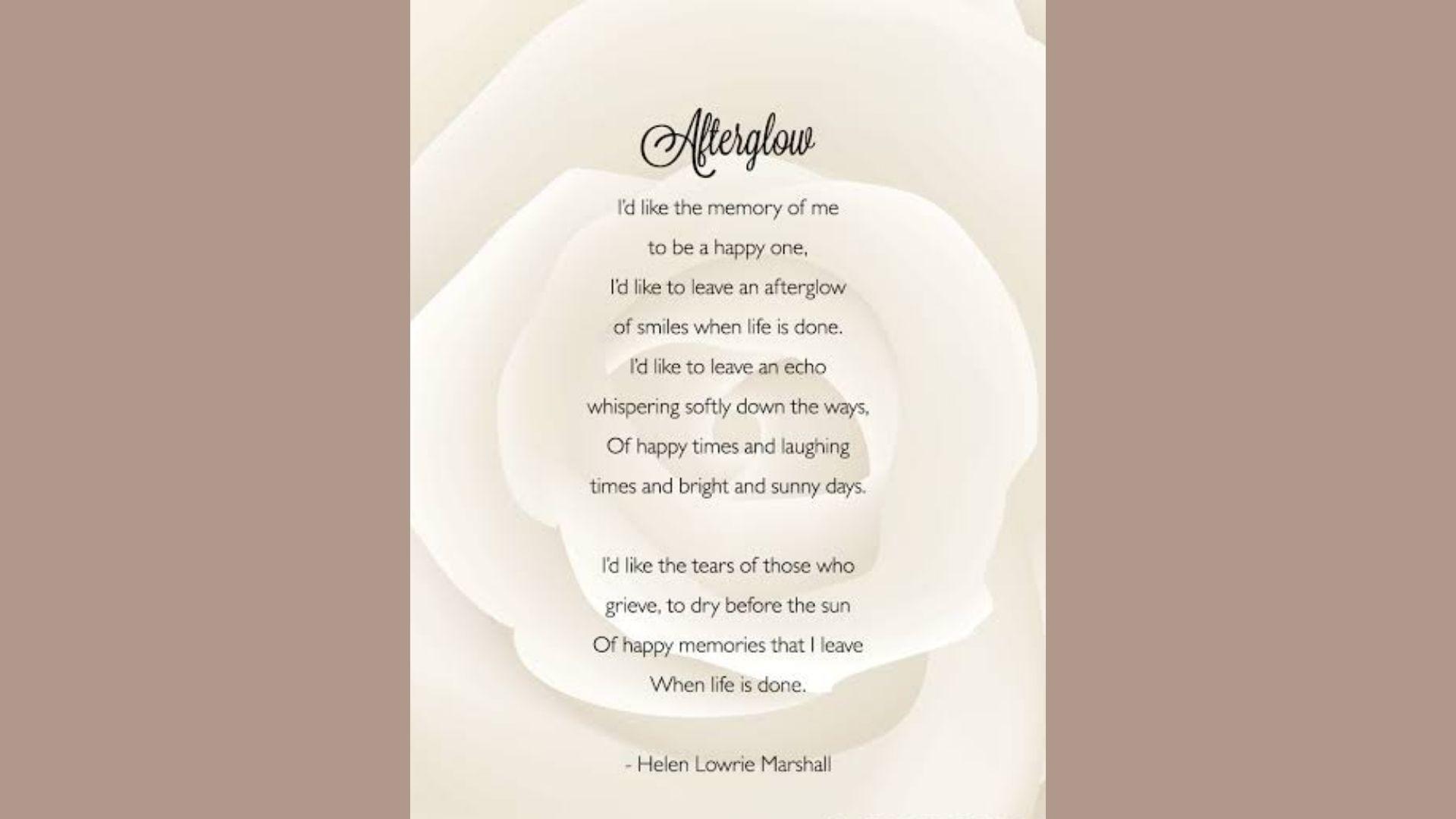
Losing someone you love is hard. Finding the right words to say goodbye is harder. That's where the Afterglow poem can help.
This article covers the full poem, its meaning, and why so many people, including funeral celebrants, choose it for funerals and memorials.
You'll learn what the poem says about love, memory, and comfort. We'll also look at where and how to use it, from readings to keepsake cards.
By the end, you'll know exactly how to use this poem for your own tribute.
Overview
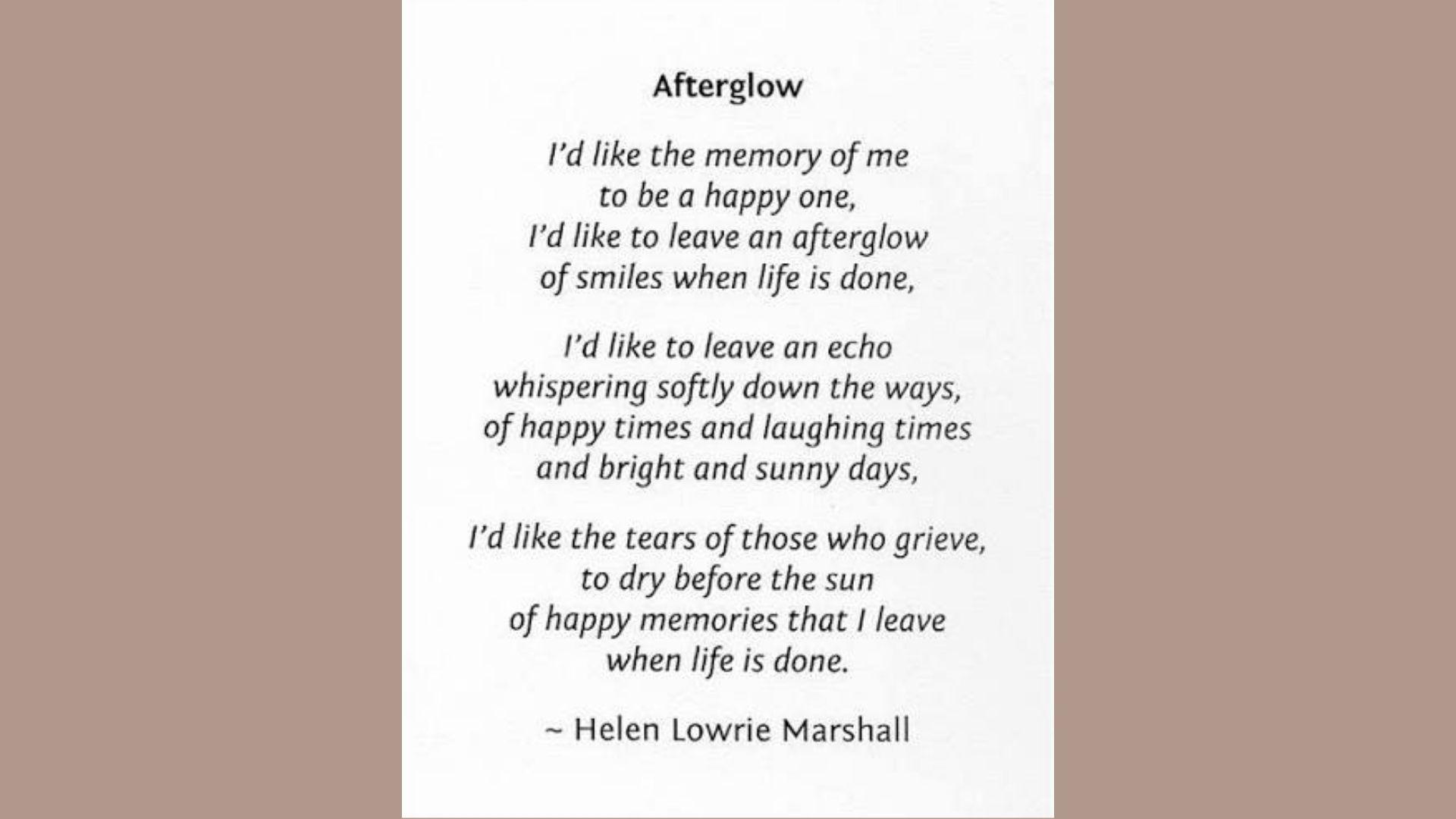
Many families choose it because it feels gentle, not heavy.It doesn't dwell on sadness. Instead, it focuses on the warmth a person leaves behind after they pass, through smiles, sunny days, and soft echoes of memory.
This poem works well for readings, cards, and tributes. Below, we'll break down its meaning, its background, and the best ways to use it during a loss.
Meaning of the Afterglow Poem
The poem speaks softly about love that outlasts death itself.
A Message of Love and Lasting Memories
The poem tells readers that love does not stop when a person dies. It stays, quiet and warm, in the people left behind, like an echo whispering softly down the years.
The Symbolism of "Afterglow"
An afterglow is the soft light left in the sky after the sun sets. The poem uses this image to show how a person's presence lingers after death, easing the tears of those who grieve.
Themes of Hope, Comfort, and Remembrance
The poem leans on hope, not grief. It reminds readers that happy memories bring comfort, and that love does not fade with time.
How to Use the Afterglow Poem
This poem fits many settings, from quiet readings to printed keepsakes.
Funeral Readings
Many families pick this poem for the reading portion of a funeral. A funeral celebrant can often suggest it, especially when the service is secular or when the person loved life, sunshine, and good company.
Its short lines are easy to read aloud without losing composure, and it works well inside a eulogy too.
Celebration of Life Ceremonies
Since the poem carries a hopeful tone, it fits well into celebration of life events, where the focus is on gratitude rather than sorrow.
Memorial Cards and Keepsakes
Some families print a few lines from the poem on memorial cards or bookmarks, so guests can take home a small piece of comfort.
Sympathy Messages and Tributes
A short line from the poem also works well in a card or message sent to someone who is grieving, offering quiet grief support during a hard time.
Tips for Reading the Afterglow Poem Aloud
A few small steps can help the reading feel calm and steady during a hard moment.
Practice Before the Service
Read the poem out loud a few times at home. This helps you get used to the words, so you don't stumble when it matters most. Reading in front of a mirror or to a family member can also help build confidence.
Pace Yourself and Use Pauses
Read slowly. Short pauses between lines give the words room to settle, and they give you a moment to breathe. Rushing through the poem can make it harder for listeners to take in the meaning.
Handling Emotions While Reading
It's normal to feel emotional while reading. Keep a tissue nearby, take a breath if needed, and remember that pausing is okay. No one will mind if you need a second to collect yourself.
Choosing Who Should Read It
Some families ask a close friend or relative to read the poem. Others prefer to have the funeral celebrant read it, especially if emotions may run high. Either choice is fine, as long as the reader feels comfortable.
Speak Clearly and at a Steady Volume
Try to keep your voice loud enough for everyone in the room to hear. Speaking clearly matters more than speaking perfectly. A steady, calm tone often carries more meaning than a rushed one.
Make Eye Contact When Comfortable
Looking up from the page now and then can help the reading feel more personal. This isn't required, but it can make the words feel more connected to the people listening.
Have a Backup Copy of the Poem
Print the poem in a larger font or bring an extra copy. This helps in case of nerves or if the original copy gets misplaced before the service.
Consider a Rehearsal Walkthrough
If possible, visit the service location beforehand and read the poem there. Getting used to the space, the microphone, or the seating can make the actual moment feel less overwhelming.
It's Okay to Ask for Help
If reading feels too hard, it's okay to ask someone else to step in, even at the last minute. The goal is for the poem to be shared, not to add pressure during an already difficult day.
Death Is Nothing at All

This is another well-known poem often compared to Afterglow for its comforting tone.
Written by Henry Scott Holland, this poem takes a different approach. It speaks as if the person who died is simply in the next room, still close, still present.
Like Afterglow, it avoids heavy sadness and instead offers calm reassurance.
Many people place both poems side by side in memorial programs because they share a similar message: death does not erase connection.
About the Afterglow Poem

A quick look at the woman who wrote this poem and why it stayed popular.
Helen Lowrie Marshall was an American poet known for writing about everyday feelings in plain, simple language.
Her poems often focused on love, family, and loss, and Afterglow is one of her most read pieces.
The exact date it was written isn't widely recorded, but it became known through poetry collections in the mid-1900s and has been shared at services ever since.
Its short length and gentle tone make it easy to use. It doesn't require heavy explanation, and its message feels comforting to people of many backgrounds and beliefs.
Conclusion
Grief is never simple, but the right words can bring a little peace. The Afterglow poem has done that for many families, including at services I've personally attended and read at myself.
If you're planning a tribute, this poem is a gentle, honest choice.
Try reading it aloud before the service, so it feels natural when the moment comes. If this article helped you, share it with someone who might need it, or leave a comment below with your own thoughts on the Afterglow poem.
Frequently Asked Questions
What is the Afterglow poem about?
It's about love and memory lasting beyond death. The poem compares a person's presence to a soft glow that remains after they're gone.
Who wrote the Afterglow poem?
Helen Lowrie Marshall wrote the poem. She was known for writing simple, heartfelt poems about love, family, and loss.
Is the Afterglow poem good for funerals?
Yes, it's a common choice for funeral readings, and funeral celebrants often suggest it for secular services. Its short length and gentle tone make it easy to read aloud.
Can I use the Afterglow poem on a memorial card?
Yes, many families print a few lines on memorial cards or keepsakes as a small, comforting reminder for guests.
How is the Afterglow poem different from Death Is Nothing at All?
Afterglow uses the image of light to describe lasting memory. Death Is Nothing at All speaks of the person as simply being nearby, still present.