

Have you ever wondered whether Remember Me poem is really about holding on to grief or learning how to move forward?
This gentle and comforting poem talks about love, loss, remembrance, and acceptance in a way that continues to touch readers of all ages.
In this article, you’ll learn the poem’s meaning, its key message, major themes, literary devices, and the deeper lesson Christina Rossetti wanted to share.
We’ll also look at why this heartfelt poem remains one of the most meaningful works about remembering someone after they are gone.
I have explained many classic poems in simple language, and this guide is designed to help you understand Remember clearly without confusing literary terms. Let us get started.
Meaning of Remember Me Poem

This section explains the poem’s central idea in simple words so you can understand what Christina Rossetti was really trying to say.
Short and Simple Meaning:
At its heart, Remember Me poem is about love, loss, and accepting that life must go on after someone is gone.
At first, the speaker asks to be remembered after death, but by the end of the poem, she realizes that it is more important for the person she loves to live happily than to remain sad because of her memory.
Here are the poem’s main ideas:
- Love continues even after separation or death.
- Remembering someone is meaningful, but healing is equally important.
- Letting go of grief is an act of love, not forgetting.
Think of it this way. If someone truly cares about you, they would rather see you smiling than carrying sadness forever. That is the gentle message Rossetti leaves with her readers.
Full Text of Remember Me Poem
This section introduces the original poem so you can read it before exploring its meaning and message.
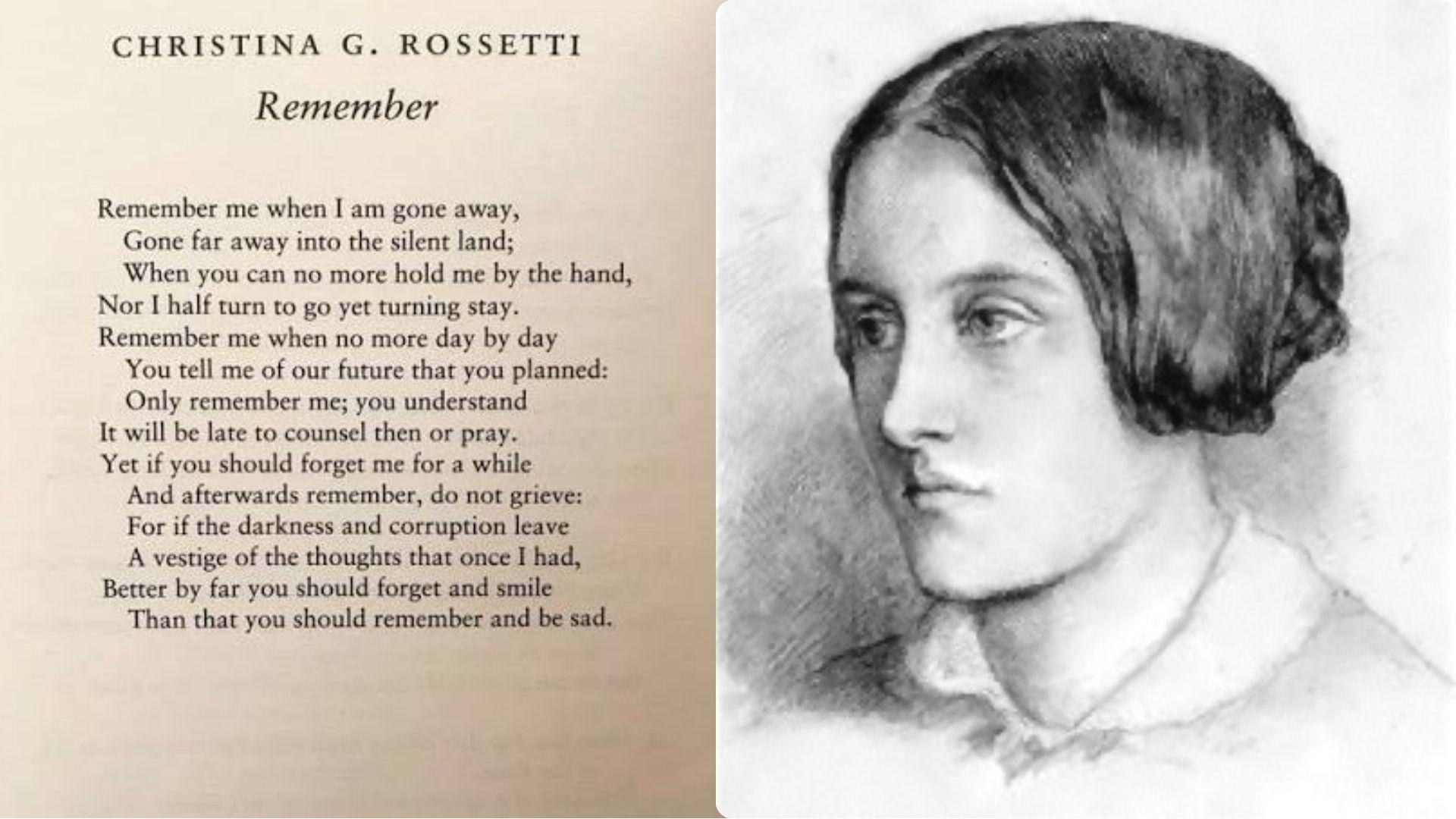
Remember me when I am gone away,Gone far away into the silent land;When you can no more hold me by the hand,Nor I half turn to go yet turning stay.
Remember me when no more day by dayYou tell me of our future that you planned:Only remember me; you understand It will be late to counsel then or pray.
Yet if you should forget me for a whileAnd afterwards remember, do not grieve:For if the darkness and corruption leaveA vestige of the thoughts that once I had,
Better by far you should forget and smileThan that you should remember and be sad.
In this sonnet, Rossetti reflects on parting, memory, and love with quiet honesty. It follows the Petrarchan, or Italianate, sonnet form, written in iambic pentameter with the rhyme scheme ABBAABBACDDECE.
That tight, traditional structure gives the poem its calm, steady voice even as it deals with death.
While the poem begins by asking to be remembered, it ends with a compassionate message that it is better to find peace and happiness than to remain trapped in sorrow.
The shift happens right at line nine, at the word “Yet,” a turn (sometimes called a volta) where the speaker’s request changes direction.
Key Message of the Poem
This poem carries a touching message about love, remembrance, and learning to move forward after loss.
Through gentle and thoughtful words, Christina Rossetti shows that true love is not about holding on to grief but about wishing peace and happiness for the people we care about.
Love Continues Beyond Separation
One of the poem’s central messages is that love does not end when people are separated by death. Although the speaker asks to be remembered, the emotional bond remains even when physical presence is gone.
Rossetti suggests that love can continue through memories, kindness, and the lasting impact people have on one another’s lives.
Healing Is More Important Than Endless Grief
As the poem progresses, the speaker changes her request. Instead of asking to be remembered forever, she says it is better to forget and smile than to remember and remain sad.
Rossetti reminds readers that healing is not a sign of forgetting or loving less. It is a natural and healthy part of life.
True Love Is Selfless
The poem also shows that genuine love places another person’s happiness above personal wishes.
The speaker wants her loved one to find peace, even if that means some memories fade over time. This selfless perspective makes the poem comforting rather than tragic.
It also puts Remember in the same company as other well-loved poems about loss, such as Mary Frye’s “Do Not Stand at My Grave and Weep,” which offers a similar kind of comfort to the grieving.
Memories Should Bring Comfort
Rossetti encourages readers to treasure memories without allowing them to become a source of constant sorrow.
Remembering someone can bring warmth, gratitude, and peace instead of sadness. The poem reminds us that love is honored not only by remembrance but also by living life with hope and happiness.
Themes in Remember Me Poem
The poem finds several timeless themes about love, memory, loss, and acceptance.
Through its gentle tone, Christina Rossetti shows that remembering someone and moving forward can exist together without diminishing love.
As an elegy, a poem written to face death and loss, it stands out for offering comfort instead of despair.
Love and Remembrance
The strongest theme in the poem is the lasting nature of love. The speaker wishes to be remembered after she is gone because memories keep emotional bonds alive.
However, Rossetti also shows that love is not measured by constant mourning. True remembrance comes from holding someone in your heart, even as life continues.
Loss and Acceptance
The poem gently finds the reality of loss while encouraging acceptance. The speaker understands that separation through death is inevitable, but she does not want grief to last forever.
Instead of resisting the natural process of healing, Rossetti accepts it with compassion and encourages readers to do the same.
Selfless Love
As the poem progresses, the speaker places her loved one’s happiness above her own desire to be remembered.
She realizes that it is better for someone to smile and live peacefully than remain trapped in sadness. This selfless attitude converts the poem from a farewell into a comforting expression of unconditional love.
Memory and Healing
The poem suggests that healing does not erase love or respect for someone who has passed away. Memories can remain meaningful while allowing space for joy and hope.
Rossetti reminds readers that moving forward is not a betrayal of the past but a natural part of honoring life and the people we have loved.
Literary Devices Used in the Poem
Christina Rossetti uses graceful literary devices to express deep emotions with simple language.
These techniques help readers understand the poem’s message about remembrance, love, loss, and acceptance while creating a calm and comforting tone.
Symbolism
The “silent land” is the poem’s strongest symbol. It represents death and the unknown beyond life without describing it directly. It creates a peaceful image rather than a frightening one.
Throughout the poem, memories also become symbolic of the lasting connection between loved ones, showing that love can continue even after physical separation.
Repetition
Rossetti repeats the word “remember” several times, making it the emotional center of the poem. This repetition emphasizes the speaker’s wish to be remembered while also highlighting the importance of memory in preserving love.
As the poem progresses, the repeated word gains a deeper meaning when the speaker finally accepts that forgetting may sometimes be kinder.
Contrast
The poem uses contrast to show the speaker’s emotional growth. It begins with a request to always be remembered but ends by saying it is “better by far” to forget and smile than to remember and be sad.
This shift from remembrance to acceptance strengthens the poem’s compassionate message about healing after loss.
Imagery
Rossetti creates gentle imagery through phrases such as the “silent land,” holding hands, and shared plans for the future. These images allow readers to picture both the closeness of the relationship and the sadness of parting.
The peaceful imagery softens the subject of death and helps create the poem’s calm, reflective atmosphere.
About the Poet

Understanding the poet helps explain the emotions behind the poem.
Christina Rossetti was one of the most celebrated English poets of the Victorian era. Born on December 5, 1830, in London, she became known for writing about love, faith, loss, nature, and human emotions with honesty and grace.
Her Anglican faith shaped much of her work, giving her a calm, hopeful view of death rather than a fearful one.
Her brother, the painter Dante Gabriel Rossetti, was a leading figure of the Pre-Raphaelite Brotherhood, and the two grew up in a household full of art and poetry.
Her poems often talk about deep feelings through simple language, making them accessible while carrying lasting emotional impact.
Some of her best-known works include Goblin Market, In the Bleak Midwinter, and Remember, which first appeared in her 1862 collection Goblin Market and Other Poems.
Rossetti’s ability to express sorrow alongside hope has made her poetry meaningful to generations of readers around the world.
Why This Poem Still Matters Today
Although Remember was written in the nineteenth century, during a period when Victorian mourning customs shaped how people grieved in public and private, its message continues to comfort readers today.
Everyone experiences separation, loss, or the fear of saying goodbye at some point in life. Rossetti reminds us that it is natural to cherish memories, but it is equally important to allow ourselves and others to heal.
In a world where many people struggle with grief, her gentle words offer reassurance that moving forward does not mean forgetting someone we love.
The poem encourages compassion, emotional acceptance, and the understanding that love can remain even as life changes.
It’s a fitting reason the poem still gets read and discussed every National Poetry Month, and why its timeless message about remembrance and healing continues to speak to readers across generations.
Conclusion
Remember gently reminds us that love is not measured by how long we grieve but by the care we carry in our hearts.
Every time I read this poem, I am reminded that some of the kindest words we can offer are permission to heal and smile again.
If this guide helped you understand the Remember Me poem better, take a moment to reflect on its message in your own life. I’d love to hear your thoughts, so leave a comment below, share this article, or try more poetry guides.
Frequently Asked Questions
Why does the speaker change her mind in the poem?
At first, the speaker asks to be remembered after death. Later, she realizes that it is better for her loved one to smile and heal than to remain sad because of her memory.
What does the “silent land” symbolize?
The “silent land” symbolizes death or the unknown after life. Rossetti uses this gentle phrase to discuss death in a peaceful and comforting way.
What is the most beautiful poem about death?
Beauty in poetry is deeply subjective, but “Because I could not stop for Death” by Emily Dickinson is widely considered a masterpiece.