

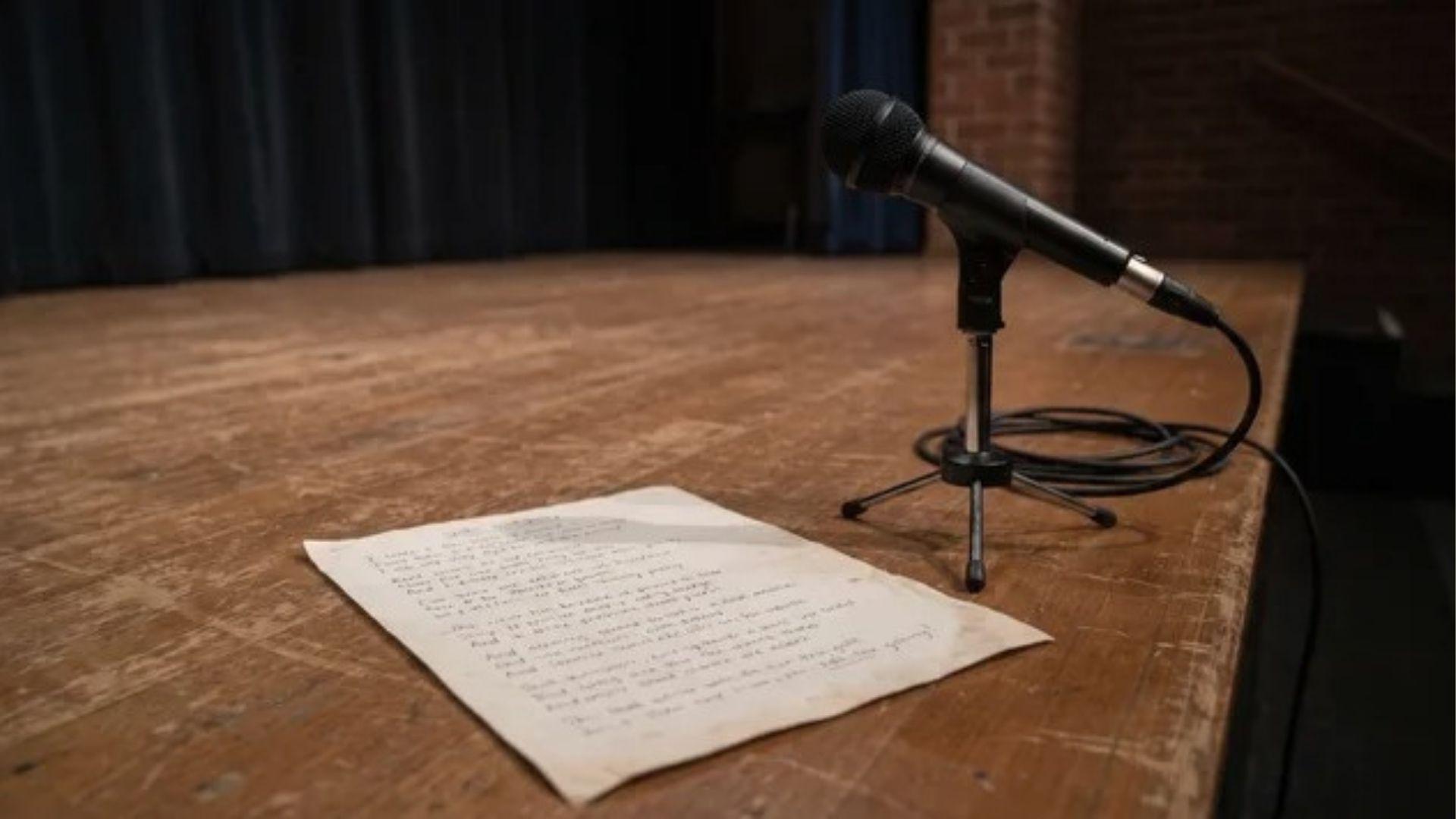
Spoken word poetry is one of those art forms that stops you mid-scroll. A voice in a room, no music, no props, just words hitting in real time.
Folks who encounter it for the first time feel it before they understand it. Is it poetry? Theatre? Something in between?
Walking through what spoken word actually is, what lives inside it, and why it lands the way it does will change how you hear it forever.
What Is Spoken Word Poetry?
Spoken word poetry is an oral performance art where poems are composed for live delivery rather than silent reading.
Most poetry is written for the page, built around the elements of poetry that work on the eye and the mind. Spoken words are built differently.
The pauses, the volume shifts, the eye contact are not stylistic choices.
They are part of how the poem works. Remove the performance and you have an incomplete piece.
The audience shapes the meaning too. A collective silence or a burst of finger-snaps feeds back into the performance in real time.
At the edges, where spoken word crosses into theatre or music, the lines blur.
The form has always been comfortable living between categories.
What Does Spoken Word Poetry Include?
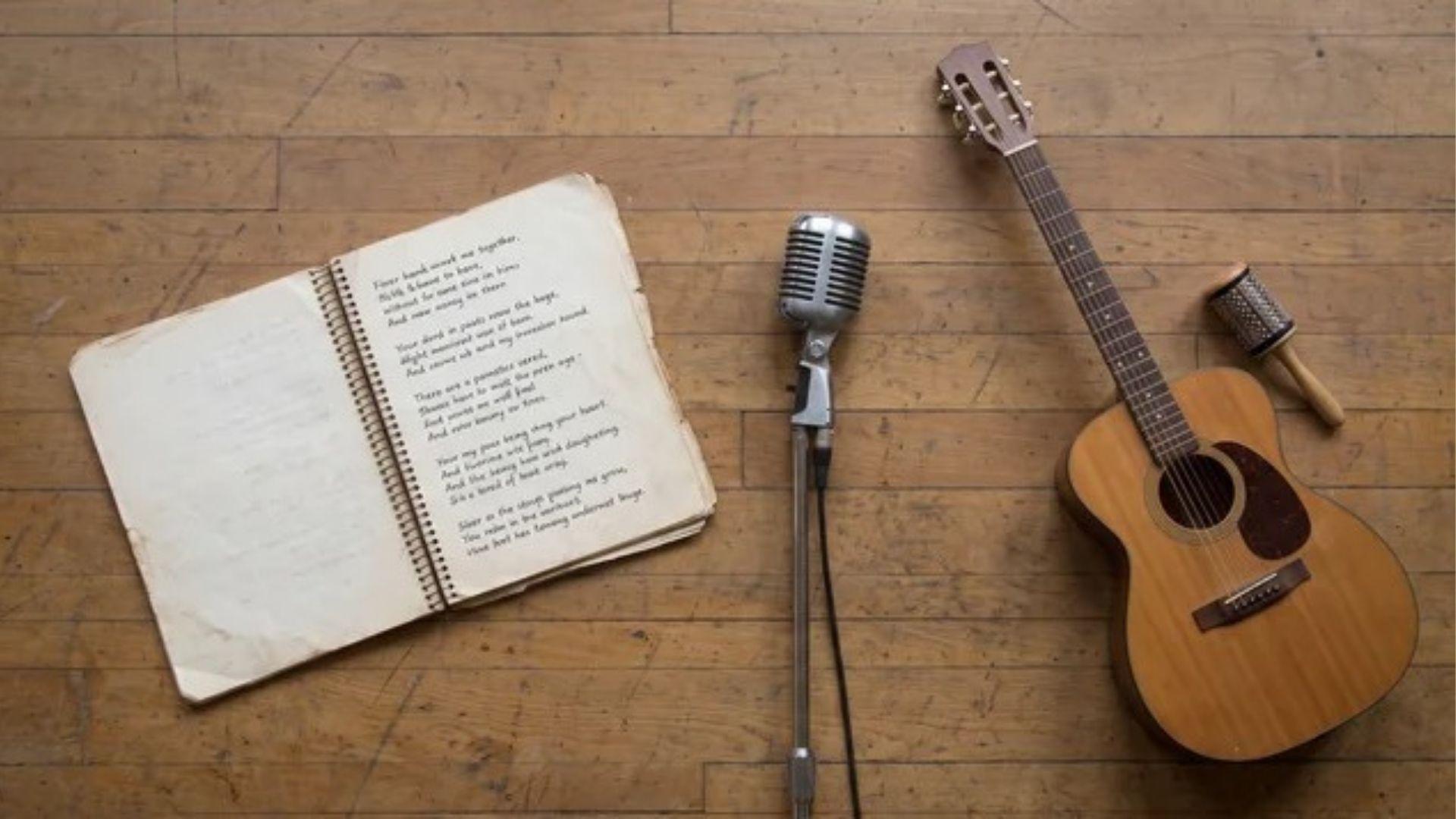
Spoken word is a broad category, not a single style. What ties every form within it together is one thing: the piece was built from the start to be heard, not read.
Slam Poetry
Slam poetry is spoken word in a competitive format. Poets perform original pieces before a live audience, and a panel of judges scores each performance, typically on a scale of zero to ten.
The scoring covers more than the words. Delivery, timing, and stage presence all factor in. Most events cap pieces at three minutes.
Slam gave spoken word much of its mainstream visibility, but it is one format within the larger form, not a synonym for it and exploring slam poetry topics shows just how wide the range can get.
Jazz Poetry and Other Forms
Jazz poetry pairs spoken verse with live jazz instrumentation. The rhythm of the words is written to move alongside the music, not just over it.
Performance poetry sits nearby. It leans into theatrical elements like movement, costume, and staging. Hip-hop carries spoken word roots too, with its emphasis on rhythm, wordplay, and oral delivery.
Each of these is a branch. The spoken word is the tree.
What is Not Considered a Spoken Word Poetry
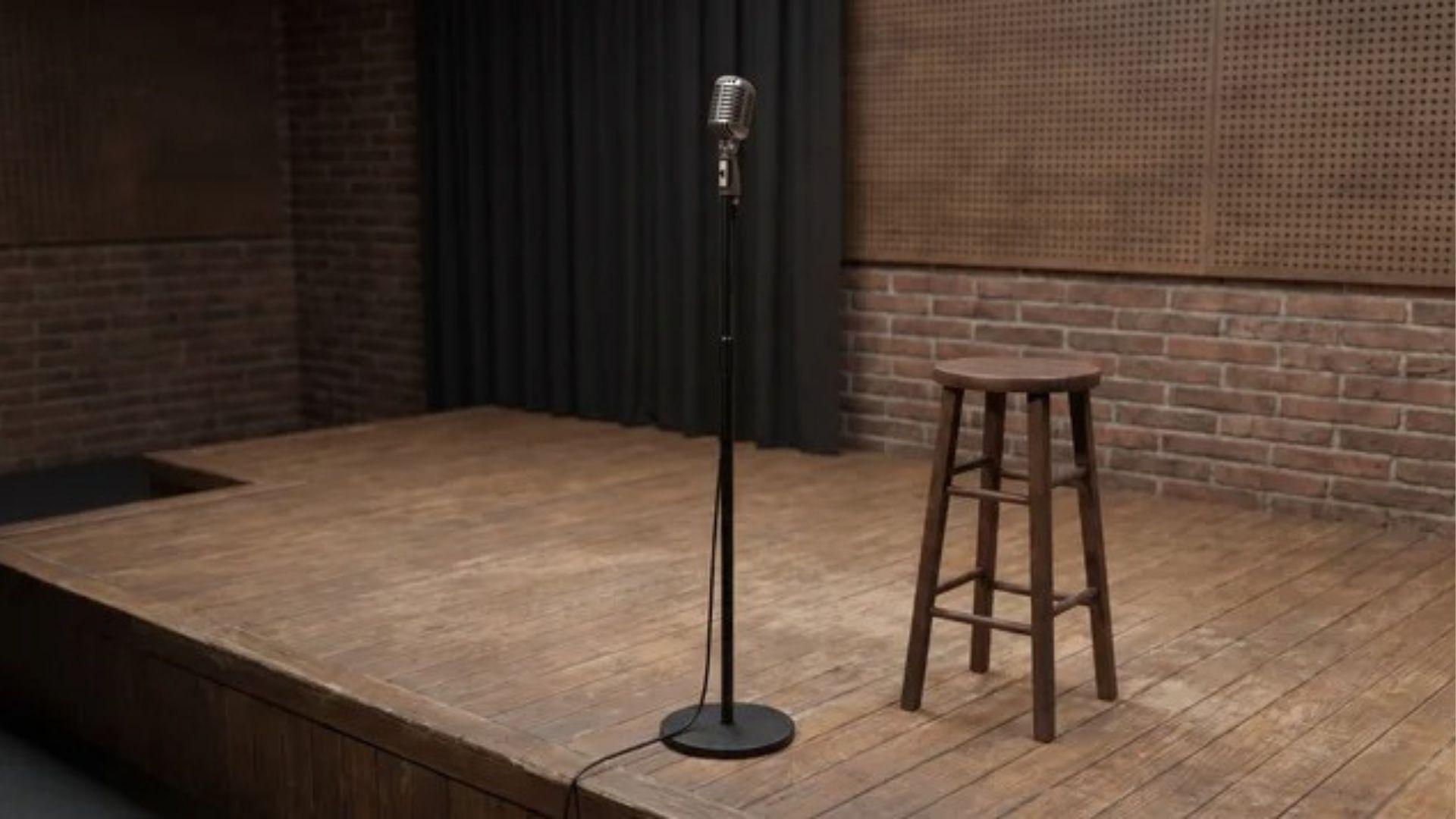
Spoken word poetry is not simply any poem delivered aloud, and it is not interchangeable with slam poetry.
The first confusion is easy to fall into. If someone reads a Shakespeare sonnet from a stage, that is a performance.
It is not a spoken word. What makes something a spoken word is where it started, not where it ended up.
The piece has to be written with live delivery as the intention from the beginning. Origin is everything here.
The second confusion is more consequential. Slam poetry sits inside spoken word, but spoken word does not sit inside slam. The relationship only runs one direction.
When people treat them as the same thing, they end up with a distorted picture of the form.
Spoken word is used in schools, therapy settings, and community spaces where competition would be completely out of place.
It is collaborative and expressive long before it is ever competitive. Slam is one room in a much larger house.
Why Spoken Word Poetry Matters
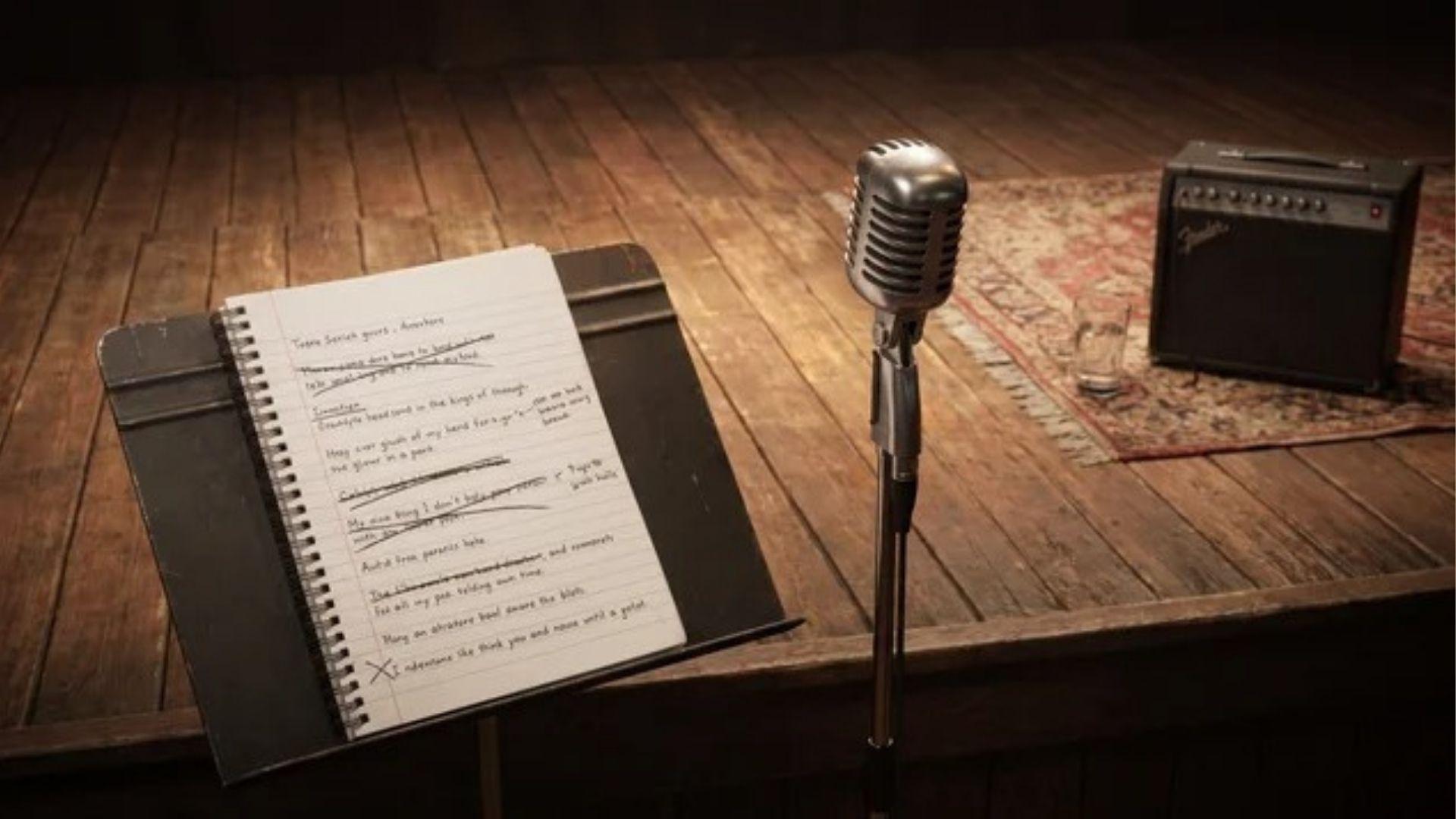
Spoken word's significance is tied directly to its format. The live performance context doesn't just frame the meaning. It generates it.
When a poet stands in front of an audience, there is no revision available. The words land or they don't.
The audience responds in real time, and that response becomes part of the moment itself.
That kind of immediacy changes what a poet is willing to say and how they choose to say it.
This is especially true when the subject is personal or political. On the page, vulnerability is implied. In spoken word, it is present.
The poet's voice shaking, or steady when you expect it to shake, carries information that no printed line can hold.
Recorded spoken words work differently. The live feedback loop is gone.
But the craft remains. A piece written for performance still moves differently than one written for the page, even through a screen.
That gap is what makes the form worth understanding on its own terms.
Wrapping Up
Once you understand how spoken word poetry is built, you start hearing it differently. The pauses stop feeling like silence.
The eye contact stops feeling like a performance trick. It all becomes intentional. That shift in perception is worth more than any definition.
Spoken word has been used in classrooms, protest movements, and therapy rooms because it reaches people where they are.
If you have never watched a live spoken word performance, find one. Local poetry slams and open mic nights are easier to find than most people think.
Frequently Asked Questions
How long does a spoken word poem have to be?
There is no fixed length requirement outside competition formats. Slam events typically cap pieces at three minutes. Outside of slam, spoken word poems range from under a minute to longer narrative pieces.
What are some famous spoken word poems?
Sarah Kay's "If I Should Have a Daughter," Gil Scott-Heron's "The Revolution Will Not Be Televised," and Andrea Gibson's "I Sing the Body Electric" are among the most referenced works in the form..
What themes does spoken word poetry typically explore?
Personal experience, identity, race, and social justice appear most frequently. The live format naturally draws out subjects that carry emotional weight, things the poet needs an audience to witness, not just read.
Can spoken word poetry be written down?
Yes. Most spoken word poets write their pieces before performing them. The difference is that the written version is a script, not the finished work. The poem completes itself in performance. Reading it on a page gives you the words, but not the full experience the piece was built to create.