

You searched for “We Remember Them” because you want to understand it clearly. This poem looks simple, but it carries real emotional weight.
I have studied poetry and grief literature for years, and I will make this easy to follow.
In this article, I will walk you through the full poem text, what it actually means, its themes and literary devices, the structure and form, and the poets behind it.
No jargon. No confusion. Just clear, honest explanations that actually help.
By the end, you will understand this poem completely.
Full Text of We Remember Them
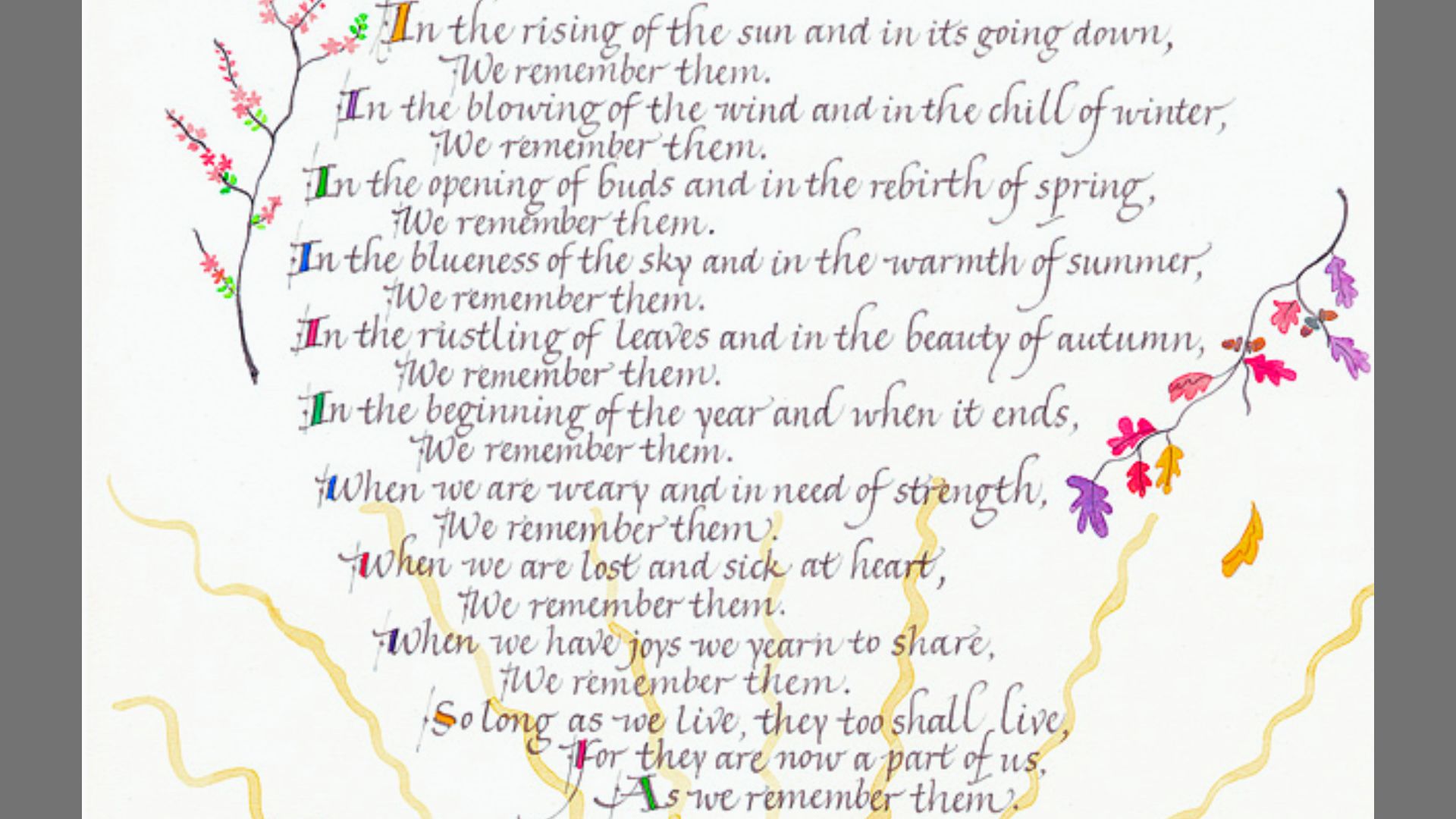
A look at the original words written by Sylvan Kamens and Rabbi Jack Riemer, exactly as they wrote them:
In the rising of the sun and in its going down,
We remember them.
In the blowing of the wind and in the chill of winter,
We remember them.
In the opening of buds and in the rebirth of spring,
We remember them.
In the blueness of the sky and in the warmth of summer,
We remember them.
In the rustling of leaves and in the beauty of autumn,
We remember them.
In the beginning of the year and when it ends,
We remember them.
When we are weary and in need of strength,
We remember them.
When we are lost and sick at heart,
We remember them.
When we have joys we yearn to share,
We remember them.
So long as we live, they too shall live, for they are now a part of us,
as we remember them.
Meaning of We Remember Them
What this poem is really saying, in plain and simple terms.
Short and Simple Meaning
The poem is a memorial reading spoken by those grieving the loss of loved ones. Each line ties remembrance to a moment in everyday life, a changing season, a personal struggle, or a moment of joy.
The simple message is this: the people we love do not disappear when they die. They live on inside us because we carry them with us.
Detailed Meaning of the Poem
The poem opens with natural world images like sunrise, wind, and the changing seasons. The poets connect remembrance to cycles that never stop. Nature keeps moving, and so does memory.
The repetition of “We remember them” builds a rhythm that feels like a ritual. It mirrors how grief works, returning in ordinary moments you did not expect.
The middle section moves into personal human experience. Weariness, joy, difficult decisions, and achievement are all named. Memory does not only visit us in quiet moments. It shows up in all of life.
Key Message in We Remember Them
The key message is that grief and memory are acts of love that keep the dead alive. The poem focuses on the living, telling us that by remembering, we extend the presence of those we have lost into our daily lives.
Themes in We Remember Them
The big ideas that run through this poem and make it so meaningful.
Grief and Memory
The most central theme is the relationship between grief and memory. The poem does not treat grief as something to move past or overcome. Instead, it presents remembrance as an ongoing, active practice.
Every moment in life, sunrise, winter, a difficult decision, a personal achievement, becomes an opportunity to remember. This is a healthy and human way to think about loss. It says that grief is not a problem to be solved. It is part of how we love.
The Continuity of the Human Spirit
The poem makes a quiet but powerful argument: the people we lose are not entirely gone. They live on in the people who remember them.
This theme is not tied to a specific religious belief. It is broadly human. This poem offers comfort through the idea of legacy and presence. The dead live through the memories, values, and love they left behind.
Nature as a Mirror for Human Experience
The first half of the poem uses nature to frame remembrance. Seasons change, the sun rises and sets, the wind blows. These are things that happen whether we notice them or not.
The poets use this to show that grief is just as natural. It arrives with the seasons. It returns like the cold of winter and the warmth of summer. By placing remembrance inside the rhythm of the natural world, the poem makes grief feel less isolating and more universal.
Communal Mourning
The poem is written in the first person plural. It says “we,” not “I.” This is a deliberate choice. The poem was written for communal recitation, particularly in Jewish memorial services.
By saying “we,” it invites everyone present to grieve together. Loss is not only personal. Communities lose people too. This poem holds space for shared sorrow and shared remembrance.
Literary Devices Used in We Remember Them
The writing tools the poets used to make this poem so moving.
Anaphora
The most prominent device in the poem is anaphora, the repetition of a word or phrase at the beginning of successive lines. Almost every couplet begins with “At the” or “When we.” This creates a chant-like, rhythmic quality.
The effect is cumulative. Each repeated opening line adds weight to the next. By the time the poem ends, the repetition feels like a steady, grounding heartbeat.
Refrain
The line “We remember them” functions as a refrain throughout the poem. It appears after every two lines and again in the closing stanza.
A refrain in poetry works similarly to a chorus in music. It anchors the reader, creates emotional resonance, and reinforces the central message with each return.
Imagery
The natural images in the first half of the poem are vivid and sensory. “The blowing of the wind,” “the blueness of the skies,” “the rustling of the leaves.”
These images place the reader in real, felt moments. They make the abstract idea of memory feel grounded and concrete.
Parallelism
The poem is built almost entirely on parallel structure. Each couplet follows the same grammatical pattern.
This creates a sense of balance and order, which is comforting in the context of grief. It suggests that even in loss, there is structure and continuity.
Personification and Symbolism
The seasons are used symbolically throughout the poem. Spring represents new life and rebirth. Winter represents hardship and endings. Autumn suggests transition.
These are not just descriptions of weather. They are symbolic mirrors for the stages of grief and the passage of time.
Form, Structure, and Rhyme Scheme
How the poem is built, and why those choices matter.
Free Verse
“We Remember Them” is written in free verse. It does not follow a fixed meter or rhyme scheme. This was a deliberate choice. Free verse allows the poem to feel like spoken language, like something being said aloud in a ceremony or gathering.
Because it was written for liturgical use, a rigid rhyme scheme would have felt forced. Free verse gives the poets flexibility to move through different images and emotions without being constrained by sound patterns.
Couplet Structure
The poem is organised almost entirely in couplets. Each pair of lines presents a new moment or setting, followed by the refrain.
This creates a call-and-response feel, which is perfectly suited to group recitation. One voice might read the first line, and the group responds with “We remember them.”
Two-Part Division
The poem splits naturally into two sections. The first section anchors remembrance in the natural world, seasons, sky, wind, and sun. The second section moves inward, into personal human experience, struggle, joy, loss, and achievement.
This two-part structure mirrors the way grief actually works. Sometimes it is triggered by something external, a change in the weather, a time of year. Other times it rises from within, during a moment of happiness or hardship.
The Closing Stanza as Anchor
The closing stanza appears twice, at the end of each section:
As long as we live, they too will live, For they are now a part of us, As we remember them.
These three lines are the emotional and philosophical heart of the poem. Repeating them gives the poem a sense of resolution and permanence. No matter what life brings, the act of remembering keeps love alive.
About the Poets
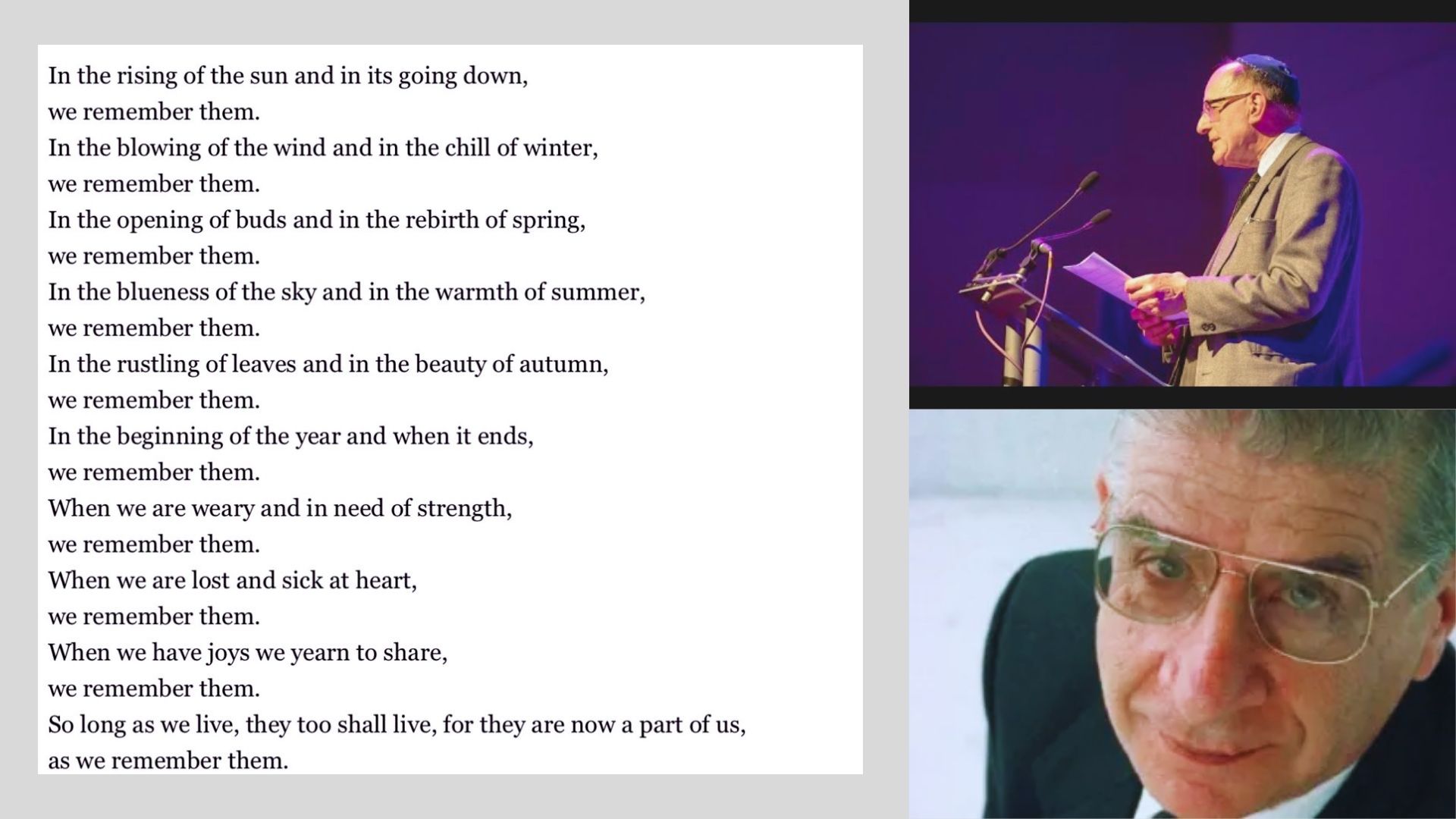
Sylvan Kamens was an American writer who contributed to Jewish liturgical literature. His work focused on bringing accessible, emotionally resonant language into memorial and religious settings. “We Remember Them” is among his most widely known contributions.
Rabbi Jack Riemer is an American rabbi and scholar who has devoted much of his career to the study and writing of Jewish memorial poetry and liturgy.
He co-edited “So That Your Values Live On,” a foundational anthology of ethical wills and letters, and has written extensively on Jewish approaches to death, mourning, and memory.
Together, Kamens and Riemer created a poem that has been read at funerals, memorial services, and Yom Kippur observances around the world. It has also been adopted widely outside of Jewish communities, used at military commemorations, hospice services, and secular memorial gatherings.
Conclusion
I hope this breakdown made “We Remember Them” feel clearer and closer. The first time I read this poem at a memorial service, I was not expecting it to hit so hard. That quiet line, “they are now a part of us,” stayed with me for days.
This poem does something rare. It turns grief into something gentle and shared rather than isolating.
If this helped you, leave a comment below and let me know your thoughts. Share this with someone who needs it today.
Frequently Asked Questions
What is the main message of We Remember Them?
The main message is that those we love continue to live through us as long as we remember them.
Who wrote We Remember Them?
The poem was written by Sylvan Kamens and Rabbi Jack Riemer for use in Jewish memorial services.
What is the tone of We Remember Them?
The tone is solemn, tender, and comforting, moving between grief and hope throughout.
Why is We Remember Them used at funerals?
Its repetitive structure and inclusive use of “we” make it well suited for communal recitation during memorial services.
Is We Remember Them a religious poem?
It was written for Jewish memorial services but is now read across many faiths and secular settings worldwide.