

What if a single poem could change the way you see your whole day?
That’s what the poems of Mary Oliver do. I read my first one on a rough day, just a few quiet lines about a grasshopper, and something in me settled.
She had that gift. Simple words. Deep meaning.
If you’re here, you’re looking for that same feeling. And I’m going to help you find it.
In this blog, I’ll walk you through her 11 most loved poems, the big themes in her work, and simple tips to read her better.
No complicated analysis. Just honest poems that real people return to, again and again.
Why the Poems of Mary Oliver Continue to Resonate
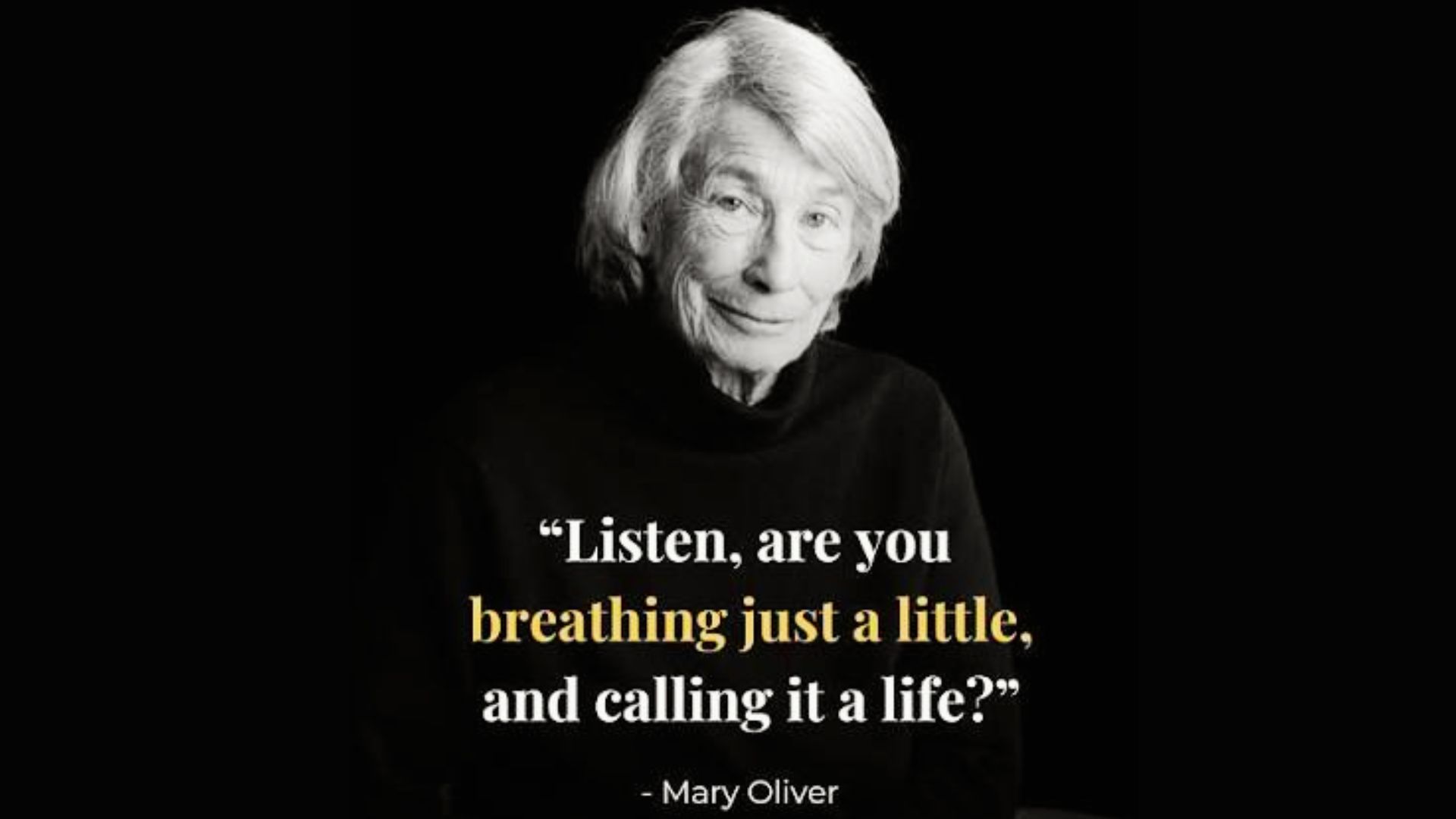
Mary Oliver had a gift for making the ordinary feel meaningful. A blade of grass. A wild goose. A summer afternoon.
Her language was simple, but her ideas were deep. That’s a rare combination.She won the Pulitzer Prize and the National Book Award.
At the time of her death in 2019, she was estimated to be the bestselling poet in the United States. That’s not a critic’s achievement. That’s a readers’ achievement.
People return to her poems when they feel lost, grateful, or just in need of a quiet moment. Her work doesn’t demand anything from you. It just invites you to slow down, look around, and ask yourself what truly matters.
List of 11 Must-Read Poems of Mary Oliver
If you’re new to her work, these are the best places to start.
1. Wild Geese

“Wild Geese” is one of the most beloved poems of Mary Oliver, and it’s easy to see why. It opens with a firm, kind reassurance: you don’t have to be perfect to belong.
The poem tells readers they are welcome in the world, exactly as they are. This message of self-acceptance hits deep. It feels like something a wise friend would say.
“Wild Geese” first appeared in her 1986 collection Dream Work, but it has taken on a life of its own since then. For many readers, this poem was the first one they truly connected with and the one they keep coming back to.
2. The Summer Day

“The Summer Day” ends with one of the most quoted lines in modern poetry. Oliver asks what you plan to do with your one wild and precious life. The rest of the poem is just as good.
She describes watching a grasshopper, noticing every small detail. It’s a poem about gratitude and paying close attention.
It reminds you that ordinary moments are not small at all. Many readers say this poem changed how they see their own lives.
3. The Journey

“The Journey” speaks to anyone who has ever needed to walk away from something that was hurting them. Oliver writes about the moment a person finally chooses themselves.
It’s not easy, she says. There will be voices trying to pull you back. But the path forward is yours to take.
This is a poem about courage and self-discovery. It doesn’t give you a map. It just tells you that moving forward is possible, and worth it.
4. When Death Comes

Most people fear death. Oliver looked at it differently. In “When Death Comes,” she writes about wanting to arrive at the end of life full: full of curiosity, full of love, full of having truly lived.
She treats mortality not as something dark, but as something to think about honestly.
The poem pushes you to ask: am I living the way I want to? It’s one of her most thought-provoking works.
5. Invitation
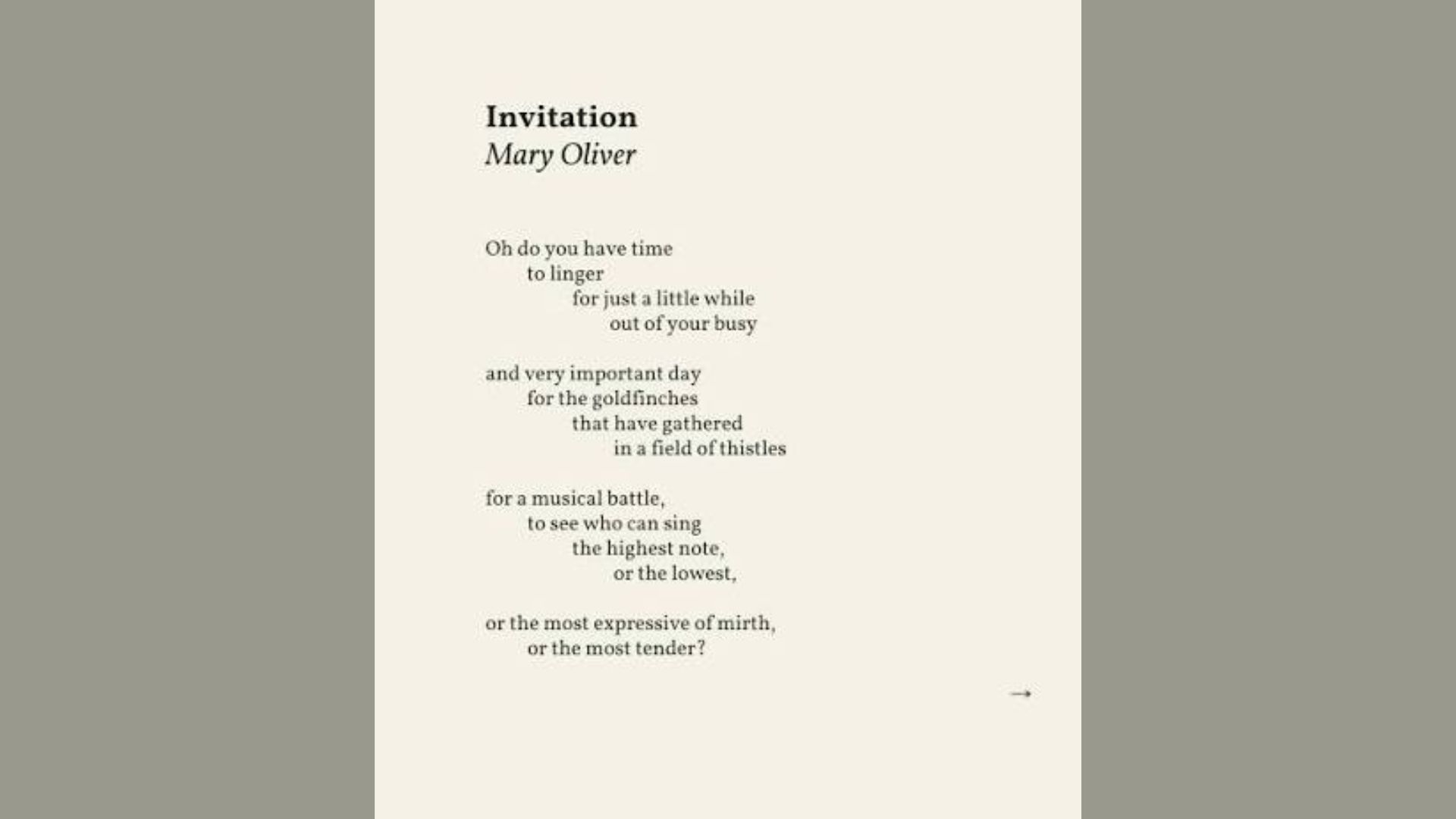
“Invitation” is a short, direct poem with a clear message: pay attention. Look at the world around you. Don’t let life pass by while you’re busy not noticing.
Oliver focuses on goldfinches gathered in a field of thistles, pointing out that even their singing contest deserves your full attention. The poem feels like a gentle nudge.
It’s especially good to read when you’re feeling disconnected or distracted. It pulls you back into the present moment.
6. Praying

In “Praying,” Oliver suggests that prayer doesn’t have to happen in a church or follow a set form. It can happen anywhere: in a field, at sunrise, in the quiet of your own thoughts.
The key is attention and gratitude. If you notice the world around you with sincerity, that itself is a kind of prayer.
This poem speaks to people who feel spiritual but don’t follow a religion. It’s open, honest, and deeply human.
7. The Swan
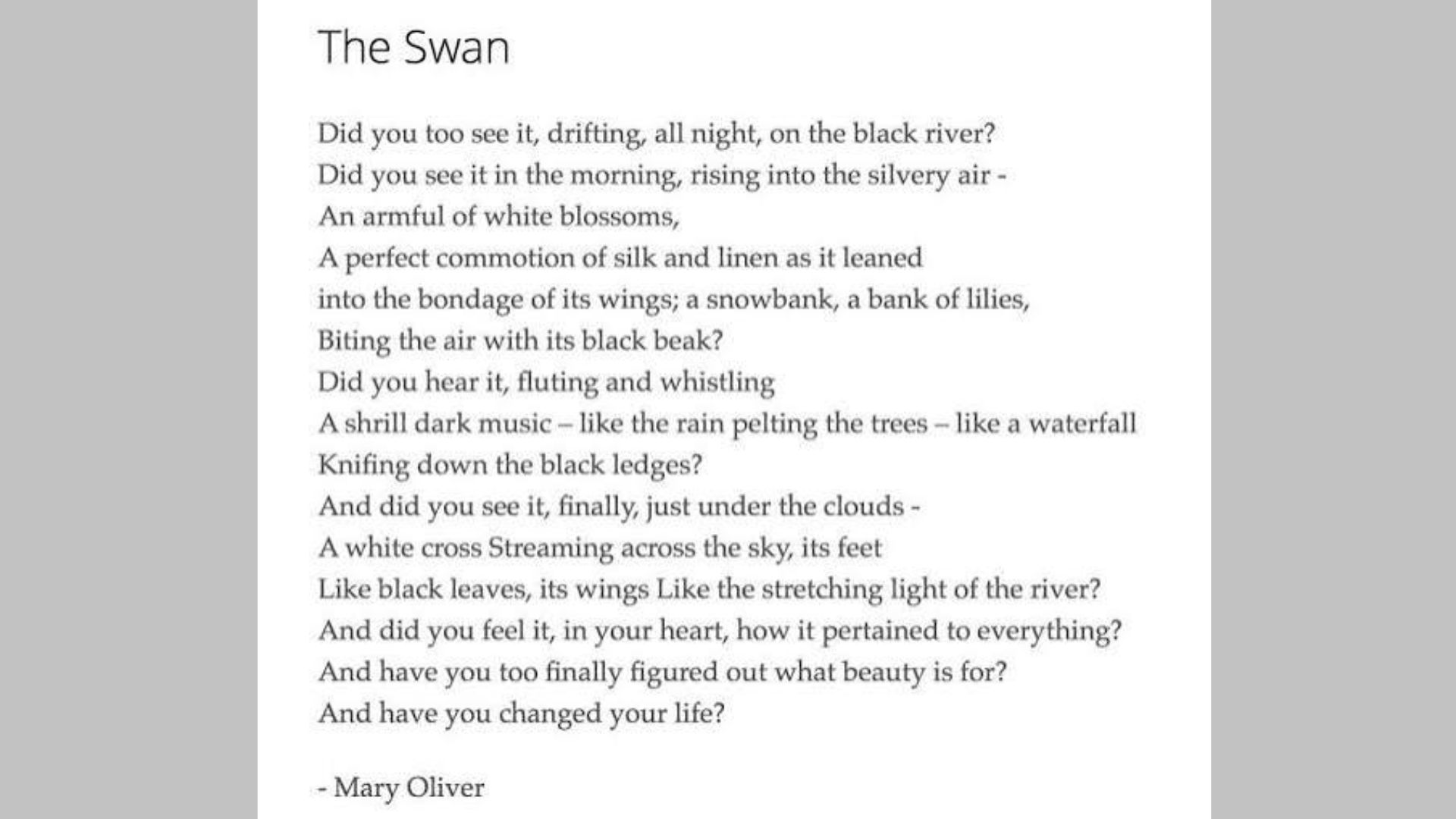
“The Swan” captures a single, breathtaking moment in nature. Oliver watches a swan and finds herself moved in a way she can’t fully explain. What makes this poem special is its use of questions.
She keeps asking, “Did you see it? Did you feel it?” That framing pulls the reader in, making the awe feel shared.
The poem is about beauty and wonder: that feeling you get when something in nature stops you cold. It’s a quiet poem, but it stays with you long after you’ve read it.
8. The Uses of Sorrow
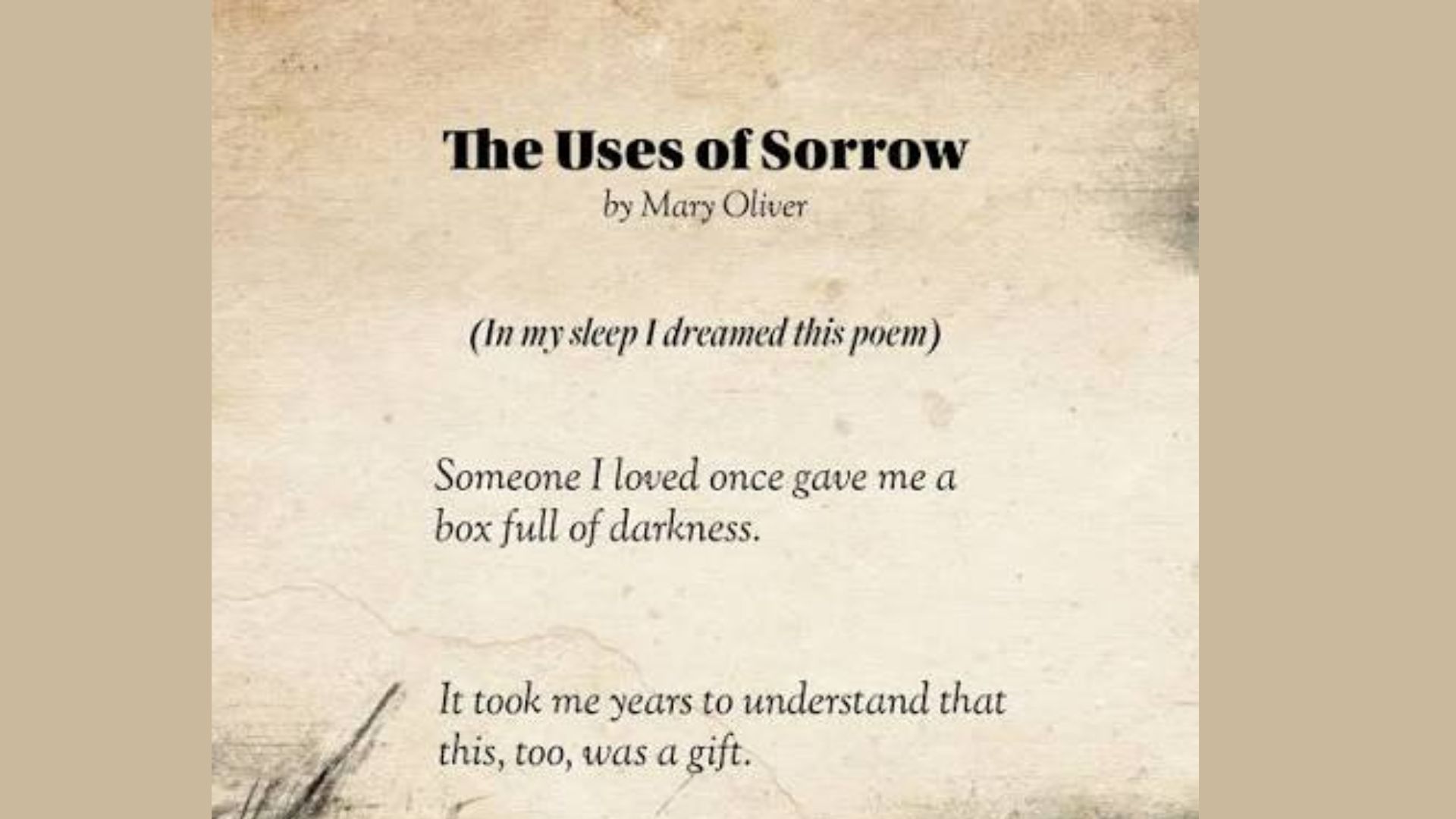
Grief is hard. Oliver doesn’t pretend otherwise. But in “The Uses of Sorrow,” she suggests that pain can teach you something. That loss doesn’t have to be wasted.
She doesn’t rush the healing process or offer easy comfort. Instead, she sits with sorrow and finds meaning in it.
This poem is often shared between people who are going through something difficult. It doesn’t fix anything, but it makes you feel less alone.
9. Starlings in Winter
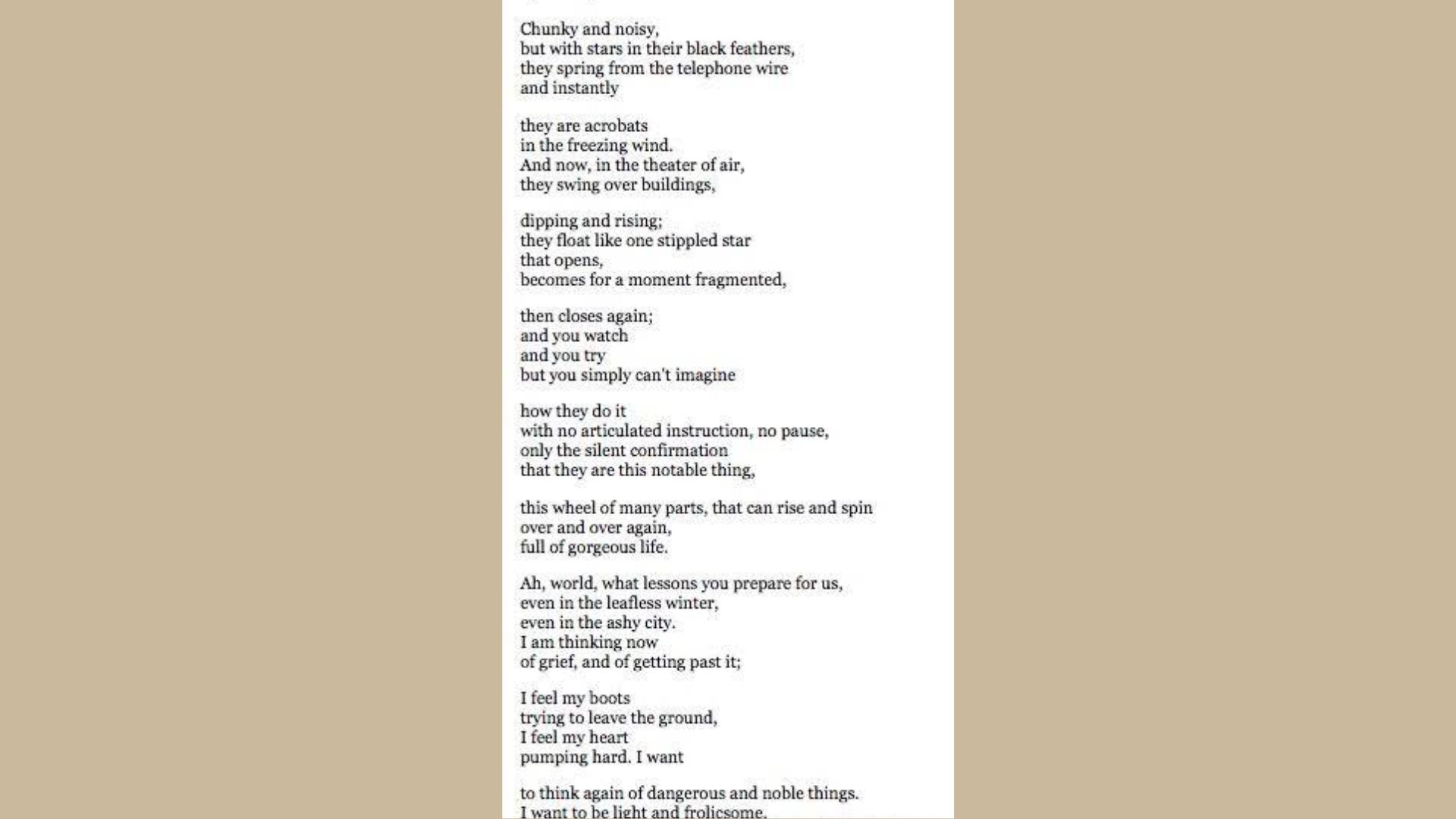
Watching a group of starlings move across the sky, Oliver finds a kind of hope. The birds are “chunky” and “noisy,” she says, not graceful or grand. But they move together: fluid, alive, free.
“Starlings in Winter” is a poem about resilience. It says: even in the hard seasons, there is beauty. Even after loss, there is movement.
This poem works well for anyone feeling stuck or worn down. It’s simple, but it carries real weight.
10. Dogfish
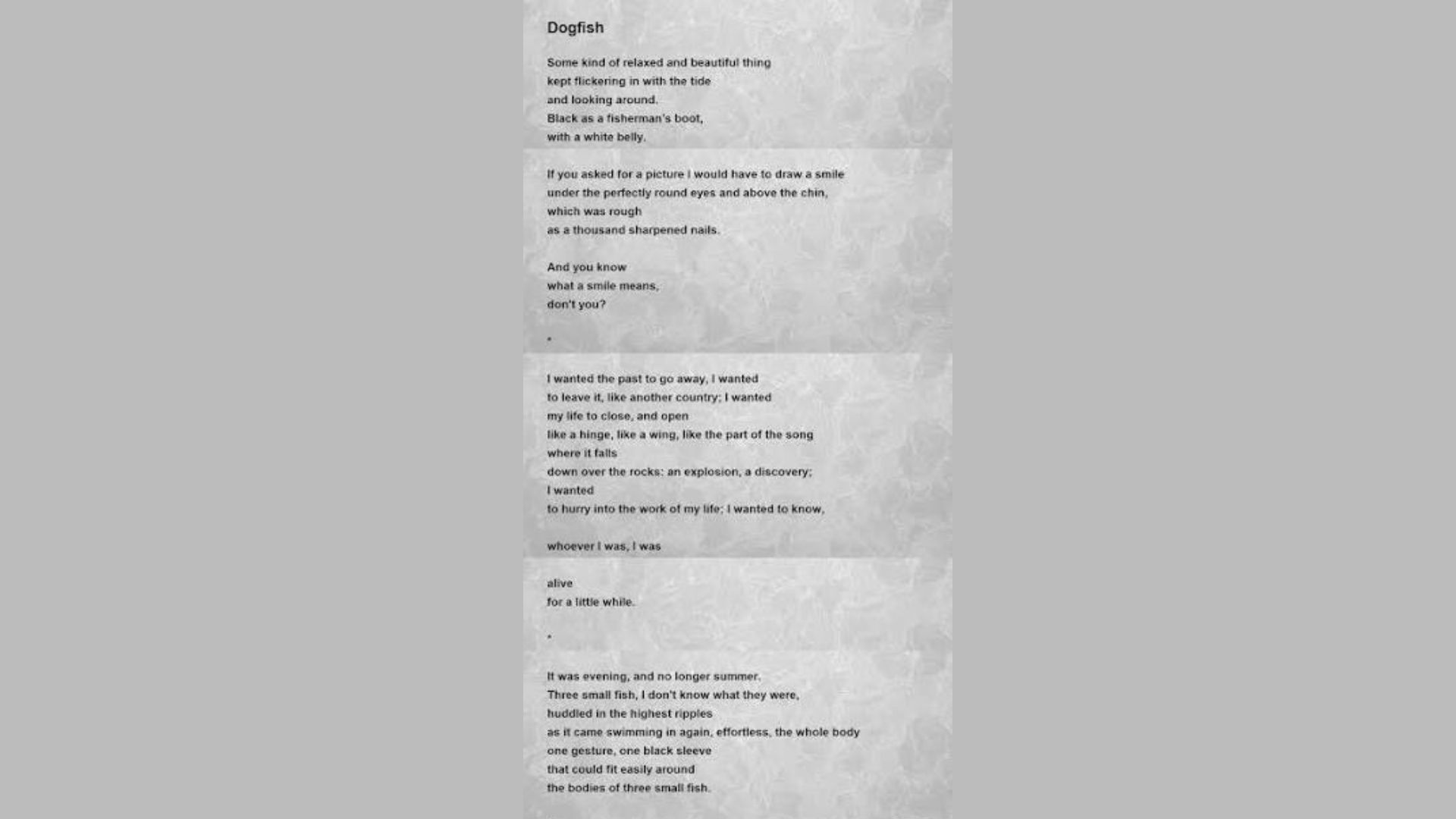
“Dogfish” is one of Oliver’s more personal poems. She writes about hard truths and hard days, the kind you can’t avoid. But she also writes about survival.
About accepting that life is messy and still choosing to live it fully. The poem deals with resilience and acceptance without being preaching.
It feels real and grounded. If you want a Mary Oliver poem that doesn’t shy away from difficulty, this is the one.
11. Don’t Hesitate

“Don’t Hesitate” is Oliver at her most joyful. The poem is a simple, direct call to embrace happiness when it comes. Don’t wait. Don’t second-guess. Joy is real, and it belongs to you.
Oliver wrote this toward the later part of her life, and it carries the weight of experience. It’s not naive happiness. It’s earned.
Readers love this poem because it gives them permission to feel good, fully and without guilt.
Common Themes Found in the Poems of Mary Oliver
Her poems circle back to the same big ideas, again and again, but in fresh ways each time.
Nature as a Source of Wisdom
Oliver didn’t just write about nature because it was pretty. She wrote about it because nature teaches. A heron standing still. A grasshopper eating. A pond at dawn.
She lived in New England for decades, and that landscape shaped every poem she made.
Like her influences Walt Whitman and Emerson, she treated the natural world as a patient, honest teacher.
Mindfulness and Paying Attention
Before “mindfulness” became a buzzword, Oliver was writing about it. Her poems ask you to slow down and notice. Really notice.
The color of light. The sound of rain. The feeling of grass underfoot.
She believed that attention was a form of love and that most of us move too fast to give the world what it deserves.
Love, Joy, and Gratitude
Oliver’s poems are full of warmth. She wrote about love for the world, for living things, for small moments of grace.
She found joy in unexpected places and wrote about it without being sentimental. Her gratitude wasn’t forced.
It came from genuinely looking at life and being glad to be in it. That honesty makes her poems feel real.
Grief, Healing, and Acceptance
She didn’t avoid pain. Oliver wrote about grief with honesty and care. She lost people she loved. She struggled.
But her poems show that healing is possible, not by forgetting, but by moving forward slowly and with open eyes.
Her work on this theme feels genuine because it doesn’t rush the process or pretend loss is simple.
Living Fully in the Present
Again and again, Oliver returned to one question: are you really living? Not just existing. Not just waiting.
Actually living, paying attention, feeling things, being present. Her poems push you gently but firmly in that direction.
They remind you that the time is now. Not later. Not someday. Right now.
Tips for Reading and Appreciating Mary Oliver’s Poetry
Her poems reward slow, thoughtful reading. Here’s how to get the most from them:
- Read one poem at a time: Give each poem space to breathe. For a great starting point, her selected volume Devotions brings her best work in one place.
- Read it aloud: She wrote in free verse, so the rhythm is subtle. Your voice helps bring it out.
- Sit with the last line: Her endings are often the most powerful part. Don’t skip past them.
- Take it outside: Reading her nature poems outdoors makes a real difference.
- Write down what you feel: Don’t analyze. Just note what comes up. That’s what she would want.
Conclusion
Mary Oliver spent her life asking one question: are you really paying attention? I hope this guide helped you find at least one poem that made you stop and think.
The poems of Mary Oliver have a quiet way of making the world feel worth noticing again.
If one of these spoke to you, drop it in the comments. I’d love to know which one hit home. And if someone you know needs this, share it with them.
Frequently Asked Questions
What are the poems of Mary Oliver mostly about?
They focus on nature, mindfulness, grief, joy, and living a full and present life.
Which Mary Oliver poem should I read first?
“Wild Geese” is a great starting point. It’s short, powerful, and widely loved.
Are Mary Oliver’s poems hard to understand?
No. She wrote in simple, clear language that almost anyone can follow and connect with.
Why do people love the poems of Mary Oliver so much?
Her words feel honest and personal, making readers feel seen and understood.
How many poems did Mary Oliver write?
She published over 15 poetry collections across her career, producing hundreds of poems in total.