

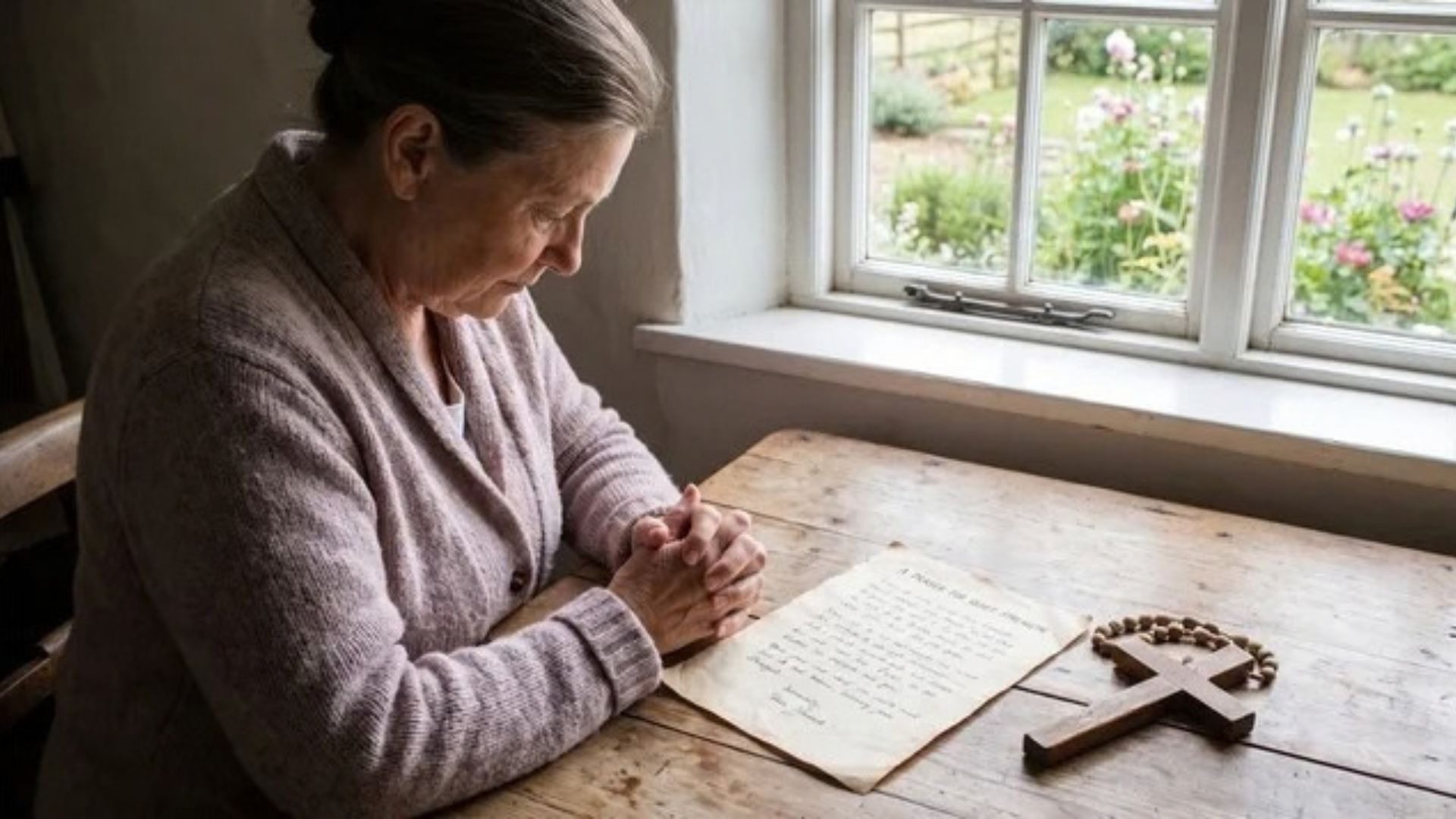
The I Said a Prayer for You Today poem is a gentle message of prayer, care, and hope for someone going through a difficult time. It reminds the reader that even when words fail, remembering someone in prayer can offer comfort. The poem has four short rhyming stanzas, and no one has proven who wrote it.
What makes this poem stand out is the way it keeps the focus on the person being prayed for.
Its simple wording carries a deeper meaning that becomes clearer when you look closely at how the poem is written.
Below you will find the full poem words, what is known about its author, a stanza-by-stanza meaning, and simple ways to share it with someone you love.
Full Text of I Said a Prayer for You Today
I said a prayer for you today And know God must have heard,
I felt the answer in my heart although He spoke no word.
I didn’t ask for wealth or fame, I knew you wouldn’t mind,
I asked Him to send treasures of a far more lasting kind.
I asked that He’d be near you At the start of each new day,
To grant you health and blessings And friends to share your way.
I asked for happiness for you In all things great and small,
But it was for His loving care I prayed the most of all.
Note: This prayer is often attributed to Doris J. Dodd, but her authorship has not been reliably verified. No verified photograph of her connected to this prayer is readily available online.
Who Wrote I Said a Prayer for You Today?
The author of I Said a Prayer for You Today is unknown. The name most often printed with it online is Doris J. Dodd. But no first printing, date, or book has been found that proves she wrote it.
Other names circulate too. Some greeting cards and online posts credit Frank J. Zamboni (not the inventor of the ice resurfacer). One prayer website credits Richard McIntyre. Several readers have also said a relative of theirs wrote it. Many card printers simply label it “Author Unknown.”
Small wording differences also exist between versions. Some print “I asked that He be near you” instead of “I asked that He’d be near you,” and many add exclamation marks or put “I knew you wouldn’t mind” in parentheses. The meaning stays the same in every version.
Why This Poem Is Widely Loved
The poem remains meaningful because it expresses care in a simple, sincere, and selfless way.
Its gentle language also makes it comforting to share during illness, grief, distance, or other difficult moments, and it pairs naturally with hopeful illness poems that carry the same spirit of faith and care.
- Simple and Memorable: Its short length and straightforward language make the poem easy to remember and share.
- Focused on the Other Person: The speaker puts the person being prayed for at the centre, making the message feel personal and thoughtful.
- Quietly Comforting: The poem avoids dramatic language and offers a gentle expression of care, faith, and hope.
- Suitable for Difficult Moments: Its message fits naturally in sympathy cards, get-well messages, memorials, and personal notes.
What the Poem Actually Means

The poem expresses care through prayer, with each stanza adding another layer to the speaker’s wishes for the person they are praying for. Here is how each stanza builds that message and leads to the poem’s central idea.
In short, the poem is an intercessory prayer. The speaker asks God for lasting gifts for someone else: His nearness, health, blessings, friends, and happiness. The last line saves the biggest request for His loving care.
Stanza One: A Quiet Prayer for Someone
The first stanza introduces the speaker’s simple act of praying for another person. The prayer feels personal and sincere, showing that the speaker is thinking about someone they care about.
What stands out is the quietness of the moment. There is no dramatic request or long explanation. The speaker simply wants the other person to know that they were remembered in prayer.
The second line adds quiet confidence. The speaker senses a reply in their heart, even though God “spoke no word.” The comfort comes from faith, not from a visible sign.
Stanza Two: Asking for What Matters Most
The second stanza moves away from material things and focuses on blessings that have lasting value. Instead of asking for wealth, status, or possessions, the speaker asks for things that can bring genuine happiness and comfort.
To me, this makes the stanza feel especially thoughtful. It shows that the speaker cares more about the person’s inner life than their possessions. The small aside “I knew you wouldn’t mind” also hints at a close bond: the speaker trusts the other person to value the same things.
Stanza Three: Health, Friendship, and Daily Care
The third stanza becomes more specific by focusing on everyday blessings: God’s nearness at the start of each new day, good health, blessings, and friends to share the way. These are the things that can make ordinary life feel supported and worthwhile.
This part makes the prayer feel more personal because the wishes are easy to recognise. Everyone wants good health, caring people around them, and reasons to feel hopeful about each day.
Stanza Four: The Heart of the Prayer
The final stanza brings all the earlier wishes together with one central request. After asking for happiness “in all things great and small,” the speaker names the request that mattered most: God’s loving care.
This ending gives the poem its strongest sense of comfort. Rather than trying to control what happens to the person, the speaker simply entrusts them to God and closes the prayer with love and hope.
When and How to Share This Poem
This poem can be shared in moments when someone needs comfort, encouragement, or a reminder that they are being remembered. From sympathy cards to personal messages, the setting can change, but the poem’s message of care remains the same.
This poem works well for memorials, celebrations of life, and sympathy cards because its message is brief, gentle, and focused on care rather than lengthy explanations.
You can share the poem with someone going through illness or a difficult season, or pair it with poems for remembrance when honouring someone at a memorial or gathering.
The poem can be shared through a text message, handwritten card, or personal note, depending on what feels most natural for your relationship with the recipient.
For an I Said a Prayer for You Today card, some printed versions place the first two stanzas on the front and the last two inside, with space for a name.
A printed or laminated version can be kept in a wallet, placed on a nightstand, or tucked inside a Bible as a simple reminder of care and prayer.

If you include the poem in a church bulletin, memorial program, or gift book, credit it as “Author unknown” or “Often attributed to Doris J. Dodd,” since no original source has been confirmed.
Poems Similar in Tone and Purpose
If I Said a Prayer for You Today spoke to you, these devotional poems offer a similar sense of faith, comfort, and emotional support.
- Helen Steiner Rice: Her poems share the same simple, faith-centred style, often offering comfort during difficult moments. She became the greeting card editor at the Gibson Art Company in Cincinnati in the mid-1930s. Her verses reached readers the same way this prayer often does: printed inside cards.
- “Footprints in the Sand” (Author Disputed): This poem, often credited to Mary Stevenson, also explores a person’s relationship with God during hardship, using simple and conversational language. Its authorship is contested: the Poetry Foundation has reported on several people who say they wrote it, including Stevenson and Margaret Fishback Powers. It tells a personal story, while I Said a Prayer for You Today focuses on praying for someone else.
| Poem | Main Focus | Best Used For |
| I Said a Prayer for You Today | Praying for someone else | Get-well cards, notes, memorial programs |
| Footprints in the Sand | God’s presence in your own hardship | Personal reflection, funerals |
| Helen Steiner Rice verses | Faith and encouragement | Greeting cards, gift books |
Why I Said a Prayer for You Today Still Comforts Readers
The I Said a Prayer for You Today poem is still shared because its message is simple: caring for someone can begin with remembering them in prayer.
The poem moves through wishes for lasting blessings, health, friendship, happiness, and God’s loving care.
Its gentle tone also makes it suitable for sympathy cards, memorials, personal messages, and difficult seasons when finding the right words can be hard.
If these words reminded you of someone you care about, consider sharing the poem with them and letting them know they are in your thoughts today. If you need words after a loss instead, try a gentle grief poem such as God Saw You Getting Tired.
Frequently Asked Questions
What is the Powerful Three-Word Prayer?
There is no single official three-word prayer, but “Lord, help me” is one of the most common examples people give. It strips prayer down to honest need and trust. Another short prayer often mentioned is “Thy will be done,” a line from the Lord’s Prayer in Matthew 6:10.
Is I Said a Prayer for You Today a Bible Verse?
No. I Said a Prayer for You Today is a devotional poem, not a passage from the Bible. It draws on biblical ideas, such as asking God to stay near someone. But its rhyming lines do not appear in any Bible translation. That is why it is credited to a person or to “Author unknown.”
What Is a Good Short Prayer Quote to Send Someone?
The first two lines of the last stanza work well on their own: “I asked for happiness for you / In all things great and small.” They are short enough for a text or card and still carry the poem’s full message of care. You can add the recipient’s name before the quote to make it personal.