


Some words stay with you long after you read them. “What Cancer Cannot Do” is one of those poems.
I first came across it in a hospital waiting room, and it stopped me in my tracks.
This article breaks down the full poem text, its meaning, key themes, literary devices, real-life stories of its impact, and a look at the poet behind it.
If you’re searching for comfort or something to share with a loved one, you’re in the right place.
I’ll walk you through everything, simply and clearly.
Meaning of the Poem
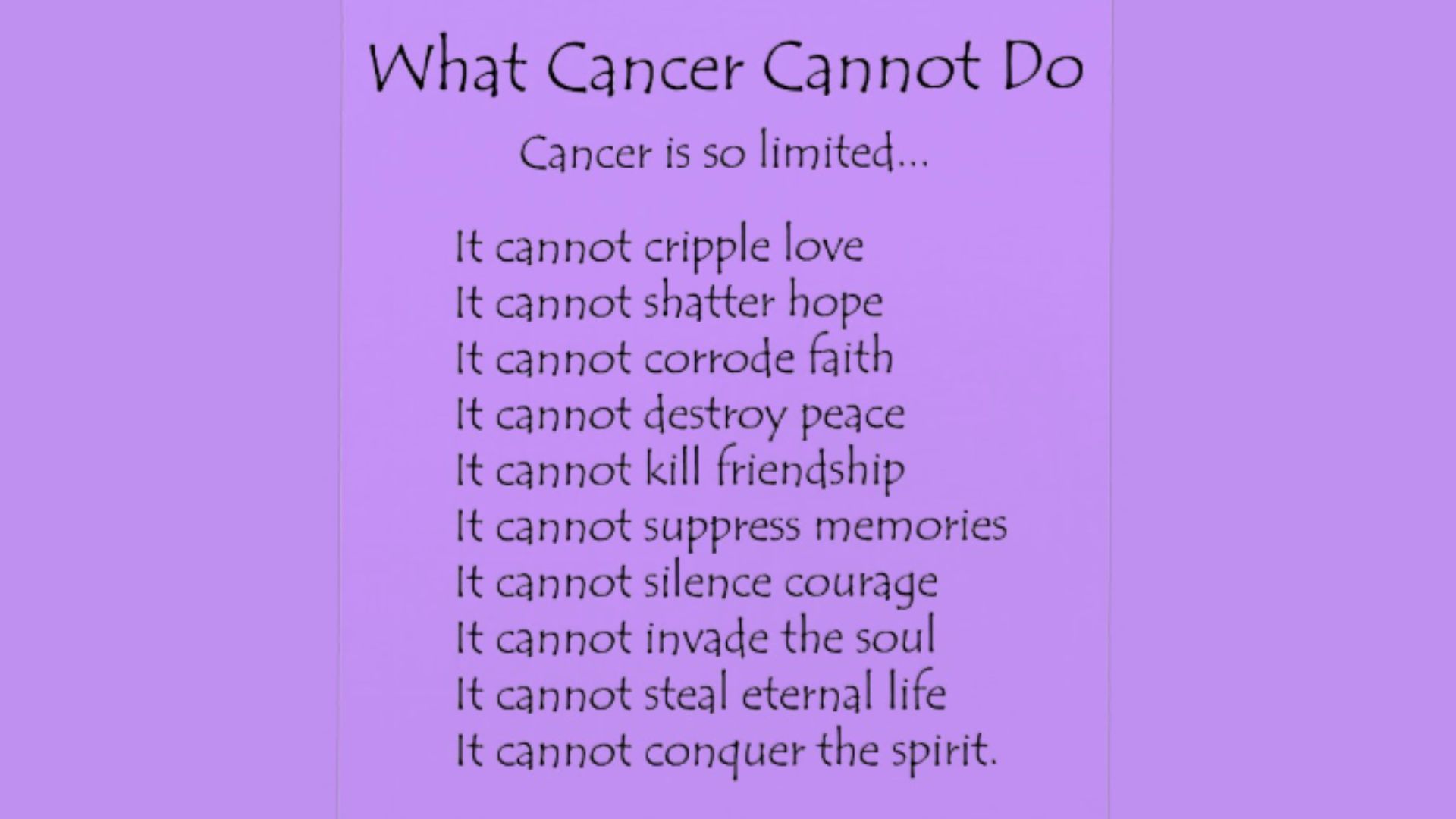
The poem “What Cancer Cannot Do” carries a simple but powerful message: cancer has limits. It can affect the body, but it cannot touch what truly matters.
It cannot take away love, hope, faith, courage, or the human spirit. The poem reminds patients and caregivers that illness does not define a person.
It speaks to what remains when everything else feels uncertain. The tone is firm, not fearful. It does not ignore pain.
Instead, it names what cancer cannot reach. That is what makes it so uplifting. It gives people something real to hold onto.
Key Themes
These three themes show why this poem has stayed with so many people for so long.
Resilience and Hope
The poem speaks directly to the will to keep going. It does not pretend cancer is easy. But it makes clear that the human spirit can hold strong through illness.
Each line reminds the reader that a diagnosis does not have the final word. Hope is not taken. Courage is not broken.
That message gives people the strength to face another hard day with their head up.
Love and Relationships
Cancer can change a lot. But the poem makes one thing clear: it cannot destroy love.
It cannot break the bond between a parent and child, a husband and wife, or two close friends. Those connections stay whole.
They are not at the mercy of a diagnosis. The poem affirms that love is stronger than illness, and that truth brings deep comfort to patients and families alike.
Faith and Spiritual Strength
For many people, faith is what gets them through the hardest days. This poem speaks to that.
It acknowledges that cancer cannot silence prayer, cannot dim the light of belief, and cannot take away the peace that comes from spiritual trust.
For those who draw strength from religion or quiet inner faith, the poem meets them with warmth and real reassurance when they need it most.
Literary Devices and Analysis
The poem uses a few key techniques to make its message land hard and stay with you.
Repetition and Anaphora
The phrase “It cannot” appears again and again throughout the poem. This is called anaphora, a technique where a phrase repeats at the start of multiple lines.
It creates a rhythm that feels strong and steady. Each repetition adds weight to the message.
By the time you reach the final line, the point has been made so many times that it feels solid and true in a way plain prose never could.
Contrast
The poem sets two worlds side by side. On one side: cancer, with its power to attack the body. On the other: the spirit, love, hope, and faith, which cancer cannot reach.
This contrast is where the poem gets its strength. The reader sees clearly what is lost and what is not.
That contrast brings clarity and, more than anything, a deep sense of relief that something remains untouched.
Imagery
The poem uses strong, active words to create clear mental images. Words like “cripple,” “corrode,” and “quench” make cancer feel real and fierce.
But these same words make the poem’s core message stronger. Because even against something that fierce, love and faith hold their ground.
The imagery does not soften the illness. Instead, it makes the victory of the human spirit feel fully earned.
Real-Life Inspiration
This poem has shown up in hospitals, cancer wards, and support groups across the world.
One well-known story comes from UCHealth, where patient Oliver Harvey carried this poem with him through his cancer treatment.He said it gave him strength on the hardest days.
Stories like his show that a few lines of verse can do what medicine sometimes cannot: offer comfort, restore hope, and remind a person of what still belongs to them.
The poem has become a quiet companion for many patients and their families through treatment and beyond.
Why Read This Poem
You do not need to be fighting cancer to connect with this poem. If someone you love has received a diagnosis, these words can help you find something to say when nothing feels right.
The poem can be read in a quiet moment, shared in a card, or spoken aloud in a support group. Hospitals have used it.
Families have framed it. Journals carry it. It gives courage without pressure and hope without pretending the hard parts aren’t real.
That balance is rare. It is worth reading, sharing, and keeping close.
About the Poet
The author of “What Cancer Cannot Do” is widely listed as anonymous. No confirmed name has been attached to it, though many have tried to trace it.
Some sources suggest it was written by a patient. Others believe it came from a caregiver or a chaplain. What is clear is that the poem has been in circulation for decades.
It has appeared in hospitals, church bulletins, cancer support materials, and personal letters around the world.
Its power does not depend on knowing who wrote it. The words speak for themselves.
Whoever put pen to paper clearly understood the weight of a cancer diagnosis and the deep human need for something steady to hold onto when fear takes over.
Conclusion
I think about this poem often. Not because I have faced cancer myself, but because I have sat with people who have.
A few honest words can shift something inside a person when nothing else reaches them.
If you are going through something hard right now, I hope this poem gives you what it gave me: a quiet, steady kind of hope.
Share it with someone who needs it. Drop a comment below and tell me which line means the most to you.
Frequently Asked Questions
Who wrote the poem “What Cancer Cannot Do”?
The poem is widely listed as anonymous, with no confirmed author traced to date.
What is the main message of “What Cancer Cannot Do”?
Cancer can attack the body, but it cannot take away love, hope, faith, or the human spirit.
Is “What Cancer Cannot Do” based on a true story?
No confirmed story exists behind it, but many real patients and caregivers have connected deeply with its words.
Can this poem be used at a cancer support group or memorial?
Yes, it has been shared widely in hospitals, support groups, and personal gatherings for decades.
Why does this poem bring comfort to so many people?
It names clearly what cancer cannot take, which gives people something firm and real to hold onto during a frightening time.