

Most Christmas poems feel warm and easy. This one does not. And that is exactly what makes the "I Heard the Bells on Christmas Day" poem worth stopping for.
Longfellow wrote it while grieving his dead wife and fearing for his wounded son. The country was at war. Peace felt impossible.
Yet somehow, he still chose hope over despair. That tension is what pulls you in and keeps you thinking long after you finish reading.
In this blog, I will cover the full meaning, the heartbreaking story behind the poem, and the themes that make it last over 160 years later.
I have kept it simple and clear so you walk away with real understanding.
Keep reading.
I Heard the Bells on Christmas Day Poem
By Henry Wadsworth Longfellow
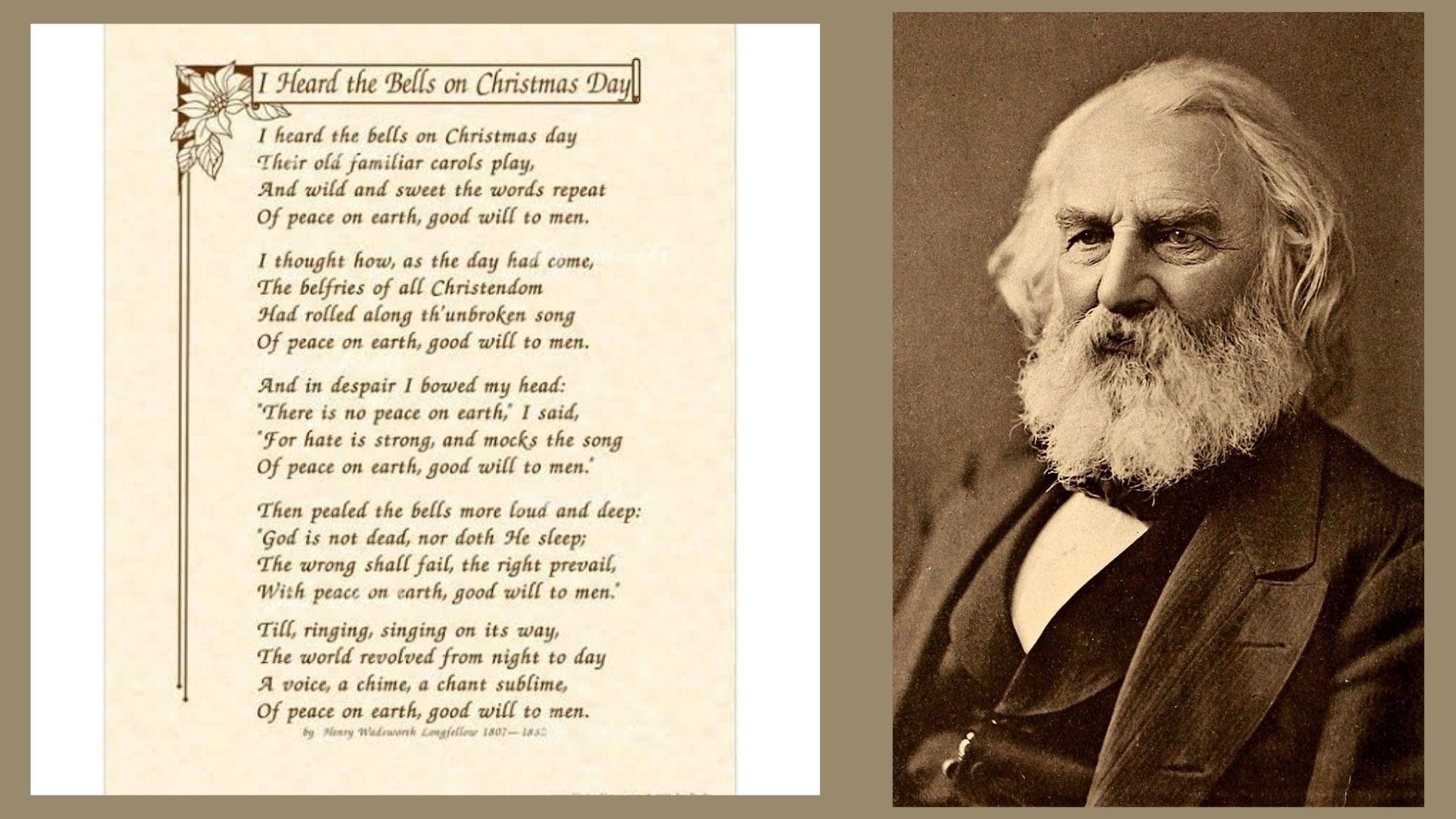
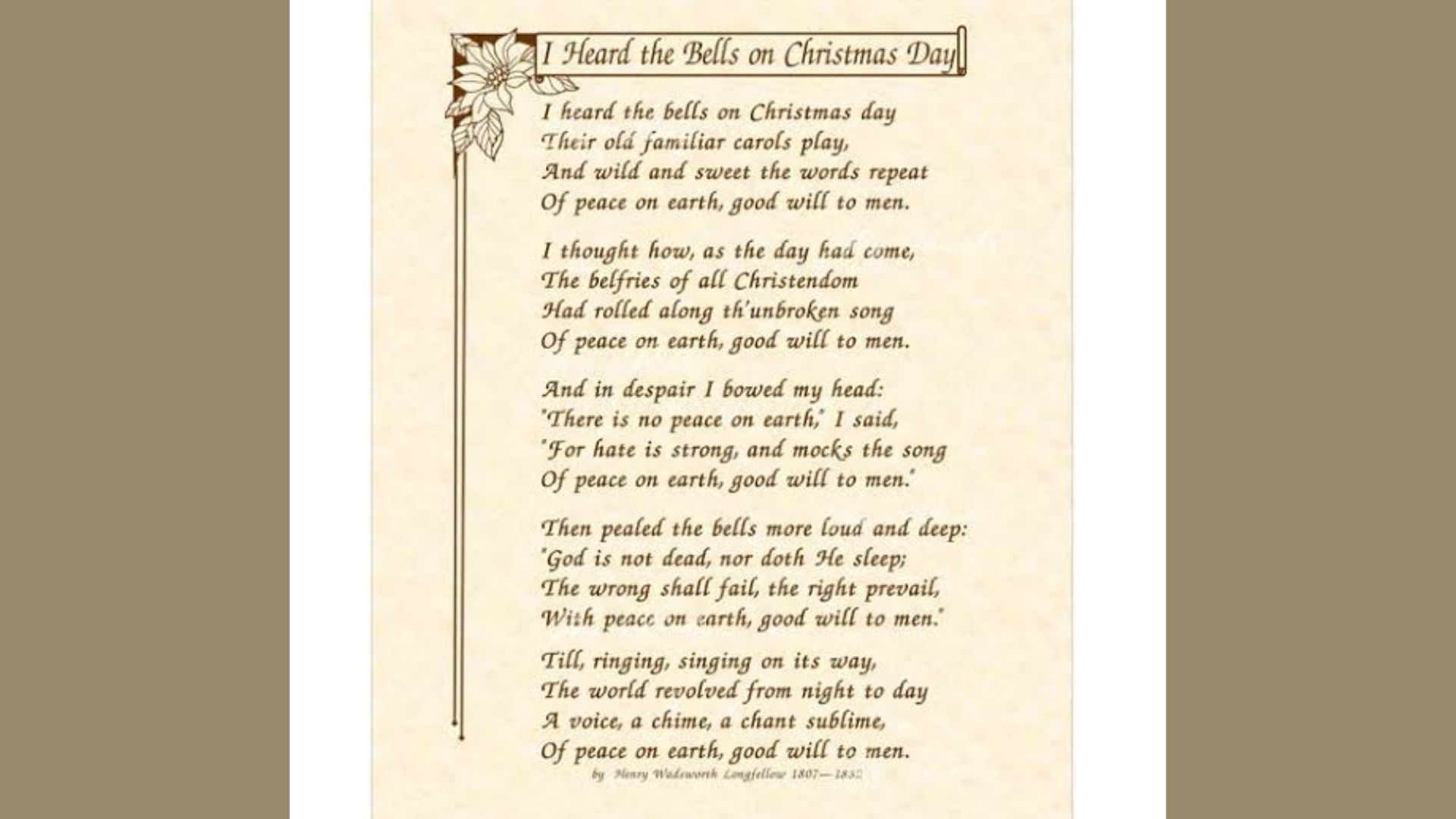
I heard the bells on Christmas DayTheir old, familiar carols play,And wild and sweetThe words repeatOf peace on earth, good-will to men!
And thought how, as the day had come,The belfries of all ChristendomHad rolled alongThe unbroken songOf peace on earth, good-will to men!
Till ringing, singing on its way,The world revolved from night to day,A voice, a chime,A chant sublimeOf peace on earth, good-will to men!
Then from each black, accursed mouthThe cannon thundered in the South,And with the soundThe carols drownedOf peace on earth, good-will to men!
It was as if an earthquake rentThe hearth-stones of a continent,And made forlornThe households bornOf peace on earth, good-will to men!
And in despair I bowed my head;“There is no peace on earth,” I said;“For hate is strong,And mocks the songOf peace on earth, good-will to men!”
Then pealed the bells more loud and deep:“God is not dead, nor doth He sleep;The Wrong shall fail,The Right prevail,With peace on earth, good-will to men.”
This poem was first published in 1865 under the title "Christmas Bells" and is now in the public domain.
Meaning of I Heard the Bells on Christmas Day Poem
The "I Heard the Bells on Christmas Day" poem places Christmas bells next to cannon fire, and that contrast is the heart of it. Peace is being sung while war is being fought.
The bells carry a line straight from Luke 2:14 in the King James Bible: "peace on earth, good will to men." Those are the words the angels sang at Christ's birth.
Longfellow heard them on Christmas Day and felt how far the world was from that promise. But the speaker does not stay in despair. He moves through it.
That shift in the final stanza is the emotional core of the poem. Hope is not loud here. It is quiet and hard-won. Longfellow did not write a cheerful Christmas poem.
He wrote an honest one. The message is simple: keep going. God is not absent. Right will win. It takes real faith to believe that, especially when you are in pain.
Summary of I Heard the Bells on Christmas Day Poem
The poem opens with the speaker hearing Christmas bells and feeling joy. But soon, cannon fire from the Civil War drowns out the carols.
The speaker falls into despair and says peace feels like a lie. Then the bells ring louder, reminding him that God is not dead, wrong will not win, and peace on earth is still possible.
It moves from joy to grief to quiet, steady hope.The poem was originally titled "Christmas Bells" and first published in February 1865 in Our Young Folks, a magazine for young readers.
The carol title most people know today came later, after the poem was set to music.
The Story Behind the Poem
This poem came from deep personal loss and a nation at war.
The Death of Longfellow's Wife
In 1861, Longfellow's wife Fanny, known as Fanny Elizabeth Appleton, died in a fire at their Cambridge, Massachusetts home. Her dress caught a flame from falling wax.
He tried to save her but could not. The burns were so severe he could not attend her funeral. He grew a beard afterward to cover the scars on his face.
The grief nearly broke him. He wrote almost nothing for months. That loss shaped everything he wrote after, including this poem.
His Son's Civil War Injury
Longfellow's son Charley, whose full name was Charles Appleton Longfellow, joined the Union Army at age 18 without his father's permission.
In November 1863, during the Mine Run Campaign in Virginia, Charley was shot through both shoulders. The bullet crossed his back and missed his spine by less than an inch.
Henry traveled to Washington to bring his son home for a long recovery. The fear of losing his son added weight to every word in this poem.
How the Civil War Inspired the Poem
Longfellow wrote this poem on Christmas Day 1863 or 1864, sitting alone in his Cambridge home while the church bells rang outside. The Civil War was at its worst.
He heard church bells and felt the gap between what they promised and what the world looked like. That gap became the poem.
It was first published in 1865 under the title "Christmas Bells" and later collected in his Household Poems.
Major Themes in I Heard the Bells on Christmas Day
This poem holds big ideas inside a few short stanzas.
Peace amid conflict
The bells repeat "peace on earth, good will to men." But cannon fire answers back. Longfellow was writing during real war.
The theme of peace is not abstract here. It is personal and painful. He wanted peace. He was not sure it was coming.
Hope after loss
The poem does not end in darkness. That matters. After grief, after cannon fire, the bells still ring. Hope is not the same as happiness. Longfellow makes that clear.
It is something you hold onto when nothing else makes sense. This is one of the most honest portrayals of hope in American poetry.
Faith in God's justice
The final stanza is a declaration. "God is not dead, nor doth He sleep." Longfellow did not abandon his faith, but he tested it in this poem.
He shows his doubt openly and then resolves it, not with certainty, but with trust. That is what makes it believable.
Love, grief, and resilience
Under every stanza is loss. A dead wife. A wounded son. A broken country. And yet the poem keeps moving forward. That is resilience.
Not strength without pain. Strength because of it. Longfellow loved deeply and lost deeply, and this poem holds both.
About the Poet: Henry Wadsworth Longfellow
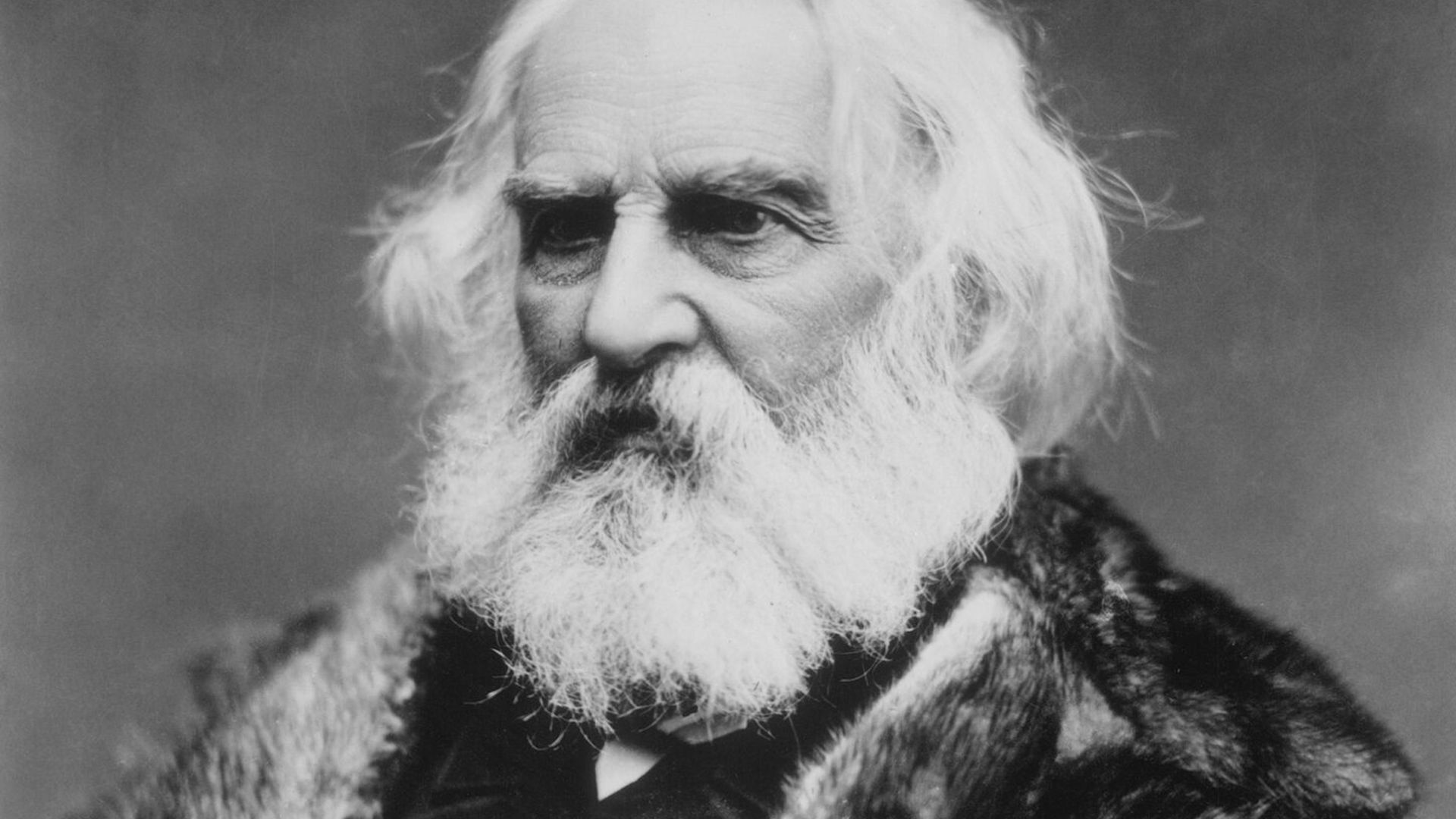
Henry Wadsworth Longfellow was born in 1807 in Portland, Maine. He became one of the most widely read American poets of his time.
He taught at Harvard, translated Dante, and wrote poems that everyday readers could understand and feel.
He lived in a colonial mansion in Cambridge, Massachusetts that once served as General George Washington's headquarters.
He lost his first wife to a miscarriage and his second wife, Fanny Elizabeth Appleton, to a fire. Sorrow ran through his life and his writing.
"Christmas Bells" was set to the hymnal melody "Waltham" by English organist John Baptiste Calkin in 1872. Later, Bing Crosby's 1956 recording brought the carol to millions worldwide.
Longfellow's legacy lives beyond literature classrooms. It lives in the hearts of people who still find comfort in his words today.
Conclusion
The "I Heard the Bells on Christmas Day" poem still speaks to me. Not because it is full of joy, but because it is full of truth.
Longfellow did not pretend life was easy. He sat in the grief and still chose to believe in something good.
If this poem moved you, share it with someone who needs it right now.
And if you have thoughts on what it means to you, drop them in the comments below. I would love to read them.
Frequently Asked Questions
Who wrote the "I Heard the Bells on Christmas Day" poem?
Henry Wadsworth Longfellow wrote it, likely on Christmas Day 1864, under the title "Christmas Bells."
What is the main message of the poem?
The poem says that even in the middle of war and despair, hope and peace are still possible.
Why did Longfellow write this poem?
He wrote it after losing his wife Fanny to a fire, fearing for his wounded son Charley, and watching the Civil War tear the country apart.
When was the poem first published?
It was first published in February 1865 in Our Young Folks magazine, and later collected in Household Poems the same year.
How does the poem move from despair to hope?
The final stanza shifts the tone when the bells ring louder, reminding the speaker that right will still prevail over wrong.