




I first read this poem at a funeral. And I cried. Not from sadness. From comfort.
“Do Not Stand at My Grave and Weep” is one of the most moving poems ever written. It has been read at memorials all over the world. And for good reason.
In this blog, I’ll walk you through the full text, the meaning, the themes, and the literary devices used in the poem. I’ll also cover the structure and the author’s story.
I’ve studied this poem closely, and I’ll break it down in a way that’s easy to follow.
Let’s get into it.
Full Text of Do Not Stand at My Grave and Weep
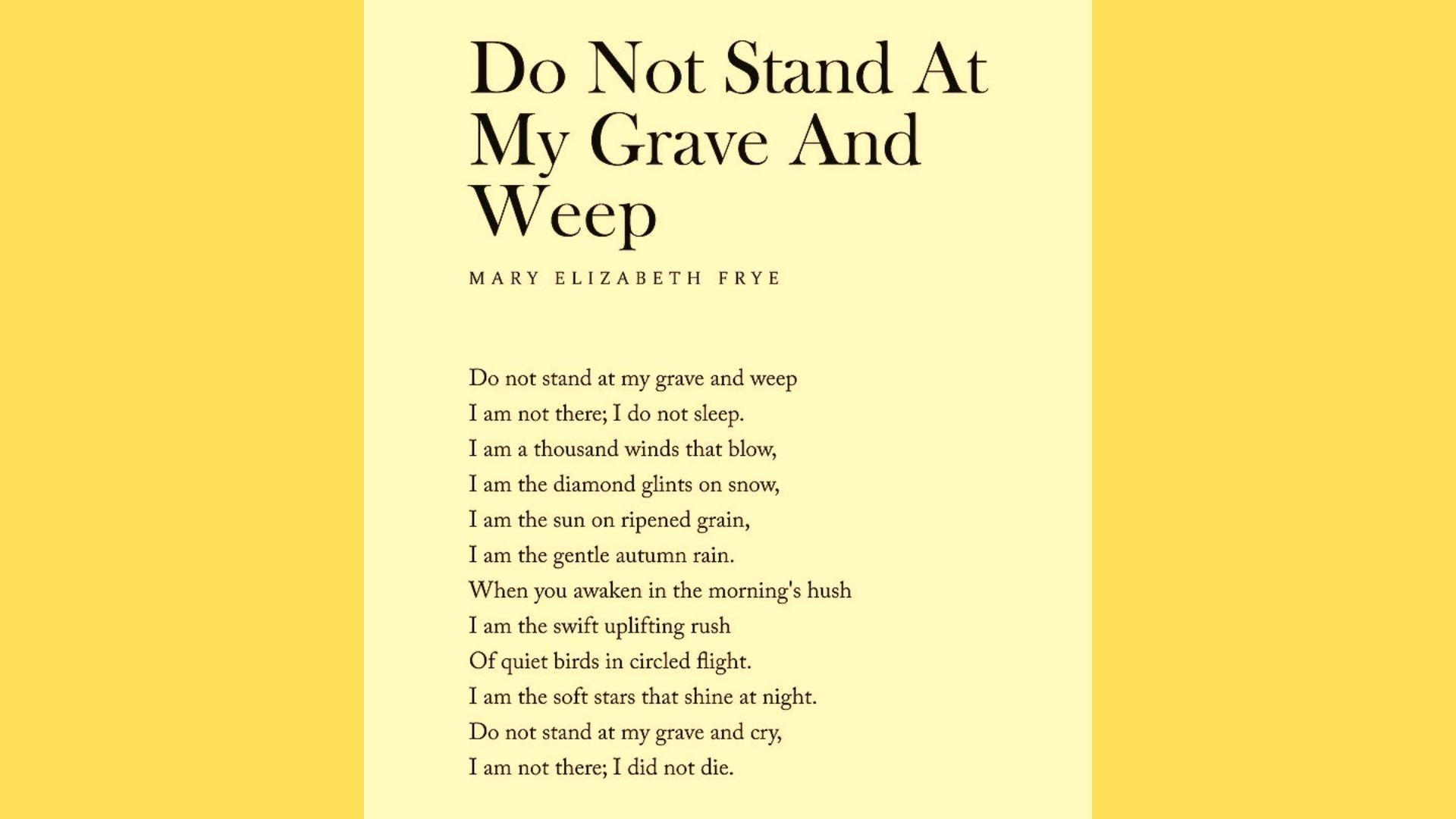
Here is the full poem:
Do not stand at my grave and weep,
I am not there; I do not sleep.
I am a thousand winds that blow,
I am the diamond glints on snow,
I am the sun on ripened grain,
I am the gentle autumn rain.
When you awaken in the morning’s hush,
I am the swift uplifting rush of quiet birds in circling flight.
I am the soft star-shine at night.
Do not stand at my grave and cry;
I am not there; I did not die.
Meaning of Do Not Stand at My Grave and Weep
This poem speaks directly to someone who is grieving.
The speaker is someone who has passed. But the message is not about death. It’s about life continuing in a different form.
The poem says: I am still here. You just can’t see me the way you used to.
The speaker lists things in nature. Wind. Snow. Rain. Sunlight. Birds. Stars. These are all things you can feel or see every day. The poem suggests the person you lost is now part of all of it.
It’s a comforting idea. The ones we lose don’t simply disappear. They become part of the world around us.
The final two lines hit hard. “Do not stand at my grave and cry; I am not there; I did not die.” This is the heart of the poem. Death is not the end. It’s a shift.
Themes in Do Not Stand at My Grave and Weep
The poem is short, but it covers a lot of ground.
1. Comfort in Times of Grief
The main purpose of this poem is comfort.
Grief is painful. It can feel isolating. This poem speaks to that pain directly.
The speaker doesn’t ignore grief. Instead, they acknowledge it and gently redirect it. They say: I see you crying. But I want you to know I’m still here.
That shift matters. It gives the grieving person something to hold onto.
2. The Continuity of Life
This poem is deeply rooted in nature.
Wind, rain, grain, birds, stars. These are all things that keep going, no matter what. They don’t stop. They cycle. They return.
The poem uses this idea to say: life is like that too. It doesn’t end. It changes shape.
This is a comforting framework. It takes the sting out of loss by placing it inside a bigger picture.
3. Hope and Remembrance
There’s quiet hope running through this poem.
The speaker doesn’t ask to be mourned. They ask to be noticed. In the morning light. In the rain. In the birds overhead.
That’s remembrance without pain. It’s a way to keep someone with you without holding onto grief.
The poem invites you to look at the world differently. Every gust of wind becomes a connection. Every raindrop is a reminder.
Literary Devices Used in the Poem
Good writing uses tools, and this poem uses them well.
1. Imagery
The poem is full of images you can feel.
Diamond glints on snow. The morning hush. Soft star-shine at night. You can see and feel all of it.
This sensory language makes the poem vivid. It pulls you into a world where the speaker is everywhere at once.
2. Repetition
The phrase “I am” appears over and over.
I am the wind. I am the snow. I am the rain. I am the birds.
This repetition builds a steady rhythm. It also reinforces the message. The speaker is present. Over and over again. In many forms.
It creates a feeling of certainty. Like the speaker really means it.
3. Symbolism
Every element of nature in this poem carries meaning.
The wind stands for freedom. Snow reflects light. Rain brings life. Birds suggest the soul rising. Stars stand for guidance and comfort at night.
None of this is random. Each symbol was chosen to reinforce the idea that the speaker lives on in the natural world.
Form, Structure, and Style of the Poem
This poem is short. Just 12 lines. But it carries a lot.
It uses rhyming couplets throughout. Weep and sleep. Blow and snow. Grain and rain. This rhyme scheme gives the poem a steady, song-like flow.
The rhythm is consistent too. It almost sounds like a lullaby. That’s intentional. It’s meant to soothe.
The poem is written in first person from the perspective of someone who has died. That’s what makes it so powerful.
The speaker isn’t talking about death from the outside. They’re speaking from within it.
The language is simple. There are no complex words. No long sentences. Just clear, direct lines. That simplicity is part of why the poem works so well.
About the Author
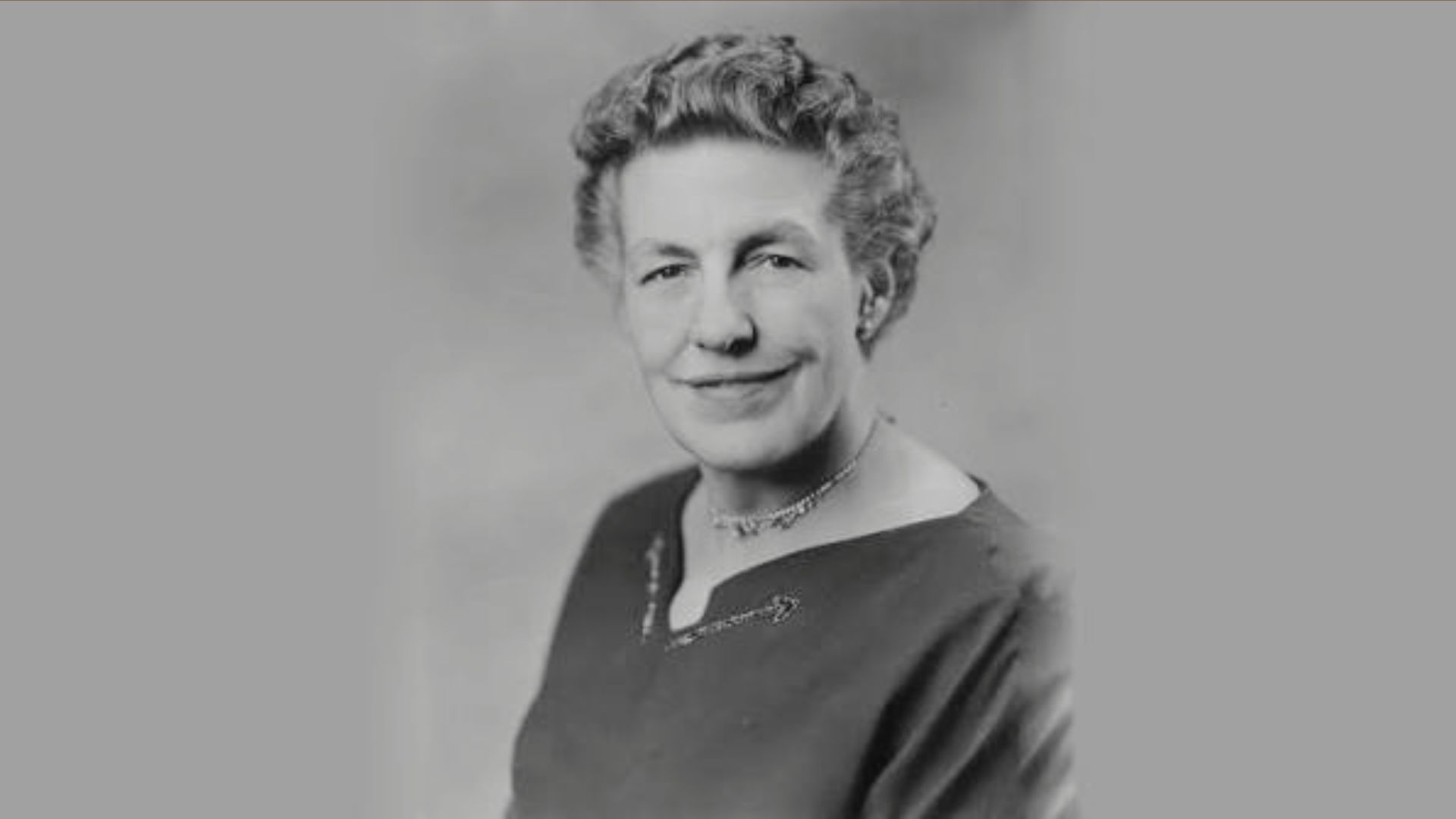
This poem is most often credited to Mary Elizabeth Frye.
She was an American poet born in 1905 in Dayton, Ohio. She is not widely known beyond this poem. But this poem alone made her famous.
The story goes that she wrote it in 1932 on a paper bag. She was moved by a young Jewish woman staying with her who could not return to Germany to visit her dying mother. The woman said she had no grave to visit, no place to mourn.
That conversation sparked the poem.
Frye never published it during her lifetime. It spread on its own. People shared it at funerals, memorials, and in letters. Eventually, it became one of the most recognized poems in the English language.
She passed away in 2004. But this poem lives on. Fittingly.
Conclusion
This poem does something rare. It talks about death without making you feel hopeless.
It takes grief and gives it a new direction. Instead of standing at a grave, you’re asked to look at the sky. In the rain. At the birds flying overhead.
I find that shift genuinely helpful. It doesn’t deny loss. It just reframes where the person is now.
The writing is simple. The message is clear. And that’s exactly why it has lasted nearly a century.
If you’ve lost someone, this poem might offer a little peace. Not answers. Just comfort.
Have you ever read a poem that changed the way you think about loss?
Frequently Asked Questions
Who wrote Do Not Stand at My Grave and Weep?
The poem is credited to Mary Elizabeth Frye, an American poet. She reportedly wrote it in 1932, though she never formally published it herself.
What is the main message of this poem?
The poem tells the grieving person that their loved one is not truly gone. They live on in nature, in the wind, rain, sunlight, and stars.
What type of poem is Do Not Stand at My Grave and Weep?
It is a lyric poem written in rhyming couplets. The structure is simple and the tone is comforting, meant to ease grief.
Why is this poem so popular at funerals?
It speaks directly to grief without being heavy or dark. The message is hopeful, and the language is easy to understand and remember.
Is this poem suitable for children who are grieving?
Yes. The simple language and nature-based images make it accessible to children. It can be a gentle way to talk about loss with young ones.