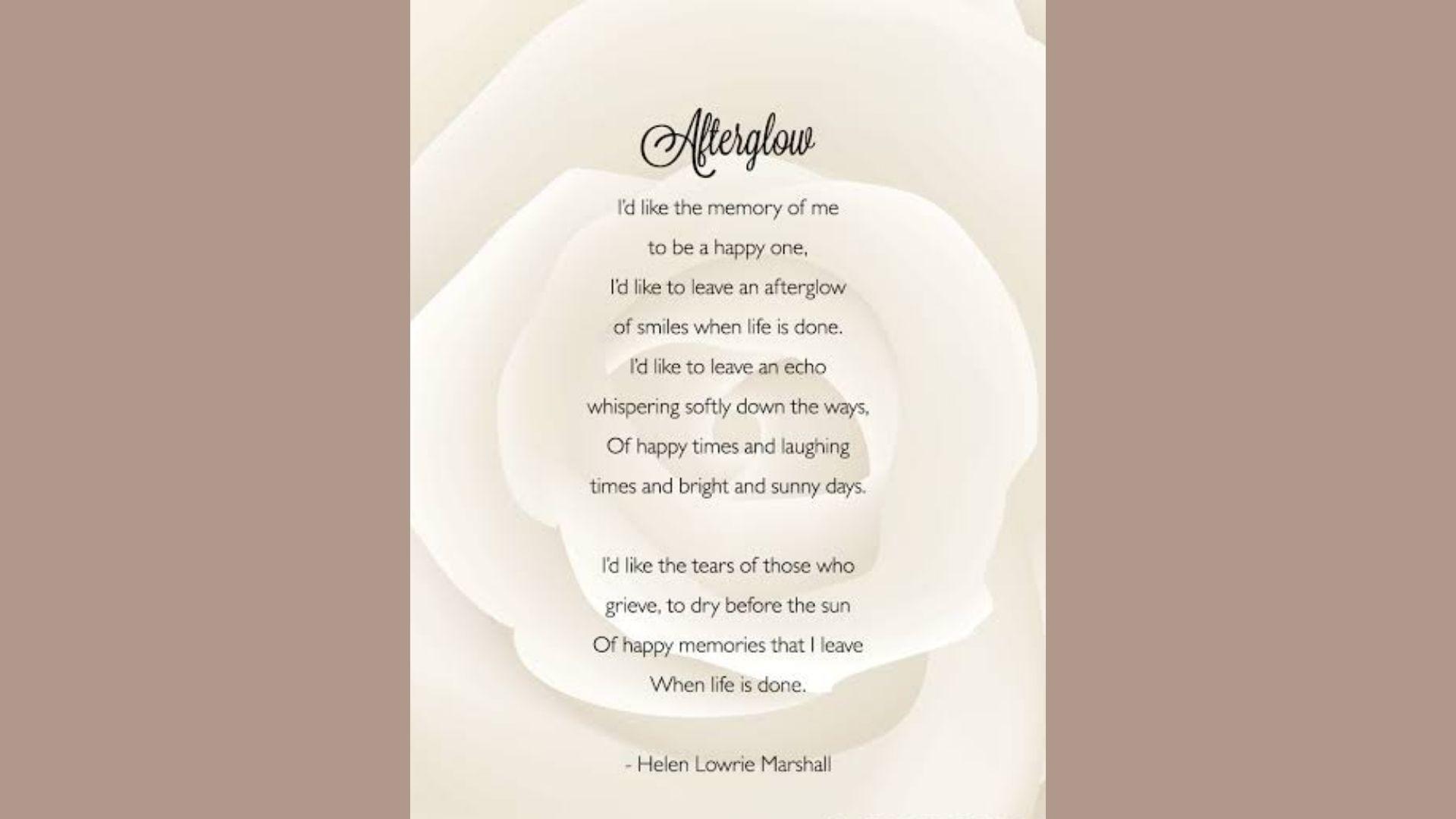



A life well lived poem often shows up folded inside a funeral program, printed on the back page where nobody quite remembers who put it there.
No name follows it. No copyright page, no author bio, nothing. It simply appears, again and again, at services for people who spent decades quietly doing good for others.
No one has traced where that missing name went. Short memorial verses like this one tend to travel through greeting cards, church bulletins, and forwarded emails, and the byline is often the first thing lost along the way.
If you are choosing a reading for someone you love, the twelve lines waiting here explain exactly why this one keeps getting picked, and if you need more options, this collection of readings for memorial services covers a wide range of tones and occasions.
The Full Text of A Life Well Lived (Author Unknown)
The poem reflects on a life shaped by love, meaningful moments, and lasting memories. It honours the legacy someone leaves behind through the joy, strength, and kindness they shared.
Life well lived
A life well lived is a precious gift Of hope and strength and grace,
From someone who has made our world a brighter, better place.
It’s filled with moments, sweet and sad,
with smiles and tears and love,
And all the experiences shared below And now recalled above.
A life well lived is a legacy Of joy and pride and pleasure,
A living, lasting memory Our grateful hearts will treasure.
Who Actually Wrote It
The author of A Life Well Lived has not been reliably identified.The poem has circulated for years without a confirmed author or clear record of who first wrote or published it.
Its wording appears in memorial and funeral contexts, but these uses do not establish authorship. Without a reliable primary source connecting the poem to a specific writer, assigning it to an individual would be misleading.
For that reason, the poem is best credited as “Author Unknown” unless a trustworthy source provides evidence of its original authorship.
What The Poem Means
The poem presents a well-lived life as one filled with love, meaningful experiences, and lasting connections. It shows how a person’s legacy continues through the memories and gratitude they leave behind.
- A Life as a Gift: The poem presents a well-lived life as a precious gift of hope, strength, and grace that makes the world a better place.
- Life Includes Both Joy and Sorrow:It recognises that a meaningful life holds both sweet and sad moments, from smiles and occasional tears to friendships formed, good times shared, and years of laughter.
- A Lasting Legacy: The poem shows that a person’s life leaves behind joy, pride, and pleasure that continue through the memories of those who loved them.
- Memories Are Treasured: The closing lines focus on loving memories as a lasting source of gratitude, keeping the person’s presence alive in the hearts of others.
Key Themes in A Life Well Lived Poem
The poem focuses on a few simple ideas about life, loss, and the memories we leave behind.
- Legacy and Remembrance:The poem shows how people live on through the memories they leave behind. Their presence may be gone, but the impact they made remains.
- Gratitude and Appreciation:The poem expresses thankfulness for the time shared with someone who has passed away. Those memories remain meaningful even after their loss.
- Joy and Sorrow in Life: The poem recognises that life holds both happy and painful moments.It shows that joy and grief can exist together.
- Human Connection and Relationships:The poem highlights the friendships a person formed and the good times and laughter they shared with others. These connections are what make a person’s life meaningful.
How the Poem Likely Spread
Short poems without a listed author often spread through funeral programs, greeting cards, memorial materials, and copied emails, a pattern seen with other poems with disputed authorship that circulated the same way for decades before anyone traced their origins.
A Life Well Lived appears to have followed a similar path, passing from one person to another without a clear author credit.
As the poem was copied and shared online, its original source became increasingly difficult to trace.
Today, multiple versions may exist across different websites and printed materials, making it difficult to determine where the poem first appeared or who originally wrote it.
Similar Poems About Living Fully
These poems explore similar ideas about living with purpose, appreciating time, and leaving something meaningful behind. Readers may also find poems about leaving a legacy a fitting companion, particularly for memorial and graveside readings.
Walt Whitman’s “O Me! O Life!”: The poem reflects on the meaning of life and ends with the idea that each person has something meaningful to contribute to the larger world.
Mary Oliver’s “The Summer Day”: Oliver’s poem explores the briefness of life and ends by asking how we should spend our limited time, making it a natural companion to this poem.
Mary Lee Hall’s “Turn Again to Life”: Read at Princess Diana’s funeral by her sister Lady Sarah McCorquodale, the poem encourages those left behind to continue living with purpose.
Henry van Dyke’s “Time Is”:Read at Diana’s funeral by her sister Lady Jane Fellowes, this short poem observes that time feels slow, swift, long, or short depending on what we feel, but for those who love, it becomes eternity. It pairs well with a life well lived because both measure a life by love rather than length.
Final Line
A life well lived poem has stayed in circulation for years without anyone claiming it, moving through funeral programs and memorial cards on quiet repeat.
What keeps it there is not mystery around who wrote it, but how precisely it names both the hard parts of a life and the good ones in the same breath.
Whether you are planning a service this week or just holding onto the words for later, that lack of a name might be exactly why it feels like it belongs to whoever needs it. Have you read something like this for someone you loved, and did it help?
Frequently Asked Questions
What is The Quote About A Life Well Lived Poem?
The poem’s opening lines are its best-known words, describing a life well lived as a precious gift of hope, strength, and grace from someone who made the world a brighter, better place.
What Poem Was Read At Princess Diana’s Funeral?
Two poems were read by Diana’s sisters at her funeral in Westminster Abbey on September 6, 1997. Lady Sarah McCorquodale read Mary Lee Hall’s “Turn Again to Life,” and Lady Jane Fellowes read Henry van Dyke’s “Time Is.” Prime Minister Tony Blair also gave a Bible reading, 1 Corinthians 13.
What is A Famous Poem About Living Life To The Fullest?
Mary Oliver’s “The Summer Day” and Walt Whitman’s “O Me! O Life!” are the two most quoted poems built around making full use of one’s time.
What is The Best Poem About Life?
There is no single agreed answer. For comfort after a loss, readers lean toward this poem; for a push toward living well, Oliver and Whitman is favoured.
Can A Life Well Lived Poem Be Used At A Celebration Of Life Instead Of A Funeral?
Yes. Its tone fits informal celebrations of life just as well as traditional funerals, since it focuses on gratitude and memory rather than religious language.