

Finding comfort in loss is never easy. I know that feeling well. The Death Is Nothing at All poem has helped so many people through their hardest days.
In this blog, I’ll share the full poem and explain what it really means. I’ll also cover why it’s read at so many funerals and who wrote it.
Whether you need it for a service or just want to understand it better, you’re in the right place. I’ve spent years studying grief poetry, and this one never loses its power.
Overview of Death Is Nothing at All Poem

The Death Is Nothing at All poem is one of the most loved funeral readings in the world. It is written from the view of someone who has passed, speaking gently to those left behind.
The message is simple. Love does not end, and the person is never truly gone. That is why so many people read and share it at services, in cards, and online.
The tone is calm, comforting, and peaceful. It does not make grief feel heavier. Instead, it gives people something steady to hold onto when words feel hard to find.
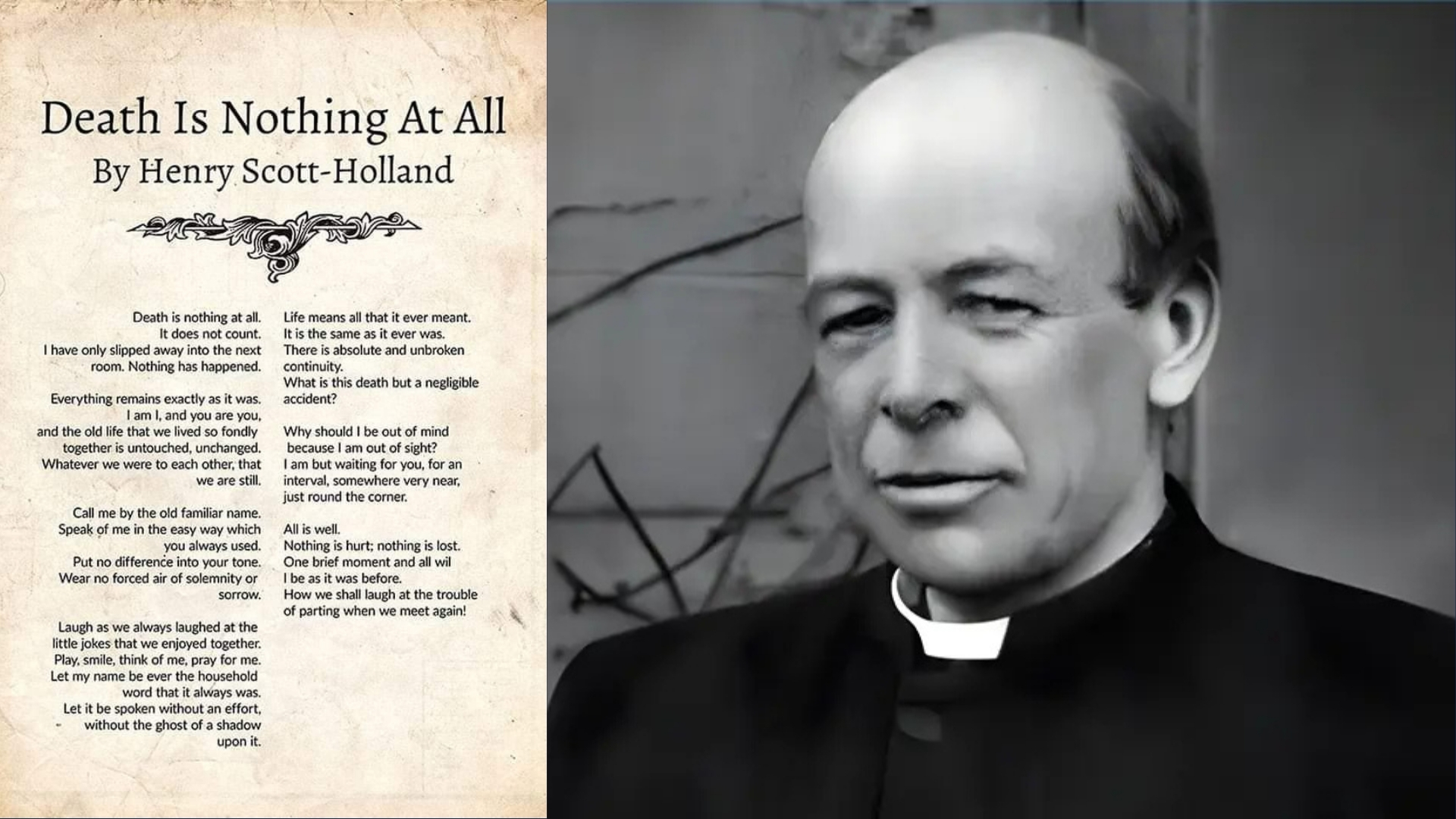
Death Is Nothing at All Poem
Read the complete poem exactly as written every verse, every line, in full.
Death is nothing at all.
I have only slipped away to the next room.
I am I and you are you.
Whatever we were to each other,
That, we still are.
Call me by my old familiar name.
Speak to me in the easy way
which you always used.
Put no difference into your tone.
Wear no forced air of solemnity or sorrow.
Laugh as we always laughed
at the little jokes we enjoyed together.
Play, smile, think of me. Pray for me.
Let my name be ever the household word
that it always was.
Let it be spoken without effect.
Without the ghost of a shadow on it.
Life means all that it ever meant.
It is the same that it ever was.
There is absolute unbroken continuity.
Why should I be out of mind
because I am out of sight?
I am but waiting for you,
for an interval,
somewhere very near,
just around the corner.
All is well.
Nothing is hurt; nothing is lost.
One brief moment and all will be as it was before.
How we shall laugh at the trouble of parting
when we meet again!
Meaning of Death Is Nothing at All Poem
A simple breakdown of what this poem says about love, loss, and what comes after.
Simple Explanation
The poem says death is not the end. The speaker has simply “slipped away to the next room.” They are still present. Just not visible anymore. That one idea changes the way grief feels.
It asks us to keep living. Keep laughing. Keep saying their name. It does not ask us to move on or forget. It asks us to carry that person with us, every single day.
The poem says grief is real, but so is love. And love stays. It does not leave when someone does. That is the quiet truth this poem holds.
Key Message of the Poem
The core idea is continuity. Love does not stop when a person dies. The memories stay. The bond remains. Nothing about that connection is broken, only changed.
Holland wrote this to comfort people in pain. He wanted them to feel that the person they lost is still close. Not gone. Just out of sight for now. That thought alone can bring a moment of peace in the hardest times.
The poem also reminds us that life still has meaning. It still holds the same weight it always did. The people we love do not take that meaning with them when they go.
Why This Poem Is So Popular
People turn to this poem at funerals, memorials, and remembrance events for good reasons.
It Uses Plain Words
People turn to this poem at funerals, memorials, and remembrance events for good reasons. It has no complex lines and no hard ideas. The language is soft and clear. Anyone can read it and feel it right away, no matter their age or background.
It Brings Real Comfort
Grief is a heavy thing to carry. This poem lightens that load. It reminds people that love does not end and that the person they lost is never truly gone. That kind of message is hard to find, and even harder to forget.
It Feels Personal
Even though it was written over 100 years ago, the words feel like they were written just for you. It does not feel old or distant. It feels close and real. That is rare in any piece of writing. It works. That is why people keep coming back to it again and again.
Famous Lines from the Poem
Some lines hit harder than others. These three are the ones most people remember.
“I am waiting for you…” This says the person hasn’t left. They are just waiting. That idea alone can bring so much peace.
“Just around the corner…” This line creates closeness. Your loved one is not far away. They are just out of sight, for now.
“All is well.” Three simple words. Yet they carry the entire message of the poem. Nothing is lost. There is nothing to fear.
About the Poet – Henry Scott Holland

Henry Scott Holland was born in 1847 in England. He was a Christian clergyman and an Oxford professor known for his kind nature and moving sermons.
The Death Is Nothing at All poem did not start as a poem. It came from a sermon he gave at St Paul’s Cathedral in London in 1910, called “The King of Terrors,” after the death of King Edward VII.
The sermon had two parts. The hopeful part became the poem. Over time, people began reading it at funerals. It passed from person to person and never faded.
Conclusion
I still remember the first time I read this poem at a memorial. The line “just around the corner” stayed with me for days. It made grief feel a little less final.
If you’re going through a hard time, I hope the Death Is Nothing at All poem brings you even a small amount of peace.
Share it with someone who needs it today. And if this post helped you, drop a comment below. Tell me which line meant the most to you. I’d love to hear from you.
Frequently Asked Questions
Is “Death Is Nothing at All” a religious poem?
It was written by a Christian clergyman, but its message reaches across many beliefs. People from different faiths and backgrounds use it at funerals and memorial services.
Who wrote the “Death Is Nothing at All” poem?
Henry Scott Holland wrote it. He was an English clergyman and Oxford professor. It came from a sermon he gave at St Paul’s Cathedral in London in 1910.
When did people start using this poem at funerals?
It began appearing at funeral services during the 20th century. People were drawn to its comforting message and it slowly became one of the most read pieces at memorials worldwide.
What is the main theme of this poem?
The main theme is that love and connection do not end at death. The person who passed is still near and still part of your life.
Is this poem in the public domain?
Yes. Henry Scott Holland passed away in 1918. His works, including this poem, are in the public domain and free to use.