


The Brontë sisters were Charlotte, Emily, and Anne, three Yorkshire writers who published under the male names Currer, Ellis, and Acton Bell.
When Emily died in December 1848, the most visible mourner at her funeral was not a relative.
It was Keeper, her mastiff cross, who walked at the head of the procession, sat in the family pew through the service, and then moaned outside her empty bedroom door for many nights.
We know this because Ellen Nussey, Charlotte’s closest friend, described the scene in a letter to the biographer Elizabeth Gaskell, and that is how nearly everything about the Brontës has reached us, through a witness and never straight from the sisters.
I’ve always been drawn to the person behind the page, and with this family the real work is separating what witnesses saw from what later writers added.
Read on to meet the sisters as they actually were, and to see which of the famous stories survive a look at the record.
Who Were the Brontë Sisters and What Did They Write?
The Brontë sisters were three English writers raised in the Yorkshire village of Haworth, where their father, Patrick Brontë, was an Anglican clergyman.
Charlotte wrote Jane Eyre, Emily wrote Wuthering Heights, and Anne wrote Agnes Grey and The Tenant of Wildfell Hall. All three appeared in print as Currer, Ellis, and Acton Bell.
The table below gives the quick facts, and the sections after it fill in the lives behind the dates.
The Brontë Sisters at a Glance
| Sister | Lived | Pen Name | Best-Known Novel | Cause of Death |
|---|---|---|---|---|
| Charlotte | 1816 to 1855 | Currer Bell | Jane Eyre (1847) | Disputed; certificate cites tuberculosis, possibly pregnancy complications |
| Emily | 1818 to 1848 | Ellis Bell | Wuthering Heights (1847) | Tuberculosis |
| Anne | 1820 to 1849 | Acton Bell | The Tenant of Wildfell Hall (1848) | Tuberculosis |
Charlotte’s cause of death is the one that sources still debate, and it is covered in the section on how the sisters died.
Growing Up at Haworth Parsonage
Patrick Brontë was born Patrick Brunty in Ireland in 1777 and adopted the spelling Brontë when he entered Cambridge in 1802.
He and Maria Branwell, who married in 1812, had six children between 1814 and 1820, and the family settled at Haworth in 1820.
Maria died of cancer in 1821, and her sister Elizabeth Branwell moved in to raise the children.
In 1824 Patrick sent Charlotte, Emily, and their two eldest sisters to the Clergy Daughters’ School at Cowan Bridge.
Maria and Elizabeth became ill with tuberculosis there and died at home in May and June 1825, and History.com’s profile of the sisters notes that Charlotte, then nine, later drew on the school for Lowood in Jane Eyre.
Back at the parsonage, the four surviving children wrote stories in tiny handmade books, with Charlotte and Branwell inventing Angria and Emily and Anne inventing Gondal.
Brontë Sisters Books and How Readers First Met Them
The sisters’ first book was Poems by Currer, Ellis, and Acton Bell (1846), which they paid to publish and which, by Charlotte’s own account, sold only two copies in its first year.
The novels followed over the next year.
Jane Eyre appeared from Smith, Elder in October 1847 and was an immediate success, and readers who want to meet its cast can use this Jane Eyre characters guide.
Wuthering Heights and Agnes Grey came out from Thomas Newby that December, with the sisters putting up £50 toward the costs, and The Tenant of Wildfell Hall followed from Newby in June 1848 and sold out within six weeks.
Wuthering Heights sold modestly and drew harsh reviews.
Charlotte later published Shirley (1849) and Villette (1853), and her rejected first novel, The Professor, appeared in 1857 after her death.
Emily wrote only one novel but many poems, and Anne’s The Tenant of Wildfell Hall is often counted among the first sustained feminist novels.
With the books in view, the obvious question is why none of them carried a woman’s name.
Here is the shortened section. The direct answer and the Gutenberg link are unchanged, and the three H3s are now two.
Why the Brontë Sisters Used Male Pen Names
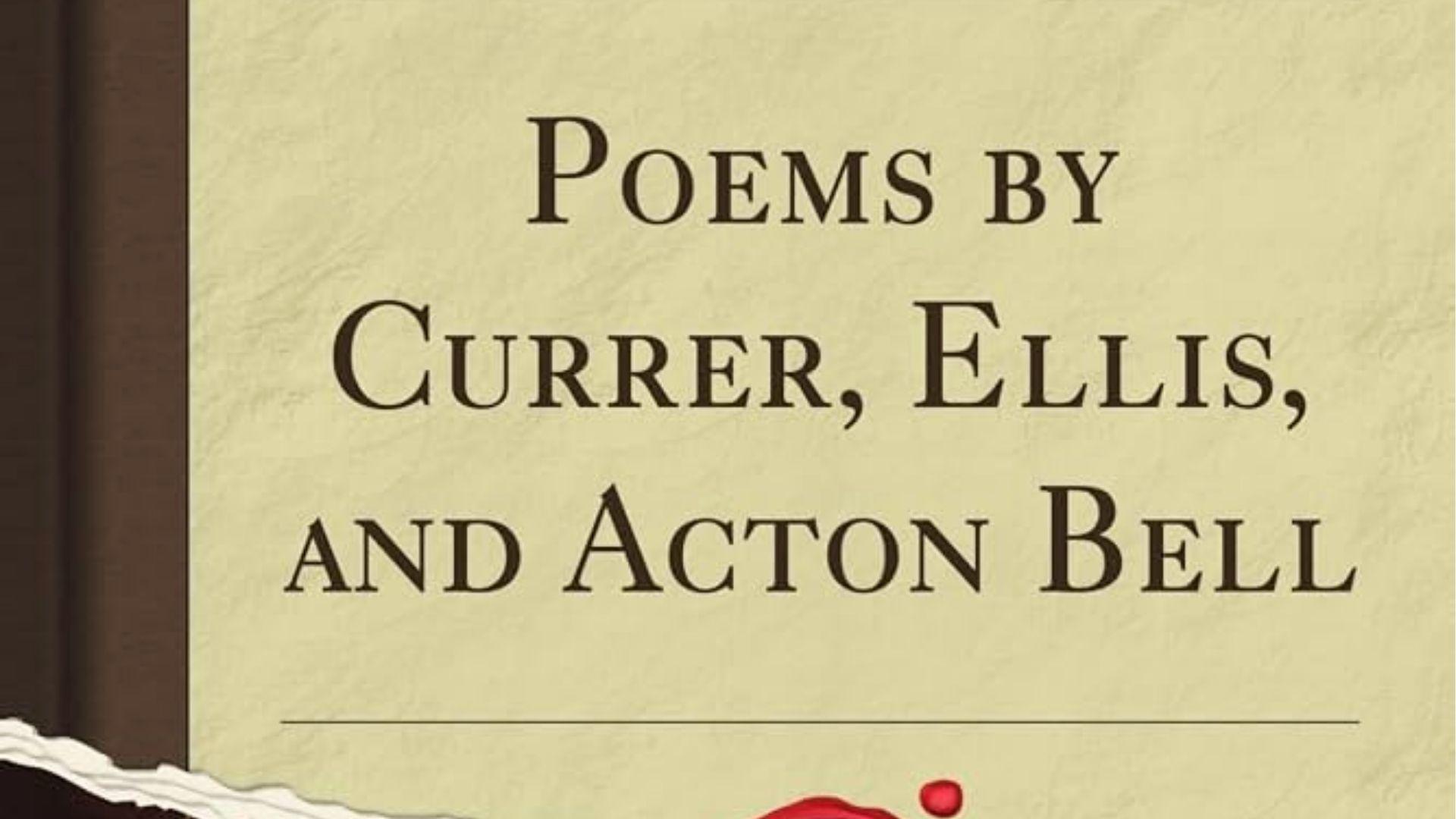
The Brontë sisters published as Currer, Ellis, and Acton Bell because they feared reviewers would judge women authors with prejudice.
In Charlotte’s 1850 Biographical Notice, she wrote that “we did not like to declare ourselves women,” yet the names stayed ambiguous because the sisters were uneasy about taking openly masculine ones.
What Currer, Ellis, and Acton Bell Signaled
The Bell names kept each sister’s initials, and the caution behind them was not paranoia.
In 1837, when Charlotte was 20, the poet laureate Robert Southey answered her poems by telling her that “Literature cannot be the business of a woman’s life.”
Reviewers proved harsh as well, since an 1848 review of Jane Eyre called it a dangerous book with a rebellious heroine.
Victorian women were not barred from publishing, though, and Jane Austen’s Sense and Sensibility had appeared in 1811 credited to “A Lady.”
The sisters feared prejudice, not a ban, and the Bell names let their books be judged first.
Charlotte never explained why she chose these particular names, and theories that link Currer to the book collector Frances Mary Richardson Currer and Bell to Arthur Bell Nicholls remain unconfirmed.
How the Secret Came Out
After Jane Eyre succeeded, readers suspected one writer was behind all three names.
In 1848 the publisher Thomas Newby advertised The Tenant of Wildfell Hall in the United States as Currer Bell’s work, which alarmed Charlotte’s publisher, Smith, Elder.
Charlotte and Anne traveled to London that summer to prove they were two people, while Emily refused to go, and only the publishers were told.
After Emily and Anne died, Charlotte explained everything in her 1850 notice but kept using Currer Bell for her later novels.
Elizabeth Gaskell’s 1857 biography then made the sisters public property.
Brontë Sister Myths vs. the Record
Gaskell’s The Life of Charlotte Brontë turned a family tragedy into a legend of three lonely sisters on a windswept moor, and Lucasta Miller’s study The Brontë Myth traces how each later generation reshaped that legend to suit its own tastes.
Four of the most persistent claims can be tested against the evidence.
Myth: They Lived Cut Off on the Moors
The record shows otherwise.
Charlotte and Anne spent long periods living away from Haworth, and Charlotte and Emily studied in Brussels in 1842, where Charlotte fell for her married teacher, Constantin Héger.
Haworth itself was a polluted town with open sewers, which hardly matches the romantic picture of untouched wilderness.
Believing in total isolation also makes the novels look like miracles of imagination, when the sisters’ work as teachers and governesses explains much of what they knew about the world.
Myth: Emily Was a Mystic and Branwell Wrote Wuthering Heights
Charlotte’s preface left readers picturing Emily as an unworldly, childlike recluse, and later writers added a mystical streak.
Claire O’Callaghan, author of Emily Brontë Reappraised, has said her students kept repeating the same stereotypes about Emily, which is partly why she wrote the book.
A related claim, that Branwell wrote or co-wrote Wuthering Heights, began after his death, when two friends, William Dearden and Francis Grundy, circulated it.
A stylometry study of Wuthering Heights by Rachel McCarthy and James O’Sullivan, published in 2020, found Emily the most likely author and Branwell the least likely member of the family to have contributed.
Branwell does appear in the books, though, as the apparent model for Hindley Earnshaw and for the drunken husband in The Tenant of Wildfell Hall.
Myth: Charlotte Only Protected Her Sisters
Charlotte’s 1850 notice defended Emily and Anne against harsh reviews, and it also shaped how readers saw them for generations.
She softened their boldest themes by presenting the novels as products of instinct more than craft.
After Anne’s death, she kept The Tenant of Wildfell Hall from being republished, which is one reason Anne remains the least known of the three even though that novel sold out in weeks.
Sophie Franklin, author of Charlotte Brontë Revisited, argues that some Brontë myths started with Charlotte herself.
Myth: The Movies Show the Real Story
Screen versions are interpretations. BBC One’s To Walk Invisible (2016), based largely on Charlotte’s letters, presents the sisters as a working team, as the letters suggest.
Frances O’Connor’s Emily (2022) is openly invented, since O’Connor has said she did not want a straight biography, and it gives Emily a love story and has her publish alone without a pseudonym.
Emerald Fennell’s Wuthering Heights, released in February 2026 with Margot Robbie and Jacob Elordi, adapts Emily’s novel loosely and not her life, so it tells you little about the sisters themselves.
How Did the Brontë Sisters Die, and Did Any of Them Marry?
Emily died of tuberculosis on December 19, 1848, and Anne died of the same disease on May 28, 1849, only months after their brother Branwell.
Charlotte, the only sister who married, died on March 31, 1855, nine months after her wedding, and her death certificate lists tuberculosis even though she was pregnant.
How Each Sibling Died
Branwell died on September 24, 1848, at 31, of tuberculosis worsened by alcohol and opium. Emily caught a chill at his funeral and was dead by December 19, aged 30.
Anne traveled to Scarborough in May 1849 for a seaside cure and died four days after arriving, aged 29.
Bad luck was not the only factor.
An inspector’s report on Haworth, known as the Babbage Report, found that 41.6 percent of residents died before age six, that the average age at death was about 25, and that the parsonage water was contaminated by the crowded graveyard next door, as History.com summarizes.
Charlotte’s death is less clear.
The certificate named tuberculosis, but she had been severely ill with nausea during pregnancy, and the Westminster Abbey memorial entry attributes her death to excessive morning sickness and a chill, while some modern writers suggest hyperemesis gravidarum.
Patrick Brontë outlived all six of his children and died in 1861 at 84.
Charlotte’s Marriage to Arthur Bell Nicholls
Charlotte married Arthur Bell Nicholls, her father’s curate, on June 29, 1854.
Patrick opposed the match at first, and Charlotte had earlier endured an unrequited attachment to Constantin Héger in Brussels, who did not reply to her letters. Neither Emily nor Anne married.
What the Brontë Sisters Left Behind
The answer to who the Brontë sisters were is more interesting than the legend: Three working women who taught, served as governesses, and wrote at night, and who used the Bell names to earn a fair reading before losing control of their own story.
Charlotte wrote the first version of that story, Gaskell polished it, and filmmakers keep rewriting it, but the books remain the best evidence of who the sisters were.
Read Charlotte’s notice first, then take Wuthering Heights and The Tenant of Wildfell Hall side by side, and if you can, see the rooms where they wrote at the Brontë Parsonage Museum in Haworth.
Frequently Asked Questions
How Do You Pronounce Brontë?
Brontë is pronounced BRAHN-tee, with two syllables and the stress on the first. Merriam-Webster also lists BRAHN-tay, and the two dots show the final e is sounded.
Where Are the Brontë Sisters Buried?
Charlotte and Emily lie in the family vault at St Michael and All Angels’ Church in Haworth. Anne is the only Brontë buried elsewhere, in St Mary’s churchyard in Scarborough.
Can You Visit the Brontë Family Home Today?
Yes. Haworth Parsonage is now the Brontë Parsonage Museum, run by the Brontë Society since 1928. The moorland ruin of Top Withens, often linked to Wuthering Heights, is roughly three to four miles from the Parsonage on foot.