


Somewhere in a school library, a kid is reading about a girl whose garbage takes over the whole house, and laughing so hard the librarian looks over.
Odds are you were that kid, and a line or two from the poems by Shel Silverstein is probably still lodged in your memory.
That pull is odd when you think about it. The rhyme that made you laugh at eight can make you wince, or smile, at thirty, because the poem stays the same while you change.
Below, you’ll find 15 of them sorted by mood, with the full text of each one, so you can jump straight to the famous, funny, short, kid-friendly, or darker ones.
Meet the Poet Behind the Poems
Shel Silverstein grew up in Chicago and started out as a cartoonist, publishing in Playboy and the military paper Stars and Stripes before turning to children’s books, according to the Poetry Foundation biography of Silverstein.
That background explains a lot about the poems. He thinks in punchlines and pictures, so the joke often lives half in the verse and half in his pen-and-ink drawings.
The same biography calls his poems darkly humorous and irreverent, filled with invented creatures such as the Bloath, which lurks in the undergrowth and feeds on poets and tea.
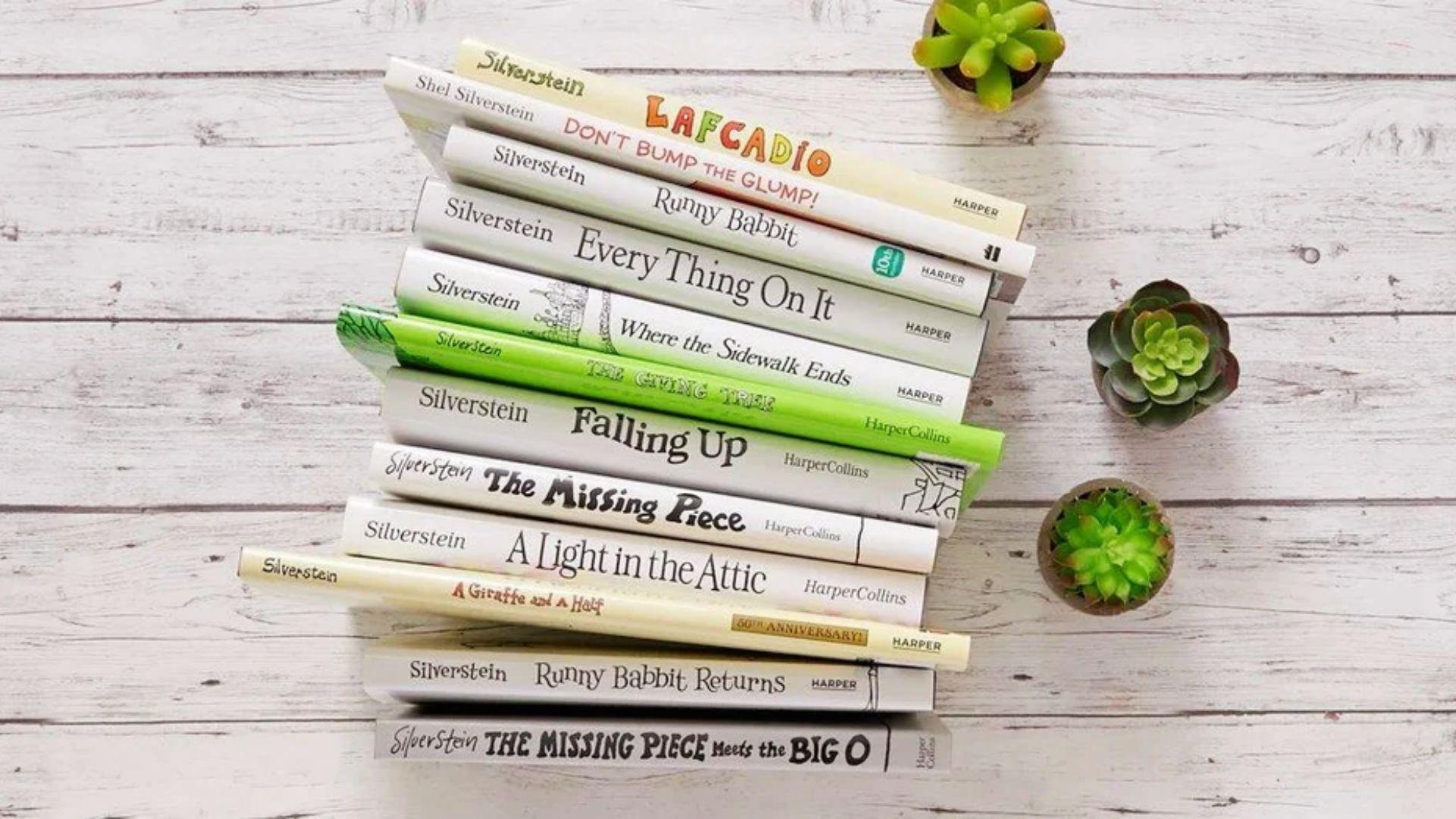
Silverstein published four main poetry collections: Where the Sidewalk Ends (1974), A Light in the Attic (1981), Falling Up (1996), and Every Thing on It (2011).
The last appeared twelve years after his death in 1999. Runny Babbit (2005), a book of spoonerism poems, is a separate posthumous title. One quiet poem from the 2011 book is Masks by Shel Silverstein.
I keep returning to these books because a poem that seemed purely silly at eight can read as a sly comment on adults at thirty. If that kind of rereading appeals to you, our collection of poems about growing up covers neighboring ground.
Shel Silverstein’s Most Famous Poems
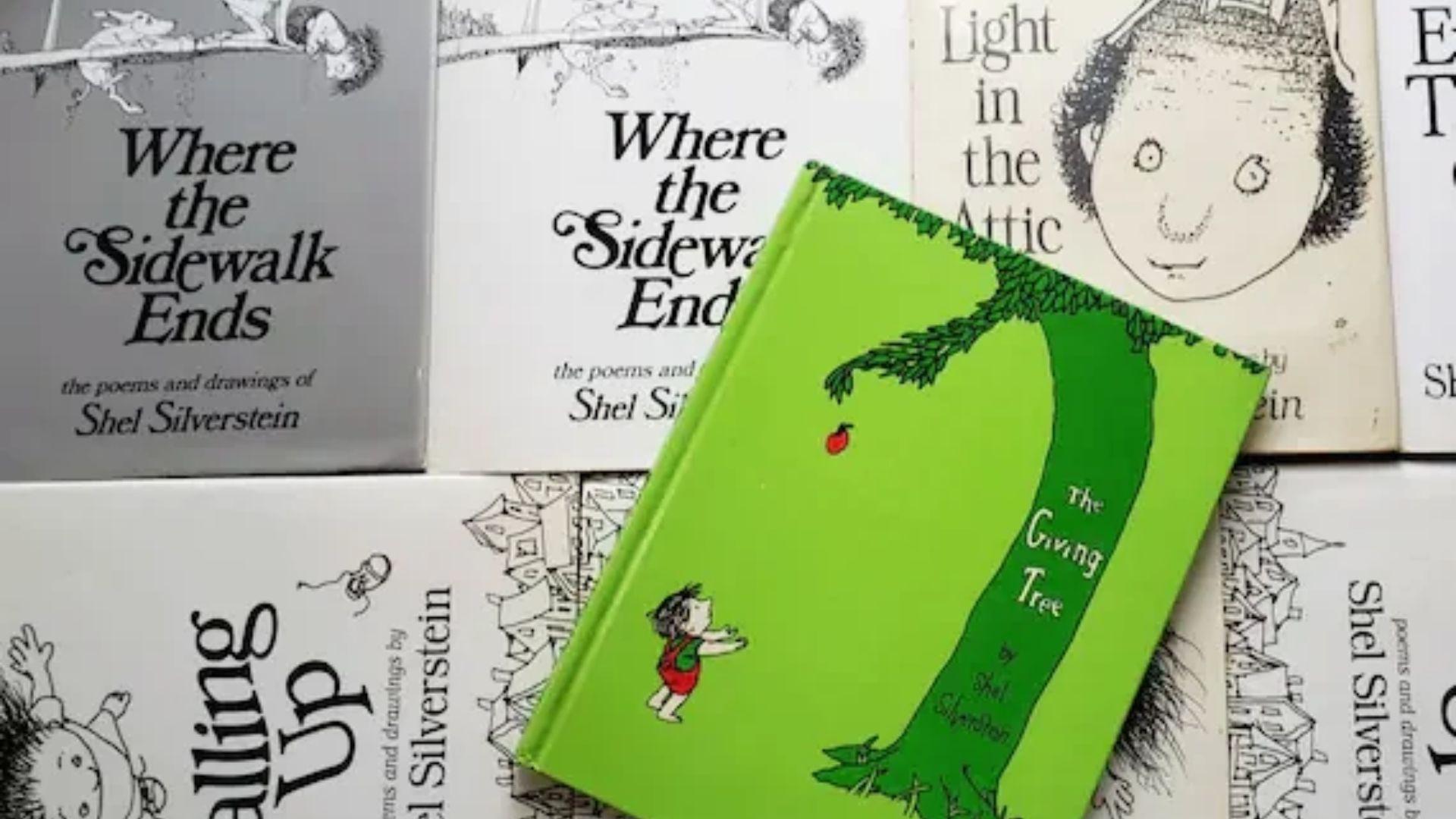
Four poems anchor most Silverstein reading lists: the title poem of Where the Sidewalk Ends, its rallying cry “Listen to the Mustn’ts,” a cautionary tale about a girl and her garbage, and the title poem of Falling Up.
Each starts from a simple premise and then bends it, which is the Silverstein signature.
1. “Where the Sidewalk Ends”
The poem describes a patch of soft grass between the end of the pavement and the start of the street, a place with a peppermint wind that sits apart from the smoky, winding city.
Its three stanzas move from describing that place to leaving the dark street behind for it, and the ending credits children with already knowing the way.
See how the second stanza turns scenery into an invitation, which makes the poem a quiet argument that imagination belongs to children first and adults must follow.
There is a place where the sidewalk ends
and before the street begins,
and there the grass grows soft and white,
and there the sun burns crimson bright,
and there the moon-bird rests from his flight
to cool in the peppermint wind.
Let us leave this place where the smoke blows black
and the dark street winds and bends.
Past the pits where the asphalt flowers grow
we shall walk with a walk that is measured and slow
and watch where the chalk-white arrows go
to the place where the sidewalk ends.
Yes we’ll walk with a walk that is measured and slow,
and we’ll go where the chalk-white arrows go,
for the children, they mark, and the children, they know,
the place where the sidewalk ends.
Credit: Shel Silverstein, “Where the Sidewalk Ends,” Where the Sidewalk Ends (Harper & Row, 1974).
2. “Listen to the Mustn’ts”
Silverstein turns rules into a crowd of capitalized voices, such as the Don’ts and the Shouldn’ts, and asks a child to tune them out in favor of a more generous message.
The official Shel Silverstein site features a line from this poem on its front page, which shows how central it is to his reputation.
Notice that every negative becomes a character, so ignoring them feels like walking away from a crowd rather than breaking a rule.
Listen to Mustn’ts, child, listen to the Don’ts.
Listen to the Shouldn’ts, the Impossibles, the Won’ts.
Listen to the Never Haves, then listen close to me.
Anything can happen, child, Anything can be.
Credit: Shel Silverstein, “Listen to the Mustn’ts,” Where the Sidewalk Ends (Harper & Row, 1974).
3. “Sarah Cynthia Sylvia Stout Would Not Take the Garbage Out”
Sarah refuses one simple chore, and the garbage grows stanza by stanza into an absurd heap of rotten food and household scraps that swallows the house and keeps going.
The poem works as a cautionary tale told with a straight face, and its long rhyming catalog of waste is where the humor lives.
Watch the closing moral aimed straight at the reader, which turns a tall tale into a parent’s warning.
Sarah Cynthia Sylvia Stout
Would not take the garbage out!
She’d scour the pots and scrape the pans,
Candy the yams and spice the hams,
And though her daddy would scream and shout,
She simply would not take the garbage out.
And so it piled up to the ceilings:
Coffee grounds, potato peelings,
Brown Bananas, rotten peas,
Chunks of sour cottage cheese.
It filled the can, it covered the floor,
It cracked the window and blocked the door
With bacon rinds and chicken bones,
Drippy ends of ice cream cones,
Prune pits, peach pits, orange peel,
Gloppy glumps of cold oatmeal,
Pizza crusts and withered greens,
Soggy beans and tangerines,
Crusts of black burned buttered toast,
Grisly bits of beefy roasts…
The garbage rolled down the hall,
It raised the roof, it broke the wall…
Greasy napkins, cookie crumbs,
Globs of gooey bubble gum,
Cellophane from green baloney,
Rubbery blubbery macaroni,
Peanut butter, caked and dry,
Curdled milk and crusts of pie,
Moldy melons, dried-up mustard,
Eggshells mixed with lemon custard,
Cold french fries and rancid meat,
Yellow lumps of Cream of Wheat.
At last the garbage reached so high
That finally it touched the sky.
And all the neighbors moved away,
And none of her friends would come to play.
And finally Sarah Cynthia Slylvia Stout said,
“Ok, I’ll take the garbage out!”
But then, of course, it was too late…
The garbage reached across the state,
From New York to the Golden Gate.
And there, in the garbage she did hate,
Poor Sarah met an awful fate,
That I cannot right now relate
Because the hour is much too late.
But children, remember Sarah Stout
And always take the garbage out!
Credit: Shel Silverstein, “Sarah Cynthia Sylvia Stout Would Not Take the Garbage Out,” Where the Sidewalk Ends (Harper & Row, 1974).
4. “Falling Up”
A boy trips on his shoelaces and falls upward instead of down.
The title poem of the 1996 collection shows Silverstein’s habit of flipping an everyday accident until it becomes a small argument for seeing things from another angle.
Notice how quickly the reversal arrives and how calmly the speaker reports it, because that deadpan tone is what makes the absurd feel believable.
I tripped on my shoelace
And I fell up—
Up to the roof tops,
Up over the town,
Up past the tree tops,
Up over the mountains,
Up where the colors
Blend into the sounds.
But it got me so dizzy
When I looked around,
I got sick to my stomach
And I threw down.
Credit: Shel Silverstein, “Falling Up,” Falling Up (HarperCollins, 1996).
Funny Shel Silverstein Poems That Still Get Laughs

Silverstein’s funniest poems rely on four moves: an exaggerated excuse, a list that escalates, a nonsense chant, and a deadpan absurdity. “Sick,” “Boa Constrictor,” “Ickle Me, Pickle Me, Tickle Me Too,” and “Allison Beals and Her 25 Eels” each lean on a different one.
His collections also include limericks, a form covered in our limerick poem guide, though most of his comedy is looser than that.
5. “Sick”
Peggy Ann McKay lists her ailments to avoid school, starting with familiar illnesses and sliding into implausible ones.
The ending reveals the calendar behind her symptoms, so the final lines send you back to reread the whole list as strategy.
Watch how the symptoms pile up before the reversal, since the pile-up is what makes the punchline land.
“I cannot go to school today,”
Said little Peggy Ann McKay.
“I have the measles and the mumps,
A gash, a rash and purple bumps.
My mouth is wet, my throat is dry,
I’m going blind in my right eye.
My tonsils are as big as rocks,
I’ve counted sixteen chicken pox
And there’s one more—that’s seventeen,
And don’t you think my face looks green?
My leg is cut—my eyes are blue—
It might be instamatic flu.
I cough and sneeze and gasp and choke,
I’m sure that my left leg is broke—
My hip hurts when I move my chin,
My belly button’s caving in,
My back is wrenched, my ankle’s sprained,
My ‘pendix pains each time it rains.
My nose is cold, my toes are numb.
I have a sliver in my thumb.
My neck is stiff, my voice is weak,
I hardly whisper when I speak.
My tongue is filling up my mouth,
I think my hair is falling out.
My elbow’s bent, my spine ain’t straight,
My temperature is one-o-eight.
My brain is shrunk, I cannot hear,
There is a hole inside my ear.
I have a hangnail, and my heart is—what?
What’s that? What’s that you say?
You say today is. . .Saturday?
G’bye, I’m going out to play!”
Credit: Shel Silverstein, “Sick,” Where the Sidewalk Ends (Harper & Row, 1974).
6. “Boa Constrictor”
The speaker reports on being swallowed, and the rhymes climb the body from toe to knee to thigh to middle to neck until the narration cuts off.
The comedy comes from the cheerful, complaining tone, which never matches the danger.
Notice how each rhyme marks the snake’s progress like a ruler, so the poem works as a countdown.
Oh, I’m being eaten
By a boa constrictor,
A boa constrictor,
A boa constrictor,
I’m being eaten by a boa constrictor,
And I don’t like it—one bit.
Well, what do you know?
It’s nibblin’ my toe.
Oh, gee,
It’s up to my knee.
Oh my,
It’s up to my thigh.
Oh, fiddle,
It’s up to my middle.
Oh, heck,
It’s up to my neck.
Oh, dread,
It’s up—
MMMMMMMMMMFFFFFFFFFF. . .
Credit: Shel Silverstein, “Boa Constrictor,” Where the Sidewalk Ends (Harper & Row, 1974).
7. “Ickle Me, Pickle Me, Tickle Me Too”
This nonsense chant sends three characters riding in a flying shoe, and the fun is in the sound of the names as much as the plot.
Silverstein recorded it himself, and an animated video uses his voice, as described in the listening section below.
Say the first line aloud and listen to how the repeated -ickle ending sets the beat for everything that follows.
Ickle Me, Pickle Me, Tickle Me too
Went for a ride in a flying shoe.
“Hooray!”
“What fun!”
“It’s time we flew!”
Said Ickle Me, Pickle Me, Tickle Me too.
Ickle was captain, and Pickle was crew,
And Tickle served coffee and mulligan stew,
As higher
And higher
And higher they flew,
Ickle Me, Pickle Me, Tickle Me too.
Ickle Me, Pickle Me, Tickle Me too,
Over the sun and beyond the blue.
“Hold on!”
“Stay in!”
“I hope we do!”
Cried Ickle Me, Pickle Me, Tickle Me too.
Ickle Me, Pickle Me, Tickle Me too
Never returned to the world they knew,
And nobody knows what’s happened to
Dear Ickle Me, Pickle Me, Tickle Me too.
Credit: Shel Silverstein, “Ickle Me, Pickle Me, Tickle Me Too,” Where the Sidewalk Ends (Harper & Row, 1974).
8. “Allison Beals and Her 25 Eels”
Character poems like this one attach an absurd number to an ordinary name, and the title alone sets the premise.
The publisher lists Allison among the unforgettable characters of Falling Up, so she belongs with the book’s other oddballs.
Look at how the title carries the joke so the poem can spend its lines on deadpan consequences instead of explanation.
Allison Beals had twenty-five eels–
She used four for skateboard wheels,
She used one as a hula hoop,
She used one to stir her soup,
Two of them with silly faces
She would use for sneaker laces,
One was a band to tie her hair,
Two were earrings danglin’ there,
One was a ring upon her hand,
One made a perfect wristwatch band,
One of them held her cup of tea,
One held the bandage on her knee,
One was a belt for her cut-off jeans,
One held you her magazines,
One was a necklace that never would choke,
One was a bra strap in case hers broke,
One was a wobbly baton to twirl,
One held a banner that she could unfurl,
One was a bracelet that wouldn’t unwind,
One made a lovely Valentine,
The ‘lectric one was a lamp that could shine,
And one got a new job on page fifty-nine.
Credit: Shel Silverstein, “Allison Beals and Her 25 Eels,” Falling Up (HarperCollins, 1996).
Short Shel Silverstein Poems You Can Read in a Minute

Short Shel Silverstein poems such as “Smart,” “Masks,” and “Hug o’ War” deliver a complete idea in a handful of lines.
They fit on a single page, read aloud in under a minute, and work well as class openers, lunchbox notes, or a first poem for a reluctant reader.
9. “Smart”
A boy trades a dollar bill for coins because more coins feel like more money, and each swap raises the count while lowering the value.
The poem lets a child’s pride show how he is outsmarting himself. Watch the arithmetic, because the joke only works if you do the math faster than the speaker does.
My dad gave me one dollar bill
‘Cause I’m his smartest son,
And I swapped it for two shiny quarters
‘Cause two is more than one!
Credit: Shel Silverstein, “Smart,” Where the Sidewalk Ends (Harper & Row, 1974).
10. “Hug o’ War”
The speaker would rather play a game where everyone hugs than one where people pull, and in that game everybody wins.
The one-letter swap from tug to hug is the whole argument, and the poem simply unfolds it.
Watch how little the poem needs beyond that swap, since a good short poem often rests on a single turned word.
I will not play at tug o’ war.
I’d rather play at hug o’ war,
Where everyone hugs
Instead of tugs,
Where everyone giggles
And rolls on the rug,
Where everyone kisses,
And everyone grins,
And everyone cuddles,
And everyone wins.
Credit: Shel Silverstein, “Hug o’ War,” Where the Sidewalk Ends (Harper & Row, 1974).
Shel Silverstein Poems for Kids and Classrooms

The best Shel Silverstein poems for kids give a feeling a name or invite play.
“Invitation” welcomes dreamers, “What if” gives bedtime worries a voice, and “Jimmy Jet and His TV Set” turns screen time into a joke. All three work for read-alouds and short class discussions.
11. “Invitation”
The first poem in Where the Sidewalk Ends speaks directly to dreamers and wishers and welcomes them into the book.
It makes a good first-day poem, and students can write their own invitation to a different kind of reader, such as the nervous, the curious, or the stubborn.
If you are a dreamer, come in,
If you are a dreamer, a wisher, a liar,
A hope-er, a pray-er, a magic bean buyer…
If you’re a pretender, come sit by my fire
For we have some flax-golden tales to spin.
Come in!
Come in!
Credit: Shel Silverstein, “Invitation,” Where the Sidewalk Ends (Harper & Row, 1974).
12. “Whatif”
Bedtime worries become creatures called Whatifs that crawl into the speaker’s ear and refuse to leave.
Because the worries are capitalized and personified, children can talk about them as something outside themselves. In class, ask students to list their own Whatifs and then write one that turns out fine.
Last night, while I lay thinking here,
some Whatifs crawled inside my ear
and pranced and partied all night long
and sang their same old Whatif song:
Whatif I’m dumb in school?
Whatif they’ve closed the swimming pool?
Whatif I get beat up?
Whatif there’s poison in my cup?
Whatif I start to cry?
Whatif I get sick and die?
Whatif I flunk that test?
Whatif green hair grows on my chest?
Whatif nobody likes me?
Whatif a bolt of lightning strikes me?
Whatif I don’t grow talle?
Whatif my head starts getting smaller?
Whatif the fish won’t bite?
Whatif the wind tears up my kite?
Whatif they start a war?
Whatif my parents get divorced?
Whatif the bus is late?
Whatif my teeth don’t grow in straight?
Whatif I tear my pants?
Whatif I never learn to dance?
Everything seems well, and then
the nighttime Whatifs strike again!
Credit: Shel Silverstein, “Whatif,” A Light in the Attic (Harper & Row, 1981).
13. “Jimmy Jet and His TV Set”
A boy who watches so much television that he turns into a TV set is one of the best-known characters in Where the Sidewalk Ends.
The poem treats the transformation as the natural result of a habit, which makes it a lively way to start a conversation about screen time.
Ask students which step in Jimmy’s routine they would change first.
I’ll tell you the story of Jimmy Jet–
And you know what I tell you is true.
He loved to watch his TV set
Almost as much as you.
He watched all day, he watched all night
Till he grew pale and lean,
From ‘The Early Show’ to ‘The Late Show’
And all the shows in between.
He watched till his eyes were frozen wide,
And his bottom grew into his chair.
And his chin turned into a tuning dial,
And antennae grew out of his hair.
And his brains turned into TV tubes,
And his face to a TV screen.
And two knobs saying ‘vert.’ and ‘horiz.’
Grew where his ears had been.
And he grew a plug that looked like a tail
So we plugged in little Jim.
And now instead of him watching TV
We all sit around and watch him.
Credit: Shel Silverstein, “Jimmy Jet and His TV Set,” Where the Sidewalk Ends (Harper & Row, 1974).
The Darker, Stranger Side of Silverstein’s Verse

Silverstein’s edge is part of his reputation. The Poetry Foundation calls his poems darkly humorous and irreverent, and “Hungry Mungry” and “Little Abigail and the Beautiful Pony” show why: both pair a bouncy rhyme with an ending that some adults found hard to take.
14. “Hungry Mungry”
A boy’s appetite expands from ordinary food to the whole world and finally to himself, until nothing is left.
The scale jumps with each stanza, so the absurdity grows from a household problem into a cosmic one.
Notice how the sing-song rhythm stays cheerful the entire time, which is what makes the ending funny and unsettling at once.
Hungry Mungry sat at supper,
Took his knife and spoon and fork,
Ate a bowl of mushroom soup, ate a slice of roasted pork,
Ate a dozen stewed tomatoes, twenty-seven deviled eggs,
Fifteen shrimps, nine bakes potatoes,
Thirty-two fried chicken legs,
A shank of lamb, a boiled ham,
Two bowls of grits, some black-eye peas,
Four chocolate shakes, eight angel cakes,
Nine custard pies with Muenster cheese,
Ten pots of tea, and after he,
Had eaten all that he was able,
He poured some broth on the tablecloth
And ate the kitchen table.
His parents said, ‘Oh Hungry Mungry, stop these silly jokes.’
Mungry opened up his mouth, and ‘Gulp,’ he ate his folks.
And then he went and ate his house, all the bricks and wood,
And then he ate up all the people in the neighborhood.
Up came twenty angry policeman shouting, ‘Stop and cease.’
Mungry opened his mouth and ‘Gulp,’ he ate the police.
Soldiers came with tanks and guns.
Said Mungry, ‘They can’t harm me.’
He just smiled and licked his lips and ate the U.S. Army.
The President sent all his bombers- Mungry still was calm,
Put his head back, gulped the planes, and gobbled up the bomb.
He ate his town and ate the city- ate and ate and-
And then he said, ‘I think I’ll eat the whole United States.’
And so he ate Chicago first and munched the Water Tower,
And then he chewed on Pittsburgh but he found it rather sour.
He ate New York and Tennessee, and all of Boston town,
Then drank the Mississippi River just to wash it down.
And when he’d eaten every state, each puppy, boy and girl
He wiped his mouth upon his sleeve and went to eat the world.
He ate the Egypt pyramids and every church in Rome,
And all the grass in Africa and all in ice in Nome.
He ate each hill in green Brazil and then to make things worse
He decided for dessert he’d eat the universe.
He started with the moon and stars and soon as he was done
He gulped the clouds, he sipped the wind and gobbled up the sun.
Then sitting there in the cold dark air,
He started to nibble his feet,
Then his legs, then his hips
Then his neck, then his lips
Till he sat there just gnashin’ his teeth
‘Cause nothin’ was nothin’ was
Nothin’ was nothin’ was
Nothin’ was left to eat
Credit: Shel Silverstein, “Hungry Mungry,” Where the Sidewalk Ends (Harper & Row, 1974).
15. “Little Abigail and the Beautiful Pony”
A girl obsessed with a pony her parents will not buy stops eating and sleeping and dies, and the poem ends by telling young readers to share it with their folks when they are refused something they want.
Critics said it glorified suicide, and Fruitland Park Elementary School in Lake County, Florida, pulled the book before a committee of parents and teachers reversed the decision.
Whether the final turn softens the death or sharpens the satire is a fair question to debate, and the clash between nursery-rhyme meter and grim content is the reason.
There’s a light on in the attic.Though the house is dark and shuttered, I can see a flickerin’ flutter, And I know what it’s about. There’s a light on in the attic.I can see it from the outside, And I know you’re on the inside … lookin’ out.
Credit: Shel Silverstein, “Little Abigail and the Beautiful Pony,” A Light in the Attic (Harper & Row, 1981).
Where to Hear the Poems Read Aloud
Silverstein recorded many of his own poems, so you can hear the author read them through audio editions of his books and a few animated videos.
The best starting points are the audio edition of Where the Sidewalk Ends, the CDs that came with anniversary editions, and Open Culture’s animated readings.
The audio edition of Where the Sidewalk Ends has Silverstein reciting, singing, and shouting the poems, and it won a Grammy for Best Recording for Children.
Library catalog records show that the 25th-anniversary edition paired the book with a CD of ten poems read by Silverstein, including “Sick,” “Ickle Me, Pickle Me, Tickle Me Too,” “Listen to the Mustn’ts,” “Smart,” and the garbage poem.
The 20th-anniversary edition of A Light in the Attic added a CD of 11 poems he performed.
For video, Open Culture collects animated readings of his poems, including Silverstein’s own voice on “Ickle Me” and “Backwards Bill.” The Runny Babbit animations use other voices, because that book was published after his death.
Try reading along with the text above while a recording plays. “Sick” and “Smart” are both on the anniversary CD, and hearing them next to the page shows how his timing sets up each punchline.
Why Silverstein’s Poems Keep Getting Reread
Silverstein’s poems last because they work on more than one level.
The rhyme gives children something to chant, while the sly turn at the end gives adults something to chew on, and his own drawings leave room for a picture to finish a thought the words only start.
That blend is why poems by Shel Silverstein still get passed from one generation to the next.
Pick the poem from this page that stuck with you longest, play its recording, then read it aloud to someone younger and watch where they laugh. That reaction is the poem working.
Frequently Asked Questions
What Is Shel Silverstein’s Real Name?
Shel was short for Sheldon. He was born Sheldon Allan Silverstein on September 25, 1930, in Chicago, and he used his given name professionally, so Shel Silverstein is not a pen name. He died in Key West, Florida, in May 1999.
Which Song Did Shel Silverstein Write for Johnny Cash?
He wrote “A Boy Named Sue,” which Cash recorded live at San Quentin in 1969 and which became his biggest-selling single. The song earned Silverstein the 1970 Grammy for Best Country Song. In 1978, he recorded a follow-up, “The Father of a Boy Named Sue,” which tells the story from the father’s side.
Why Was Shel Silverstein Controversial?
Parents and school boards challenged his books, especially A Light in the Attic, over poems they read as encouraging disobedience or glorifying death. One Wisconsin elementary school library banned the book over claims that it glorified Satan, suicide, and cannibalism. See PEN America’s reporting on challenges for the American Library Association case files.


